Pondering Over Coffee

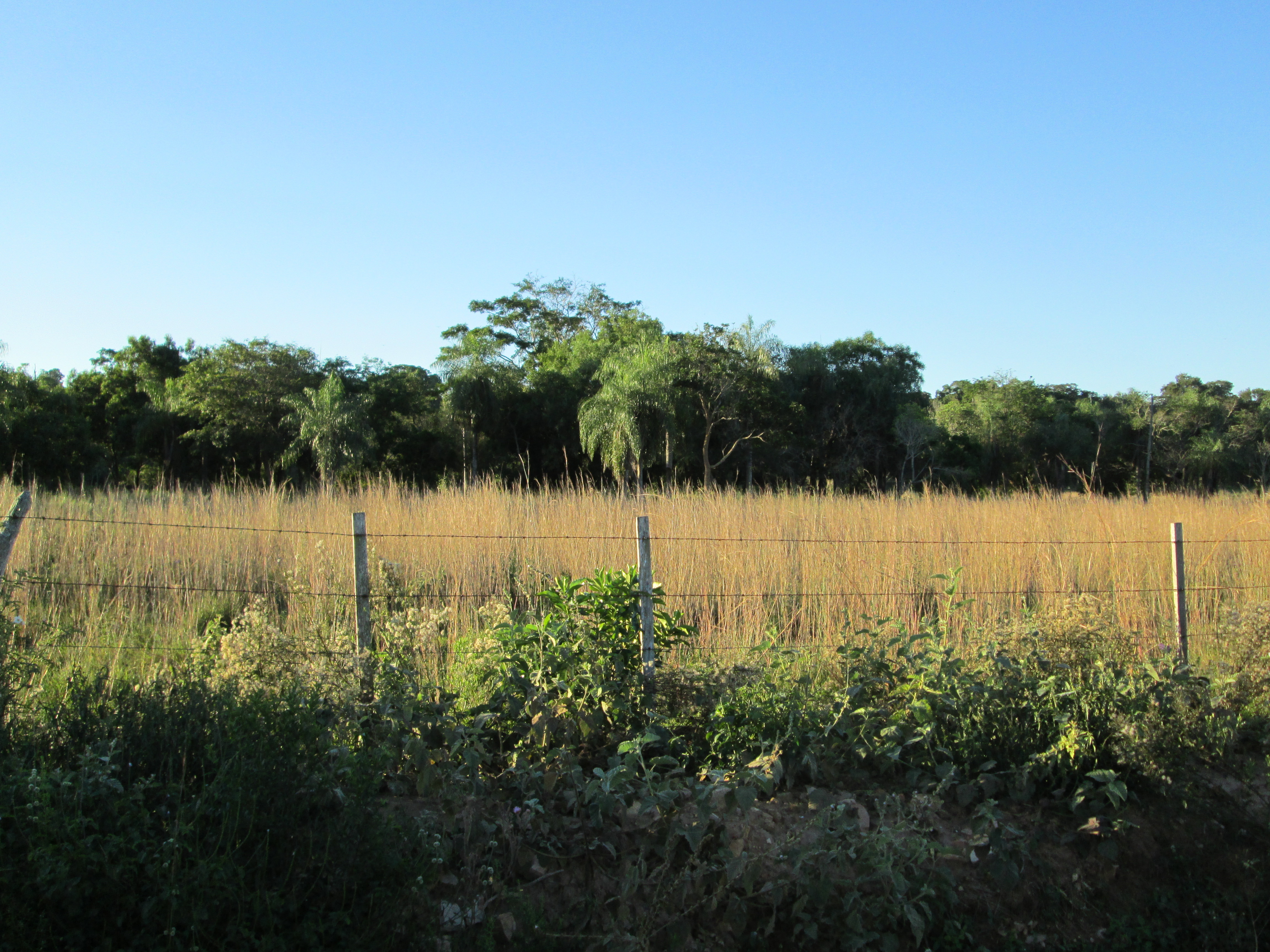
FieldIt’s chilly, as in I’m not comfortable outside in my shorts. It’s before 7 am and I’m sitting in the dim kitchen drinking my daily morning coffee and eating my daily morning bread. It’s Saturday. My family started playing the polka at 6 am. Being a light sleeper, I gave up trying to snooze and brushed my teeth at 6:20 am.

The chicken that I thought was one of my best friends tries to steal my bread. The kitchen has a window without glass or a shutter and a door that stays open to the outside during the day. The cold air wafts toward me. I set my mug on my leg to warm up.

This morning, the coffee is already sweetened. That’s not always the case, but today it is. The coffee is syrupy, painfully sweet. It’s like liquid coffee-flavored hard candies.

A Paraguayan coffee recipe:

  • 2/3 – Hot water
  • Just enough to thoroughly color the water – Instant coffee or finely ground coffee
  • 1/3 – Milk
  • Many, many spoons – Sugar

Mix coffee and water. Add milk at the end of the cooking process. Add sugar before drinking.

Soaking my white bread in the coffee-flavored-sugar, milk-flavored-water I wonder why my family makes their coffee this way. In my past life, I didn’t drink coffee, but this is Paraguay.

In the shadows, I consume my coffee—reminding myself not to gulp it every time I lift my mug.  The new sun makes the trees outside shiny green.

“Oh, I get it,” I think. “I know why they use so much sugar in their coffee…it must be the cheapest ingredient, apart form water, in the mix. That’s it, they add sugar to make it taste like something.”

Somehow that realization is settling. I sip my coffee and dunk the last of my bread. I too would rather have sugar-flavored-coffee than coffee-flavored-water everyday.
2 More Myths About the US: City and Disposable Clothes

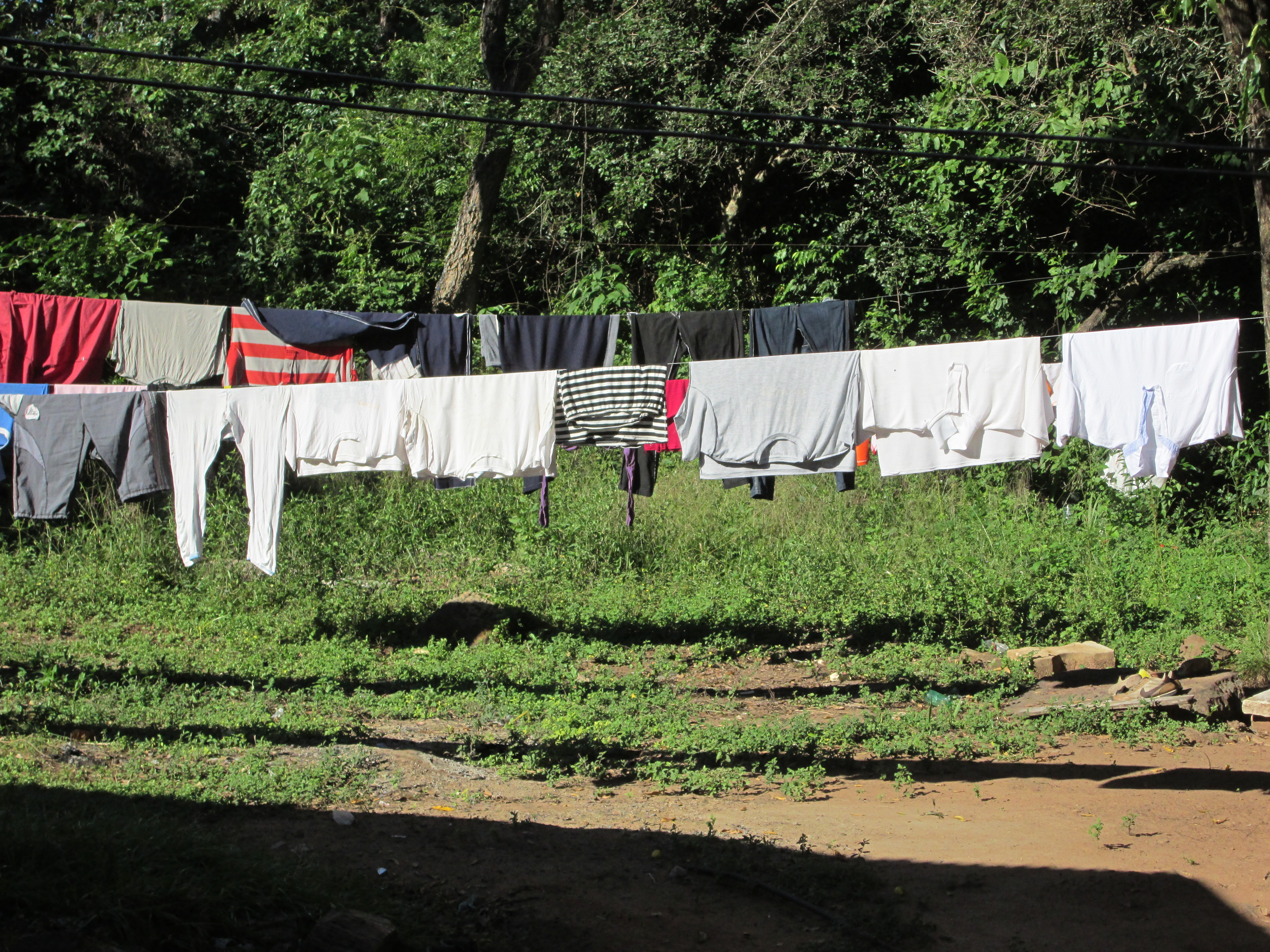
ClothesWhen I was in college we talked a lot about globalization and how US culture is everywhere. I won’t argue that point, but I’ve come to understand that being everywhere and being understood everywhere are different things.

Myth 1: The US is only city.

The thought that the US is only city has a lot to do with movies. Most of the movies that make it to Paraguay about the US are set in a city. Actually, most of the movies I watched in the US are set in the city. I guess the city is more exciting. Being from the rural US myself, this myth was fun to dispel.

Myth 2: People in the US wear their clothes once and then throw them out.

The person who asked me about this heard it from someone who visited the US. I think the root of the confusion might have been that it seemed like people wore their clothes only once because people in the US tend to have more clothes than Paraguayans. In Paraguay most people I’ve known have a handful (more or less) of each clothing item. It’s common and fine to wear the same shirt (or outfit) multiple times a week as long as it’s clean. To ensure they always have clean clothes, many Paraguayans do laundry several times a week.

Meat

CowI cannot describe the Paraguayan love for meat

So strong and not selective


It’s not romantic, but matter-of-fact

Nawing, slurping, cutting, chopping, slicing, pounding, breading, frying, grinding

It is not the cut that matters


Cow for the weekdays and pig for the weekends

Pork fatty bits seasoned and laced with cornmeal

Blood sausage or breaded and fried stomach slices


Bones with fat in a runny broth

Little bits in cheesy rice

Slices that are somewhat nice


Meat, carne, so’o, pork, chancho

Meat is king in Paraguay

(Chicken does not count as meat)


Slaughtering is a group affair

Kids know how to remove pig hair

The men slice and the women cook


It’s not exciting and it’s not passionate

The source of our food is very clear

This here pork came from over there


Paraguayans love their meat

It’s not secret but loudly announced

Meat desire.


A Day in the Life

Serving in the PC is an emotion roller-coaster. Here is an example of my feelings and thoughts during a typical weekday. Palm trees

5:30 am – Tired: I wish my family wasn’t so loud getting ready for work and school.

6:00 am – Screw it: I’m not that tired, so I might as well get up. I have to pee anyway.

6:15 am – Yay: The morning is cool and the sky is gorgeous.

6:16 am – Pumped: I’m so productive when I start the day this early.

7:00 am – Reflective: Well, this coffee with bread is actually pretty good considering I didn’t like either before coming to Paraguay.

7:15 am – Relieved: Writing it all down in a journal makes it easier. I don’t know when I’ll be able to talk to someone about it anyway.

7:30 am – Excited: I’ll get to work early today. It’s going to be a good day.

8:00 am – Cared for: The people at the health post are awesome.

12:00 pm – Starving: I’m starving and really need to pee. How do Paraguayans drink so much terere and never need to use the bathroom?

12:30 pm – Reluctant: Just eat it. I should be thankful someone made me lunch…

1:00 pm – This sucks: It’s sort of hot and now I don’t know what I want to do or what I should do.

1:30 pm – Bored: Fine, fine, I’ll study Guarani…maybe I’ll read instead.

3:00 pm – Escape: I got to get out of here. It’s clearly time for a walk, run, or trip to the grocery store.

4:00 pm – Missing people: Is anyone in the states online? What are my g-mates doing?

4:15 pm – Grr: Of course no one is online; it’s still during the work hours.

5:00 pm – Satisfied: Most of my Paraguayan family is home. We are drinking terere, and I actually know what they are talking about (mostly)!

5:45 pm – Frustrated: I’m never going to learn Guarani. Why did my host brother have to ask me a question in Guarani so fast?

6:00 pm – Hungry but it’s okay: I don’t think we are having dinner for a while still. But, I feel so integrated and connected sitting here drinking terere.

7:00 pm – Greasy: Tortillas, so good at first, so bad later.

7:30 pm – Indecisive: Do I want to watch TV with my family, work on my novel, study, read, or plan charlas? …Is there another option?

8:00 pm – Calm: Watching this soccer game is engaging enough, and they are calling the game in just Spanish so that’s nice.

8:30 pm – Awkward: Everyone in my Paraguayan family is falling asleep and the TV is in their room. Looks like I should go to my room.

8:45 pm – Not tired: Now what?

9:30 pm – Doubtful: I think I’ve been productive today. I feel like I’m not doing enough.

10:00 pm – Defensive: Stop putting yourself down, you’re doing just what you should be doing.

10:01 pm – Sleepy: On that note, let’s go to bed shall we?

10:30 pm – Awake: Why am I still awake?

Bad Habits

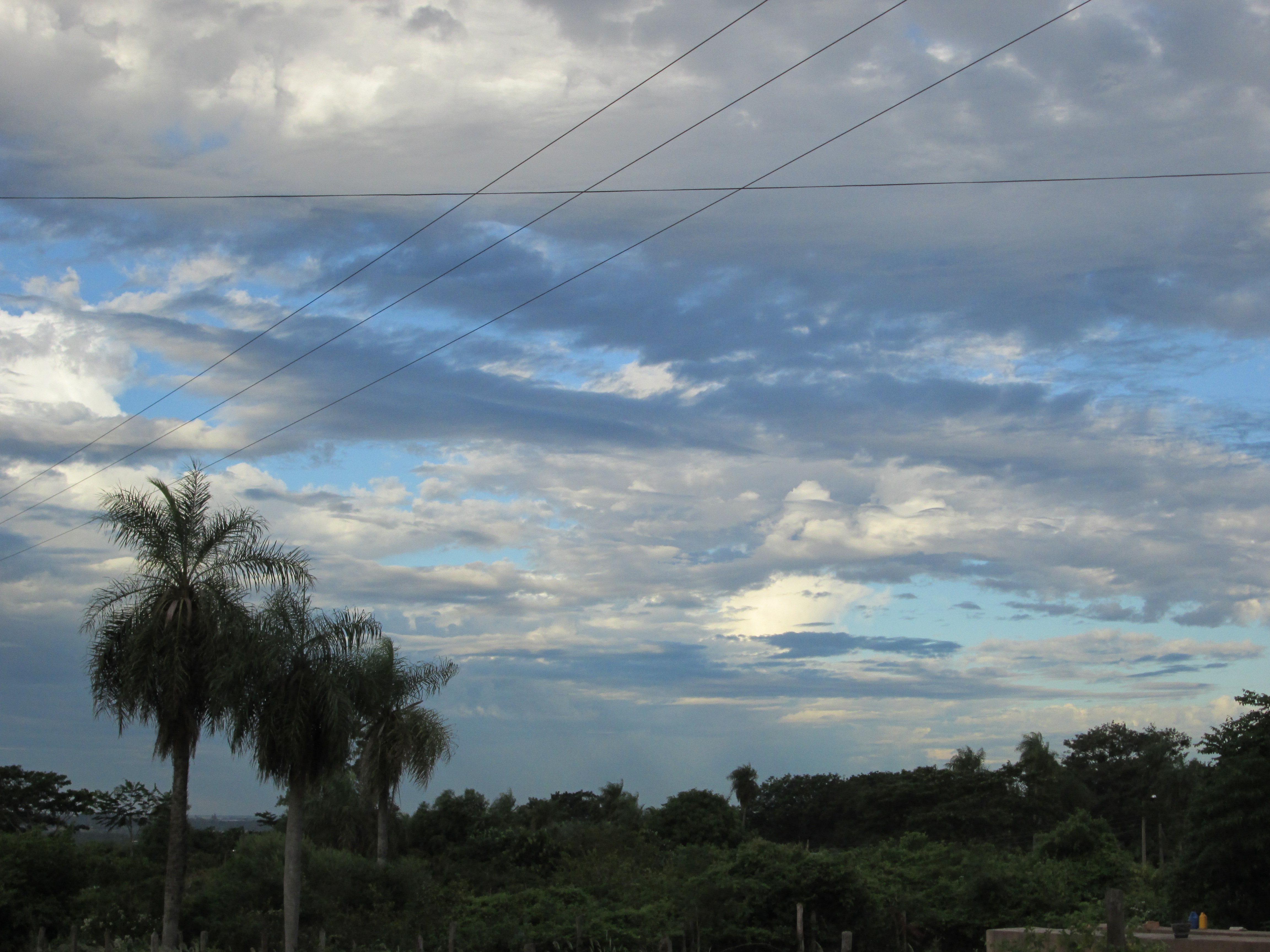
Paraguayan skyWhy is the knowledge that something is bad for you not enough to make you stop doing it?

I’ve been thinking about this question a lot recently. When I tell Paraguayans that I’m in Paraguay to teach about health they jump right in and tell me how bad the Paraguayan diet is. Paraguayans tell me their food “has a lot of fat” or that the food “is heavy.” They tell me that there are a lot of people who are overweight, have diabetes, or have high blood pressure.

Next, Paraguayans ask if I like their traditional foods like sopa paraguaya, tortillas, and mandioca. They tell me they want to lose weight, but then put three tablespoons of sugar in the milk they are going to drink with bread. They ask, already knowing the answer, if they should eat fewer carbohydrates if they want to lose weight. They explain how they don’t exercise or eat vegetables.

I don’t know if the people I talk to know that different foods have different nutrients or that balancing calorie intake and calorie burn is the center to weight control, but it’s clear they know what they are consuming isn’t the healthiest option.

If they know it’s bad for them, why aren’t they trying to change it?

  • Is it habit?
  • Is it that they don’t know how to cook different foods?
  • Is it taste preference?
  • Is it cost?
  • Is it cultural heritage?
  • Is it a lack of information or understanding about what makes food healthy or unhealthy?
  • Is it something I’m not seeing?

In the past, I wrote about developing public health programs that encourage change by focusing on the out-of-box-experience. But, as I work in Paraguay, it’s daunting. Clearly, a lack of knowledge isn’t the only thing at work here. But what can I do other than provide information?

Hold Tight Folks, We’ve Got a Storm Coming

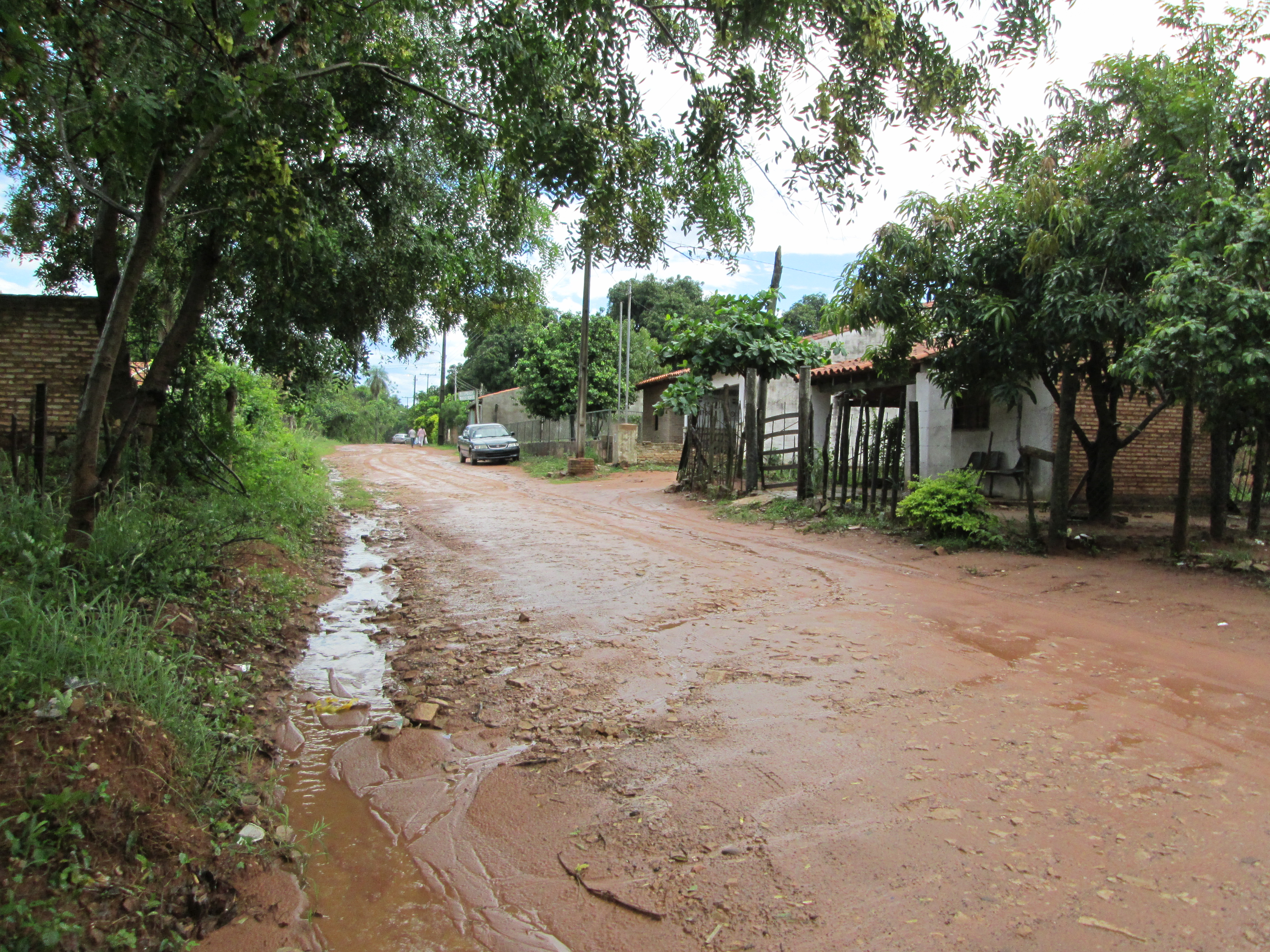
Muddy road after rainIt doesn’t rain in Paraguay; it dumps buckets. We have days darkened by ominous clouds with sheets of rain. We have nights that boom with thunder and gleam with lightening. You’ll never go back to fireworks after you’ve seen a Paraguayan lightening storm light up the starless sky.

When it rains the streets become red rivers. We don’t have glass in our windows so rain beats against the shutters and drips down the wall. If you don’t have a good roof it will inevitably drip. In my current house the kitchen, bathroom, and bedrooms are in separate buildings and the only water faucet we have is outside—the downpour days are damp days. You can’t avoid water specks on your hair and shirt.

Children don’t go to school when it rains and sometimes work is cancelled. The buses run less than usual. Most people have dirt bikes, which don’t protect you from the rain. There’s too much mud to drive a car.

Because you have to close the shutters it’s dark inside. Early afternoon feels like early evening. The electricity flickers or goes out entirely, so you are trapped in the dark. You unplug everything, including the fridge, in case the power surges when it comes back. It drops 20-30 degrees Fahrenheit and wind rustles the trees. Sometimes the water stops working.

My dirt lawn is textured with little craters from the rain pounding into the fine rust-colored sand. The trash that is around our lawn is carried away by the rain. Old terere and food scraps thrown out days earlier are washed down downhill.  Water pools on the cobblestoned roads and the paths turn to quicksand and streams. I’ve seen it hale nickel-sized ice chunks. The rain hammers on metal roofs and patters on ceramic ones. The mosquitos come out in flocks.

I sit in the gray dark in my room and think about the houses made of wood slabs, metal roofing, and tarps I saw at the edge of my community. I doubt the people who live there can stay dry.

Turn On the Public Health

Palms and ParaguayMy latest quandary (excluding all the integration and assimilation challenges I face) is not whether I will have work but rather where to begin. The community clinic and school where I plan to start my work seem open to have me do everything I can do to share information about health. What’s more, my school expressed commitment to teaching life skills and sexual health, my dream topics, along with all the other PC community health focus areas (plus some, like drug prevention).

I can see the need for public health education—from five-year olds with rotting front teeth to pregnant teens. It’s exciting to transition from creating health education materials in an office far removed from those I was trying to help to working with my target audiences directly. It’s a wonderful puzzle trying to find resources and find methods to convey information in a way that each audience will find useful.

It’s not going to be easy. I still don’t know how to say everything I want to say in Spanish (or Guarani). I don’t yet have allies in the community I know will help me or know if anyone will show up to whatever activities I do plan. I’m not sure I know enough about all the topics about which I’m supposed to teach.

I’m excited all the same. I have two years to give it my best shot. I hope by the end I’ve given at least a couple of people information they can use to improve their health and that of their loved ones.

I see a lot health presentations, lectures, games, and activities in my future. Don’t worry; I’ll let you know what works for me and what doesn’t.

Why Am I in Paraguay: Peace Corps Goals

A Paraguayan viewI know the Peace Corps and its work sounds abstract, being hard to explain is one of the many challenges of international development. Before leaving for Paraguay, many people asked what I would be doing and I couldn’t tell them. Here is my post-training attempt to define my work as a volunteer.

The Peace Corps Goals

  • To help the people of interested countries in meeting their need for trained men and women
  • To help promote a better understanding of Americans on the part of the peoples served
  • To help promote a better understanding of other peoples on the part of Americans

Cultural Exchange

The first job (and inevitable outcome of a job well done) of Peace Corps volunteer (PCV) is cultural exchange. Cultural exchange means learning about your host country’s culture and sharing about the culture of the US.

As a PCV, I’ve lived with a host family almost 3 months now and will live with one for almost 5 months when all is said and done. Living with a host family gives me the chance to learn what Paraguayan family life is like, eat tons of Paraguayan food, and ask endless questions about social events, pastimes, and beliefs. On the flip side, it also allows my host family to ask billions of questions and allows me to combat myths about the US, share my music, share American food, and offer a new perspective.

Of course, this exchange isn’t limited to my host family or the time I will live with them. Through all my interactions with community members, including people just seeing me do what I do, we are exchanging culture. Also, this blog, conversations with friends in the US, and all the stories I will tell when I get back to the States work toward the cultural exchange goals.

Health Education and Public Health

As a community health volunteer my work toward helping Paraguay develop skilled men and women involves raising awareness about health issues and working to improve health environments. The community health sector goals in Paraguay are:

Goal 1: Improve hygiene and environmental health practices

  • Dental health: I could teach why brushing your teen is important and how to brush properly. It is normal in Paraguay to see children with visible rotten teeth and for people to be missing some or many of their teeth.
  • Hand washing and parasite prevention: I may teach kids how to wash their hands correctly and parents how to recognize if their children have parasites. The main types of parasites found in Paraguay are giardia, roundworm, and hookworm.
  • Sanitation Practices (trash management and potable water): There isn’t trash collection in most places in Paraguay so most families burn or burry their trash. Water pollution can be a problem in some areas of Paraguay because of sewage management and livestock, among other things. Many people don’t think twice before throwing trash on ground.
  • Cook Stoves: Many families in Paraguay use open fires to cook. The Peace Corps has developed several wood cook stoves that when built can improve cooking efficiency, reduce the risk of burns, and reduce respiratory problems aggravated by breathing smoke.

Goal 2: Reduce the risk of non-communicable diseases (NCD)

  • Non-communicable diseases education: NCDs are diseases that can’t be passed from one person to another. Some of the most common NCDs in Paraguay are diabetes, hypertension, and obesity.  I could provide general information about these diseases and teach about nutrition and exercise as a way to control and prevent NCDs.
  • Gardens: I’m planning to have my own veggie garden, help my school have a school garden, and work with anyone who wants help making their own veggie garden. Gardens are a great opportunity to promote healthy eating and diversify the veggies available to families.

Goal 3: Reproductive Health:

  • Life Skills: I will work with youth to help them expand their decision-making and problem solving skills, critical and creative thinking abilities, communication and interpersonal relationship strategies, self-awareness and sense of empathy, and stress and emotional strain coping strategies.
  • Sexual and Reproductive Health: I may talk to youth about what sex is, STDs, and family planning strategies.
  • HIV/AIDS: As part of reproductive health, I could work to educate youth about what HIV is and how it is transmitted. Also, through this work I can hopefully help reduce discrimination against people who are living with HIV.

The Lindo Factor

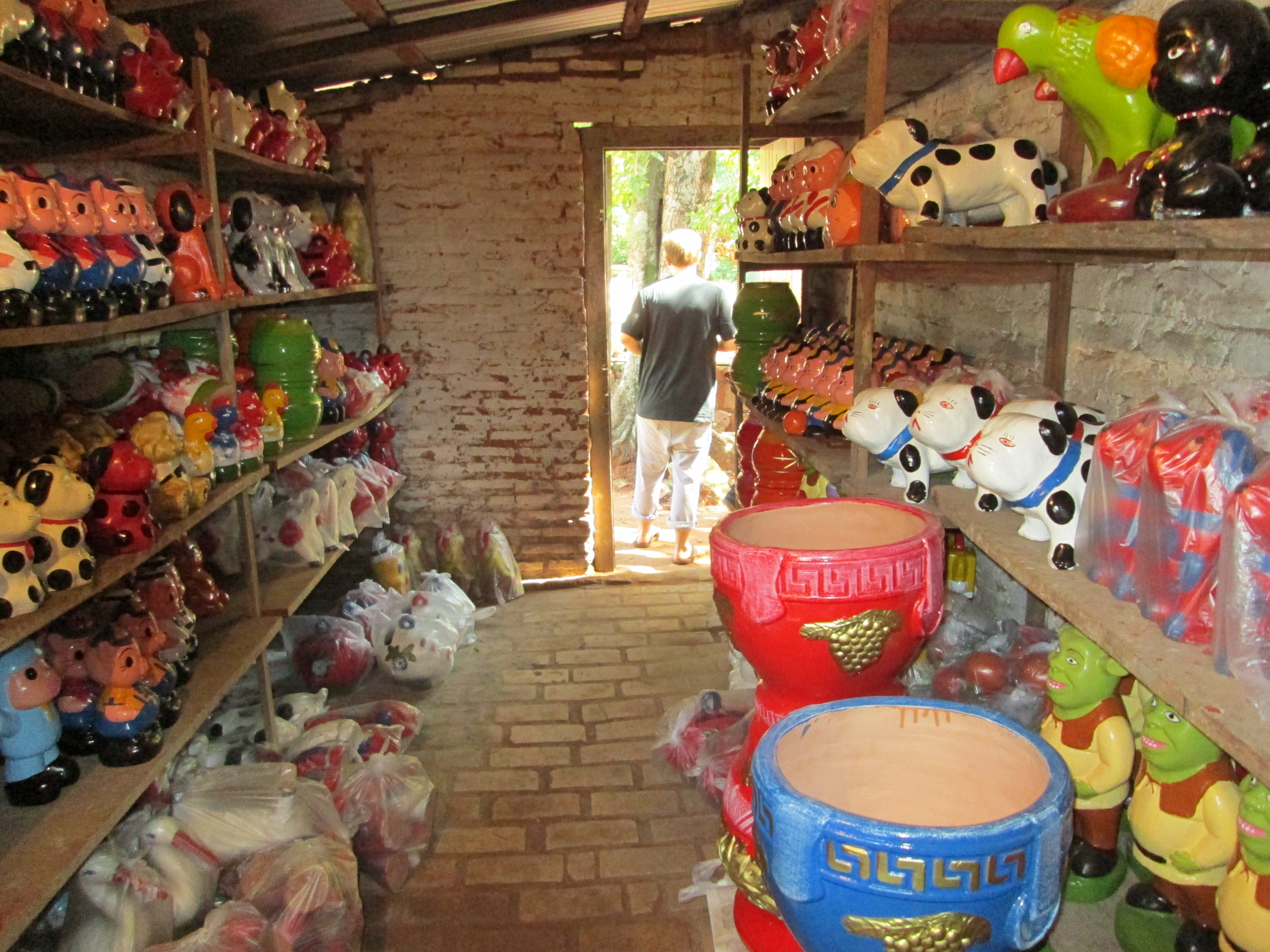
Ceramic figurines made in Aregua.

Ceramic figurines made in Aregua.

Lindo means pretty in Spanish. And while it means that in Paraguay too, especially when talking about people, it also carries a deeper meaning. I like to call it the “lindo factor.” Let me come clean from the outset, I love the lindo factor. Actually, it’s one of my favorite things about Paraguay.

In short, the lindo factor is the emphasis Paraguayans put on making things look nice. Lindo doesn’t just mean clean and it doesn’t mean hygienic (and in Paraguay clean and hygienic are not the same thing). The emphasis is on how things look overall.

Let me describe the lindo factor from within my American upbringing and then expand it to the Paraguayan setting. My mother has always been keen on keeping the house neat, which to her means no dirt and no dust; things are put away in their places in an organized manner; and curtains, flowers, art, and other objects are strategically placed to make things look pretty.  In this context, the emphasis is on making things perfect. All this together, gives my mom’s house a serious dose of the lindo factor.

Now, in the Paraguayan context, as much importance is put on making things pretty and neat as in my mom’s house, but there isn’t the pressure to make things perfect.  There’s a lot of sand here in Paraguay so there’s always sand on the floor. There’s dust and spiders on the ceiling beams and the walls show dirt and water marks. Things like seat covers might be stained or slightly torn and the walls or doors might have children’s writing left over from the tender years. But, you will never walk into a messy Paraguayan home. There is a table cloth on the table, the floors are swept everyday, the dirt in the lawn is swept everyday, and sometimes you’ll find a ceramic figurine outside or a painting inside.  The first 3 feet of the trees outside might be painted white for no other reason than it makes them more “lindo.” Things might be piled on a table (because there are no drawers or shelves available), but nothing is left on the floor. Everyone in the house helps keep it clean.

The lindo factor is one thing that has made living in Paraguay easier for me. I’ve always felt that the neatness of one’s living space is a reflection of the neatness of her mind.

Cows in the Street

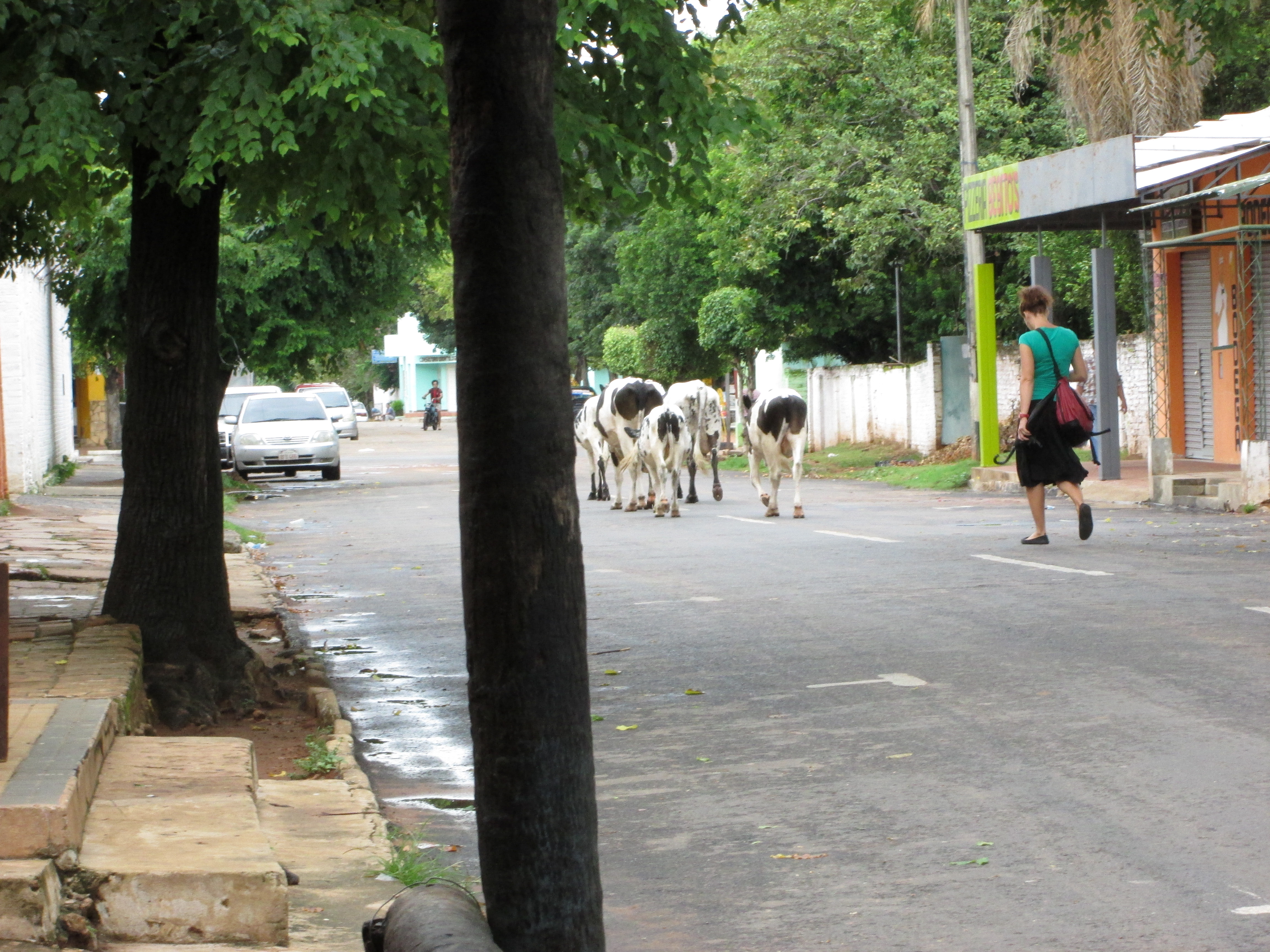
cows in the streetIf you can overlook the fact that everyone is not speaking English and you’re never entirely sure what is going on around you, Paraguay can seem a lot like the US, especially the rural US. However, contradictorily, you would never mistake your life in Paraguay for that in the US.

So what makes the two countries different? What makes Paraguay a developing country and the US a developed country? These are hard questions, but here are some observations about Paraguay I think illustrate some aspects of life here.

Infrastructure

  • Dirt bikes are the most common mode of personal transportation. Buses are a critical way of going farther distances or to areas where you don’t want to drive or park your dirt bike. Along with motor vehicles, you will see ox carts and horse carts on the road.
  • If it’s raining school and work may be cancelled. We are in the sub-tropics; a heavy rain will turn streets into rivers that are fast enough to carry a child away. Dirt bikes don’t have roofs to protect you from the rain.
  • On the walk from your house to the nearest supermarket, your eyes and nose may sting because people are burning trash. Most areas don’t have trash collection so some of the easiest ways to get rid of trash are to burn it or bury it.

Daily Life

  • Paraguay has it’s own soundtrack. A soundtrack that blasts from almost every house from morning to evening.  Have you every heard the Paraguayan polka?
  • Most people and houses are well kept. I don’t mean to say they are flashy, because they’re not. “Humble” and “neat” are some words that come to mind.
  • The tablecloth serves as a napkin for whipping your mouth and as a cover for the table and then a cover for food left on the table. It’s not uncommon for family members to share one or two glasses while drinking juice, soda, or beer.

Personal Interactions

  • In your community, everyone you pass acknowledges you with a greeting, nod, or smile. Most people in your community are related.
  • You don’t just do errands, but rather you have conversations with people while buying things. A lot of shopping can be done at house-front, mini general stores.
  • Children live with their parents until they marry. Siblings are likely to share beds and it’s not uncommon to have several beds in one room.

Animals

  • Dogs run free everywhere. They aren’t trained; they aren’t de-bugged; and they aren’t spayed or neutered.
  • Except in the city, there are a lot of free-range chickens.
  • You can sit at a bar in the middle of a medium-sized town and cows will wander down the street by you.