Traditional Dance

Girl DancersIf you (US resident) had a visitor from another country who had never been to the US before how would you show them what America is all about? What would you show them? What would you do? What would you eat?

I imagine those are the questions running through the heads’ of my host family members right now. They are also the questions running though my head, but from the opposite direction. How can I figure out what Paraguay is all about? What do I need to see? What do I need to do? What should I eat?

A buzzword for the Peace Corps is “assimilation” – the taking and understanding of another culture. It’s important to the Peace Corps because the assimilated volunteer is the successful volunteer. (We will avoid defining success right now because I wager I’ll post about that in a year or two).

How does one assimilate? That is the great overarching question of Peace Corps training. One thing I’m doing and several other trainees are doing to assimilate is learning traditional Paraguayan dance.

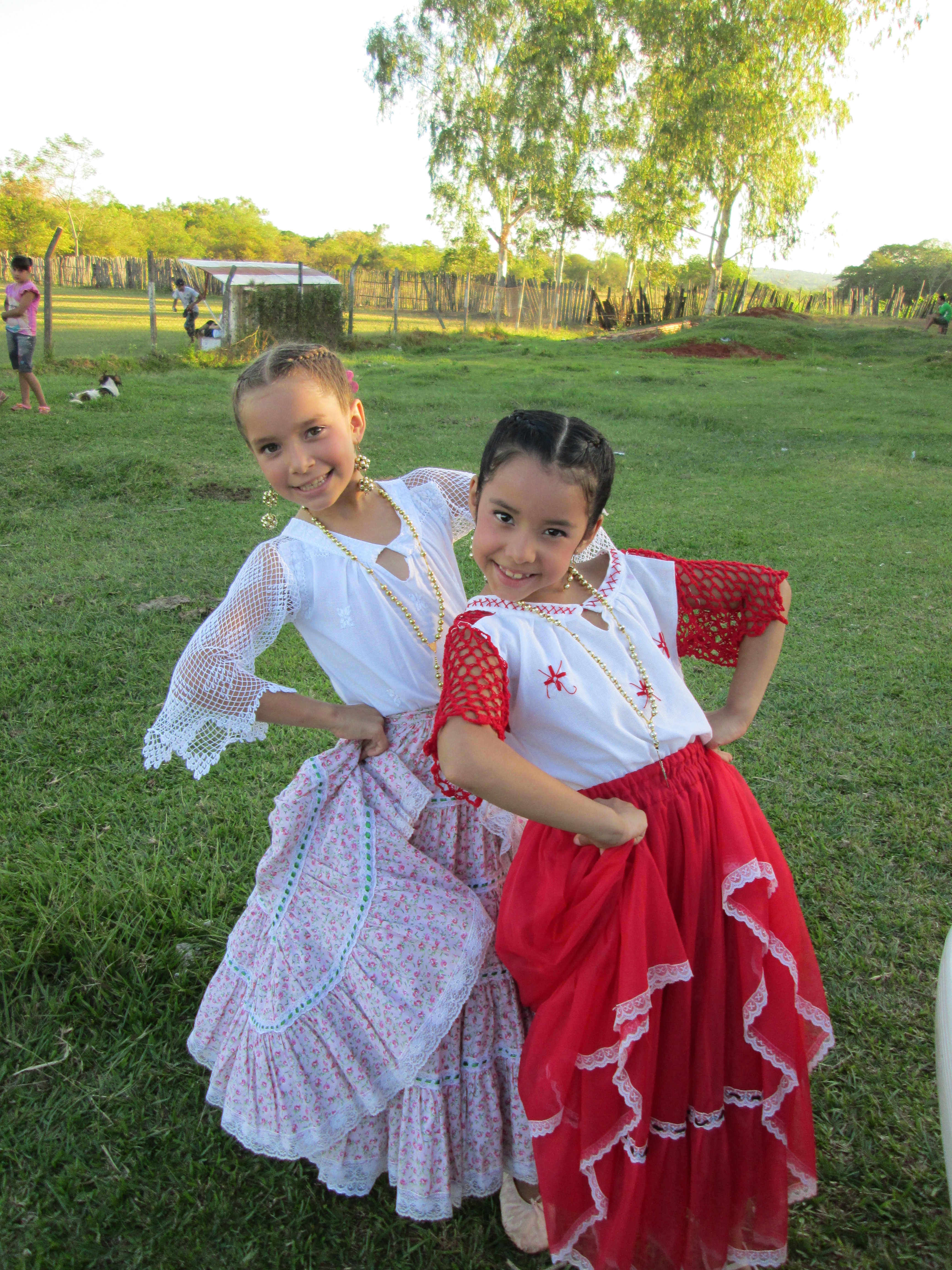
To me, the best part about traditional Paraguayan dance is the costumes. Women wear flowing skirts, embroidered and laced shirts, flashy earrings and cross necklaces, and braided hairdos. Men ware a white shirt and black pants, a bright, multicolored waistband, a handkerchief over their collars, and a straw hat. My least favorite part about Paraguayan dance is the music. At least right now, all the music sounds the same to me – a kind of patriotic march. The dance itself is neat.

Traditional Paraguayan dance reminds me of contra dancing in the US. Some dances are done with couples and others aren’t, but all (at least what I’ve seen and started learning) involve many people. There are specific steps and formations.

Saturday afternoons we have dance class. Several other volunteers and I joined girls and boys in our neighborhood for free dance lessons in a covered area next to the soccer field. The dance professor is good humored but serious.

For the same reason I like the harbors of Maine, I like learning traditional Paraguayan dance—to carry on and share the tradition and to remember all those who traced the steps before me.

First Site Visit

HouseLast week, I went on my first site visit. In pairs we (the trainees) traveled to a current volunteer’s site to learn about volunteer life. I was ecstatic to finally see a site after spending weeks discussing sites theoretically—it sunk in that in only a little over a month I too will live in a site of my very own.

Sleeping in, taking siesta, selecting my own food… my wonderful host spoiled me.

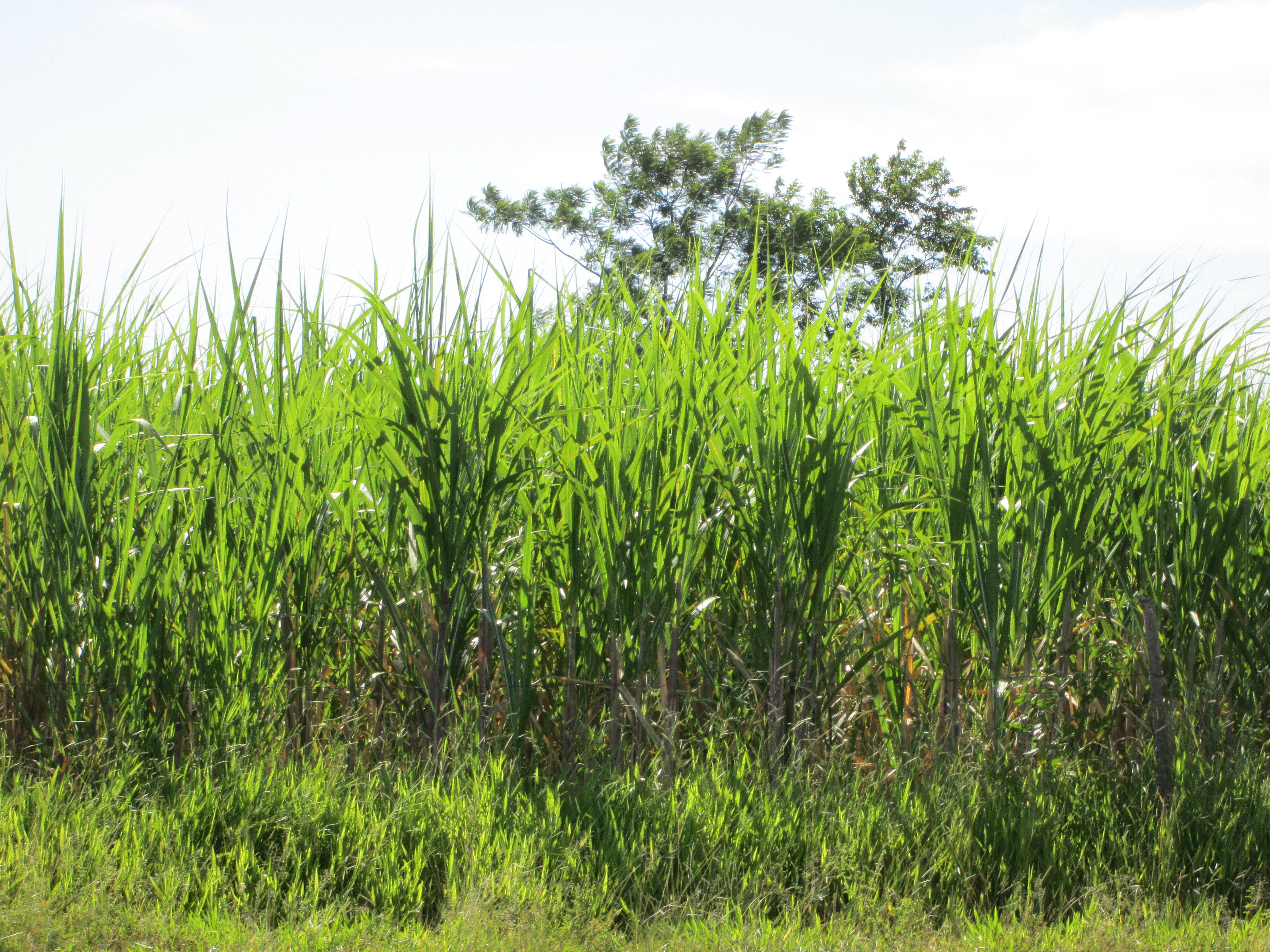
The visit shed light on the Paraguay beyond my training community. The department that I visited, Paraguarí, is green and tranquil. During the visit we hiked along a stream with little waterfalls, viewed the plains from a hilltop garnished with palms, and enjoyed the vibrant sugarcane fields.

Palms and ForestThrough the course of the visit two contradicting feelings bubbled through me: excitement and dread.

Daydreaming about what my house would look like was the root of my excitement. Seeing how my host had decorated her mud and brick house walls, stocked her kitchen with all kinds of goodies, and shared her space with an energetic cat I’m itching to get started with my own homestead in Paraguay.

Sugar caneDread came from an entirely different place: reality. Despite my host’s positivity there are slow times (no tangible work) and hard times (rumors, gossip, etc.) between the rewarding times (little victories). The visit showed that we volunteers are not in control of our work. As a volunteer we have a responsibility to put ourselves out there, build relationships, offer our ideas, lend a hand, but in the end all projects, work, and relationships come back to the Paraguayans of our community. What I mean to say is that pure desire to work hard doesn’t guarantee that you will accomplish any project that you can report on—a project that has numerical results (i.e. things produced). Being a volunteer is the epitome of teamwork, you have to trust and work with others of a culture you are still learning to navigate.

I returned from the site visit with the vision that I’d be trapped in a rainbow for the next two years—caught in the rain and the sun at the same time.

Asunción

AsunciónI traveled using the buses to Asunción for the first time on Wednesday. The other trainees and I were divided into pairs and tasked with getting to Asunción and to several locations throughout the city.

It was an adventure.

I left my house around 5:40 a.m. and met with several other volunteers to walk to the town center were we would meet our travel partners and catch our first bus.

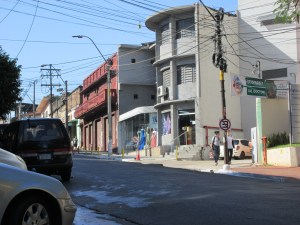
The bus started comfortably full, but with every lurching stop there was less space as more people climbed onto the bus. Out the window I saw brink and stucco houses, some painted bright colors and others lighter hues of dirt. I read the painted signs on some—many faded or dented—of the house-front shops: “Coka-Cola,” “ice cream,” “ice” they declared. The breeze from the bus’ motion and the early start dampened the descending heat as the sun rose inch-by-inch.

People sitting slept with their bags clutched close and their heads against the windows. A man and woman standing behind me talked about a Peace Corps volunteer who lived with the woman—or maybe had lived with her in the past—the woman only said good things and I didn’t have the chance to see her face.

If it weren’t for the tightness of my calves from bracing against every jolt of the breaks, it wouldn’t have been as apparent that the ride was over an hour.

The traffic buzzed and the heat settled as we entered the outskirts of Asunción. Soon, I saw it, the bus terminal. It was the first stop on our journey. We needed to change buses.

We crowded onto another bus—the one that would take us to our first Peace Corps-assigned stop, a major market called Marcado 4. My host parents told me that I’d know when we got to the market because there’d be tons of stands and shops. There are very few signs, including road signs, in Asunción. Joyfully, I discovered my host parents were right: The market was obvious.

Marcado 4 had just opened. It wasn’t an open-air market and it wasn’t a mall. It was a warehouse divided into floors, each floor a winding maze of stands. Around the warehouse were more stands that opened onto the street but also to the inside of the warehouse. It was divided by theme. Bright shirts, sequin-encrusted tops, and selves of sandals shouted from the windows; deodorant, toothpaste, and soap piled high on crates; baskets of dog food, cat food, and herbs fouled the air with their pungent smell.

I bought cookies to tide me over until lunch. The market was still just waking up, but young women were already sitting outside the nail polish store. The women of Paraguay don’t just paint their nails—they turn their nails into art and change their color almost as often as their outfits.

We passed two men sawing the ribs off a side of beef and another man grinding up herbs with a pestle and mortar. My travel buddy and I spoke in our fragmented Spanish as we reviewed our assigned tasks and planned our next steps. We were looking for dental hygiene products.  Toothpaste was easier to find, but toothbrushes were harder. I’ve yet to find dental floss, though people tell me it’s sold in supermarkets and in pharmacies. Our Asunción missions were related to dental hygiene because it is an important health topic in Paraguay. Many people here don’t brush their teeth regularly and dental care is expensive—as a volunteer I could help educate children about teeth brushing and why it’s important.

Our next stop was Paraguay’s Ministry of Health, specifically the dental and mouth division.  We thought we found the building easily and sat in the shade, to wait. We were early. The ministry lives in a series of yellow buildings ranging in size and style. We wandered around the first building until we found someone who could help us. She said to go to a different building…two buildings later we finally found someone who could tell us where to find the person with whom we were supposed to talk.

We found our contact (well she actually found us, we must have looked lost) outside among a bunch of ministry vans. The vans are used to help people in really rural areas of Paraguay get medical treatment. Our contact was a doctor in the dental and mouth division of the ministry. She is an energetic woman with a large smile. She talks very quickly.

The ministry has three main dental health programs and materials that we could request to help with dental health trainings. All requests must be submitted in writing.

After our brief, though thorough, discussion of the ministry’s offerings and the doctor’s suggestions for how we could tackle dental health when we become volunteers, we were back on the street.

It was early and we were hungry so we popped into the closest, cheap eatery we found. It wasn’t glamorous, but they had one of the cleanest public restrooms I’ve used anywhere. I had a sandwich and yogurt. Did you know in Paraguay yogurt is often more liquid than solid. You eat it by drinking it, not with a spoon.

We wandered around trying to find the corner where we were supposed to catch our final bus. The directions made it sound easy. It was only a couple of blocks away, but somehow we couldn’t find it. We asked for directions. In Paraguay, I’ve been warned, people will give you directions if you ask even if they don’t know where the place about which you asked is. Because of this, it is advised that you ask for directions from more than one person.

We broke this rule. We ask one woman and then waited at the bus stop she was at, as she recommended. Luckily, at about the time we were starting to think maybe we should ask someone else she gave us different directions. Just like that we found the corner and were on our last bus.

The ride to the Peace Corps office, our last stop, was simple. We passed a soccer stadium and the United States embassy along the way. We heard about a brochure that had complete information about getting around Asunción and a man sing what may or may not have been a traditional Paraguayan song.

The Peace Corps office is in a compound, but once inside the buildings themselves are unassuming. Most importantly, the office has air conditioning. My group was the first to make it to the office…we were an hour early. The Olympics were on, and we even got to see some figure skating.

One mission down. Countless to go.
5 Favorites and 5 Challenges

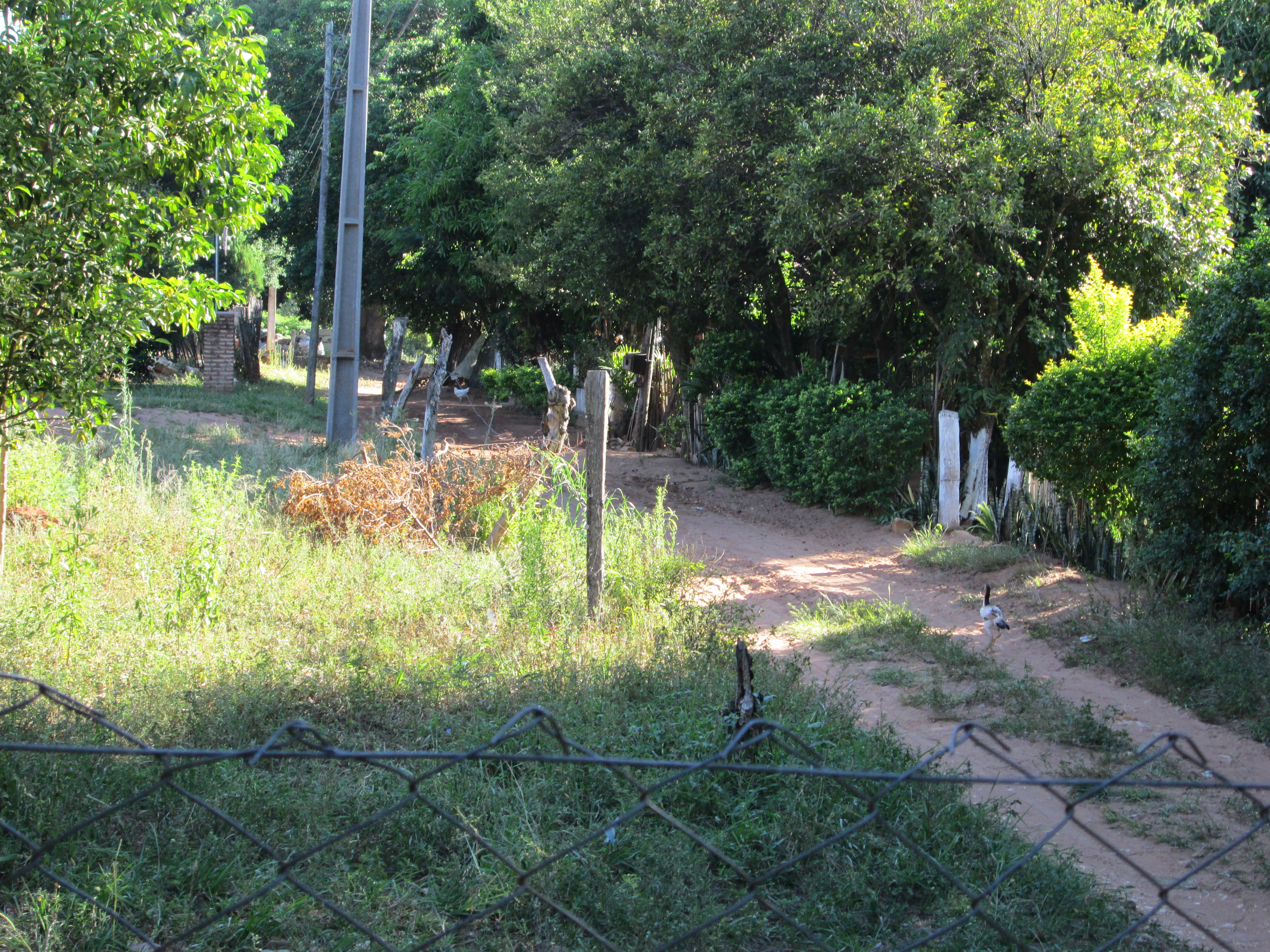
Paraguay road I’ve been in Paraguay almost two weeks. It’s hard to believe—it feels like a LOT longer! Each day is a roller coaster of new things and things that appear familiar and at the same time strange.

My 5 favorite things about Paraguay so far:

1. My Paraguayan welcome

I have a host family, Paraguay PC staff, and whole community welcoming me and supporting me as I try (not without hilarious misstep) to learn Guaraní and learn how to assimilate into Paraguayan culture. My language professors go out of their way to give me tips for communicating with my family and my family members repeat themselves a million times as I learn.

2. Tropical fruit actually grows on trees

Yep, that’s right, my neighbor has a mango tree and we have oranges, grapefruits, and lemons (not to mention all the wonderful fruits whose names I haven’t learned yet).

3. Learning about a new culture

The thing about the PC is you’re not just trying to learn about the culture of your country of service, you are trying to know it well enough to operate within the system. This is frustrating, no doubt, but it’s neat when you realize you are flexible enough to adapt your life to fit a different mold.

4. Other volunteers

Every person in my volunteer class has an interesting and unique story. This is particularly cool because despite our diversity we have something in common: We agreed to leave whatever we were doing to come to Paraguay.

5. Time to reflect

There is a lot of time to just sit, stare at the lawn, and drink tereré. Sitting time is thinking time and it’s nice to have time to think built into daily life.

The 5 most challenging things about Paraguay so far:

Children practicing traditional dance.

Children practicing traditional dance.

1. The heat

It’s too hot to think or move several hours a day.

2. Guaraní

It’s a unique language. The challenge is learning new words and how to make new sounds. I anticipate many stumbling conversations in the coming months and years.

3. Pace of life

While it’s nice to have plenty of time to reflect, life moves a lot slower than it does in the US. Coming from a city, I will need to creatively come up with ways to stay busy after training.

4. Adjusting to a new culture

Did you know the typical greeting wave of the US (made by keeping your hand upright and moving fingers up and down) doesn’t mean “hi,” it means “come”? Did you know that in Paraguay dogs are kept as guards, not really as pets? These are just several examples of the many small things that make life different here.

5. Availability of things

Tampons and candy bars, no you can’t just find them at the corner CVS. I’m slowly learning about all the little stores in my community. I visited the one “large” supermarket the other day. There is nothing like the box stores you’ll find in a US strip mall here and nothing like the variety you’ll find in the shampoo aisle of Walgreens.

Open Hearts, Heat, and Carbs

Open Hearts 

We fit in the bus!

We fit in the bus!

The people of Paraguay are what make the country wonderful.

For training (about 10 weeks) I’m living with a host family of seven – a father, a mother, two sisters around my age, one sister and one brother about 10 years younger than me, and a much younger sister.

I feel like a long-lost cousin—one that wasn’t born in Paraguay but has always been part of the family. My family makes me feel welcome and included even though I don’t know Guaraní (Spanish has been a great bridge) and I know few of the social norms of Paraguay.

In Paraguay you say “hi” to people when you walk by and it’s not strange to look at people as you pass them. It’s the small town of New England without the icy edge of New Englanders. News travels fast and everyone has countless cousins. The most practiced pastime is sitting with family and friends while chatting and drinking tereré.

It’s Hot

A classroom

A classroom

Paraguay is hot. It’s the kind of hot where doing nothing but sitting and drinking tereré for hours makes a whole lot of sense. It’s the kind of hot where you don’t want to sit on plastic lawn chairs. It’s the kind of hot that a fan can barely tamper. It’s the kind of hot that makes you understand why the Paraguayans are described as tranquilos (calm)—because it’s just to darn hot to be anything else.

Carbs, Meat, and Fat

In the US we blame a (large) portion of our battle with non-communicable diseases, like diabetes and obesity, on processed food. And, while the Paraguayans I’ve met don’t eat many processed foods, I can’t say the average diet here is much healthier – enter the carbohydrates, meat, and fat. Most of the traditional foods in Paraguay are heavy in carbs (especially corn and mandioca) and involve frying or fat is some other way…and red meat. And, much like processed food they are quite delicious (“rico” in Spanish).

One of my trainers did a good job of putting the diet into prespective. The trainer mentioned that many of the foods served Paraguayans well when they were working long, hard days in the fields. But, now that life has changed and things are easier the calories aren’t needed anymore. Things, like food, that have a deep cultural connection evolve a lot slower than society moves into modernity.

Some traditional foods

Mandioca – boiled

Mandioca


Sopa Paraguaya – a type of corn bread with cheese

Sopa Paraguaya


Tortillas Paraguayas – fried flour, eggs, milk, salt, and veggies

Tortillas Paraguayas

Intro: Peace Corps and Paraguay

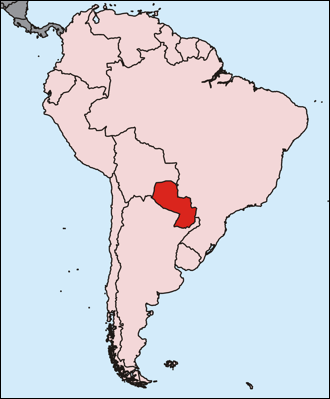
Paraguay is in South America - Wikimedia Commons

Paraguay is in South America – Wikimedia Commons

I leave the USA to start my Peace Corps service in Paraguay in 3 days. I’m excited and starting to get butterflies in my stomach.

Before I’m in the thick of things, I wanted to share answers to common questions people have asked about the Peace Corps and Paraguay as I’ve been saying my goodbyes.

About the Peace Corps

By joining the Peace Corps I’ve committed to 27 months of service in Paraguay as a community health volunteer.

During the first 3 months, I will live with a host family in Asunción, the capital of Paraguay, and attend training most days during that period. The training will cover language, culture, and project-related information (in my case health).

About 8 weeks into training, I’ll find out where in Paraguay I’ll be serving my 2 years (my site). I won’t know exactly what I’ll be doing until I arrive at my site because I’ll work with my site community to determine with which project(s) they would like to me help.

About Paraguay

Paraguay is a landlocked country in South America. Paraguay is:

  • About the size of California.
  • Bordered by Argentina, Bolivia, and Brazil.
  • Divided by the Paraguay River—97% of the populations lives in the east half of the country.
  • Subtropical to temperate with grassy plains and wooded hills in the east and marshy plains and dry thorny shrubs in the west.
  • Pretty dang hot in the summer and mostly above freezing in the winter.

Paraguay has a population of 6,623,252 (July 2013 est.). Paraguayans are:

  • Mostly bilingual. The two languages widely spoken in Paraguay are Spanish and Guaraní.
  • Mostly mestizo.
  • Mostly Roman Catholic.
Paraguay - Wikimedia Commons

Paraguay – Wikimedia Commons

Paraguay is a constitutional republic. The current president is Horacio Cartes. He took office in 2013 and the next presidential election is in 2018. Some key historical events include:

  • 1525: Alejo García, a Portuguese explorer, discovered the region.
  • 1537: Explorer Juan de Salazar y Espinoza established a fort on the Paraguay River, founding Asunción.
  • 1607-1768: Jesuit missions operated and helped protect the indigenous people, the Guaraní, from Spanish brutality.
  • 1811: Independence from Spain.
  • 1864-1870: War of the Triple Alliance. Paraguay fought against Brazil, Uruguay, and Argentina and lost upwards of 60% of its population.
  • 1932-1935: The War of the Chaco. Paraguay fought against Bolivia.
  • 1954-1989: Dictatorship of Alfredo Stroessner.
  • 1989: Coup ending Stroessner’s rule and beginning a period of Colorado party presidents.
  • 2008: Fernando Lugo was elected president whereby ending the Colorado party’s 60-year rule.

Some facts I find interesting about Paraguay:

  • There are 799 airports in Paraguay, 15 of them are paved.
  • Paraguay’s national symbol is the lion.
  • Paraguayans drink a lot of tereré, which is a kind of iced tea drank from a communal cup.
  • The polka (different from the European polka) is one type of popular music in Paraguay.
  • Some of the animals that live in Paraguay are the jaguar, maned wolf, giant anteater, armadillo, caiman, toucan, and macaw.

Sources:

Packing

Packing for Paraguay presents an interesting puzzle. How little can I bring and still have everything I need?

Thinking about what I will need to live over two years in a country I’m still learning about is daunting. But, more than anything, I just don’t want to over pack. The whole process has become a bigger existential exploration of what is necessary for me to live.

The more I think about packing, the more I feel like my pile of to-be-packed things is too large and I’m approaching the whole thing the wrong way. I’m not going to outer space. I will be able to get most things.

I’ve pondered, I’ve asked questions, and I’ve researched.  I’ve gotten great ideas and support from current and returned Peace Corps volunteers, Peace Corps pre-departure materials, other soon-to-be volunteers preparing to leave, and friends and family.

I think it all boils down to five key points:

  1. It’s hot and rainy in Paraguay.
  2. Make sure I have nice clothes. Dress in Paraguay isn’t about individualism; it’s about respect for the people around you. How “nice clothes” is defined is up for debate.
  3. I’m not going to be camping, but I’ll want camping basics.
  4. I’ll want electronics for work and connectivity, but I shouldn’t overdo it.
  5. Paraguay = high context culture, so bring pictures and gifts to help share about myself and build relationships.

With departure from home 15 days away and departure from the United States 16 days away, I feel ready. I just need to repack my bags…packing most things a month early turned out to be too soon.

Getting Ready for Departure – DC Chapter

I’ve been thinking a lot about finishing chapters, saying goodbye, and opening new doors. In twelve days I leave DC, perhaps for good. I’ve lived in DC for over five years, and I’ve enjoyed it. But, I’m not sad to leave. The truth is I’ve never been sad to leave anywhere.

Departure is often charged with foreboding. It signals a change from the way things have been to something else unknown. Often departure brings with it a sense of discomfort and sadness. Moving away from your family or friends means you won’t see them as much as you did. It means your habits and routines are going to change and so to will the habits and routines of your friends, family, and coworkers.

Change is hard; it inherently bucks the status quo. But change—taking the leap, trying something new—is the only way I’ve ever found you can truly push yourself to the next level. Maybe it’s just that I like to test myself, but I am always drawn to the things that challenge me most. I often pursue the next steps that are so difficult and different for me that they are scary. Yet, I’m a cautious person. I ask a lot of questions. I think about scenarios. I make contingency plans for those scenarios and for the likely event that those scenarios won’t occur.

I don’t think goodbye is the end. We often place a lot of value in geography—mostly proximity. And while living close to where you work makes sense, and perhaps is necessary for your sanity, living close to the people you care about is not a requirement. I’d say it’s a luxury. If you care about someone you will make time for them. Today there are so many ways to make time for people that don’t require you to be in the same room all the time. I won’t list them, but here’s a hint—Internet and telecommunications. Don’t get me wrong, face time is important. But just because I move doesn’t mean I forget about you. For me, our friendship is more than convenience.

I don’t know what the next step, going to Paraguay, is going to bring. As a planner this drives me crazy. But, I also trust my gut. My gut tells me this is the right thing, and my gut has never been wrong. Sometimes I don’t listen to my gut feelings; sometimes I ignore them. But in the end, I usually come around and realize that things would have been a lot simpler if I had listened to them in the first place.

I’m excited to leave. I can’t wait. I will miss you, everyone who has made DC amazing. I won’t miss you in a pining way or in a sad way. But I will think about you often, what you said and the times we shared together. I’m not so foolish as to think things will be the same once I leave—but, I do think our friendship will continue to grow. Thanks for supporting me as I cross this new threshold; it’s going to be hard and I need you.

Next stop is Vermont. Then I’m off to Paraguay!

Carrying Health Messages Beyond Behavior Change

In October, I attended a George Washington University Communication & Marketing symposium titled “Frontiers of the New Social Marketing” presented by Dr. Craig Lefebvre a professor at the University of South Florida. Lefebvre discussed the complexity of public health problems, and how solutions to those problems are equally complex. He summarized the evolution of theories of change from the “Stages of Change” model to the “Social Networks” model. He argued that the social networks model should be the main framework for social marketing—and that social marketing is behind corporate marketing (by a lot).

What struck me most was what Lefebvre called the “OOBE” or the “out-of-box experience.” The OOBE is the experience you have after you’ve taken the desired action a marketing campaign (social or otherwise) was designed to convince you to take.

Lefebvre provided a simple example, the iPhone. When you buy a iPhone you take it home. The packaging is neat and when you open it the charger and directions are nicely place by the phone. In a matter of minutes, you are well on your way to setting up your phone. You are happy and you tell your friends about your great new phone. You use your phone a lot and love it. Compare that to an unnamed other phone. You buy an unnamed phone and bring it home. When you open the package you can’t find the instructions, and there isn’t a charger. An hour later, your phone still isn’t set up and you’re annoyed. You tell your friends how annoying it was to set up your phone. You use the phone and  maybe you like it, but you might buy a different phone next time.

In this example, the iPhone won the OOBE. Both companies got you to buy their phone, but by winning the OOBE Apple won not only a new customer, but also a loyal one who believes in their product. Why is this so important? There are two reasons.

  1. People don’t talk about the research they did to find the right phone or where they bought their phone. People talk about their experience with and enjoyment (or hate) of their phone.
  2. Creating a great OOBE helps sustain the action your original marketing campaign was trying to produce. You bought the iPhone and you love it. Next time you need a phone, or maybe another electronic device, you’ll look first at Apple products.

Right now, public health campaigns leave out the OOBE. Campaigns tell you to stop smoking, eat less, exercise more, avoid this, do that…but what happens if you actually do take the action the campaign asks you to take? Nothing. There are no rewards and no one says, “Great job, keep it up.” Those who take the desired action are checked off, forgotten.

You might say the reward for listening to a public health campaign is better health. That’s true, better health is an amazing thing. But, quitting smoking or eating less or exercising more doesn’t provide instant, tangible results and in most cases comes at a price. It’s hard to quit smoking because it’s addictive, and maybe your life is centered on the social aspect of smoking. It’s hard to eat less; food is so good and there are so many options. It’s hard to exercise, everyone’s busy and sometimes you just don’t want to get sweaty. Summary: Even after you make a healthy change there is a chance that you will revert to your old ways. You’re not necessarily sold on the new “product.”

So the question is, how can public health professionals create an OOBE experience? How can they sustain behavior change after initial action is taken?

Let me offer one example of a health program I think does create an OOBE: Alcoholics Anonymous (AA). I know some people find the AA philosophy controversial, but here I am not interested in the philosophy or method but more the structural model. AA is life-long. You are welcome at AA meetings when you are trying to stop drinking; when you are struggling to avoid relapse; and when you’ve been sober for one month, five years, or two decades. You are always welcome. People at the meetings are at varying stages of recovery and sobriety. The community is always there. There are coins that mark that you’ve made it to certain stages or lengths of time. You have a mentor. The OOBE is the sustained support and the opportunity to use your success to help others achieve the same thing.

Social marketing has a lot to do to catch up with marketing. But most important, especially with the rise of chronic diseases, is finding and creating the OOBE to help those who do take action, maintain their healthier choices.

Empathy – Critical and Elusive

Helping others is dependent on your ability to be empathetic, not just your knowledge and skill. In the world of health this may seem obvious, however empathy often gets lost in the complexity of the health care system.

I began pondering the sometimes dire absence of empathy in health care after watching Peter Attia’s TED Talk “Is the obesity crisis hiding a bigger problem?.” In his talk Attia discusses the practice of blaming obese patients for their health and questions the current way we think about obesity. He starts the talk with a story about a patient whom he treated. He explains that he provided exemplary medical treatment but failed as a person. He says he failed as a person because rather than being empathic he subconsciously blamed the patient for her condition.

In today’s U.S. culture it’s easy to blame people for health conditions like their weight; it’s easy to blame them for all their unhealthy choices. But, what does blaming achieve?

A large portion of my current work is in substance abuse prevention. Empathy is sometimes so hard. When I read the latest horror story about drug use, it’s hard to stop thoughts like “How can ANYONE start meth? There’s just no upside.” But, thoughts like that don’t help prevent anyone from using drugs and they certainly don’t help people trying to recover from addiction. Again, it’s so easy to blame people for using drugs. But if we want to help we must get beyond the finger pointing. We must acknowledge that we are trying to help individual humans, and that those individuals are struggling. Their struggle is their own, but we do not have to be another barrier, we can be a positive force.

I was struck by the power of empathy after watching Eleanor Longden’s TED Talk, “The voices in my head.” She talks about her struggle with schizophrenia. When she was first diagnosed it seemed her world would end. However in her fight for peace she got help from someone who told her she could work with the voices in her head. He believed in her and her ability to lead a safe and happy life. He was right. She was able to master the voices in her head. By simply offering support and understanding he changed the course of her recovery.

Health is charged. Health is mysterious. Empathy is simple. But in its simplicity it is easy to overlook. Don’t.