Getting Ready for Departure – DC Chapter

I’ve been thinking a lot about finishing chapters, saying goodbye, and opening new doors. In twelve days I leave DC, perhaps for good. I’ve lived in DC for over five years, and I’ve enjoyed it. But, I’m not sad to leave. The truth is I’ve never been sad to leave anywhere.

Departure is often charged with foreboding. It signals a change from the way things have been to something else unknown. Often departure brings with it a sense of discomfort and sadness. Moving away from your family or friends means you won’t see them as much as you did. It means your habits and routines are going to change and so to will the habits and routines of your friends, family, and coworkers.

Change is hard; it inherently bucks the status quo. But change—taking the leap, trying something new—is the only way I’ve ever found you can truly push yourself to the next level. Maybe it’s just that I like to test myself, but I am always drawn to the things that challenge me most. I often pursue the next steps that are so difficult and different for me that they are scary. Yet, I’m a cautious person. I ask a lot of questions. I think about scenarios. I make contingency plans for those scenarios and for the likely event that those scenarios won’t occur.

I don’t think goodbye is the end. We often place a lot of value in geography—mostly proximity. And while living close to where you work makes sense, and perhaps is necessary for your sanity, living close to the people you care about is not a requirement. I’d say it’s a luxury. If you care about someone you will make time for them. Today there are so many ways to make time for people that don’t require you to be in the same room all the time. I won’t list them, but here’s a hint—Internet and telecommunications. Don’t get me wrong, face time is important. But just because I move doesn’t mean I forget about you. For me, our friendship is more than convenience.

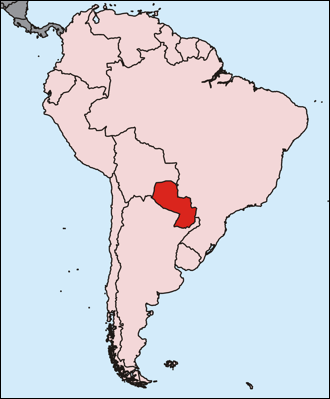
I don’t know what the next step, going to Paraguay, is going to bring. As a planner this drives me crazy. But, I also trust my gut. My gut tells me this is the right thing, and my gut has never been wrong. Sometimes I don’t listen to my gut feelings; sometimes I ignore them. But in the end, I usually come around and realize that things would have been a lot simpler if I had listened to them in the first place.

I’m excited to leave. I can’t wait. I will miss you, everyone who has made DC amazing. I won’t miss you in a pining way or in a sad way. But I will think about you often, what you said and the times we shared together. I’m not so foolish as to think things will be the same once I leave—but, I do think our friendship will continue to grow. Thanks for supporting me as I cross this new threshold; it’s going to be hard and I need you.

Next stop is Vermont. Then I’m off to Paraguay!

Carrying Health Messages Beyond Behavior Change

In October, I attended a George Washington University Communication & Marketing symposium titled “Frontiers of the New Social Marketing” presented by Dr. Craig Lefebvre a professor at the University of South Florida. Lefebvre discussed the complexity of public health problems, and how solutions to those problems are equally complex. He summarized the evolution of theories of change from the “Stages of Change” model to the “Social Networks” model. He argued that the social networks model should be the main framework for social marketing—and that social marketing is behind corporate marketing (by a lot).

What struck me most was what Lefebvre called the “OOBE” or the “out-of-box experience.” The OOBE is the experience you have after you’ve taken the desired action a marketing campaign (social or otherwise) was designed to convince you to take.

Lefebvre provided a simple example, the iPhone. When you buy a iPhone you take it home. The packaging is neat and when you open it the charger and directions are nicely place by the phone. In a matter of minutes, you are well on your way to setting up your phone. You are happy and you tell your friends about your great new phone. You use your phone a lot and love it. Compare that to an unnamed other phone. You buy an unnamed phone and bring it home. When you open the package you can’t find the instructions, and there isn’t a charger. An hour later, your phone still isn’t set up and you’re annoyed. You tell your friends how annoying it was to set up your phone. You use the phone and  maybe you like it, but you might buy a different phone next time.

In this example, the iPhone won the OOBE. Both companies got you to buy their phone, but by winning the OOBE Apple won not only a new customer, but also a loyal one who believes in their product. Why is this so important? There are two reasons.

  1. People don’t talk about the research they did to find the right phone or where they bought their phone. People talk about their experience with and enjoyment (or hate) of their phone.
  2. Creating a great OOBE helps sustain the action your original marketing campaign was trying to produce. You bought the iPhone and you love it. Next time you need a phone, or maybe another electronic device, you’ll look first at Apple products.

Right now, public health campaigns leave out the OOBE. Campaigns tell you to stop smoking, eat less, exercise more, avoid this, do that…but what happens if you actually do take the action the campaign asks you to take? Nothing. There are no rewards and no one says, “Great job, keep it up.” Those who take the desired action are checked off, forgotten.

You might say the reward for listening to a public health campaign is better health. That’s true, better health is an amazing thing. But, quitting smoking or eating less or exercising more doesn’t provide instant, tangible results and in most cases comes at a price. It’s hard to quit smoking because it’s addictive, and maybe your life is centered on the social aspect of smoking. It’s hard to eat less; food is so good and there are so many options. It’s hard to exercise, everyone’s busy and sometimes you just don’t want to get sweaty. Summary: Even after you make a healthy change there is a chance that you will revert to your old ways. You’re not necessarily sold on the new “product.”

So the question is, how can public health professionals create an OOBE experience? How can they sustain behavior change after initial action is taken?

Let me offer one example of a health program I think does create an OOBE: Alcoholics Anonymous (AA). I know some people find the AA philosophy controversial, but here I am not interested in the philosophy or method but more the structural model. AA is life-long. You are welcome at AA meetings when you are trying to stop drinking; when you are struggling to avoid relapse; and when you’ve been sober for one month, five years, or two decades. You are always welcome. People at the meetings are at varying stages of recovery and sobriety. The community is always there. There are coins that mark that you’ve made it to certain stages or lengths of time. You have a mentor. The OOBE is the sustained support and the opportunity to use your success to help others achieve the same thing.

Social marketing has a lot to do to catch up with marketing. But most important, especially with the rise of chronic diseases, is finding and creating the OOBE to help those who do take action, maintain their healthier choices.

Empathy – Critical and Elusive

Helping others is dependent on your ability to be empathetic, not just your knowledge and skill. In the world of health this may seem obvious, however empathy often gets lost in the complexity of the health care system.

I began pondering the sometimes dire absence of empathy in health care after watching Peter Attia’s TED Talk “Is the obesity crisis hiding a bigger problem?.” In his talk Attia discusses the practice of blaming obese patients for their health and questions the current way we think about obesity. He starts the talk with a story about a patient whom he treated. He explains that he provided exemplary medical treatment but failed as a person. He says he failed as a person because rather than being empathic he subconsciously blamed the patient for her condition.

In today’s U.S. culture it’s easy to blame people for health conditions like their weight; it’s easy to blame them for all their unhealthy choices. But, what does blaming achieve?

A large portion of my current work is in substance abuse prevention. Empathy is sometimes so hard. When I read the latest horror story about drug use, it’s hard to stop thoughts like “How can ANYONE start meth? There’s just no upside.” But, thoughts like that don’t help prevent anyone from using drugs and they certainly don’t help people trying to recover from addiction. Again, it’s so easy to blame people for using drugs. But if we want to help we must get beyond the finger pointing. We must acknowledge that we are trying to help individual humans, and that those individuals are struggling. Their struggle is their own, but we do not have to be another barrier, we can be a positive force.

I was struck by the power of empathy after watching Eleanor Longden’s TED Talk, “The voices in my head.” She talks about her struggle with schizophrenia. When she was first diagnosed it seemed her world would end. However in her fight for peace she got help from someone who told her she could work with the voices in her head. He believed in her and her ability to lead a safe and happy life. He was right. She was able to master the voices in her head. By simply offering support and understanding he changed the course of her recovery.

Health is charged. Health is mysterious. Empathy is simple. But in its simplicity it is easy to overlook. Don’t.

Empower People to Take Ownership of Their Health

Public Health

The heated debate about U.S. health care focuses largely on health insurance and health care access. Of course, these two aspects are appropriate for the policy debate—there are few who would say our current system is optimal with regard to either, and many who say it’s not acceptable. But from a public health prospective, I can’t help but think of a slightly more humble part of the future of health in the U.S. –mainly the everyday tools everyday people can use to take ownership of their health. Two tools are of particular interest to me: the Internet and health tracking.

It’s not to say that Internet information or personal health tracking can replace medical professionals and their care, but it is to say that the health of the individual goes beyond medical visits and consultations with health care professionals. Many of us who do visit the doctor and the dentist may already know this—the forceful suggestions to exercise at least 4 times a week and to floss everyday remind us that maintaining our health is not just the responsibility of medical professionals.

It’s true that individual people can take ownership of their health on a daily basis. There are tons of health education initiatives trying to help people do that by providing them with information and specific steps they can take. What makes these initiatives both strong and weak is that they focus on one specific aspect of life that can improve health, like quitting smoking or exercising.

But, what if health education in the U.S. taught people how to find out about health conditions and healthy actions instead of focusing on disseminating the facts about conditions and healthy actions?

The Internet: A First Source of Health Information

According to a 2013 Pew Internet report, 35% of U.S. adults reported going online to try to diagnose a medical condition they or someone else had. Of these, 46% said their findings made them think they needed help from a medical professional and 38% said the condition was something they could take care of at home. In addition, 41% of the adults who used the Internet to form a diagnosis said that a medical professional confirmed their diagnosis.

What I find fascinating is that of adults who looked for health information online, 77% started their search on a search engine and only 13% said they started on a site that specializes in health information.

This leads to several questions:

  • How can we make the Internet, as a whole, a better source of health information?
  • How can we help individuals develop good online searching skills that will lead them to accurate health information online?
  • How can we make online health information easier to weed through?
  • How can we ensure that the most helpful, accurate, and credible sources of online health information come up when people search for health information?

Many health organizations are already putting health information online—not just research organizations but also doctor’s offices that allow you to view your medical records online.  But, putting information online is not enough. Empowering individuals to find health information on their own is going to also require helping people learn how to navigate the sea of information and creating tools that organize and sort that information.

Tracking Health: Health Empowerment

According to a 2013 Pew Internet report, 69% of U.S. adults track one or more health indicators (e.g. weight, exercise, or diet). Adults are more likely to track health indicators if they have one or more chronic health conditions. People have different ways of tracking these conditions—49% of adults reported tracking their health mentally, 34% reported tracking their health on paper, and 21% reported using technology to track their health.

What’s more, 63% of those who reported tracking their health also agreed with at least one statement of impact including: their tracking changed their approach to maintaining their (or someone else’s) health, caused them to ask their doctor questions or get a second opinion, and impacted a decision about treatment for a illness or condition.

Much like with Internet health information, personal tracking can provide individuals with knowledge about their health before they visit a health professional. The prevalence and impact of health tracking indicated in this report lead to several questions:

  • How can we help people become better at tracking their own health?
  • How can we develop tools to help people keep better track of their health?
  • How can we develop tools that not only track health but also provide analysis of the tracking results?

Access to technology can help individuals track their health, according to the same Pew Internet report one in five smartphone owners has a health app, but it’s not the only important piece to effective health monitoring. Providing people with the knowledge of what aspects of their health are most important to track and the skills to track those aspects with consistency is another key piece to the puzzle.

Health Ownership

Tools like the Internet allow individuals to find health information on their own and tools like health trackers empower individuals to monitor their own health. While online information and health trackers abound, the challenge with these tools is their usability and accessibility. The usability of these tools not only depends on the tools themselves but on individual’s skills and confidence in using the tools. The accessibility of the tools is about how an individual is going to find the tools when there is so much information online and so many different ways of tracking health.

As we look forward to improving public health, it may be worth shifting our focus from pushing information about specific conditions and actions to teaching skills that help individuals effectively find health information on any condition and track their health on their own.  It’s not enough to just push the facts, we need to empower individuals with health knowledge and skills so they can take ownership of their health.