Mindfulness

SkyI won’t live long enough to get sick of rainbows. Of Jacob’s ladders. Of sunsets. Sunsets with clouds puffed in pink against a purple glow, streaked is violet over a golden spread, and wisped in orange and gray across the fading blue of day and darkening navy of night.

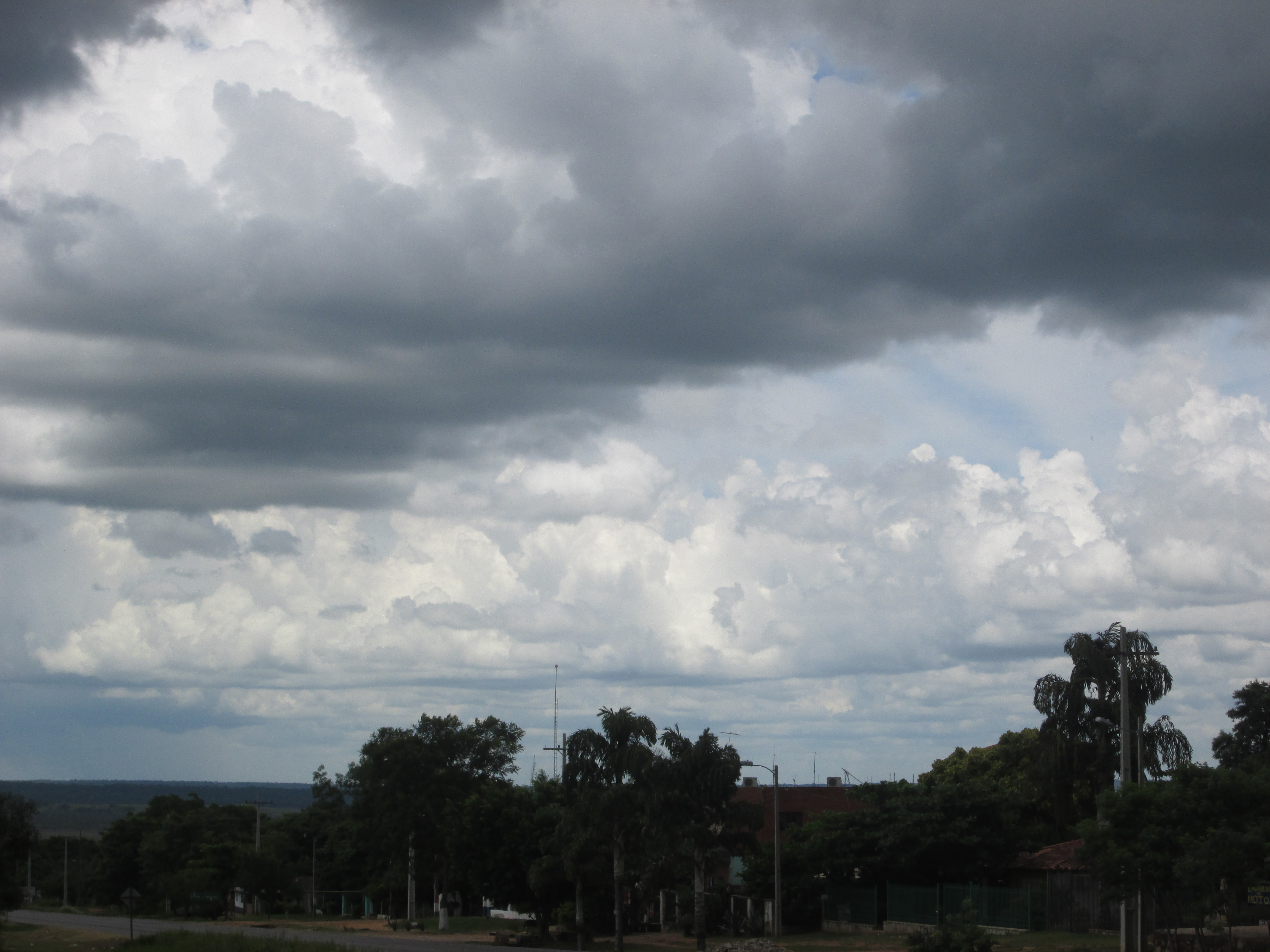
I don’t think I’ll tire of thunderclaps; the flash of lightening—veins across the sky—will never lose their thrill. I will always look forward to the rain. The first drops that make the dry ground let up little poofs of dust, the sideways no-way-to-stay-dry sheets mid-storm, and the mist before the sun returns.

I don’t believe I’ll ever know anything more beautiful than the stars on a clear moonless, lightness night or the orange moon glowing just above the treetops. I won’t live long enough to get sick of the magenta sunrise.

It pains me to think there might have been times when I was too harried, too busy to notice these things when they crossed my path. To be truly lost is to forget life distilled is sunbeams and water droplets.

Sometimes Being a Woman Isn’t Fun

ViewIf you’ve studied or spent time in Latin culture you’re probably familiar with the term “machismo” (strong or aggressive masculine pride). Someday I’ll probably talk about machismo in terms of Paraguayan men or relationships between men and women in Paraguay, but not today. Today the topic is how women talk about other women, and how it feeds machismo and everything else that’s disempowering to women.

In the States and in Paraguay you can gripe about or battle gender inequality, the complaints are justified and the fight is needed. But, when we talk about empowering women we often talk about one of two things: 1) giving women skills and tactics to get what they deserve, 2) teaching men to be less discriminatory toward women. We infrequently talk about how women treat and talk about other women, and that’s where we need to start.

I love so many things about Paraguayan culture and spending time with Paraguayan women, but there is one thing I detest and that is how critically and negatively Paraguayan women talk about other women. In truth, women bashing other women isn’t unique to Paraguay, but it is so blatant here that it directly influences almost everything women do. Women might critique other women’s weight, their dress, their house, their food, their children, their husbands…anything that can be blamed on someone could be the subject of scrutiny. I have yet to hear a conversation among women about another women that is devoid if negativism. The catty comments might be sandwiched between compliments but they’re there.

People in my community joke that women get dressed up to go to the soccer game to impress other women because the men don’t care. You might brush off women’s negative comments about other women as envy, and sometimes that is the root of it, but I think more often these comments stemmed from learned culture and are not based on insecurity.

We got to change this.

The Ruins: Marking Unexpected Victory

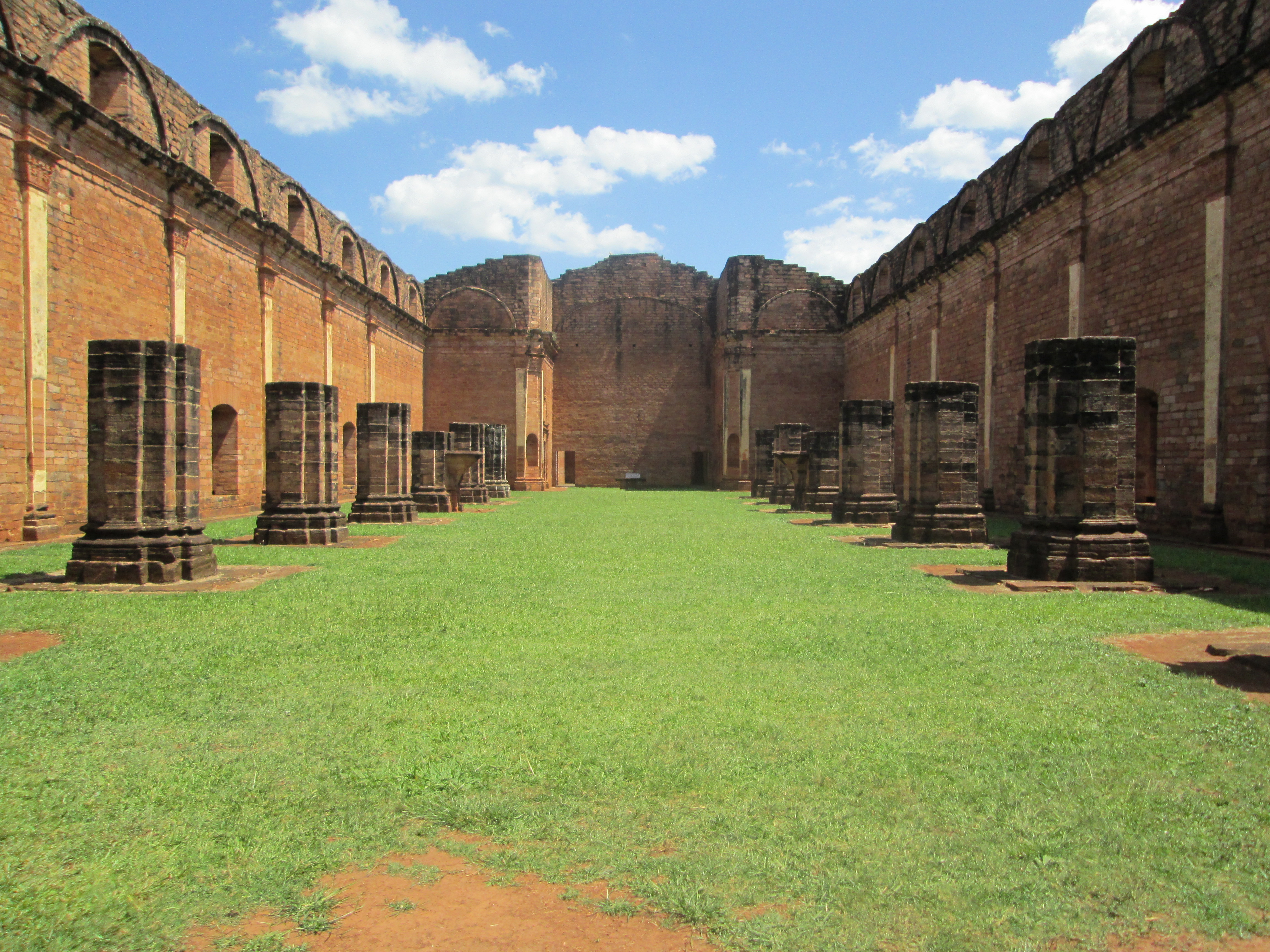
Jesuit RuinsThe Jesuits were in Paraguay from 1607 until 1768 when Carlos III of Spain kicked the Jesuits out of all of South America. The Jesuits are the reason Paraguay is still a bilingual country. They formed religious communities for the indigenous people the Guaraní (the most prominent indigenous group and language in Paraguay) that provided protection from slavery and preserved the language. It is doubtful that the Jesuits’ main mission was to preserve indigenous culture, but it is the greatest influence they’ve had on modern Paraguay.

I find the story of profound, unexpected victories inspiring.

In Peace Corps training, health volunteers in Paraguay, they told us not to lose hope if it seemed like we were having no obvious impact. As they liked to say, “You never know what good you’re doing.” If you’re into behavior change or prevention (of any kind) or life skills such uncertainty is familiar because “you can never be sure” is the bane of all those disciplines. Of course, “never” is a bit of an exaggeration, but measuring the impact of programs/materials/activities designed to change actions, to influence decision-making, or to empower individuals requires a longitudinal study that won’t be complete until many years after the fact and will be so dense that congressmen and other money-controllers won’t have time to read it and their underlings won’t want to read it.

I spend a lot of my time working with youth. The idea is to help them develop strong self-esteem, leadership abilities, and other skills so they make better decisions and will have happier lives. I often wonder if anything I do with the youth is going to be useful or influential in their lives. But, I am satisfied because I know my time in Paraguay will be like that of the Jesuits: I’ll never know the influence I had, the impact will be profound for someone, and it will be unexpected.

Mercy: Send Some AC, Please!

Jesus Jesuit RuinsTraveling to southern Paraguay


You people of the auto-land

Of the world where buildings have central air

Don’t understand the power of the sun

The wavering of heat waves hovering


A six-hour bus ride is no less than an eternity

Chest covered in salty droplets

Clothes sticking, stained

Air stale, heavy, traffic blocking the breeze


To sit is the greatest of toils

The thought of moving painful

You must drink water, but you’re on the bus

Bags piled around making it worse


Other passengers sitting too close

Someone else’s sweat

Don’t think about the history if your seat

No clothes are appropriate for such travel


Stay strong. You can do this.

You tell yourself such things

You try to sleep to forget the fact

That it’s summer in Paraguay and you’re traveling.

The Ghosts of Christmas (and Thanksgiving)

Thanksgiving MealThis Thanksgiving was the first I spent outside of the States. I ate a huge Thanksgiving dinner with turkey, gravy, and other common-fare Thanksgiving dishes with a bunch of other volunteers. It was joyous. It was hot—I spent hours diving into one of the 3 pools at our hotel. But, all cheer aside, it didn’t feel like Thanksgiving, and it doesn’t feel like almost Christmas. It doesn’t matter that I have a mock Charlie Brown Christmas tree and that several of my neighbors have blinking Christmas lights.

Don’t worry; to say I’m sad would be a gross error. After all, I will be doing new, jubilant things for Christmas. I’ll eat a ton of Paraguayan food and probably dance all night—that’s how the family with which I’m spending December 25 tells me they celebrate. This sounds like a smashingly jolly time.

So if it’s not sadness that squashed the holidays for me this year, what is it?

To start, Thanksgiving for me has always been a day to be thankful. Thankful for family, friends, delicious food, and everything that makes life great. The trouble is that this year Thanksgiving focused on hanging out with volunteers—good company but little thankful reflection. Conversely, when I’m in my site I am actively, consciously thankful for something on the daily. Being a foreigner makes me hyper-aware of the wonderful things about my native culture and adore the things Paraguay does better—I’m grateful about something everyday, whether it be recalling something familiar or learning something new. What’s more, Paraguayan culture has a fabulous way of appreciating the little things; and it’s contagious. My point: This year I didn’t need to set aside a day to give thanks, because it’s become daily routine.

Next, there’s Christmas. It’s not the location or the traditions; it’s the people who are missing. Christmas for me is a day where I’m guaranteed to see all my siblings and parents at the same time—it doesn’t happen any other time of year. I’m not seeing any of them, so it’s just December 25.

White

Jesus RuinsI thought I looked like a lot of Paraguayans—I have brown hair and I’ve tanned to be several shades darker than I was in the northlands. I sort of thought I’d done a good job blending. Nope.

I’m mostly German and Irish with a mix of other groups is my heritage. Before coming to Paraguay I didn’t stick out with my freckles and greens eyes, actually I was so nondescript in the States that I figured if I needed someone who had never seen me to pick me out in a crowd I’d just wear something interesting.

Paraguayans compliment me on my light skin. Recently, I was feeling very integrated at a birthday party. Then, several of my students who were at the party looked at me funny as I walked across what would later become the dance floor. I asked them why they looked at me that way and they told me my legs were pretty…because they are so white. I’ve never before been in the minority. It’s weird having a physical trait that people use to judge you—especially one over which you have no control.

It’s not uncomfortable when Paraguayans comment on my skin—they tend to ask if I’m German (in their minds all light-skinned people are German, just like all dark-skinned people are Brazilian)—because in Paraguay any physical aspect of your body can and is a topic of conversations. The number of times I’ve been told I’ve gained weight (or lost it) in Paraguay is mind-boggling.

It’s not something I think about all the time, but comments about my skin remind me that I’m not from Paraguay. They make me feel like an outsider. Usually the skin-color conversation concludes when Paraguayans tell me that white skin is pretty and I say that their skin is beautiful too and that I think I’ll be their color when my freckles blend together. They laugh. I don’t think Paraguayans would understand if I told them that tons of people in the State pay to go to tanning salons so that they can be the color of the average Paraguayan.

Why is light skin considered the ideal, even in regions where it marks an outsider? When we don’t look like the people around us, why do we have moments of doubt about whether or not we belong?

Changed

Campo RoadChange (to become different, transform) is such a simple word and such a complicated reality. It is said that each of us is constantly changing and that the world is in a continual state of transformation. Sometimes those processes of becoming different are quick and sometimes they are slow. Being in the Peace Corps makes your process of changing fall close to lightening speed on that scale.

When we have a set routine—an American style routine where every minute is assigned to a specific activity—we choke our opportunities for personal evolutions. It’s not so much the routine, but when we are too busy to break out of our normal daily activities to try new things and overcome unchartered challenges the metamorphosis of life is slowed.

People who excel in experiences like volunteering for the Peace Corps, are people who embrace change. By becoming volunteers, my peers and I threw everything we had and knew to the wind to try something that we had never done and could not understand until we landed in Paraguay. (And to be honest, we are still figuring out what it means to be a volunteer in Paraguay. For example, something that would NEVER happen in the States occurs every single day).

I’m 10 months in Paraguay and counting. Ten months is also known as: 2 college semesters, one high school year, and the time a baby is in the womb (remember babies should be in the oven for at least 39 weeks). In the grand scheme of things, 10 months is a snippet of time. But, I’ve changed as much in these 10 months as I did during college (maybe more depending on what aspect of my life at which you’re looking).

Peace Corps is fertile ground for self-growth. Some of the fertilizers are:

  • We have many hours by ourselves during which self-reflection and contemplation of the meaning of life is inescapable.
  • Every day we have an experience that is quite unlike any prior experience.
  • Living in a culture that isn’t ours blows our mind. Things we took for granted before are no longer granted.
  • We have to change our beliefs to encompass the new reality through which we are muddling.

Why am I telling you all this? Do you remember that first time you visited your hometown after being away for a while—like after your first year of college? Do you remember how your parents’ and childhood friends’ interactions with you operated on the assumption that you were the same person you were before you moved out? Do you remember how wrong they were?

Peace Corps volunteers change, and our rate of change is faster than most of our loved ones back home. This difference in rate is not good or bad; it’s just a fact. And it’s true because our lives, serving in another country, require us to be flexible. We must be willing to breakdown assumptions we held and rise to new challenges—if we can’t do that we can’t do our job. When you talk to us, don’t be surprised if our interests are different than they were before we departed; don’t be surprised if our opinions, stereotypes, worldviews, concepts of good and bad, passions, and general attitude were mutated by Paraguay. Don’t worry, we still love you, but we aren’t the person who accepted our Peace Corps invitation. The person who opened that Peace Corps invitation some months ago no longer exists.
A Little Kindness Works Magic

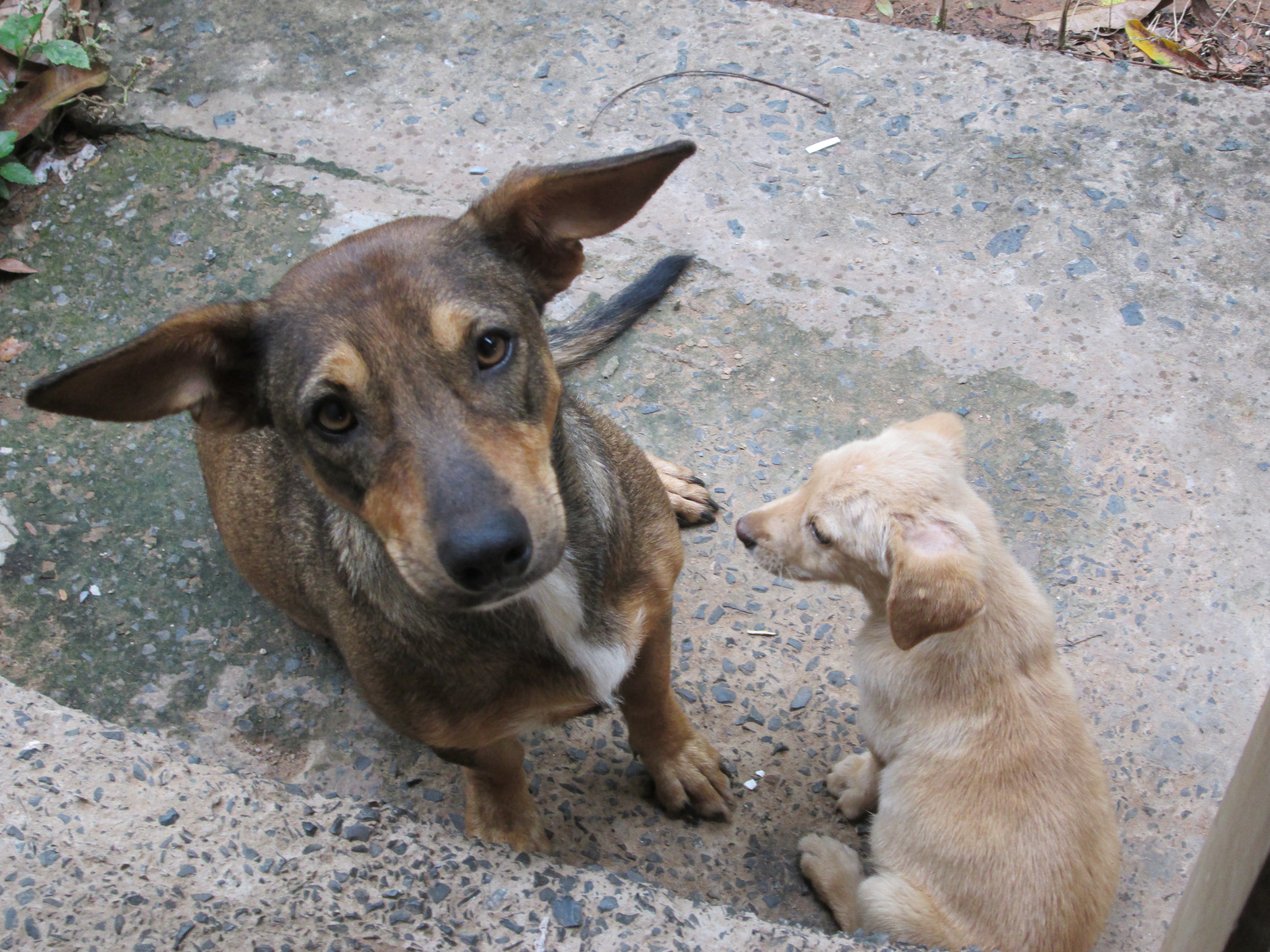
Cutest NeighborI don’t have my own pet in Paraguay. I travel too much and it’s not exactly practical to fall in love with a fuzzy friend and then spend a mountain of money to ship it to the States at the end of my service. But, there is a dog that owns me in the community. She’s my neighbor’s dog.

My neighbor has a house in Asunción so she is not always in the apartment next to me. Because of this, her dog ranges free for the majority of the week. I don’t know who feeds that dog, but someone does and it’s not me. But, I do pet that dog and talk to her and if I make too many pancakes I give her a few—she’s amazingly picky about what she eats and I don’t cook meat so beside pancakes we are somewhat at an impasse when it comes to food.

Sometimes I let my neighbor’s dog into my house—she’s allowed to sleep in the bathroom when it is unbearably hot and she is allowed to sleep in one corner of my house when it is pouring outside. She has fleas and smells, which is why she is regulated to certain regions of the house: dogs and cats are not seen here the same way as they are in the States.

Despite my minimal love the dog bounds to meet me when I come home and whines until I pet her. She often follows me around the community. She will wait for four hours at the house of someone I’m visiting so she can walk me home. She’ll brave crossing into other dogs’ turf, which could cause a fight, to go on long walks with me.

She’s a perfect example of what so many doctrines tell us we should be: giving, forgiving, unconditionally kind, and low-maintenance. We should all strive to be more like her.

The Paraguayan Woman: The Expert Event Planner

In the US, we often leave event planning to the professionals. Event planners are those people who don’t overlook a single detail, are able to hound countless vendors to get the best price and invitations delivered on time, and make sure all the ducks are in a row when the church bells chime. They make your dreams come true.

Well, many Paraguayan women should consider work in event planning if they move to they States. These women are experts. (I’m going to use birthday parties as an example, but there are many events from weddings to funerals that Paraguayan women organized without hiccup.)

Paraguayan women start planning by discussing the menu, decorations, and party favors months in advance. They’ll think about their budget and take countless trips to different towns and cities to scout out the best prices. They will discuss options and prices with all their friends and female relations until they develop the perfect plan. The planning drills down to what each member of the family hosting the event will wear. By the hour of the event, not a corner of the house will have cobwebs and not a wrinkle can be found on the t-shirts of the children.

Birthday parties are a big deal in Paraguay. We’re talking parties that cost a couple months salary for one-year-old birthdays and perhaps as much as a year’s salary for quinceñearas. The guest list for these birthdays can range from thirty people to hundreds.

Birthdays in Paraguay have a list of essential elements:

  • Invitations, addressed to each invitee, printed, and hand delivered by the hostess.
  • Theme, it might be princess or Winnie the Pooh, but all parties have a theme.
  • Agenda, depending on the age of the birthday person, there is a set order of events.
  • Sound system, to blast music, of course.
  • Tables with tablecloths and chairs, rented because no one has that many tables and chairs.
  • Food, you can’t have a party without food.
  • Cake, it’s a birthday after all.
  • Party gifts and treats, if it’s a kid’s party every kid gets a toy and some candy and every mother gets a trinket and candy. If it’s an adult party everyone gets at least a pocket full of candy.
  • Table centerpieces, every table needs a centerpiece that the people at the table will take home with them.
  • Display for the cake and photos, this usually takes the form of a backdrop stylized for the party theme and a table with decorations and the cake.
  • Gift receptacle, a decorated basket set up near the cake table.
  • Photographer, who takes posed photos, films key events during the party, and also takes action photos.
  • Other things that set ambiance, for a kid’s birthday there is always a bouncy house. There might also be face painting and the Paraguayan version of a piñata. For other birthdays it might be a decorated, large frame to take photos or fabric garlands (in theme colors) to decorate the event space.

Walks: Success Strategy

I never have trouble getting out the door to go on a walk. And when I walk, I’m usually out half an hour to an hour (though I’ve been known to disappear for several-hour walks if the occasion is right). I think best when I’m walking. Because of this passion, I was filled with delight when I learned that taking walks in site could help me integrate.

When I walk around my community people see me. That’s the key thing—they can’t see me when I’m sitting at home—which means they are notified of my existence or reminded that I live in their community.

When I’m walking, I have the opportunity to say “hi” to each person I pass. Greeting people is a chance to connect with them and show my community how friendly I am. During the school year, I would time my walks with the hour that school let out. That way, I would be able to chat briefly with the majority of my students outside of the classroom.

I try to walk daily. People sometimes joke that they want to join me on my walks, I always welcome them, but to-date I still walk alone. I like to think that seeing me walk most days might inspire others to start walking too, even if they don’t end up walking with me.

It’s true that my walks won’t make or break my service. But, the longer I’m a volunteer, the more I realize that all the little things matter. They add up and together each little thing I do to get to know my community better makes me a more effective and integrated volunteer.