1 Year in Paraguay!

Paraguayan ViewIt’s hard to believe that a year ago today I landed in Paraguay. On that day, I had no idea into what I was catapulting myself. I was trying desperately not to make any assumptions. That’s to say, I came to Paraguay in the dark.

While the time passed in a flash; I feel like I’ve been here a year. It’s 95 degrees Fahrenheit as I write this and I’m almost comfortable sitting in my house without a fan. Almost. There is nothing more wonderful and delicious than a cold glass of water. I’ve joined the locals in their understanding that ice cubes don’t cut it. Water is only cold enough when it has huge ice chunks. The Paraguayans I know don’t use ice trays, they fill bags (12 inches long, 3 inch in diameter) with water to freeze. Those ice bars are sold for 500 guaranis almost everywhere in Paraguay.

I miss terere when I don’t drink it. I can drink liters of terere, no problem. Terere really is the only thing that will get me through those hot afternoon when the humidity makes it impossible to be hungry. Hand washing my clothes is part of my routine (not to say I enjoy it). Cutting vegetables into crumb-sized cubes is second-nature. I expect things to start late and I’m surprised when I don’t have to wait for the bus. Whistles, hisses, and other catcalls do not particularly catch my attention. I no longer laugh to myself when I see people sweep their yards.

I know I’ve been in Paraguay a year because I’ve started claiming back some of the things I set aside when I first got here in an effort to “ingrate.” I’ve been drinking soda for almost a year, but I’m over it. I didn’t like soda when I lived in the States, I still don’t like it, and I’m not drinking it anymore. When I feel like I want to leave a social function, I leave rather than waiting until the end. My eyes are sensitive to light, so I wear sunglasses even if people think it’s off-putting. I tentatively share my opinions about cultural things when people ask.

It’s nice to be accustomed to Paraguay and start to feel like I can be more like me and less like a censored me. But, I’m still in the dark.

I’ve come to like the dark. When the power goes at night, I can actually see the stars that fill the ever-alluring Paraguayan sky. There are too many florescent lights on at night to see the stars clearly the rest of the time. I’ve come to terms with hours spent when I understand a fraction of what people are talking about—if only I actually spoke Guarani or Paraguayans only spoke Spanish. You never know how many thoughts go through your head until you’re in a situation where you don’t have the words to express many of them.

I’ve been happy and not focused too much on the differences between my culture and Paraguayan culture until the year mark started approaching. My recent heightened observance of the differences between me and my Paraguayan friends may be because it was easier to accept that I will never be able to live up to their standards when I realized I don’t actually want the life of a Paraguayan woman. It’s not that Paraguayan women aren’t wonderful, because I’ve never met so many awesome women in one place, but my understanding of the world makes their reality terrible to me.

I will never wash my brother’s clothes and fold his shirts while he sits on his ass watching. I will never accept when my brother, father, boyfriend, husband, or any man gets up from the table leaving his dishes for me to pick up and wash. Especially when I made the meal in the first place. I will never accept that because someone is a man it’s fine that he gets drunk every weekend and hits on any women he sees. Nor do I think he has special rights to stay out late with his friends. I do not think the house is the domain of women and the outdoors is the domain of men. I don’t think because I’m a woman I must be a mother or find a boyfriend.

I guess it took a year, but now it’s hard to ignore when mothers tell their sons to stop crying because they are men and their daughters that they can’t walk around alone because they are women. As my year mark in Paraguay approached, I was angry about these things and wondered how I’d kept them in the closet of my mind so long. But, the anger past and the dawn is coming. I can’t change Paraguayan culture. First, I can’t change it because I have no means to do it. Second, I can’t change it because it must be changed by Paraguayans so it’s done the right way for them. I’ve consoled myself because I know change is a thing that happens no matter what we do to stop it. And, being the weird foreigner I am part of that change whether I’m trying to be or not.

It’s still night. Culture is complicated and hours alone thinking really do highlight the shadows in the cave. The most useful thing I’ve learned from being in the dark is that there’s nothing wrong with shade.

Nails, Hair, and Make Up

Ruins and skyIn Paraguay women do their nails. I’m not just talking about painting their nails one color and letting the paint chip away to the point where they have a “worn” look. I’m talking about periodic paintings, every time the paint gets messed up. I’m talking about elaborate flowers, dot patterns, hearts, and nails with as many as four colors making up the design. I’m not talking about thick layers that are gummy and painted on dirty nails. I’m talking about soaking and scrubbing, trimming and filing, and then painting thin layers using toothpicks or homemade fine nailbrushes to make crisp designs. I’m talking about girls who have briefcases of nail polish—all colors and levels of sparkle. It doesn’t matter if you’re a homemaker or a businesswoman, if you pick herbs or flit around on TV all day, if you’re a women it is not unusual to have immaculate nails.

Many Paraguayans have a course hair texture that is very adaptable to elaborate hairdos including braids, twists, and curls. When a party comes around, you’d be amazed by the hairstyles the average girl whips up—multiple braids, curlicues, and bows.

We can’t forget the makeup. Of course, like everywhere, every lady has her own style, but makeup in Paraguay tends to be bold. Bold as in bright colored eye shadow (usually 70s pink or blue), vibrantly red lips, full-face foundation coverage that lightens the skin, a healthy dose of blush, and dark eyeliner. If you are young and single these beauty elements are more pronounced.

I think documentaries, articles, and books about “third world” countries often give us pictures of dirty-faced women in ragged clothing struggling to feed their starving children. And sure, that happens (in the States too), but we would all be better served remembering that almost everyone is prideful and most people do what they can to look their best. Paraguayan women have a clearly defined and elaborate idea of what it means to “look your best” and it starts with dressing well and it’s topped off with nails, hair, and makeup.

Doesn’t Take Much

Paraguay does it againMaybe you’ve read some leadership books or maybe you just know, but one of the best ways to get people to work is to make them feel like their work is appreciated and valuable. I became aware of the power of appreciation during my first job post-college. My boss there was a master at showing appreciation and because of that no matter how tedious the task she asked me to do was, I always did it enthusiastically.

In the States, some people naturally thank others for their work and are good at handing out compliments and some people aren’t. In Paraguay, providing positive feedback all the time it’s less of a personal trait and more of a cultural trait.

First of all, there’s the term “guapo” which you must dish in extravagant portions: You call people guapo if they are sweeping, washing clothes, cooking, walking, visiting you…seriously you can and do call people guapo as long as they aren’t sleeping.

Second, there’s a custom of giving visitors or anyone who helps you food and terere. It doesn’t matter if you are paying a team to build your house, you’ll still make them lunch and maybe pass around a couple of beers at the end of the day. On a smaller scale, when people are drinking terere, they’ll always invite you to join. And while this sharing culture is very indirect, it makes you feel included and liked, which is the first step to appreciating and valuing your work.

Third, Paraguayans offer commentary on anything—sometimes this is annoying because if involves telling you that you gained weight or asking how much something cost—often this manifests itself as a compliment, especially when it comes to food. There’s no such thing as food that isn’t yummy when you’re talking to the cook. It is also common and important to tell people their outfit, or their house, or something they possess is nice.

And finally, Paraguayans are intuitive about your needs. For example, I am teaching an English class during these summer months. For this class I give out a lot of homework and quizzes. A mother of several of my students noticed the worksheets her daughters brought home and thought that I probably was using a lot of paper. She knows paper has its cost and is a former teacher so she has a ton of paper she’s not using anymore. She went out of her way to stop by my house and give me the paper so I could use it. She explained that she’s very grateful that I’m teaching English and that she figured I’d need the paper.

Summary: Sometimes I’m not sure if I’m living in the real world or a bubble. If it weren’t for periodic, multi-hour battles with cockroaches I’d be convinced that life in my site is a dream. My community has a knack for motivating me and makes me feel justified in doing hours of prep-work for whatever I’m teaching that week. It doesn’t take much, but a little appreciation goes a long way.

Sometimes Being a Woman Isn’t Fun

ViewIf you’ve studied or spent time in Latin culture you’re probably familiar with the term “machismo” (strong or aggressive masculine pride). Someday I’ll probably talk about machismo in terms of Paraguayan men or relationships between men and women in Paraguay, but not today. Today the topic is how women talk about other women, and how it feeds machismo and everything else that’s disempowering to women.

In the States and in Paraguay you can gripe about or battle gender inequality, the complaints are justified and the fight is needed. But, when we talk about empowering women we often talk about one of two things: 1) giving women skills and tactics to get what they deserve, 2) teaching men to be less discriminatory toward women. We infrequently talk about how women treat and talk about other women, and that’s where we need to start.

I love so many things about Paraguayan culture and spending time with Paraguayan women, but there is one thing I detest and that is how critically and negatively Paraguayan women talk about other women. In truth, women bashing other women isn’t unique to Paraguay, but it is so blatant here that it directly influences almost everything women do. Women might critique other women’s weight, their dress, their house, their food, their children, their husbands…anything that can be blamed on someone could be the subject of scrutiny. I have yet to hear a conversation among women about another women that is devoid if negativism. The catty comments might be sandwiched between compliments but they’re there.

People in my community joke that women get dressed up to go to the soccer game to impress other women because the men don’t care. You might brush off women’s negative comments about other women as envy, and sometimes that is the root of it, but I think more often these comments stemmed from learned culture and are not based on insecurity.

We got to change this.

The Ruins: Marking Unexpected Victory

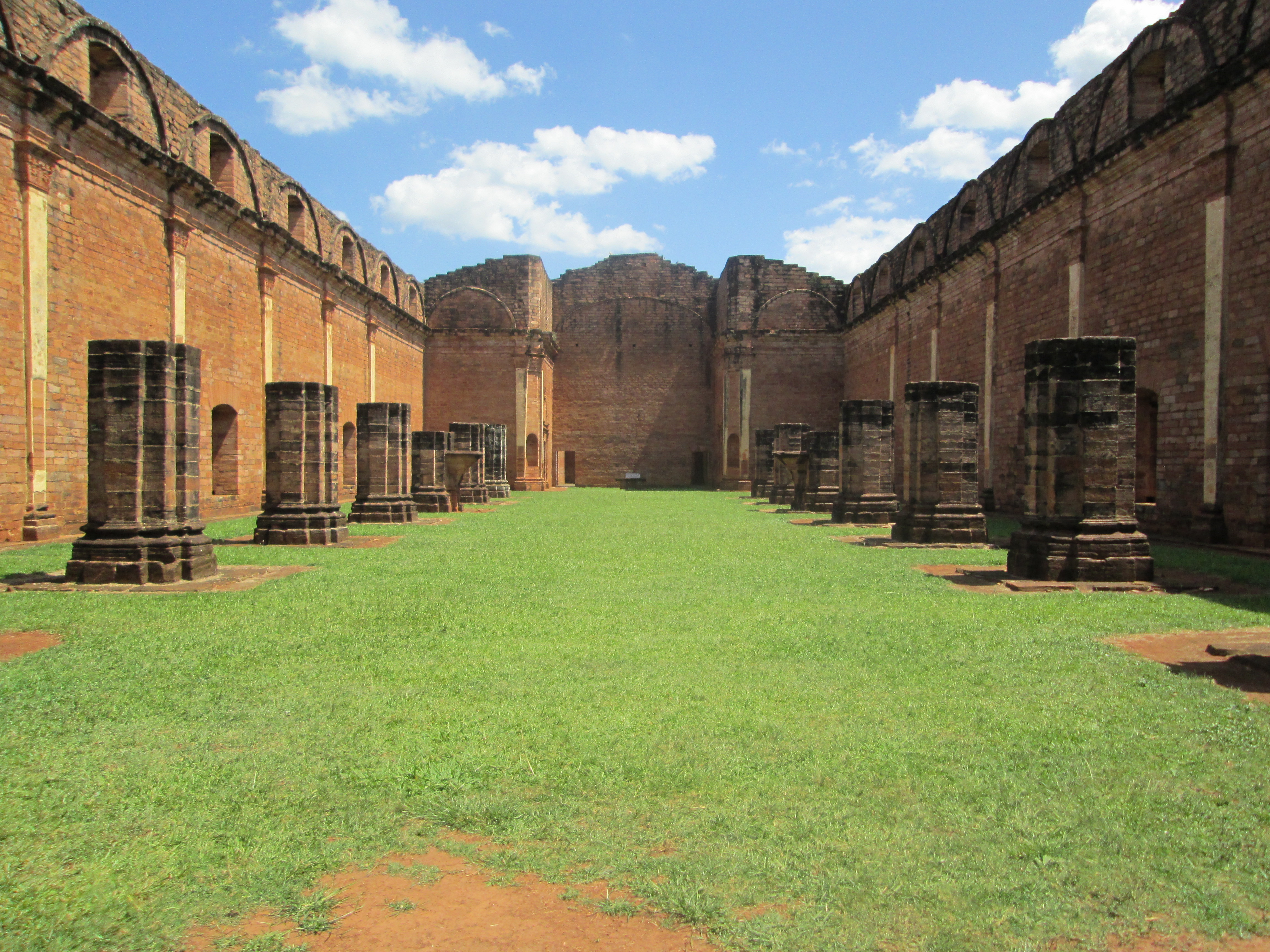
Jesuit RuinsThe Jesuits were in Paraguay from 1607 until 1768 when Carlos III of Spain kicked the Jesuits out of all of South America. The Jesuits are the reason Paraguay is still a bilingual country. They formed religious communities for the indigenous people the Guaraní (the most prominent indigenous group and language in Paraguay) that provided protection from slavery and preserved the language. It is doubtful that the Jesuits’ main mission was to preserve indigenous culture, but it is the greatest influence they’ve had on modern Paraguay.

I find the story of profound, unexpected victories inspiring.

In Peace Corps training, health volunteers in Paraguay, they told us not to lose hope if it seemed like we were having no obvious impact. As they liked to say, “You never know what good you’re doing.” If you’re into behavior change or prevention (of any kind) or life skills such uncertainty is familiar because “you can never be sure” is the bane of all those disciplines. Of course, “never” is a bit of an exaggeration, but measuring the impact of programs/materials/activities designed to change actions, to influence decision-making, or to empower individuals requires a longitudinal study that won’t be complete until many years after the fact and will be so dense that congressmen and other money-controllers won’t have time to read it and their underlings won’t want to read it.

I spend a lot of my time working with youth. The idea is to help them develop strong self-esteem, leadership abilities, and other skills so they make better decisions and will have happier lives. I often wonder if anything I do with the youth is going to be useful or influential in their lives. But, I am satisfied because I know my time in Paraguay will be like that of the Jesuits: I’ll never know the influence I had, the impact will be profound for someone, and it will be unexpected.

The Ghosts of Christmas (and Thanksgiving)

Thanksgiving MealThis Thanksgiving was the first I spent outside of the States. I ate a huge Thanksgiving dinner with turkey, gravy, and other common-fare Thanksgiving dishes with a bunch of other volunteers. It was joyous. It was hot—I spent hours diving into one of the 3 pools at our hotel. But, all cheer aside, it didn’t feel like Thanksgiving, and it doesn’t feel like almost Christmas. It doesn’t matter that I have a mock Charlie Brown Christmas tree and that several of my neighbors have blinking Christmas lights.

Don’t worry; to say I’m sad would be a gross error. After all, I will be doing new, jubilant things for Christmas. I’ll eat a ton of Paraguayan food and probably dance all night—that’s how the family with which I’m spending December 25 tells me they celebrate. This sounds like a smashingly jolly time.

So if it’s not sadness that squashed the holidays for me this year, what is it?

To start, Thanksgiving for me has always been a day to be thankful. Thankful for family, friends, delicious food, and everything that makes life great. The trouble is that this year Thanksgiving focused on hanging out with volunteers—good company but little thankful reflection. Conversely, when I’m in my site I am actively, consciously thankful for something on the daily. Being a foreigner makes me hyper-aware of the wonderful things about my native culture and adore the things Paraguay does better—I’m grateful about something everyday, whether it be recalling something familiar or learning something new. What’s more, Paraguayan culture has a fabulous way of appreciating the little things; and it’s contagious. My point: This year I didn’t need to set aside a day to give thanks, because it’s become daily routine.

Next, there’s Christmas. It’s not the location or the traditions; it’s the people who are missing. Christmas for me is a day where I’m guaranteed to see all my siblings and parents at the same time—it doesn’t happen any other time of year. I’m not seeing any of them, so it’s just December 25.

White

Jesus RuinsI thought I looked like a lot of Paraguayans—I have brown hair and I’ve tanned to be several shades darker than I was in the northlands. I sort of thought I’d done a good job blending. Nope.

I’m mostly German and Irish with a mix of other groups is my heritage. Before coming to Paraguay I didn’t stick out with my freckles and greens eyes, actually I was so nondescript in the States that I figured if I needed someone who had never seen me to pick me out in a crowd I’d just wear something interesting.

Paraguayans compliment me on my light skin. Recently, I was feeling very integrated at a birthday party. Then, several of my students who were at the party looked at me funny as I walked across what would later become the dance floor. I asked them why they looked at me that way and they told me my legs were pretty…because they are so white. I’ve never before been in the minority. It’s weird having a physical trait that people use to judge you—especially one over which you have no control.

It’s not uncomfortable when Paraguayans comment on my skin—they tend to ask if I’m German (in their minds all light-skinned people are German, just like all dark-skinned people are Brazilian)—because in Paraguay any physical aspect of your body can and is a topic of conversations. The number of times I’ve been told I’ve gained weight (or lost it) in Paraguay is mind-boggling.

It’s not something I think about all the time, but comments about my skin remind me that I’m not from Paraguay. They make me feel like an outsider. Usually the skin-color conversation concludes when Paraguayans tell me that white skin is pretty and I say that their skin is beautiful too and that I think I’ll be their color when my freckles blend together. They laugh. I don’t think Paraguayans would understand if I told them that tons of people in the State pay to go to tanning salons so that they can be the color of the average Paraguayan.

Why is light skin considered the ideal, even in regions where it marks an outsider? When we don’t look like the people around us, why do we have moments of doubt about whether or not we belong?

Nothing Is More Important Than Here

People my age in Paraguay and people my age in the States have a number of things in common, but one that sticks out is that their cell phones are lifelines. We just can’t seem to put them down, no matter the occasion. And so, I find myself having the same reaction here that I used to have in the States when my friends whipped out their phones in the middle of a conversation.

Yeah, I’ve already head this: Internet, social media, and cell phones allow you to expand your reach far beyond your physical location and the number of people you can talk to personally in a day. These connecting tools, message-sharing tools sell things, allow you to plan with your friends, and help you keep in touch with friends and family who are far away. They are powerful.

But, nothing you post on Facebook about our friendship will ever be as powerful as that conversation we had yesterday. Nothing is more important than here, the space you are occupying at the moment, and the people who are here with you. When you bury your nose in your phone during our conversation you only send me one message: Whatever is on that little screen is more important than whatever we have between us.

When you go to an event and spend your whole time instagraming, tweeting, and facebooking, you will miss the event. Do you have to text every one of your friends to see when they’re arriving? Yes, social media and texting is important. But living life—doing real things and connecting to people in person—comes first.

Sure, I am curmudgeonly when it comes to cell phones and social media. But, it’s not because I don’t use them or think they aren’t useful; I find them essential. But don’t make me fight What’sApp when I’m talking to you. Don’t make me give up telling my story because you are clearly more interested in scrolling through newsfeeds than listening. Give me the time of day for a conversation, a meal, or an afternoon. You just might have fun and, maybe, you’ll even have something that’s genuinely interesting to say on Facebook afterwards.

The Paraguayan Woman: The Expert Event Planner

In the US, we often leave event planning to the professionals. Event planners are those people who don’t overlook a single detail, are able to hound countless vendors to get the best price and invitations delivered on time, and make sure all the ducks are in a row when the church bells chime. They make your dreams come true.

Well, many Paraguayan women should consider work in event planning if they move to they States. These women are experts. (I’m going to use birthday parties as an example, but there are many events from weddings to funerals that Paraguayan women organized without hiccup.)

Paraguayan women start planning by discussing the menu, decorations, and party favors months in advance. They’ll think about their budget and take countless trips to different towns and cities to scout out the best prices. They will discuss options and prices with all their friends and female relations until they develop the perfect plan. The planning drills down to what each member of the family hosting the event will wear. By the hour of the event, not a corner of the house will have cobwebs and not a wrinkle can be found on the t-shirts of the children.

Birthday parties are a big deal in Paraguay. We’re talking parties that cost a couple months salary for one-year-old birthdays and perhaps as much as a year’s salary for quinceñearas. The guest list for these birthdays can range from thirty people to hundreds.

Birthdays in Paraguay have a list of essential elements:

  • Invitations, addressed to each invitee, printed, and hand delivered by the hostess.
  • Theme, it might be princess or Winnie the Pooh, but all parties have a theme.
  • Agenda, depending on the age of the birthday person, there is a set order of events.
  • Sound system, to blast music, of course.
  • Tables with tablecloths and chairs, rented because no one has that many tables and chairs.
  • Food, you can’t have a party without food.
  • Cake, it’s a birthday after all.
  • Party gifts and treats, if it’s a kid’s party every kid gets a toy and some candy and every mother gets a trinket and candy. If it’s an adult party everyone gets at least a pocket full of candy.
  • Table centerpieces, every table needs a centerpiece that the people at the table will take home with them.
  • Display for the cake and photos, this usually takes the form of a backdrop stylized for the party theme and a table with decorations and the cake.
  • Gift receptacle, a decorated basket set up near the cake table.
  • Photographer, who takes posed photos, films key events during the party, and also takes action photos.
  • Other things that set ambiance, for a kid’s birthday there is always a bouncy house. There might also be face painting and the Paraguayan version of a piñata. For other birthdays it might be a decorated, large frame to take photos or fabric garlands (in theme colors) to decorate the event space.

The Clothes Paradox

You would think that red mud everywhere, 100 plus degree-days, hand washing all clothes, no clothes dryers, and crappy (or no) showers would be an acceptable excuse to be mildly dirty and slightly unkempt. Wrong.

I’ve never felt more pressure to make sure my clothes are without wrinkles or to wear accessories and high heels as I do in Paraguay. And that’s saying something because I worked in PR in Washington, DC before coming to Paraguay.

Paraguayans scrub their sneakers weekly. Women wear bows in their hair on the daily. After watching an almost two-hour soccer game in the blazing sun, I’m sweating like a river and have serious sweat stains while my Paraguayan friends still look fresh in their neon t-shirts and tank tops and their flesh-crushing, tight jeans. When I walk from my house to the school, I get mud on my shoes and/or feet. But, my students always have shiny-clean sneakers. How they manage to avoid the mud is something I’ll never know.

I struggle walking from my house to the church in my flip-flops because of the sand and the rocks while my Paraguayan friends walk delicately in their three-inch wedges.

I don’t care how much deodorant I put on, at some point the heat makes me smell lightly stale. I’ll let you know when I find a Paraguayan with BO.

It’s a paradox. It’s almost as though because it’s so easy to be clean in the States we don’t judge people if they decide to dress like the stereotypical hippie. As long as people don’t smell, usually American’s couldn’t care less what someone wears to a baseball game. Well, Paraguay is different. Watch out what you wear, people notice.