Blend or Take a Stand?

Look at the sky!Assimilation is the name of game for the Peace Corps volunteer. That means absorb and integrate, become part of your host community’s culture. But, assimilation is a balance between integrating and staying true to your being.  It’s more of a give and take than a transformation. Here are some things I’ve changed and some things I fight to keep in my life as I adapt to Paraguay.

Things I’ve changed:

  • Ugh, I won’t wear sunglasses. My eyes are very sensitive to light, but people here don’t wear sunglasses and they think it’s standoffish if you do. I stopped wearing them (though I’ll probably get wrinkles from squinting and the sun gives me headaches).
  • You’re right, let me minimize my time mingling with men. Interactions between the sexes are just too complicated and sexually charged in almost every setting but professional ones. It’s easier to just chill with kids and woman.
  • Fine, I’ll drink coffee…and eat bread and meat all the time. I wasn’t a big fan of any of those things in the states but they’re staples here.
  • You know, sitting doing nothing for hours isn’t so terrible. I was one of those people who always had to be doing something. But, in Paraguay, sitting together is a huge social activity. It’s kind of the core of everything and, now that I’m used to it, I kinda like it.
  • Yeah, waiting is just part of life. Just plan for double or triple the time you think it should take when preparing to do something. Then, you’ll be pleasantly surprised if it happens faster.
  • Okay, I can eat faster. I don’t know how Paraguayans do it, but they are rapid-fire eaters.

Things I’ve kept:

  • No, I’m not here to look for a boyfriend. Questions about my love life and cat calling are part of life here. But, that doesn’t mean I have to embrace them.
  • Sorry, I can’t say I like listening to the same genera of music all day, everyday. Paraguayans LOVE their music, which is nice but it’s either cumbia or polka…which I only enjoy in SMALL doses.
  • Correct, I believe as a woman I have the same freedoms as men. I’m never going to believe things like: “when women are menstruating they shouldn’t shower” or “we aren’t made to do certain jobs”. Sure, I can’t pee standing up and that’s annoying, but I’m not delicate.
  • Yep, I do stuff by myself all the time. Just because I’m in my room or walking alone doesn’t mean something is wrong. I just enjoy alone time and being independent sometimes.
  • Nope, I’ll just take the bus or walk. It’s a Peace Corps rule that I can’t ride motorcycles and dirt bikes. Yeah, it’s an annoying rule on the surface, but I’ve also seen how people drive motorcycles in Paraguay and I’ve read the stats. I don’t want to die.
  • Well, I’m just going to tell it how it is. Communication in Paraguay is indirect (people usually don’t say exactly what they mean). But, I’m going to be blunt. Yes, I will do everything in my power to be polite, but I’ve worked my entire life to avoid beating around the bush.
Being a Woman in Paraguay

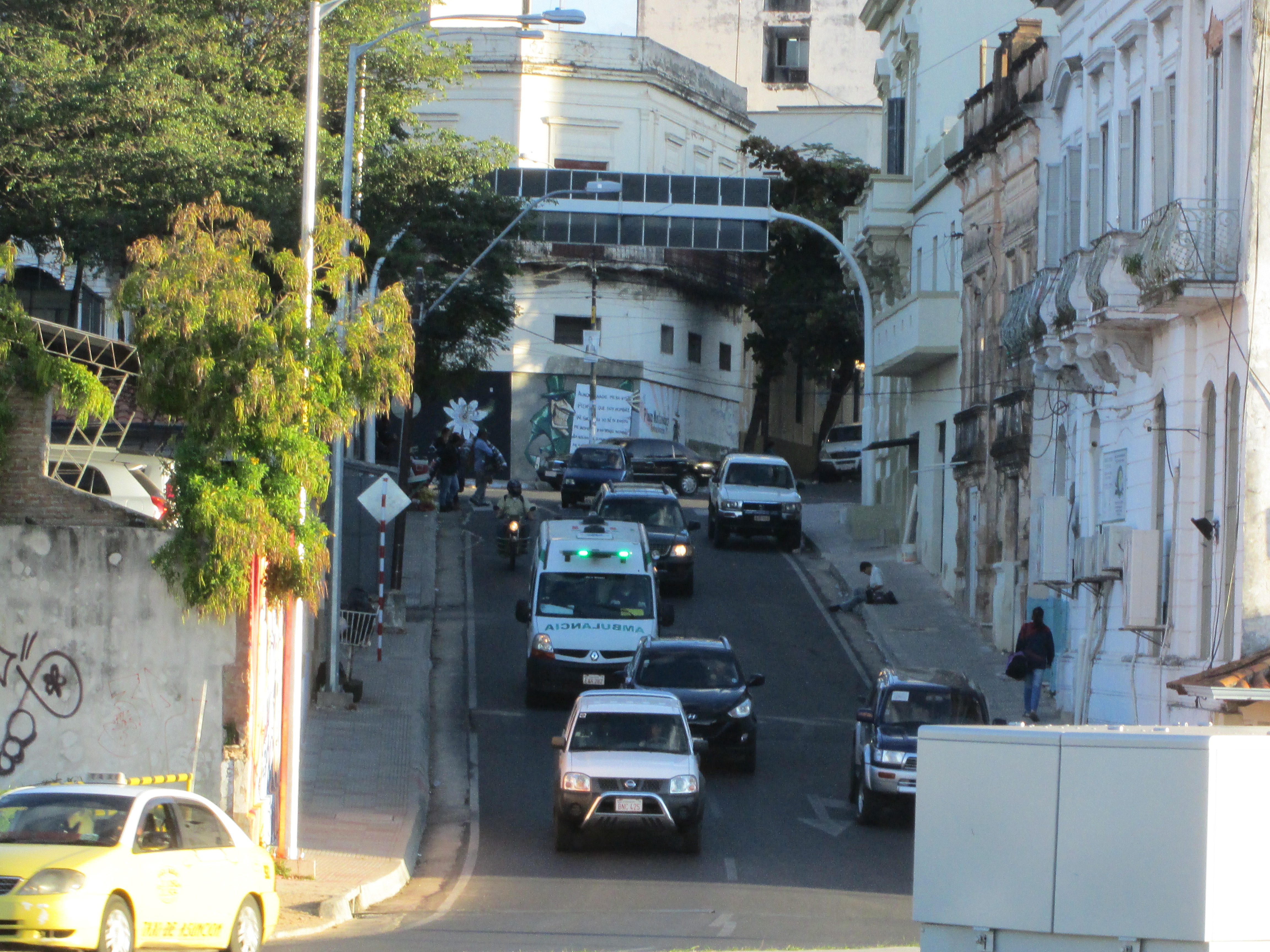
Uphill street in AsunciónI’m used to Paraguayans asking how old I am and if I have a boyfriend. But I’m still surprised when people ask me if I have kids. I’m years away from 30; children of my own aren’t on my radar.

But, after a 17-year-old mom asked me if I had kids, I started pondering the connection between motherhood and womanhood. Having children seems to be central to being a woman in Paraguay. Women without children are scarce here. Some women wait until they are older to have children, but most have them by their mid-20s.

You will find many children and many young mothers in Paraguay. But, what strikes me most is how happy every mother is to be a mother. How strong mothers are and how mothers have the last word.

Because children live with their mothers until they marry (and often afterwards too), mothers dictate the lives of their children well beyond the point when they grow from kids to adults. Mothers maintain the home. Mothers manage the family finances. Mothers earn money for the family. Mothers are a source of love and strength. Should a mother and father separate, it is the mother who takes the kids.

I’m left wondering: Is womanhood possible without motherhood in the Paraguayan context?

Chisme (aka Gossip)

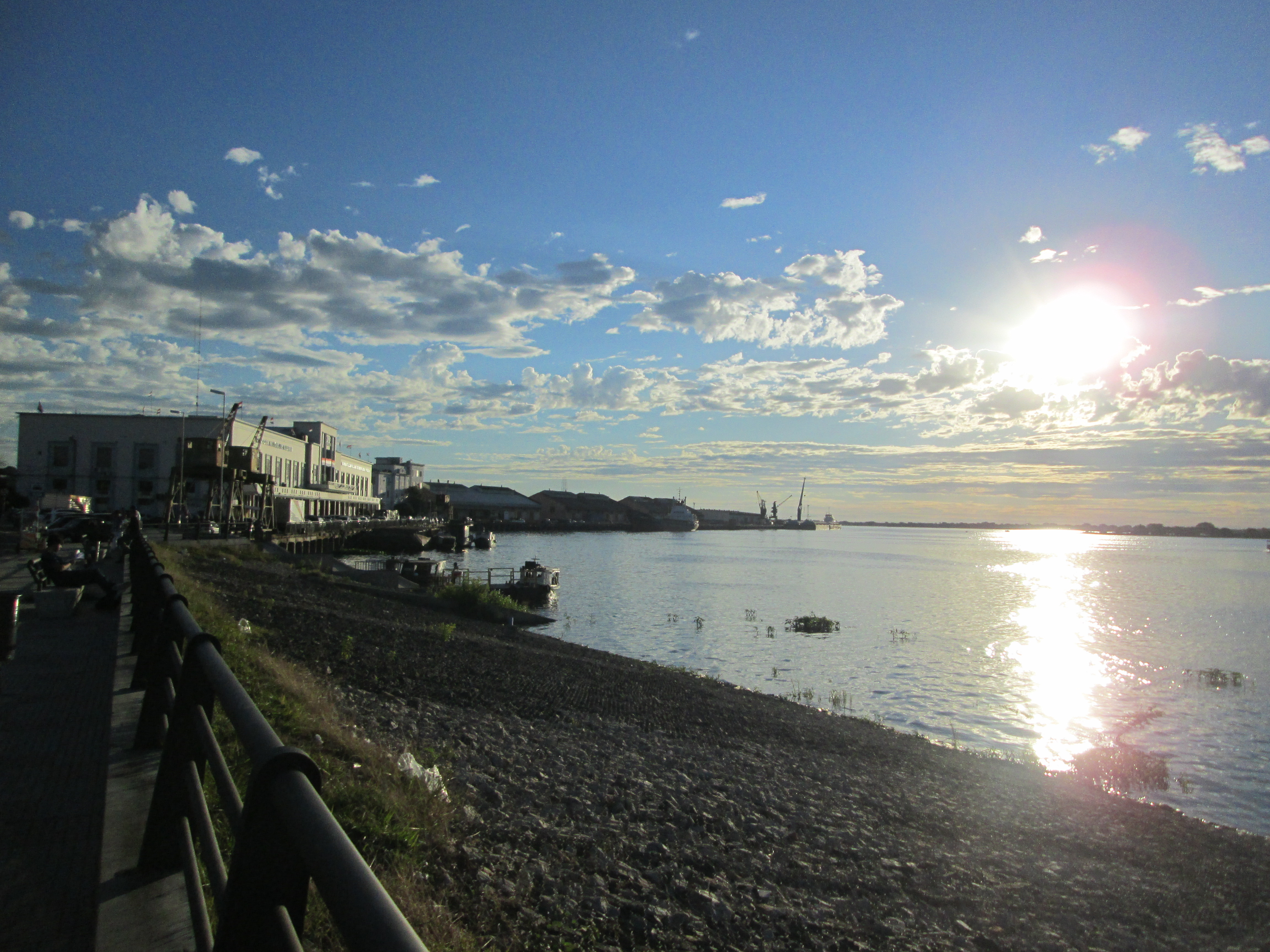
Río ParaguayIf you’re from a small town or went to high school you’re already familiar with the idea of gossip, called “chisme” in Spanish.  Gossip is when people talk about what other people are doing, sometimes what they say is true and sometimes it is false, but they usually pass judgment. Here in Paraguay, well, at least in rural Paraguay, gossip is very important. In fact, it’s so important that Peace Corps has several sessions related to dealing with gossip during our training.

The brutal truth is life in a small town or rural Paraguay is pretty slow. Yep, the highlights are celebrations of saints, birthday parties, and soccer games. Many Paraguayans prefer to stay home and spend time with their families to going out. This leaves a lot of time to talk about what people are doing but not a lot being done about which to talk.

Anything that falls under the popular topics of sex, fights, and money is likely to catch people’s interest. The fun thing about it is even if you aren’t doing anything, someone might see something that makes them think you are doing something, and lo and behold you have a completely fictitious story about you flying around town.

Gossips will be gossips, so who cares? Well, the challenge isn’t really the gossip itself, but the fact that people often use gossip to form their opinions of others. It’s the judgmental side of gossip that’s particularly interesting when you are a Peace Corps volunteer.

As one of the only, if not the only, foreigner in your community you are stranger than your average person. Gossip about you is unavoidable. The trick, however, is preventing gossip that will harm your reputation or people’s respect for you. Because you don’t have history or family in your community, so reputation and respect is all you got.

The Peace Corps Volunteer: Paraguay

Moon and cloudsThe job of the Peace Corps volunteer
Is to be everywhere and nowhere at the same time
To visit as many families as possible
To ensure that everyone knows who she is

And to try to be like an authentic Paraguayan
Without ever wanting to be like one
To live somewhere that is nowhere
And make it everything

To focus on the friendships and teaching moments
And share whatever she can about whatever she knows
With the single hope of leaving her community better
Somehow, just a little happier or with a bit more knowledge

The Peace Corps volunteer is everywhere
Because she’s trying to get to know her community
As well as an authentic Paraguayan
Who had generations to learn, and she only has two years.

The Peace Corps volunteer is nowhere
Because she lives in a country her family hardly knew existed
Before she left, but now is very real to her
But it’s experience, not distance, that makes her seem so far away

The job of the Peace Corps volunteer
Is to be everywhere and nowhere at the same time
Because everywhere is her community and nowhere is what she left behind
But not always, sometimes it’s quite the opposite.

Guaraní: The Language of Paraguay

Paraguayan Presidential PalaceGuaraní, the indigenous language of Paraguay, is so elemental to Paraguay you can’t understand Paraguay without knowing a little but about it.

In Paraguay, most people speak a mixture of castellaño (Paraguayans’ preferred term for Spanish) and Guaraní, which is called jopara. “Jopara” means “mix” in Guaraní. When I think of jopara, I think of Spanglish; it’s the same idea, just with different languages. Basically, when talking you can use Spanish or Guaraní syntax and use a combination of Spanish and Guaraní words. Put simply, you are conversing in two languages at once, and there’s no right way to do it. Some people use more Guaraní, some people use more Spanish. It just depends on the person, the topic, and the context.

You can get by in Paraguay speaking castellaño, most teens and adults will understand you and be able to respond in castellaño. But, as you get more rural or if you want to talk to kids or older people you have to know more Guaraní.  If you want to understand what people are saying to each other you have to know Guaraní. If you want to understand what the guys are yelling at women as they walk down the street or what the old ladies are joking about over terere, you better know Guaraní.

When I was in training, my Peace Corps teachers always said Guaraní is the language of the heart in Paraguay. They explained that to make deep relationships and to really excel here you have to learn Guaraní. But, in my experience, Guaraní is as much a core of Paraguayan identity as it is a language of the heart.

Paraguayans are very proud of Paraguay. They may criticize small aspect of Paraguayan culture or their government but they will never question Paraguay. They are proud of and enjoy their tradition food, dance, music, terere, mate, and crafts. Coming from the US, where individuality is so central to most people, the uniformity in Paraguay is unfathomable. Everyone seems to listen to the same 20 songs, eat the same 7 foods, and do the same thing in their free time. To me, Guaraní is the summary of everything that Paraguayans feel makes them Paraguayan.

A Neighborhood of Family

Mural in AsunciónWhen I talk to other volunteers about their sites we often joke that we are related to almost everyone (through our host families) in our sites. In Paraguay, everyone in one family tends to live in the same town, on the same street. The street will have generations of one family, and the family members will likely live their entire lives there. One common exception comes because of marriage: If two people from different parts of Paraguay marry, most often the woman moves to the man’s neighborhood.

Another thing that makes families so massive to someone from the US is that the average woman has more children than in the US. Many nuclear families, especially families where the mother does not have a professional job, have more than 3 children and 5, 6, or more is not uncommon. It is also interesting to note that children frequently live with their parents until they marry. For example, I have 5 siblings in my current host family: 26, 24, 15, 12, and 8 years old and all of them live in the house with their mother and father.

What does living so close to your family mean?

It means, as a kid, you are guaranteed a huge band of cousins (friends) with whom you can play. It means when you host a party you have tons of hands to help cook. It means, to visit with family, you don’t need to leave your neighborhood.

As someone who grew up far away from branches of my family, I find it neat that Paraguayans have their aunts, uncles, and cousins so close. But, the closeness doesn’t prevent divisions and arguments. For example, in my site, my host family is related to most people on one side of the street through my mother and the other side of the street through my father. But, family members from the two sides of the street visit infrequently, even though they live only a ten-minute walk apart.

How does this relate to daily life as a volunteer?

For me a key aspect to doing my job is knowing who talks to who. Why? In a small town, gossip flies around and is a key pastime for many people. As a foreigner trying to maintain a positive image, it’s helpful to know how individual’s opinions of me might get around and affect my relationships with other members of the community. Knowing who gossips together is also helpful in terms of meeting people and understanding safety warnings. Like anywhere, people only hang out with the people they like, so they can only introduce you to that circle. Often, people don’t trust or don’t like the people who are not in their circle so they’ll advise you to avoid those people. As someone who is still trying to learn about the entire community, it is important to know when warnings to avoid someone are for a good reason or just because the person you’re talking to doesn’t like that person.

A Land Where Fruit Grows on Trees

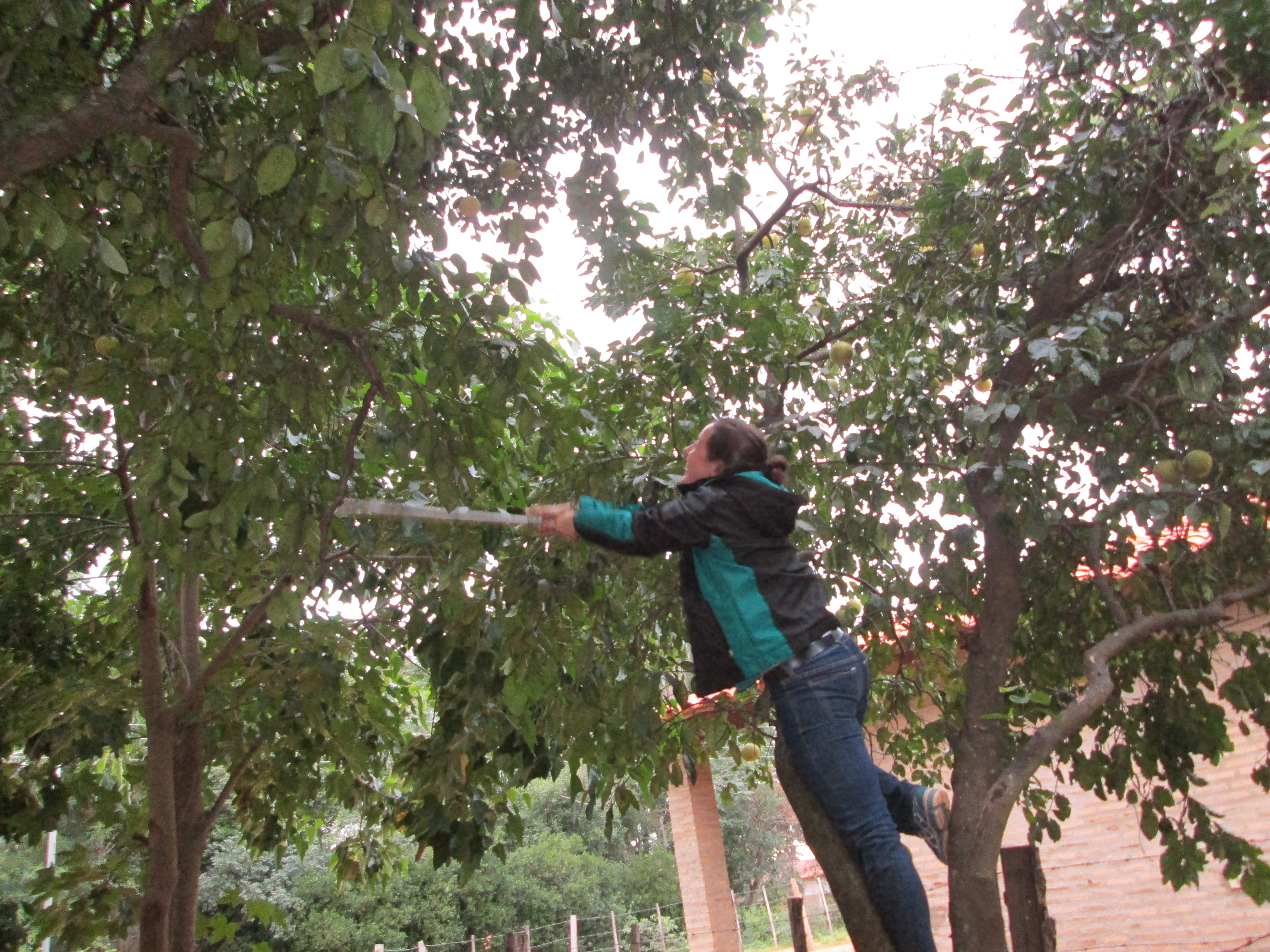
Me Hunting for GrapefruitIn the States I used to go grocery shopping for fruit—you know: grapefruits, mangos, and passion fruit—but in Paraguay you go acquaintance shopping instead. As far as I can tell, Paraguay grows just about every fruit except apples—the trick is to know what’s in season. Once you know the seasons the next step is finding someone who has that particular fruit at her house. From there, a pleasant ask or a afternoon of terere will likely do the trick.

Citrus are in season right now, and they are delicious. The trees are heavy with little globes. There’s something completely lovely about whacking down grapefruits and mandarins, high above your head, with a stick. They thud to the ground. They are juicy and fresh. The peels are not some pretty color like they are in the grocery store—usually they’re more patchy yellow-orange and green.

Before citrus it was guavas and avocados and before that it was mangos. Passion fruit are also coming in right now—so tart and mouth wateringly tasty. I think papayas are coming up. And there are different bananas throughout the year, though I’m not sure exactly when…just yet.

It’s fall quickly turning to winter right now. I’m not sure if that means we’ll have a fruit break or if the trees will just keep chugging along.

Darn Cold…at 60 Degrees Fahrenheit

Storm CloudsI didn’t bring winter clothes to Paraguay. It was partly a, “I want to pack light” thing and partly a, “it’s a sub-tropical country so it doesn’t get cold, right?” thing. Well, I learned my lesson. It gets bone-breaking cold in Paraguay…starting at 60 degrees Fahrenheit.

When it dips below 80 it’s likely to be windy, but the real killer is the rain. I know, I know, it sounds crazy. I, too, grew up in a land that dipped below zero during the winter so let me explain.

The houses in Paraguay have windows but they don’t have glass. The houses have walls, one brick thick, but they don’t have insulation. The houses have roofs but, there is no ceiling, so you can see right to the tiles or metal that is blocking the rain. The doors are thin and often have cracks. There is no heat source in the house. What does this all mean?

It means that it’s about the same temperature inside and outside. The house protects you from wind and rain and holds a little heat, but basically there is no escape. When the cold settles, it seeps into every room.

In my house, the shower and toilet are in stalls outside the house, with just curtains as doors. We have hot water, but it seldom is hot but rather just not cold. When the rain pounds down, the wind rustles the trees, and the coolness engulfs the house—it is frigid. The trick is to stay warm, because once you start feeling cold it’s hard to heat up again. I wasn’t prepared for the first cold spell. I ended up spending an afternoon in my sleeping bag, fighting a fever, because I got cold in the morning. But a trip to Marcado 4 fixed me up for the next time the temperature dips.

Mercado 4

Narrow paths, dirt outside and shiny tile inside, are tapered further by the crowd. Clothes line the paths – sweaters, sweatshirts, jackets, pants, leggings, socks, underwear, and hats – bright white and vibrant colors and crisp new shoes. Each stall with a different mix of things neatly organized in folded stacks. Salesmen and women invite you to ask about the prices. Suddenly the clothes fade away and its heaps of red tomatoes, oranges, and onions. Herbs green and brown are laid out and tied in bundles with palm leaves.

The sales women yell to each other across their mountains and hills of produce, sipping terere and jeering at the young men straining to push their wooden wheelbarrow-carts up the inclined walkway and between shoppers. The carts are stacked high with bursting plastic, burlap bags.

Kittens, scrawny and ownerless, gallop around the crates and between feet—gray, striped, orange, and black. Their fizzy ears and whiskers make them cuter than rats.

I look to the right and see hunks of meat and stacks of fish—the smell of flesh clashes with the earthy aroma of the vegetables next to me. I hurry on. I walked in a meat section once. The sent of death was thick, and I promised myself I wouldn’t go back there.

A basket made of chicken wire holds live chicks, chipping and jostling each other, and rabbits with their noses twitching.

I dart between to stalls to pass from the outside part of the market to the warehouse part of the market. I go up the stairs to find a bench. I sit on a bench in the middle of the room and look around at the racks of shoes around me…shoes in every direction: snazzy sneakers and sexy heals, clunky work boots and shiny men’s dress shoes.

I go back down into the fray and ask the smoothie-empanada lady where I can find a guitar. I cross the street—dashing through a just-big-enough-gap between the buses, cars, and motorcycles that roar and hum on the muddy street. I find myself in a new mix: Stands stacked high with shiny new cellphones. People ask if I’m looking to sell my phone. I hurry on. There are stereos and TVs. And there is kitchenware. Finally, I find the guitar store.

The last and final mission—find a bus home. I catch the bus on the corner-ish, hailing it like you do a taxi in the United States. I climb on. Luckily there is a seat. I sit with my new purchases piled on top of me.

I didn’t realize how big the market was. It stretches for blocks—crossing streets and alleys. The stores and stalls weave in and out of buildings. You get stuck going in circles. They tell me you can get just about anything there, and the prices can be cheaper than the mall, but to find a product you must navigate a labyrinth. (At least I have two years to master the whole thing.)

I made it! I finished my first solo mission to Asunción’s Mercado 4. I’m proud of myself, but there isn’t time to relax on the bus. Clanking and coughing my bus sputters down the cobbled streets of the city—there is too much to see and the air is spoiled by diesel smog. School children get on the bus, their uniform sweat pants and polos in some shade of gray or blue. Candy, cookie, and fruit venders hop on and off the bus holding their wares for all to see—their sales pitches are more like songs in rhythm and tonality than spoken word.

The little streets with the stacked and crunched houses wiz-by, and I just glimpse them through the dust-encrusted bus window. I am not inclined to call Asunción pretty; it isn’t. But it’s a city where you feel like things are happening and progress is pushing forward—to what end and to where is unclear, but Asunción in a word would be “movement.”

Site Presentation: Feeling Loved

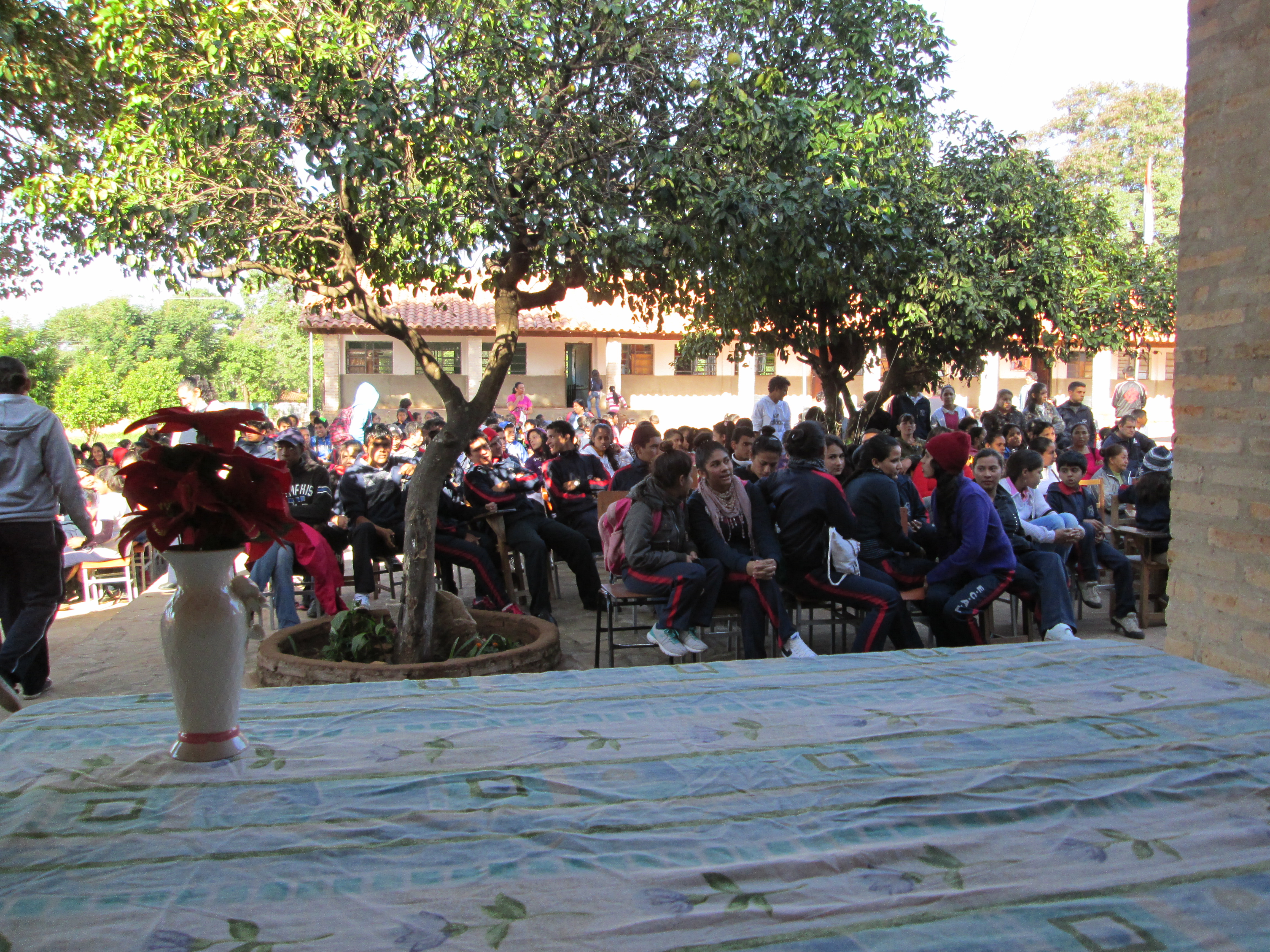
Site Presentation CrowdAt the end of May my boss came to my site to officially present me to my community at an event called my “site presentation.” The idea of the site presentation is that you organize a community meeting so that Peace Corps can explain why you are here. My presentation went way better than I could have imagined.

The director of the school where I will work organized the presentation and I made cake and invited my host family and the team at the community clinic where I work. I wasn’t sure what to expect.

It was beautiful! When I got to the school the professors and director were running around getting everything ready. I went into the office to help the director with my name and when I came out again the school patio was filled with chairs and the entire school, plus several parents, and the clinic staff were waiting.

They put on music and had a microphone. The program unfolded like a real community event would. One of the professors introduced each part of the agenda. We started with the anthem of Paraguay. Next, the director talked about how I’m here to teach about health including self-esteem and starting a school garden.

What made the presentation special was that the students performed music and dance. First, one student played the guitar and sang a song about welcoming foreigners as friends, then several students performed a traditional Paraguayan dance. Next, the students performed a modern dance –which was surprising, amazing, and almost brought me to tears. They danced to a song about New York City.

The director of the health clinic shared some words and so did my boss. Then it was my turn. I wrote out my speech—I hated that I had to read it, but I figured being understood but reading was better than being confusing and not reading. I spoke in a mix of Guarani and Spanish.

The event was exhilarating and, for the first time since getting to my site, my doubts melted away…I can do this crazy thing call Peace Corps service.