Phrases I Can’t Live Without

gecko¡Que guapa! – This is a compliment and means that someone is hard working. It is a good conversation starter and al ways makes people smile. It’s an acknowledgement that someone is working or that you are listening to whatever she is telling you about someone in her family.

Vamos a ver – Literally means, “We’ll see.” It’s a great way to deflect or be noncommittal without saying “no.” It leaves the possibility open, without making you a liar if you don’t do it. It’s also a good way to show that you don’t necessarily like whatever is being suggested.

Tranquilopa – Means happy, calm, and great. People always ask how you are doing and you can never say that you aren’t doing well. Saying “tranquilopa” instead of “well” always puts a smile on people’s faces.

Igual, no más – The literal translation is “equal, no more.” Paraguayans use the “no más” part with everything. It’s used to deescalate a situation, to tell someone to relax, to deemphasize something, to fill space…I think of it as an equivalent to the smiley face in chat, texting, and email. It can follow a positive statement or soften a negative statement.

Mba’e pikoGuaraní for “What?” You can also use a mixture of Guaraní and Spanish and say “Qué piko.” You can use it to literally ask a question or express surprise.

Hi’kue – An expression of surprise. It is especially helpful when someone is telling you something really sad or difficult and you don’t know what to say. It’s also a good way to express that something is expensive. I also use it to deflect questions and comments I don’t like.

Chipa

Chipa waiting to go in the oven.

Chipa waiting to go in the oven.

Chipa is a kind of cheesy biscuit. Its ingredients include cheese, cassava flour, corn flour, animal fat, milk, anise, and eggs. It’s a common snack. People sell it on the bus, at soccer games, along the highways, and on street corners. People serve it at memorial services (which in Paraguay are nine days long and can also occur on the anniversary of people’s deaths).

Chipa is crumbly and cheesy—and amazingly yummy when it is hot. If it sits around for much more than a day, it can get rock hard. During Semana Santa, which is the week leading up to Easter, it is traditional to make a ton of chipa or only eat chipa. During that week, my jaw hurt after eating so much hard chipa.

Chipa comes in a variety of shapes but the most common are circles and sticks. It is one of the traditional foods of Paraguay, in fact, in a number of traditional Paraguayan dances the dancers hold a basket of chipa.

Patron Saint Celebration

Feathered MenThe patron saint of my community is San Francisco and his day is celebrated on July 24. There were celebrations throughout that week, ending in a huge party. But, on July 24, there was a mass in the morning, a saint’s procession, and a carnival, all of which I attended.

The most interesting tradition about celebrating San Francisco is that men dress up in suits completely covered in feathers—pants, jackets, and hats—and wear masks. They wear these outfits to the mass and during the saint’s procession and then dance around to traditional Paraguayan music in front of the church. There’s also some drum beating to go along with the dance.

The mass was about an hour and included singing, a sermon, and biblical readings. For the procession a group of men dressed in feather outfits, followed by the church’s men, and the congregation took a figurine of San Francisco around the soccer field that is in front of the church. After that, the feathered men jumped around in the patio of the church, there was a raffle, and there was a carnival complete with crumbling rides.

Getting Excited About the Same Food

general storeThere are somewhere between 7 and 12 foods that make up the bulk of the Paraguayan diet. Most of those foods are made of the same things. Most of them are carbohydrates with some oil or fat added. A lot of them involve meat.

What amazes me is how excited Paraguayans are to eat these traditional foods. Despite the repetition, Paraguayans I’ve eaten with talk about sopa paraguaya like it’s a rare delicacy and chipa like it’s the “be all, end all” of foods. Chipa sells like wildfire at the soccer games and on the commuter buses.

Terere and mate is the same way. The Paraguayans I’ve drunk mate or terere with have probably drunk it almost a million times, but they still comment on how good it is every single time.

I wish I could enjoy the same food over and over again. It would make dieting a lot easier. I can’t even eat my favorite foods with the frequency that Paraguayans eat their traditional foods. How does one develop such an appreciation for life?

Big City vs. Countryside

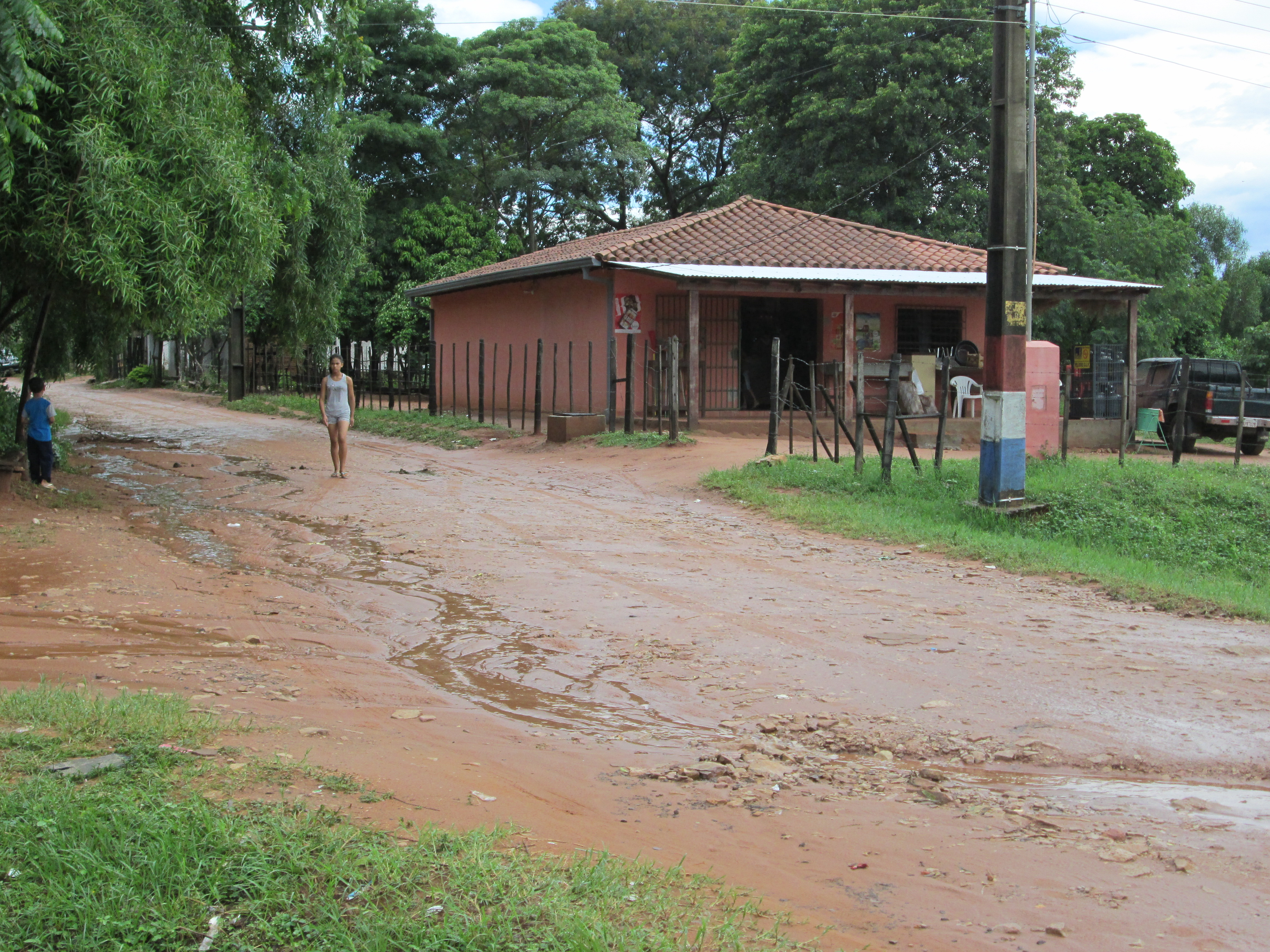
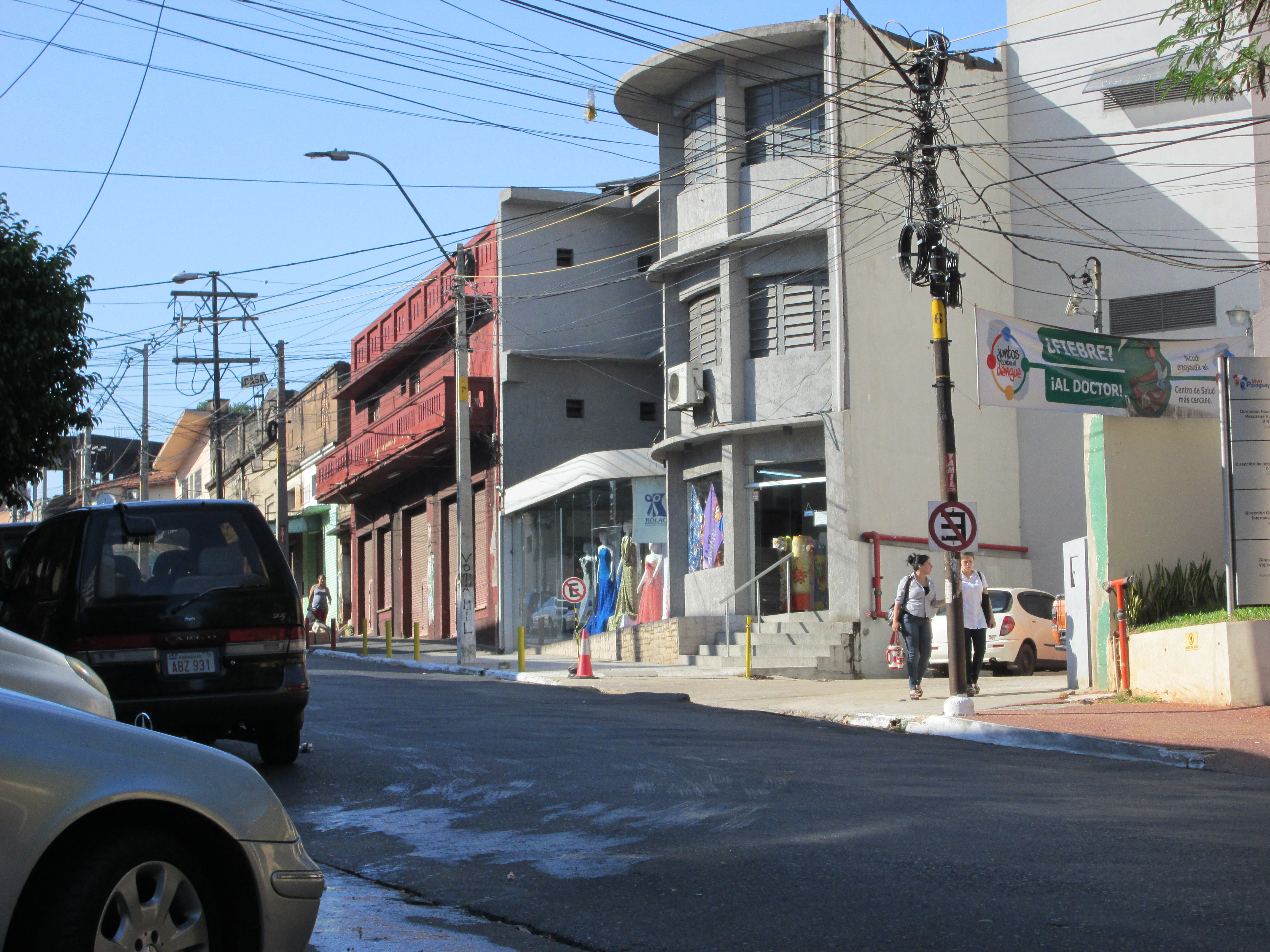
The Big CityComing from Vermont we always joke that we are years behind New York City. I mean, my parents still don’t have cell service at their homes and only got rid of dial-up within the past 5 years…and pop culture doesn’t get to Vermont any faster. The difference between the rural US and the urban US is dramatic. Now, times the city-country contrast in the US by 10 and you’ll get closer to the disparity between big Paraguayan cities (mainly Asunción and Encarnación) and the rest of Paraguay. Most of Paraguay is rural, ranging from rural with running water and electricity to rural with nothing.

In the many rural parts of Paraguay there are roads that can’t be crossed when it rains. Cows roam free. There’s bad cell service, no Internet, electricity that goes out, and water pulled from wells with buckets. It can be hard to find groceries because there are just little house-front stores with the basics: sugar, salt, and flour.

In Asunción, as least when it’s not flooding because of a downpour and no drainage—there are high-end clothing stores and sit-in restaurants with waiters and WiFi. There are coffee shops, ice cream parlors, movie theaters, and international businesses. You’d be surprised how many people in Asunción speak English, but don’t know Guaraní.

In Paraguay, the city and the countryside are like to different worlds. Sometimes, it’s hard to believe they are part of the same country.

Raw Animal Fat

Making potteryHave you even seen fat, raw and blobby? Maybe as part of Mayor Bloomberg’s obesity reduction campaign? Maybe on a TV show about liposuction? Maybe after bacon grease congeals?

I’ve seen it. I’ve worked it from a semi-solid to a mixable paste. Nothing makes you think about what you’re eating quite as dramatically as working fat globs into something more like soft butter.

In Paraguay, one of the common ingredients is raw animal fat, rather than butter or vegetable oil. In the end, it still gives baked goods a great consistency and tastes amazing, but it does make you think about your middle section. Is that whole cup going to end up right on my stomach?…is usually what I ask myself.

Baking with the señoras here has brought me back to the basics, in terms of what we actually use to give our food the taste and texture it has. In Paraguay, there is an abundance of the real thing—raw milk, raw animal fat, fresh eggs, and fresh meat (just killed minutes before cooking).

I still eat cookies, but since coming to Paraguay visions of fat globs dance in my head when I do. I know that butter and raw animal fat is the same thing in the end, but for some reason raw animal fat gives me an unpleasant visceral reaction while butter makes my mouth water. I’m used to fresh meat and raw milk, but the animal fat makes me pause every time.

The Smiles of Children

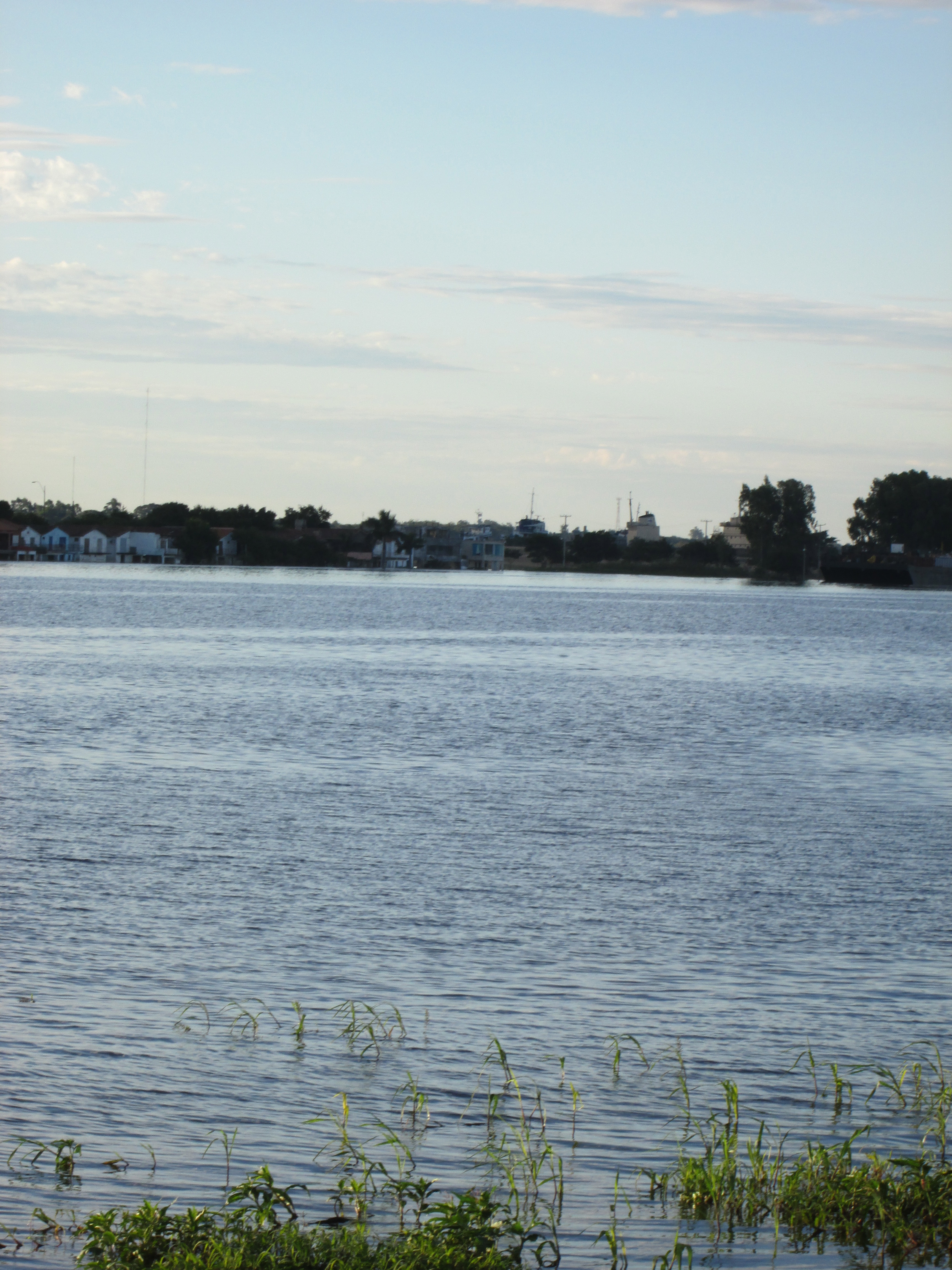
Paraguay RiverIt’s the smiles and waves of the children in my community that remind me what I’m doing here is worthwhile. I’m still learning these kids’ names and I’ve been to their class maybe once, but they are already happy to see me. They yell “hello” across the street, wave and smile vigorously, and ask me when I’m coming back to the school. They may be little terrors when I’m actually in their classroom trying to teach, but their smiles give my work meaning.

It’s easy to wonder why I’m here. My work doesn’t have a clear product, or a clear direction for that matter. It’s not like I have sales that I can track to measure my success. I’m dabbling in diplomacy and public health—terms that don’t even have a clear definition. And to tell you the truth, up until recently I haven’t even been doing those things…I’ve been setting up to do those things.

The first 3 months in site—yep, I’ve been in my site 3 months already—are supposed to be about building relationships. For me, building relationships included going on walks, hanging out at the health post, visiting houses in my community, baking at the bakery, and helping my site mate teach in the school. I watched a lot of soccer. I’ve helped some people study English. I helped a child with his math and Spanish homework.

I tell myself time and time again that sitting for hours, drinking terere or watching the soccer game, is actually part of my job. Peace Corps service is like building a house—you need a good foundation before you can build the walls and roof. But, I’m the one building and evaluating the foundation. I guess I’ll know how I did somewhere down the road when my projects start falling into place. I start teaching at the school regularly at the end of July. I can’t wait to have a “set” schedule.

Germany Won, You Know

RoadI’m sure you’ve heard: Germany won the World Cup. Several people in my community pointed out Germany’s victory to me, which I found confusing. I mean, I watched the game, but Germany was never my team. The confusion evaporated as soon as one person asked me if Germany was a city in the US and another asked me if Germany was near the US.

A lack of geographic knowledge, which may have led to these confusions, isn’t what interested me in these interactions. Plenty of people in my home country don’t know where Paraguay is, so I call it even. What interested me was how people were making the connection. Mainly, Germany is foreign and so is the US. I’m from the US, so therefore I am foreign and must have a connection to Germany. (It’s also a race thing, but I’ll save assumptions about light-skinned people for another post).

Many people in the countryside of Paraguay never leave their communities, or only go as far as the nearest town or city. Vacations aren’t common, especially vacations abroad. Most people who emigrate for work go to Argentina (at least that’s what it seems from the stories I’ve heard). My site is comprised of two communities, and my house is about 1 kilometer (less than a mile) from one of the communities. Yet, people in the community I don’t live in often comment about how far away I live. It’s a fifteen-minute walk.

The idea of living all your life in a small fraction of the Earth isn’t uncommon. Even friends I have in the US who haven’t traveled much see the world as a giant, strange place beyond their country’s borders. But, for me the idea of “us and them” is even more exaggerated here because Paraguay is such a small country. And, many Paraguayans are only just discovering that they can explore the world.

It’s also a good reminder why I’m here: to clarify some basic facts about the US and try to dispel fears and assumptions about the US that come from not knowing. I guess as humans we are uneasy about the unknown and make things up to explain things we don’t understand. Living here has turned my life on end; it’s very interesting to be the proof that certain beliefs aren’t true. But, more than anything, it makes me wonder what things I assume or think are true but are really just fantasies I’ve invented to fill in the gaps of my knowledge.

Family Planning and Religion

HouseOne of the topics about which I will teach here is family planning. Before coming to site, I was concerned about the topic because of how polarizing it is in the US. I worried that there would be as much religious rhetoric against contraception and teaching sexual health in Paraguay as there is in the US. Paraguay is a Catholic country and I wondered if some of the same denial of basic health realities was present here as in the US. It is not.

Family planning and sexual health in Paraguay is not a subject cramped by religion. It is awkward and hard to talk about, just like in the US, but not because of religious beliefs. I find it awkward because of the power relationships between men and women here. And, well, because it’s just a hard subject to discuss eloquently.

In Paraguay, birth control pills and condom are free and offered at every public health clinic in the country. To get birth control pills a woman simply needs to go to the health clinic, request them, and present her ID. Sexual education is taught in many schools. I like to think Paraguay is transitioning to a family model that allows women to have the number of children they want when it makes sense for them. Paraguay isn’t there yet, but it’s on its way.

One thing I find particularly interesting about the relative ease of discussing family planning in Paraguay is that abortion is illegal. Period. Having one national set of laws in Paraguay that governs actions related to family planning makes it easier than in the US to know what can be said and can’t be said when teaching.

6 Unexpected Outcomes of Paraguay

  1. Paraguayan house, back viewMy best friends in site are all 2-3 times my age. The señoras are simply awesome.
  2. I go to Bible study. Sometimes you got to do things you’re not comfortable doing to integrate. And, with the stress I feel just living in Paraguay, it’s nice to have an hour to just reflect and be calm.
  3. I think babies are cute. I’ve never been a baby person. Here there are babies everywhere. And the babies are pretty darn cute.
  4. I’ve eaten tripe and other organ parts of animals. I just tell myself not to think about it.
  5. I drink coffee. Coffee is a common breakfast food, yep food.
  6. I pray for rain. Nothing happens in the rain, so it’s nice to have a justification to take time to recharge.