What would you say?

Celebrating Teachers' Day

Celebrating Teachers’ Day

Community member: Do you have a boyfriend?

Me: No.

Community member: But you’re pretty.

Me: …

~

Community member: When are you going to have kids?

Me: I don’t want to have kids.

Community member: You’re bad.

Me: …

~

Community member: Give me your eyes.

Me: What?

Community member: I want your eyes.

Me: …

~

Community member: Have you gained weight?

Me: No, I’m the same as I was.

Community member: You’ve gained weight.

Me: …

~

Community member: Do you have a boyfriend?

Me: No.

Community member: In your country?

Me: No.

Community member: How about a Paraguayan?

Me: No.

Community member: Why not?

Me: …

~

Community member: What is your religion?

Me: I don’t practice religion.

Community member: But you’re Christian, right?

Me: I don’t have a religion.

Community member: God exists.

Me: …

Teachers’ Day

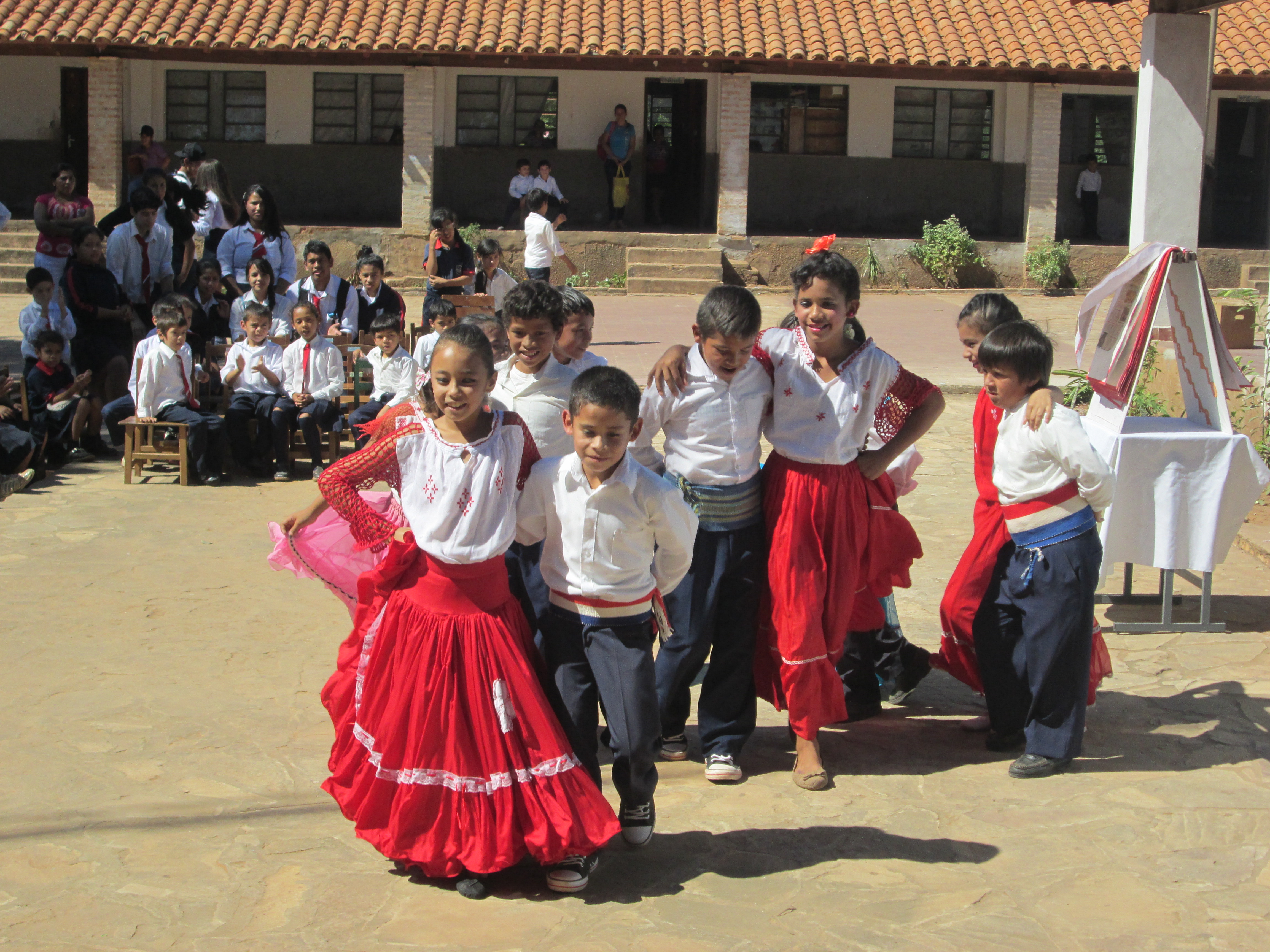
Traditional Paraguayan dance

Traditional Paraguayan dance.

In early May, Paraguay celebrates Teacher’s Day, and it’s no small thing. In fact, in an almost ironic way, schools have the day off. The school where I work also got the day before off—because we held a celebration for teachers. In the morning of the celebration, students performed skits, dances, and poems. The school recognized one teacher who retired last year after 30 years of teaching. Then, there was a lunch for all the teachers. We had cake, danced a little, and sang traditional Paraguayan songs.

When my school invited me to participate in the teacher’s lunch not as a special guest but as a teacher it hit me: I am a teacher. I never thought I’d be a teacher. There were brief moments in high school when teaching, the profession, crossed my mind. My Peace Corps projects have brought me back to high school (I teach grades 8-12 primarily). My days, in Paraguay, are filled with life skills classes, English tutoring, and sometimes helping with communications class (Yes, I am helping with Spanish homework even though my students make fun of me for my errors in Spanish when I speak. It stems from the fact that I’m good at literary analysis, and that’s a challenge for many in my community).

Even if my role as a teacher wasn’t formalized by my work in the school, I still think my main project in Paraguay would be teaching. Whether I mean to or not, I push the people I interact with in my community to expand. First, they have to put in a good effort to understand me—which is not just a lesson in active listening, but also clear communication. Second, and more profound, we have different cultures and understandings of the world, and together we are helping each other grow.

It is easy to forget or demean the importance of exposure to people different from yourself in the grand scheme of life and Peace Corps service. But, in the end, that’s the core of it. Peace Corps volunteers do a range of work that can be reported—lectures, classes, building things, camps—but in the end the only sure things that change are the volunteers and the people with whom they spend the most time in their community. I can’t summarize personal growth neatly in a report. But, many things that are worthwhile are hard to quantify—love, friendship, goodness, happiness, kindness, respect—that’s what makes life so damn exciting.

Meaning of Military

My grandfather was a veteran. That has many layers of meaning to those born in the USA. For me it invokes conflicting thoughts. But, in Paraguay the understanding of the military is different. I do not know how the history of the dictatorship or the history of several high-casualty wars influence Paraguayans’ views of Paraguayan soldiers. I know soldiers are respected here. But, from what I understand (grain of salt) joining the military is held high in Paraguay because it’s a good, solid job. One has to work hard to get in, and once he or she is in he or she will always be able to provide for his or her family.

In Paraguay, the military is a providers’ choice. Paraguay doesn’t wage wars these days like the States still does. Paraguay has never been charged by scholars as trying to be the “world’s policeman.” In Paraguay, the military is a secure way to pull oneself up his or her bootstraps. Paraguayan soldiers have a small chance of being shipped off to a land they don’t know to fight a guerrilla war. In the current political climate, they seem unlikely to use their weapons on any kind of battlefield.

Several of the most difficult conversations I’ve had in Paraguay were about military service. I’m close to the family of a young man who is studying in the Paraguayan military academy. His sister once asked me if I like soldiers. His aunt talked about what a hard-working person the soldier-to-be is. His mother and father explained how they’ve had to sacrifice to send him to military school. They hope he will help his younger sister when it’s her turn to go to college.

During those conversations, I thought of Arlington cemetery and the news—why I don’t like watching the news. I thought of the base shootings. I thought of the pledge of allegiance. I thought of baseball games and the National Symphony Orchestra’s concert each Memorial Day on the Capitol lawn. I thought of my grandfather in uniform. I thought of the star spangled banner.

In those conversations with Paraguayans about the military I chose to listen. I chose to limit my commentary. There are cultural things that can be explained—food, for example. There are parts of culture that run too deep to neatly fit in words. What do Paraguayans think when I tell them my grandfather was a soldier? How would they react to his funeral? Do Paraguayan soldiers have special burial rites? If so, who gets them and under what circumstances? Are Paraguayan mothers worried about their children or just proud when they enlist?

Lost But Not Forgotten

He was honored and not forgotten,” my father said of my grandfather’s funeral. My grandfather was a soldier for 20 years. He fought in WWII and Korea. He suffered for it. But, his comrades remembered him and in doing so they helped bring some peace to his family. Shiny pins and folded flags don’t pay for the dead, but ceremony does help those who are left behind.

It’s easy to forget. To close the door when the job is “done.” But, being able to talk to my father the week of his father’s funeral and hear the pride in his voice for how my grandfather was sent off—I’m glad that someone, many, took the time to remember. My grandfather lost a lot of himself in those 20 years. But, I will not criticize his motivation. His sacrifice was founded in a dedication to country and all people, a desire to do good. Further, I will not criticize the loyalty of his fellow veterans.

The thought of remembering struck me, as I sat alone in my little house thinking about my family so far away. I thought about why I left them. All the crazy phrases my grandfather used are on the tip of my tongue these days. They come to me as I’m going about my business. Sometimes, I try to expression them into Spanish, but they don’t have the same ring. “I’m taking hat, brother,” for example. Sombrero means “hat” in Spanish, in Paraguay it also can mean “lover on the side.”

In Paraguay, people pray for nine days when someone dies. Each day friends and family are invited to pray and eat snacks. On the last day, there are many snacks and there is extra praying. People remember their dead on specific anniversaries thereafter by holding similar praying sessions.

Oh, I Couldn’t Because…

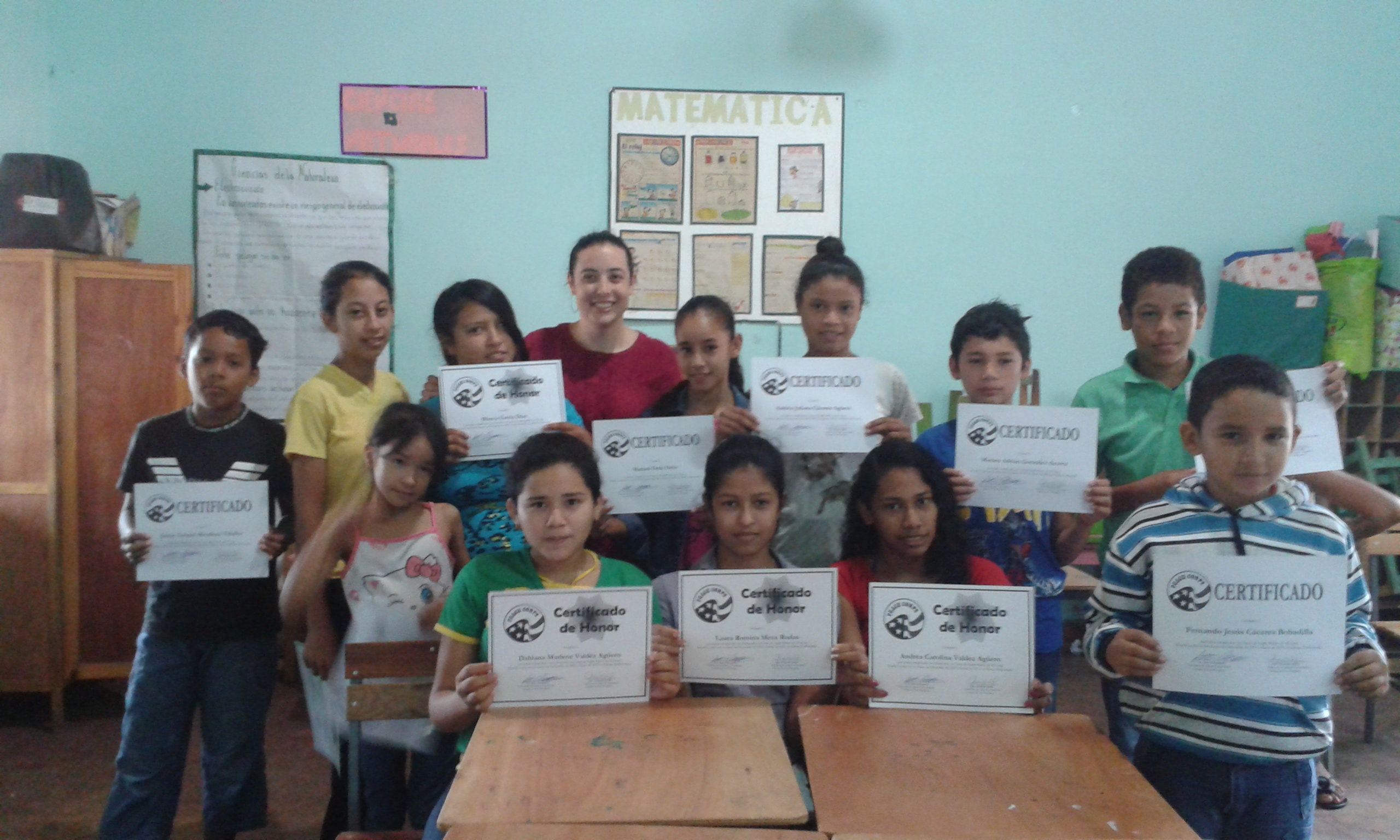
Summer English Class Champions

Summer English Class Champions

Because I had to wash my clothes. Because I had to clean my house. Because I didn’t have the energy. Those excuses would NOT fly in my US world, but in Paraguay they aren’t only legit excuses but won’t be questioned.

It’s amazing. I can come up with an excuse that would be completely understandable to my friends in the US. Like, “I had a ton of work for the next day and I needed to study.” If I try that excuse in my community people give the half nod that means something like, “Right, you just didn’t want to come. Lame.” Conversely, I can simply say, “I needed to wash my clothes. It’s been raining lately, so it’s been hard to wash them.” People will nod understandingly. No questions asked. Done. I didn’t come because I had to wash my clothes. Obviously. I had to take advantage of the sun.

As for cleaning the house. I’m a woman, after all. I couldn’t let my house be dirty, right? What would that say about my womanhood? Done. I didn’t visit because my house had to be cleaned that instant.

The excuse that I didn’t go because I didn’t have the energy is the hardest for me. I get the clothes washing. I wash clothes by hand. It’s a chore, and if it rains clothes don’t dry well. The sun is a valid concern. I also get the house cleaning bit. I might not agree with it, but the house is the women’s domain in Paraguay. Women in Paraguay are very proud of how they keep their homes, and to fail on that front would make people judge me. I do what I can to keep my house almost up to Paraguayan standards. However, I do fail on the lawn sweeping and spider web reduction parts of the job. But, what exactly does it mean to not have energy to do something? Isn’t that the same as just being lazy and lame?

No, it is not, according to Paraguay. It’s a polite reason not to go. Sometimes it has nothing to do with being lazy. Maybe it was raining. Maybe it was too hot. Maybe the terere I was drinking was simply too good to leave.

Culture. It permeates everything. Even the excuses we use to get out of things.

Chipa Time: Semana Santa

Semana Santa is what Paraguayans call the week leading up to Easter. School stops on Tuesday, and most people get off work before mid-day on Wednesday. Families share a last supper on Thursday and every night there is a religious celebration of some kind—not everyone goes. The TV is filled with depictions of Jesus’ death and resurrection. The gory details are not spared.

After the last super, you aren’t supposed to eat anything but chipa until Easter Sunday, or at the least, you aren’t supposed to eat meat. Chipa is a kind of cheesy biscuit, that promptly gets stale.

The chipa tradition is neat because it is unique to Paraguay. The idea is that every family makes their own chipa, and as families visit each other on Friday and Saturday they exchange chipa. As I got ready for Semana Santa, my friends explained that people take chipa less seriously than they once did. Many people buy chipa these days, and most people eat other things (though they do avoid meat).

I made around 500 hundred chipa on the Tuesday and Wednesday of Semana Santa. Several of the señoras I visit most are part of a baking cooperative. I helped them make chipa for their clients, and also helped various community members who used the cooperative oven make their chipa.

Making chipa is a strenuous process. First, you whip raw animal fat, vegetable fat, or maybe butter with your hands until it is smooth, then you mix in all the other ingredients. You mix everything with your hands, and by the end the dough is crumbly. From that point, you knead the dough until it is the consistency of putty. From there, you shape each individual chipa.

I like chipa making, especially for Semana Santa, because it brings the women of the community together.

Weight Watchers

In Paraguay it’s normal, acceptable, and common to talk about people’s weight. I’ve sort of come to accept this, except one morning a man I hadn’t seen in months made a point to stop and ask if I’d gained weight. That put me over the edge—no matter how hard I try I can’t completely suppress my US upbringing. It shouldn’t have bothered me, especially seeing as I’ve lost weight since we last spoke, but it did. And there was no escaping as that morning progressed.

Subsequent conversations that day with Paraguayan men included why I didn’t have a boyfriend and then how I am a cold person because I don’t respond well to Paraguayan men’s way of being. Examples: I don’t answer catcalls; I don’t hold suggestive text conversations joking or not; and I don’t dance with random people (even if someone I know asks me to) at parties where everyone is drinking…crazy, I know.

I think it was the timing. That morning occurred days after I returned from a girls leadership camp. To have some dude engage me in a conversation by calling me fat after almost a week of talking about self-esteem and girl power created a juxtaposition of reality that was impossible to ignore. We talk about self-esteem and how it leads to bad decisions; or, more aptly, inability to stand up for yourself or what you want.

Maybe it is culturally acceptable to ask or comment about someone’s weight in Paraguay, but not it the way it was done that morning. It was a classic case of undermining someone to cow them into doing something. I didn’t take the bate, and the conversation ended promptly. There is a reason why I hadn’t talked to that particular guy or his family in months, and regardless of my weight I won’t go back on my decision to keep them out of my life.

Weight is a blurry thing in Paraguay. Everyone talks about it. Babies (both sexes) and little girls are a called “fatty” in Spanish, it’s a pet name. Girls and women (to a lesser extent boys and men also) who are overweight or very skinny will also get called the nick name “fatty.” But, the regularity of talking about weight doesn’t negate the negative connotations. You might argue that the “ideal” woman in Paraguay is a little more curvy that the “ideal” in the States, but the ideal is still skinny. The same goes for men, the “ideal” man is muscular and trim, not jiggly.

There’s a lot of ways to interpret what a Paraguayan mother means when she calls her adult daughter fat: she thinks it’s endearing, she thinks her daughter should lose weight, or she just wants to start a conversation with you (about whatever). But when the Paraguayan male calls any woman fat, there are fewer interpretations: he wants to start a conversation or he is criticizing her.

Why is putting people down, especially women, an acceptable conversation starter? Cultural differences are peachy, but things that help maintain a status quo of inequality ought to be reconsidered no matter where you live.

When $%#@ Goes Down, God Has Spoken

Not so long ago, a woman in my community died. I don’t know all the details of the story. I only heard a witnesses account, and I only understood what I gleaned from the conversation. But, it’s too good of an example of health access and religion in Paraguay to let it pass untold.

The woman had diabetes and that’s what killed her. Diabetes, high blood pressure, and obesity are common health problems in Paraguay. There may be genetic component (I’m not sure) but it has a lot to do with the diet and life style. Food is saturated in oil and fat and most meals are nothing more than a medley of carbohydrates with a chuck of fatty meat at the center. For many, life is centered around sitting, and dirt bikes have made is so many people don’t even need to walk to go to the corner store or their neighbor’s house.

I don’t entirely understand what happened. The doomed lady at first felt very ill and had to lie down. She sent her younger child out of the room so the child didn’t have to see her that way. The person telling me the story, started calling around to ask if anyone with a car could help take the sick woman to the hospital.

In Paraguay, ambulances aren’t the norm. There are ambulances, especially connected to private hospitals. Public hospitals also have them, but those ambulances don’t cover the hospital’s whole territory—I’m still murky on how that works. The closest public hospital to my site is a half hour bus ride away, but they can’t help with everything. The closest major public emergency center is about two hours away by bus. Basically, in an emergency, you need a ride. Cars aren’t super common. More people have dirt bikes, but a two-hour ride on a dirt bike is not really the best idea understanding the dangerous traffic conditions of the route. Not to mention, holding on to a dirt bike when you’re sick must be hard.

So, the lady trying to find a ride for the ill woman called several people—the old go-to’s, people with cars known to give rides, the taxis. No one could help. When she returned to the ill lady, the woman was dead and her skin colored with blood leached out underneath.

The woman telling this story, was actually telling the woman I was visiting that afternoon. And the woman I was visiting responded to the story by saying something like, “When you need help and there is no one, it’s your time.” The three of us nodded in agreement to that comment; it made perfect sense.

Each person has his or her own system of beliefs. But, in Paraguay belief in the Christian God helps explains a lot of things. Life isn’t always fair. There is suffering. There is joy. God helps relieve feelings of injustice and despair by providing one reason for why things are the way they are.

The Ability to Do Nothing

Think for a moment, how often do you do absolutely nothing? Now, I’m not talking about watching the TV, reading a book, sleeping…those would all be considered something regardless of your value judgement. Think hard: Nothing, sitting and staring into space, maybe watching people pass on the street and kids play in the patio. Concession, it’s hot in Paraguay so that nothingness activity might also include terere.

I don’t know your answer, but mine before coming to Paraguay was almost never. It’s so culturally ingrained in me that I must always be doing something it’s practically biological. At best, doing nothing for extended periods of time makes me show physical signs of stress. At worst, long stretches of nothingness makes me saturnine and frozen with boredom.

Paraguayans possess an innate ability to do nothing, or maybe it’s culturally taught, because the kids here have more energy then a hydro-dam running full throttle. The point is this, to my community members, a great afternoon is one spent sitting outside in the shade drinking terere. For hours. Sometimes that sitting involves conversations about the normal—who’s dating who, who’s not parents right, who’s gotten into trouble, or who did this, that, and the other thing. You know, small-town gossip. If you come from where I come from in the States you know the drill.

It’s hard for me to comprehend that an afternoon spent in such a way isn’t a waste. I know the Paraguayans in my community see an afternoon sitting as a gift, as a win. I’m always trying hard to not use my culture to judge them, but it’s difficult. Something about idleness gets to me. There are studies that people in the States should do less, that the brain needs time to just putter along. I have my doubts.

My tolerance for nothingness has grown. I can sit a couple of hours a couple times a week before my legs get completely stiff and my brain feels like mush. It’s an improvement, but I don’t possess the ability of nothingness. I never will.

The ability to do nothing is the ability to only think about this moment in time. To enjoy everything there is, as it is, and not question how it could be improved or changed. I can never only live in the moment. I replay the past; I ponder the future. If I’m not thinking about my life I slip into planning out the novel I’m writing, or going to write someday, I think about philosophical questions.

Having passed my year mark in Paraguay, I’ve returned to the conclusion that it is neither good or bad to be able to do nothing, but it is bad to force myself to try too often. Paraguayans judge self-worth in a different way than I do. They define self-worth by the group they are part of—their family, friends, or team. I define self-worth by what I’v done. To ask me to do nothing too often, is to ask me to be worthless. My way of seeing things is not better or worse than the Paraguayan way, it’s just different. And when in Paraguay, do as the Paraguayans do…with a grain of salt. I now always carry a book or flashcards when I go visiting…just in case the terere conversation stops and I find myself falling into the black abyss of nothing. There’s a difference between integrating and losing yourself.

No…No…No…I Don’t Have a Boyfriend

No, I haven’t found that special Paraguayan

No, I don’t have someone waiting for me in the States either

My answer shouldn’t come as a surprise

Because it’s the same as yesterday’s response

Does this topic really require daily discussion?

This is my excuse:

Clearly an excuse is necessary…who knew?

As if living in a foreign country for two years isn’t enough.

I’m not looking for one…

I don’t have time, I’m busy

I have things to do and I’m in Paraguay to work

I can’t bring a Paraguayan back to the States (unless he can support himself)

No, there’s no rule against it (that would be stupid)

Oh, I’m hopeful, but I’m not waiting

Well, since we’ve had this convo so many times

Your responses are of little surprise:

The man’s the one whose supposed to look and you’re pretty

But come on, you could just bring him home a few hours

Love is powerful

No rule against it? Well then…(insert critical look)

Are you really saying these things to me?

The inevitable conclusion:

It’s not that I’m against them, back off a bit would you?

You make it seem like without one I’ll drop dead

Which, is beyond annoying.

Yes, of course, if the perfect man crosses my path

Things would be different

Dear Paraguay, what I didn’t tell you:

Sure, I’d be happy to have a boyfriend

But, I’m not pining away

Feeling worthless or pointless because I don’t have one

I have nothing against Paraguayans

They are actually a pretty attractive people

But the thing is this…

I’m leaving in 2 years, tops 3

And I’m looking at 8-9 years of studying when I get back

Having kids is not on my agenda right now

No way in hell am I doing all the cooking and cleaning

Aggressiveness, catcalls, and any comments about my body

Are rude and a huge turn off

I don’t understand enough Guaraní and my first language is English

More important than anything is a good conversation

So, if you’re insistent on pairing me with a Paraguayan

Find someone who can work with all those things

Who isn’t dating or married, doesn’t have kids and has his teeth

And is genuinely a “good” person and someone I enjoy

Find someone who fits that bill

Then we can start a real discussion about dating.