Sharing Is Just Part of Life

Clouds and palmsOne thing I’ve noticed while living with Paraguayan families is that they have few things. That’s not to say they don’t have anything—the families I’ve lived with have TVs (yes, plural), stereos, toys, and fashion items like purses and watches. But, they don’t have things in excess. Paraguayans use the things they have until they are completely worn out, and then they use them for something else.

Despite having little, Paraguayans share almost everything and aren’t afraid to use things just because they might get dirty or break. For example, one of my host brothers has a bike. It’s a bike that’s too big for him and has parts from different bikes, but it runs just fine. He rides that bike whenever he can. And his sister rides it, and two of his neighboring cousins ride it because they don’t have a bike, and his other siblings and cousins ride it sometimes. They all zoom around, up and down, the little dirt paths that connect our houses. Sometimes the seat has to be raised, but most of the time it is pushed down as far as it can go. No one worries that the bike is going to break—they just enjoy what they are getting out of it now.

The same goes for food. When a little kid, or adult, or anyone really, has something yummy they almost always share it if they are eating it in front of other people. I’ve passed candy bars and cookies back and forth with my eight-year-old sister.  If you don’t want to share, you don’t eat around other people.

Everything here seems to be shared. Siblings share beds, cousins share party shoes, and neighbors share garden tools. Why does everyone family need their own ladder when someone in the vicinity already has one?

When someone in the family gets something new they pass it around so everyone can look at it. Things that individuals get still add, somehow, to the enjoyment of the whole family or group.

Having only what you need and sharing everything is very different than my experience in the US. In the US we focus on being independent and being individuals, so the idea of sharing is second thought. It may not seem like a big difference, but it is.

What’s the Real Message Here?

Not so long ago, I sat in on a twelfth grade psychology class. The topic was security and how everyone has to do their part to maintain security. After a brief lecture, the class split into groups. Each group developed and preformed a skit about one of the following topics: security in the home, security in the plaza, security in the community, security in the bus, and security in the school.

The skits were funny and covered a range of themes from helping old people on the bus (this skit poked fun at the Paraguayan buses…more on that later) to picking up trash in the town plaza.

One skit struck me more than the others, but not because of its security message. The plot: The stay at home mom had a lot to do around the house, and so she was unable to have lunch (the biggest meal in Paraguay) ready for the hour her husband came home. She had three daughters who at the beginning didn’t help her with the house chores—one was texting, one was watching TV, and one was painting her nails. One day the father came home and lunch wasn’t ready. He got angry and told the daughters they had to help their mother because he wants lunch ready when he gets home because he is hungry. After that, the daughters helped their mother and lunch was ready for the father when he got home.

I understand that the intended message of this skit was that everyone should contribute in the house. But, for me, the skit did a better job of illustrating power relationships and gender expectations.

I found it interesting that the reason the daughters had to help was because their father wanted his lunch at a specific hour. From what I’ve seen in Paraguay so far, most women’s prescribed role is taking care of their men. Women aren’t powerless here, but the last word is usually the man’s, especially when he’s the main breadwinner. I also noted that it was three daughters—this was mostly due to who was in the group developing the skit—but I think expectations for sons are different. The sons I’ve seen do help out, but few do many house chores.

For me, this little skit was a great example of how gender norms and expectations permeate through how we see everything in society. It made me wonder how a group of high school students would portray the same topic, security in the home, in the US.

2 More Myths About the US: City and Disposable Clothes

ClothesWhen I was in college we talked a lot about globalization and how US culture is everywhere. I won’t argue that point, but I’ve come to understand that being everywhere and being understood everywhere are different things.

Myth 1: The US is only city.

The thought that the US is only city has a lot to do with movies. Most of the movies that make it to Paraguay about the US are set in a city. Actually, most of the movies I watched in the US are set in the city. I guess the city is more exciting. Being from the rural US myself, this myth was fun to dispel.

Myth 2: People in the US wear their clothes once and then throw them out.

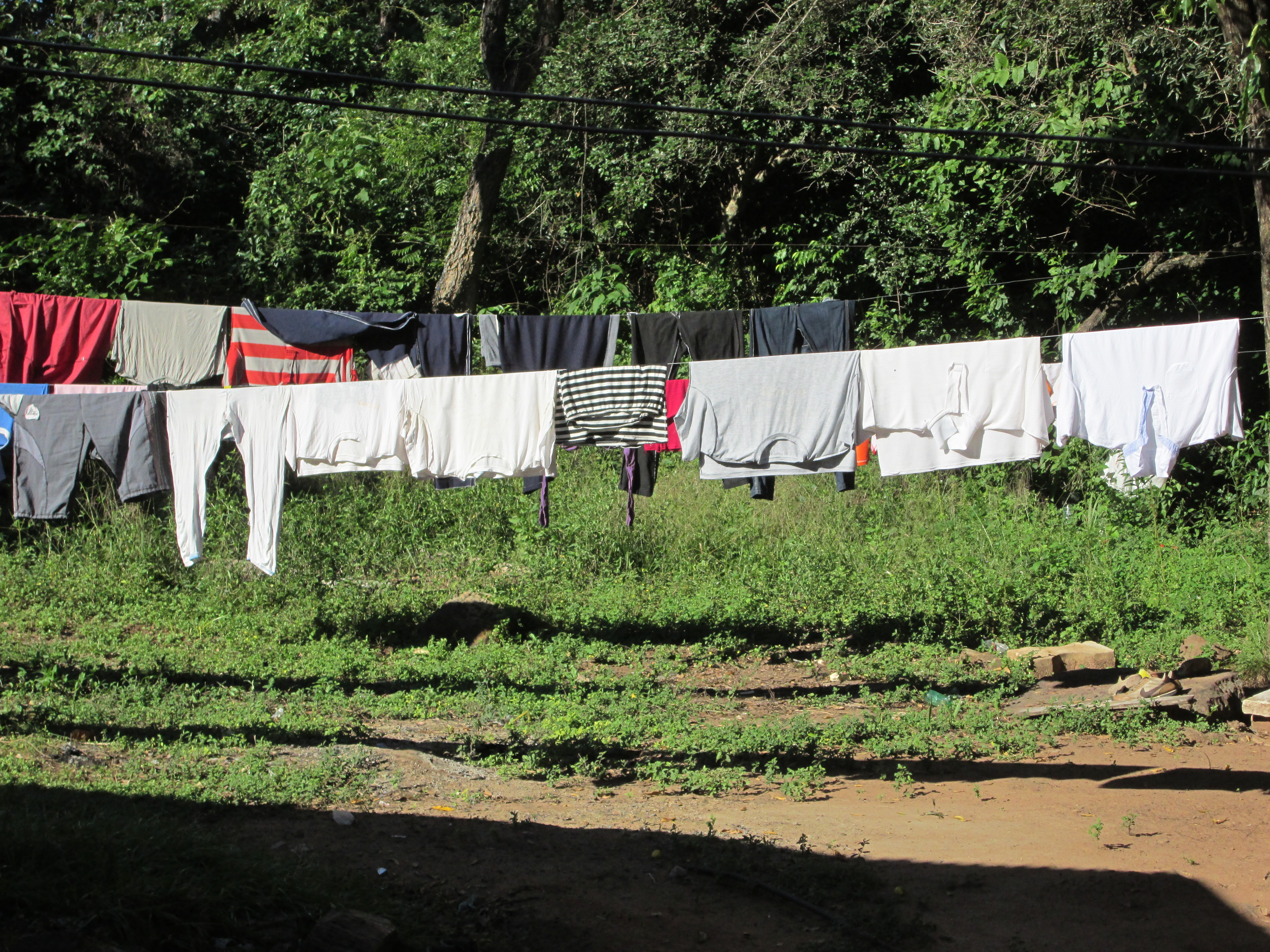
The person who asked me about this heard it from someone who visited the US. I think the root of the confusion might have been that it seemed like people wore their clothes only once because people in the US tend to have more clothes than Paraguayans. In Paraguay most people I’ve known have a handful (more or less) of each clothing item. It’s common and fine to wear the same shirt (or outfit) multiple times a week as long as it’s clean. To ensure they always have clean clothes, many Paraguayans do laundry several times a week.

Meat

CowI cannot describe the Paraguayan love for meat

So strong and not selective


It’s not romantic, but matter-of-fact

Nawing, slurping, cutting, chopping, slicing, pounding, breading, frying, grinding

It is not the cut that matters


Cow for the weekdays and pig for the weekends

Pork fatty bits seasoned and laced with cornmeal

Blood sausage or breaded and fried stomach slices


Bones with fat in a runny broth

Little bits in cheesy rice

Slices that are somewhat nice


Meat, carne, so’o, pork, chancho

Meat is king in Paraguay

(Chicken does not count as meat)


Slaughtering is a group affair

Kids know how to remove pig hair

The men slice and the women cook


It’s not exciting and it’s not passionate

The source of our food is very clear

This here pork came from over there


Paraguayans love their meat

It’s not secret but loudly announced

Meat desire.


The Lindo Factor

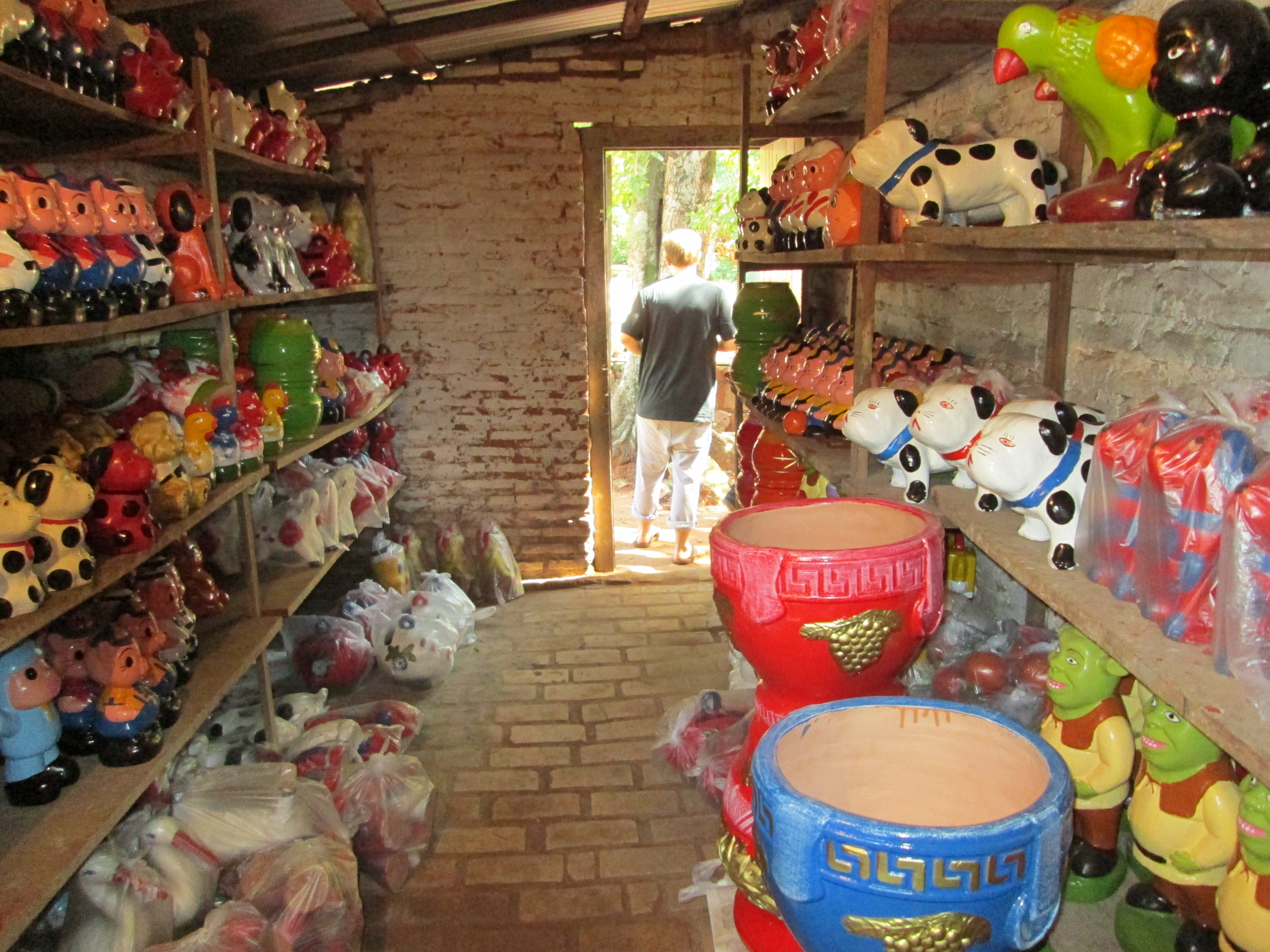
Ceramic figurines made in Aregua.

Ceramic figurines made in Aregua.

Lindo means pretty in Spanish. And while it means that in Paraguay too, especially when talking about people, it also carries a deeper meaning. I like to call it the “lindo factor.” Let me come clean from the outset, I love the lindo factor. Actually, it’s one of my favorite things about Paraguay.

In short, the lindo factor is the emphasis Paraguayans put on making things look nice. Lindo doesn’t just mean clean and it doesn’t mean hygienic (and in Paraguay clean and hygienic are not the same thing). The emphasis is on how things look overall.

Let me describe the lindo factor from within my American upbringing and then expand it to the Paraguayan setting. My mother has always been keen on keeping the house neat, which to her means no dirt and no dust; things are put away in their places in an organized manner; and curtains, flowers, art, and other objects are strategically placed to make things look pretty.  In this context, the emphasis is on making things perfect. All this together, gives my mom’s house a serious dose of the lindo factor.

Now, in the Paraguayan context, as much importance is put on making things pretty and neat as in my mom’s house, but there isn’t the pressure to make things perfect.  There’s a lot of sand here in Paraguay so there’s always sand on the floor. There’s dust and spiders on the ceiling beams and the walls show dirt and water marks. Things like seat covers might be stained or slightly torn and the walls or doors might have children’s writing left over from the tender years. But, you will never walk into a messy Paraguayan home. There is a table cloth on the table, the floors are swept everyday, the dirt in the lawn is swept everyday, and sometimes you’ll find a ceramic figurine outside or a painting inside.  The first 3 feet of the trees outside might be painted white for no other reason than it makes them more “lindo.” Things might be piled on a table (because there are no drawers or shelves available), but nothing is left on the floor. Everyone in the house helps keep it clean.

The lindo factor is one thing that has made living in Paraguay easier for me. I’ve always felt that the neatness of one’s living space is a reflection of the neatness of her mind.

Two Myths About the US

Paraguayan SkyWhen I meet people in Paraguay, I expect to tell them that my state is close to New York and Canada because they’ve never heard of it. I’m excited to be the first one to talk to them about Vermont. Coming from a rural area of the United States, I think it’s fun to dispel the image movies and TV shows create of my country. Eagerness to teach aside, there are two myths many people in Paraguay have about the US that frustrate me.

Myth 1: Everyone in the US is blond and blue-eyed.

I think one of the challenges related to this is that Paraguayans don’t always realize how big the US is. They’ve heard of New York and some of our other major cities. But, it’s hard to describe to them that the US is about 24 times the size of Paraguay (Paraguay is about the size of California). We have cities that have more inhabitants than the entire population of Paraguay

Myth 2: Everyone in the US is rich. There are no poor people in the US.  

I had an interesting conversation with one woman who thought people didn’t have to work in the United States. I think she thought we get money from the government. If I wasn’t so interested in capitalizing on the teachable moment I might have laughed. When I left the US, people were still up in arms because some saw the new health care law as a government overstep.  In Paraguay, where government handouts were part of the system for the 30-odd years leading up to Paraguayan democracy, it’s hard to convey the “pull yourself up by your bootstraps” mentality that is the American dream. Many volunteers struggle against the perception that they are here to deliver money.  Even among development organizations the idea of development as a partnership of work is not as common as it should be.

It’s not for nothing that 2 of the 3 Peace Corps goals focus on cultural exchange.

Guapa

SunriseIf you were to look up the word “guapo” or “guapa” (the “o” ending for men and the “a” ending for women) in a Spanish dictionary you would likely find a definition like, “beautiful, cute, or physically attractive.” And, while that definition will serve you well in most places, it won’t in Paraguay.

In Paraguay, guapo or guapa means hard working.  It is a complement that is lightly tossed around, but I think it has a greater weight than the joking way it’s delivered may imply.

If people think you’re guapa you’ll go far.  Respect is given to people who work and especially those who work hard. Why? I don’t know yet, but I have some guesses.

  • As you will hear many times, it is hot in Paraguay.  Have you ever tried to do anything when it’s over 100 degrees and humid? It’s like trying to do calculus after staying up all night. You deserve brownie points for just staying awake.
  • Things just take longer here (generally). Many people wash their clothes by hand and hang their clothes to dry. Some communities don’t have running water or modern stoves so people have to haul water, bucket bathe, and cook with a wood-burning stove. Paved roads are in the minority and newer to the scene.
  • Paraguayan culture is laid-back. One of the main free time activities is sitting and drinking terere.

Chuchi – No Good Translation

Cat!Chuchi can be defined as fancy or big headed, but that’s not really a good translation. Let me try to explain “chuchi” in the context of Paraguayan culture.

In Paraguay things are used until they don’t exist; it is hot; and there is a lot of sand that turns to mud when it rains. Outside of larger towns the only option you have for shopping are little house-front shops. People here recycle—my family gets their milk delivered in old 2 liter soda bottles. Even people with running water tend to wash, or at least rinse, their clothes by hand. The sun scorches, but it also dries things quickly.

Despite the sand and ants (which are everywhere) neatness and cleanliness are part of the culture. Some people even iron their underwear. But “nice” attire, at least outside the capital, Asunción, takes on a completely different form than it does in the US. For men slacks and a polo, not necessarily tucked in, is good for almost any occasion requiring formal dress. For women, capris with wedge sandals and a short sleeve (or long sleeve) blouse will do. In US terms, business casual is formal. The well-dressed person is well kept, clean, and without wrinkled clothes.

Enter chuchi.

Chuchi is used to describe something that is nicer than it needs to be, or particularly nice. Chuchi shoes shouldn’t be worn when regular shoes could be. A house with extra frills, beyond the functional, like new, detailed kitchen cabinets might be chuchi. If someone looks especially well put together they might be chuchi.

Chuchi is excess. It’s not negative, like we view it in the US. It’s a word used to show people you noticed their extra effort.

Traditional Dance

Girl DancersIf you (US resident) had a visitor from another country who had never been to the US before how would you show them what America is all about? What would you show them? What would you do? What would you eat?

I imagine those are the questions running through the heads’ of my host family members right now. They are also the questions running though my head, but from the opposite direction. How can I figure out what Paraguay is all about? What do I need to see? What do I need to do? What should I eat?

A buzzword for the Peace Corps is “assimilation” – the taking and understanding of another culture. It’s important to the Peace Corps because the assimilated volunteer is the successful volunteer. (We will avoid defining success right now because I wager I’ll post about that in a year or two).

How does one assimilate? That is the great overarching question of Peace Corps training. One thing I’m doing and several other trainees are doing to assimilate is learning traditional Paraguayan dance.

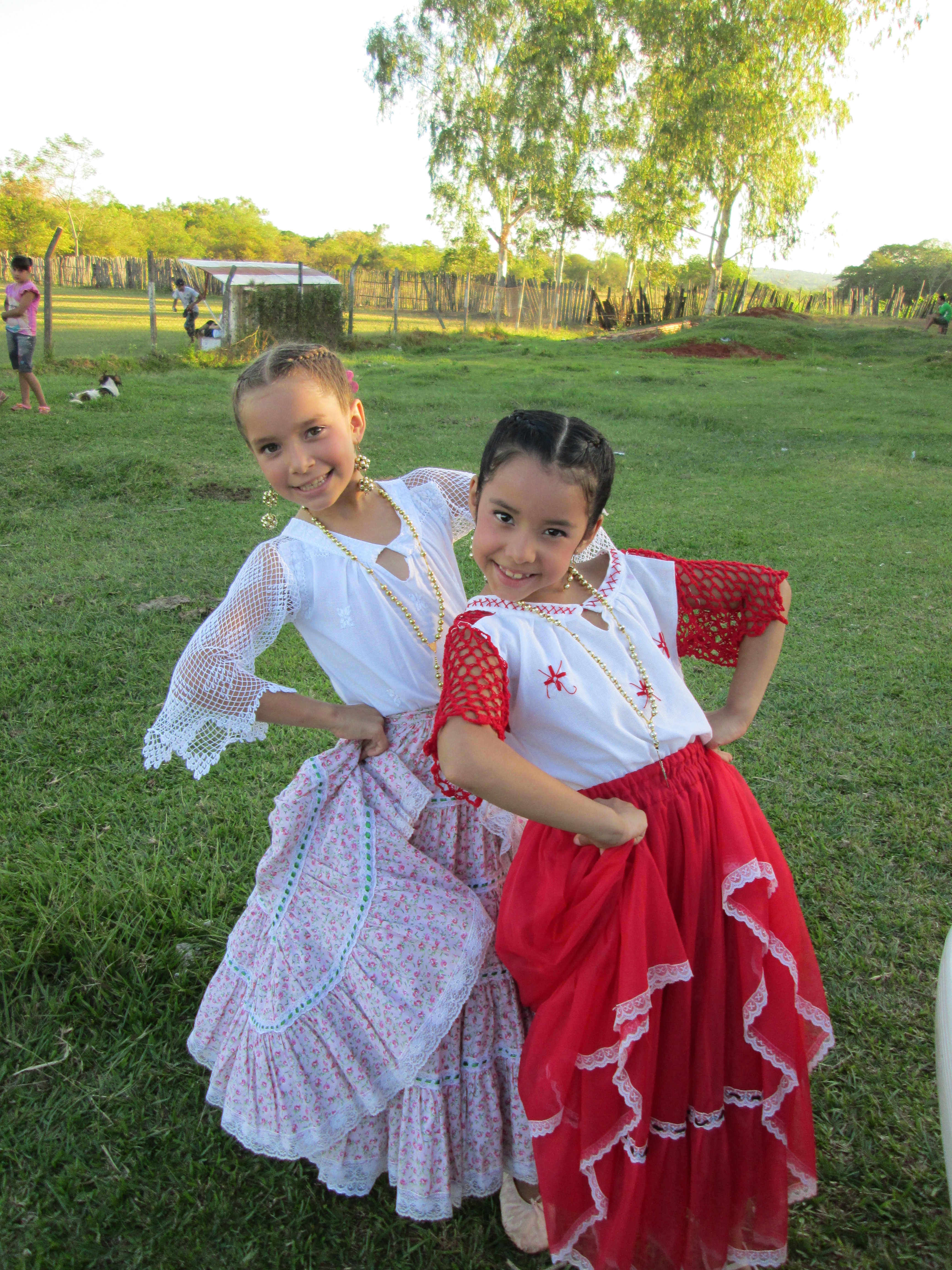
To me, the best part about traditional Paraguayan dance is the costumes. Women wear flowing skirts, embroidered and laced shirts, flashy earrings and cross necklaces, and braided hairdos. Men ware a white shirt and black pants, a bright, multicolored waistband, a handkerchief over their collars, and a straw hat. My least favorite part about Paraguayan dance is the music. At least right now, all the music sounds the same to me – a kind of patriotic march. The dance itself is neat.

Traditional Paraguayan dance reminds me of contra dancing in the US. Some dances are done with couples and others aren’t, but all (at least what I’ve seen and started learning) involve many people. There are specific steps and formations.

Saturday afternoons we have dance class. Several other volunteers and I joined girls and boys in our neighborhood for free dance lessons in a covered area next to the soccer field. The dance professor is good humored but serious.

For the same reason I like the harbors of Maine, I like learning traditional Paraguayan dance—to carry on and share the tradition and to remember all those who traced the steps before me.