Mercado 4

Narrow paths, dirt outside and shiny tile inside, are tapered further by the crowd. Clothes line the paths – sweaters, sweatshirts, jackets, pants, leggings, socks, underwear, and hats – bright white and vibrant colors and crisp new shoes. Each stall with a different mix of things neatly organized in folded stacks. Salesmen and women invite you to ask about the prices. Suddenly the clothes fade away and its heaps of red tomatoes, oranges, and onions. Herbs green and brown are laid out and tied in bundles with palm leaves.

The sales women yell to each other across their mountains and hills of produce, sipping terere and jeering at the young men straining to push their wooden wheelbarrow-carts up the inclined walkway and between shoppers. The carts are stacked high with bursting plastic, burlap bags.

Kittens, scrawny and ownerless, gallop around the crates and between feet—gray, striped, orange, and black. Their fizzy ears and whiskers make them cuter than rats.

I look to the right and see hunks of meat and stacks of fish—the smell of flesh clashes with the earthy aroma of the vegetables next to me. I hurry on. I walked in a meat section once. The sent of death was thick, and I promised myself I wouldn’t go back there.

A basket made of chicken wire holds live chicks, chipping and jostling each other, and rabbits with their noses twitching.

I dart between to stalls to pass from the outside part of the market to the warehouse part of the market. I go up the stairs to find a bench. I sit on a bench in the middle of the room and look around at the racks of shoes around me…shoes in every direction: snazzy sneakers and sexy heals, clunky work boots and shiny men’s dress shoes.

I go back down into the fray and ask the smoothie-empanada lady where I can find a guitar. I cross the street—dashing through a just-big-enough-gap between the buses, cars, and motorcycles that roar and hum on the muddy street. I find myself in a new mix: Stands stacked high with shiny new cellphones. People ask if I’m looking to sell my phone. I hurry on. There are stereos and TVs. And there is kitchenware. Finally, I find the guitar store.

The last and final mission—find a bus home. I catch the bus on the corner-ish, hailing it like you do a taxi in the United States. I climb on. Luckily there is a seat. I sit with my new purchases piled on top of me.

I didn’t realize how big the market was. It stretches for blocks—crossing streets and alleys. The stores and stalls weave in and out of buildings. You get stuck going in circles. They tell me you can get just about anything there, and the prices can be cheaper than the mall, but to find a product you must navigate a labyrinth. (At least I have two years to master the whole thing.)

I made it! I finished my first solo mission to Asunción’s Mercado 4. I’m proud of myself, but there isn’t time to relax on the bus. Clanking and coughing my bus sputters down the cobbled streets of the city—there is too much to see and the air is spoiled by diesel smog. School children get on the bus, their uniform sweat pants and polos in some shade of gray or blue. Candy, cookie, and fruit venders hop on and off the bus holding their wares for all to see—their sales pitches are more like songs in rhythm and tonality than spoken word.

The little streets with the stacked and crunched houses wiz-by, and I just glimpse them through the dust-encrusted bus window. I am not inclined to call Asunción pretty; it isn’t. But it’s a city where you feel like things are happening and progress is pushing forward—to what end and to where is unclear, but Asunción in a word would be “movement.”
Site Presentation: Feeling Loved

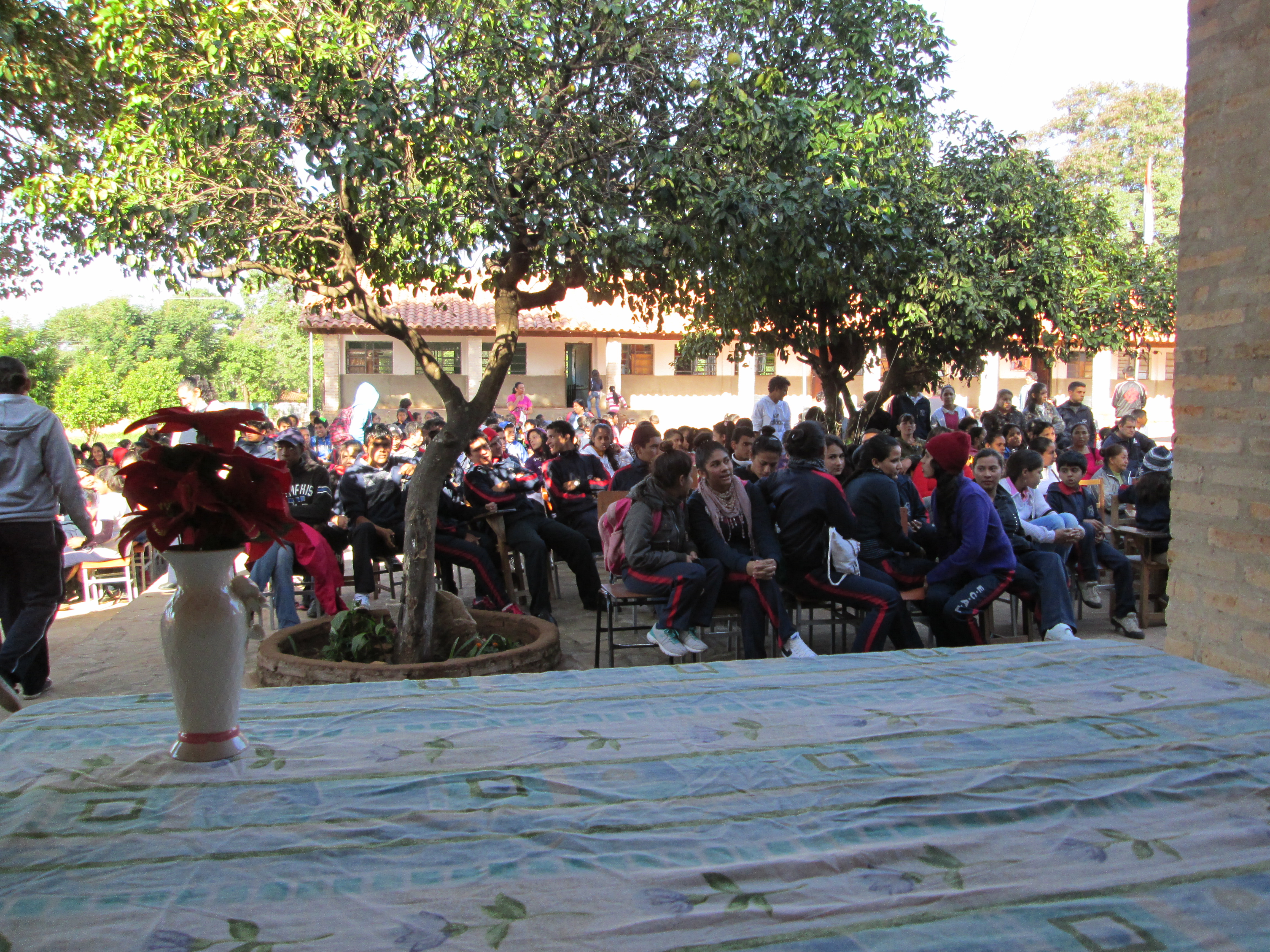
Site Presentation CrowdAt the end of May my boss came to my site to officially present me to my community at an event called my “site presentation.” The idea of the site presentation is that you organize a community meeting so that Peace Corps can explain why you are here. My presentation went way better than I could have imagined.

The director of the school where I will work organized the presentation and I made cake and invited my host family and the team at the community clinic where I work. I wasn’t sure what to expect.

It was beautiful! When I got to the school the professors and director were running around getting everything ready. I went into the office to help the director with my name and when I came out again the school patio was filled with chairs and the entire school, plus several parents, and the clinic staff were waiting.

They put on music and had a microphone. The program unfolded like a real community event would. One of the professors introduced each part of the agenda. We started with the anthem of Paraguay. Next, the director talked about how I’m here to teach about health including self-esteem and starting a school garden.

What made the presentation special was that the students performed music and dance. First, one student played the guitar and sang a song about welcoming foreigners as friends, then several students performed a traditional Paraguayan dance. Next, the students performed a modern dance –which was surprising, amazing, and almost brought me to tears. They danced to a song about New York City.

The director of the health clinic shared some words and so did my boss. Then it was my turn. I wrote out my speech—I hated that I had to read it, but I figured being understood but reading was better than being confusing and not reading. I spoke in a mix of Guarani and Spanish.

The event was exhilarating and, for the first time since getting to my site, my doubts melted away…I can do this crazy thing call Peace Corps service.

Under Paraguayan Skies

I can count on the Paraguayan sky to cheer me up any day—no matter the weather. Most days the sky is bright blue and often accented with expressive clouds. At night the stars shine brightly or the moon shines through a lace of clouds.

Here are some pictures of the Paraguayan sky:

Cloudy

Cloudy with a patch of blue


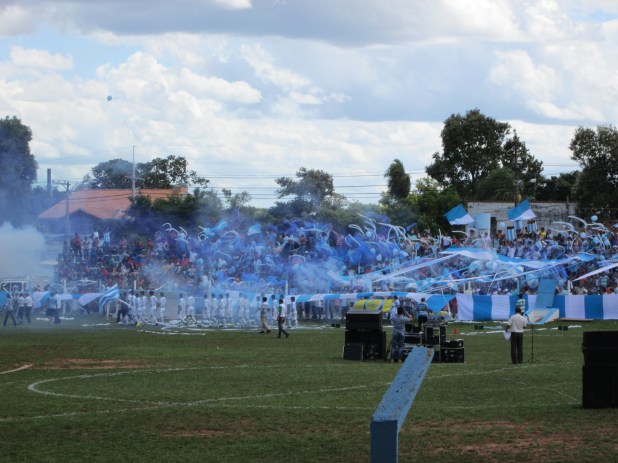
Clouds over a soccer field


Clouds over water


Paraguayan Blue


Dressing Up for the Soccer Game

In Paraguay you dress up to go to the community soccer game. It doesn’t matter that it’s hot, that there may or may not be shade, and that the players themselves will be covered in dirt and dripping with sweat.

You dress up because everyone is going to be there. Because, there will be people you want to impress—whether that means you’re looking for a significant other or know you’re going to run into a community leader.

Young women and young men gather in gendered groups and strut around.

You will see a lot of pink, on men and women, and other saturated tropical colors. You will see girls with bright pink and blue eye shadow, dark eyeliner, and lashes heavy with mascara. You’ll see rhinestone-encrusted hairpieces, scrubbed-clean-like-new sneakers, and lacy shirts. Everyone wears his or her best pair of jeans. Men wear crisply ironed t-shirts and polos. Women wear cleanly pressed tank tops. Everyone has Jesus, angel, or virgin necklaces. Even little girls break out their rings.

Just because it’s a social scene doesn’t mean soccer is secondary. The parading happens before and after the game and during halftime. When the players are playing all eyes are on the field. People scream, swear, squeal, sing, pound drums, set off fireworks, and jump to express their opinion of the game’s progress.

Cats and Dogs in Paraguay

JasyDogs and cats in Paraguay are usually approached in the same way that farm animals are—they serve a purpose and people are not emotionally attached to them. One common exception is puppies, which children tend to play with and adults tend to pet.

Dogs guard houses. They aren’t trained, spayed, or neutered. Sometimes female dogs are given a birth control shot, but several Paraguayans have told me that if you spay a dog before she has at least one litter she will die early. Dogs tend to have fleas and are dirty. They generally don’t come in the house and are often fed leftovers instead of special dog food.

There are dogs everywhere and you have to be aware when walking around at dawn, dust, and dark because dogs won’t hesitate to attack you. Luckily, however, a stick or pretending to pick up a rock will scare them away.

Cats are for killing rats and mice. They tend not to be welcome in the house and aren’t fed. Most cats I’ve met don’t really have owners and don’t really have names. Paraguayans call all cats “Michî,” which means “little” in Guaraní.

Sharing Is Just Part of Life

Clouds and palmsOne thing I’ve noticed while living with Paraguayan families is that they have few things. That’s not to say they don’t have anything—the families I’ve lived with have TVs (yes, plural), stereos, toys, and fashion items like purses and watches. But, they don’t have things in excess. Paraguayans use the things they have until they are completely worn out, and then they use them for something else.

Despite having little, Paraguayans share almost everything and aren’t afraid to use things just because they might get dirty or break. For example, one of my host brothers has a bike. It’s a bike that’s too big for him and has parts from different bikes, but it runs just fine. He rides that bike whenever he can. And his sister rides it, and two of his neighboring cousins ride it because they don’t have a bike, and his other siblings and cousins ride it sometimes. They all zoom around, up and down, the little dirt paths that connect our houses. Sometimes the seat has to be raised, but most of the time it is pushed down as far as it can go. No one worries that the bike is going to break—they just enjoy what they are getting out of it now.

The same goes for food. When a little kid, or adult, or anyone really, has something yummy they almost always share it if they are eating it in front of other people. I’ve passed candy bars and cookies back and forth with my eight-year-old sister.  If you don’t want to share, you don’t eat around other people.

Everything here seems to be shared. Siblings share beds, cousins share party shoes, and neighbors share garden tools. Why does everyone family need their own ladder when someone in the vicinity already has one?

When someone in the family gets something new they pass it around so everyone can look at it. Things that individuals get still add, somehow, to the enjoyment of the whole family or group.

Having only what you need and sharing everything is very different than my experience in the US. In the US we focus on being independent and being individuals, so the idea of sharing is second thought. It may not seem like a big difference, but it is.

Paraguay’s Commuter Buses

RoadThe bus groans, heaving up the hill. The driver slams the bus into another gear. Someone pulls the cord, there’s a buzz, and then the bus lurches to a stop. Everyone is thrown back—even the people sitting hold on tight. In Paraguay, you can catch the bus anywhere along its route and get off anywhere along the way. You just buzz to stop and put out your hand (like you would hail a taxi) to get the bus to stop.

The bus starts again and the person who got on pushes through the metal turnstiles at the front of the bus and takes a seat. At the back of the bus are maybe five plastic burlap bags with produce. If you can lift it onto the bus you can take it on. The wind whips through the open windows; a welcome coolness to offset the penetrating sun. I should have sat on the shady side.

We jolt to another stop. Some school children get on. They duck under the turnstile because they didn’t pay. A woman next to the seat where I’m sitting presses against my shoulder and the bus roars up the road again. The bus swerves back onto the street from the curve where it had been driving for the past kilometer. The bus puffs black smoke as we pass someone on a dirt bike.

We stop and someone selling apples and someone selling donuts gets on. They make their rounds and get off at the next stop. They carry their goods in baskets and plastic bags.

I wonder how many people on the bus are going to my community. I watch the palm trees wiz by, surrounded by tall grass. There are cows tied up along the edges of the road. The bus driver drinks terere. His windshield is decorated with stickers of Jesus’ face and fringe. When the bus isn’t full, I love the ride.

What’s the Real Message Here?

Not so long ago, I sat in on a twelfth grade psychology class. The topic was security and how everyone has to do their part to maintain security. After a brief lecture, the class split into groups. Each group developed and preformed a skit about one of the following topics: security in the home, security in the plaza, security in the community, security in the bus, and security in the school.

The skits were funny and covered a range of themes from helping old people on the bus (this skit poked fun at the Paraguayan buses…more on that later) to picking up trash in the town plaza.

One skit struck me more than the others, but not because of its security message. The plot: The stay at home mom had a lot to do around the house, and so she was unable to have lunch (the biggest meal in Paraguay) ready for the hour her husband came home. She had three daughters who at the beginning didn’t help her with the house chores—one was texting, one was watching TV, and one was painting her nails. One day the father came home and lunch wasn’t ready. He got angry and told the daughters they had to help their mother because he wants lunch ready when he gets home because he is hungry. After that, the daughters helped their mother and lunch was ready for the father when he got home.

I understand that the intended message of this skit was that everyone should contribute in the house. But, for me, the skit did a better job of illustrating power relationships and gender expectations.

I found it interesting that the reason the daughters had to help was because their father wanted his lunch at a specific hour. From what I’ve seen in Paraguay so far, most women’s prescribed role is taking care of their men. Women aren’t powerless here, but the last word is usually the man’s, especially when he’s the main breadwinner. I also noted that it was three daughters—this was mostly due to who was in the group developing the skit—but I think expectations for sons are different. The sons I’ve seen do help out, but few do many house chores.

For me, this little skit was a great example of how gender norms and expectations permeate through how we see everything in society. It made me wonder how a group of high school students would portray the same topic, security in the home, in the US.

Pondering Over Coffee

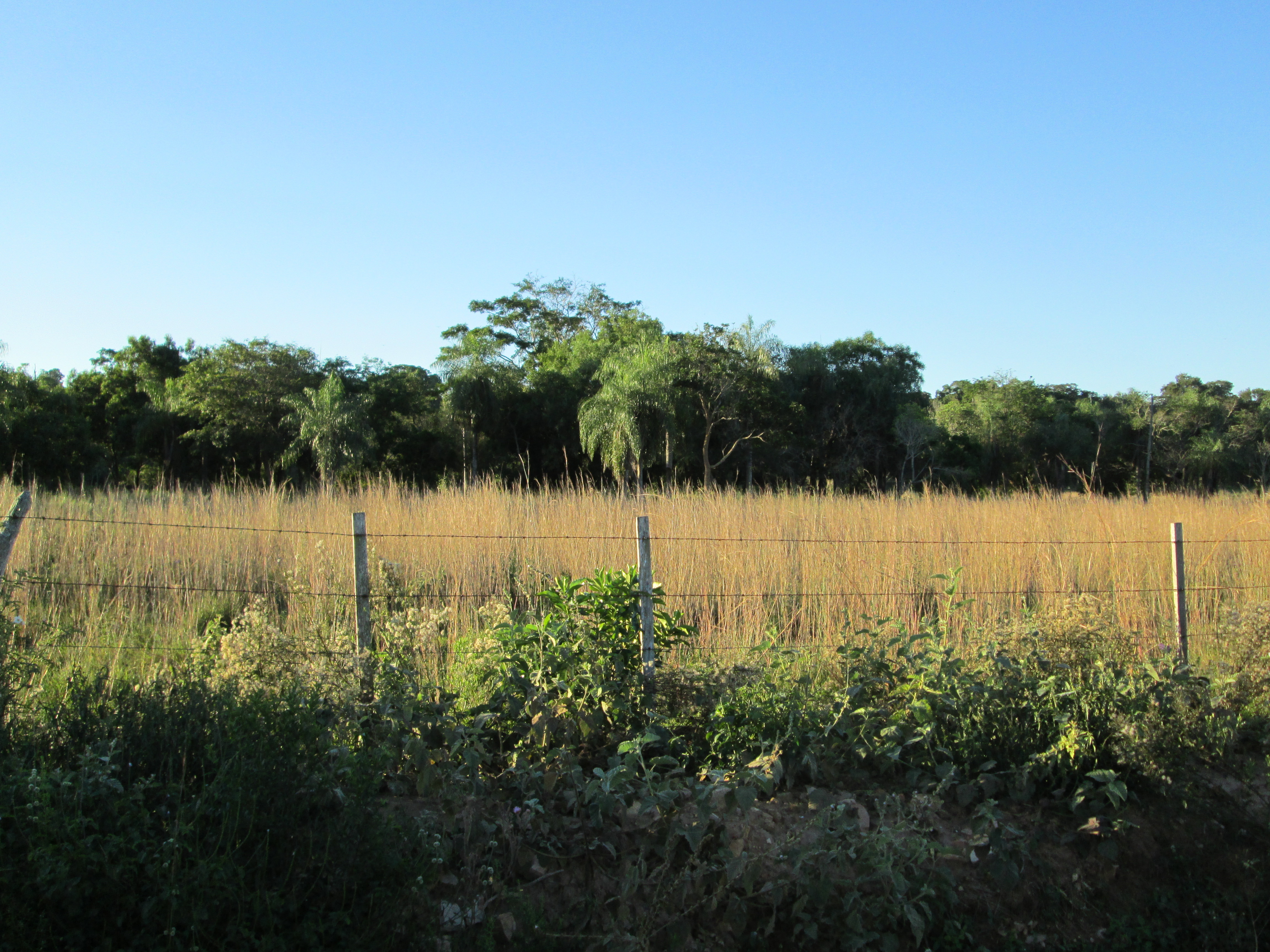
FieldIt’s chilly, as in I’m not comfortable outside in my shorts. It’s before 7 am and I’m sitting in the dim kitchen drinking my daily morning coffee and eating my daily morning bread. It’s Saturday. My family started playing the polka at 6 am. Being a light sleeper, I gave up trying to snooze and brushed my teeth at 6:20 am.

The chicken that I thought was one of my best friends tries to steal my bread. The kitchen has a window without glass or a shutter and a door that stays open to the outside during the day. The cold air wafts toward me. I set my mug on my leg to warm up.

This morning, the coffee is already sweetened. That’s not always the case, but today it is. The coffee is syrupy, painfully sweet. It’s like liquid coffee-flavored hard candies.

A Paraguayan coffee recipe:

  • 2/3 – Hot water
  • Just enough to thoroughly color the water – Instant coffee or finely ground coffee
  • 1/3 – Milk
  • Many, many spoons – Sugar

Mix coffee and water. Add milk at the end of the cooking process. Add sugar before drinking.

Soaking my white bread in the coffee-flavored-sugar, milk-flavored-water I wonder why my family makes their coffee this way. In my past life, I didn’t drink coffee, but this is Paraguay.

In the shadows, I consume my coffee—reminding myself not to gulp it every time I lift my mug.  The new sun makes the trees outside shiny green.

“Oh, I get it,” I think. “I know why they use so much sugar in their coffee…it must be the cheapest ingredient, apart form water, in the mix. That’s it, they add sugar to make it taste like something.”

Somehow that realization is settling. I sip my coffee and dunk the last of my bread. I too would rather have sugar-flavored-coffee than coffee-flavored-water everyday.

2 More Myths About the US: City and Disposable Clothes

ClothesWhen I was in college we talked a lot about globalization and how US culture is everywhere. I won’t argue that point, but I’ve come to understand that being everywhere and being understood everywhere are different things.

Myth 1: The US is only city.

The thought that the US is only city has a lot to do with movies. Most of the movies that make it to Paraguay about the US are set in a city. Actually, most of the movies I watched in the US are set in the city. I guess the city is more exciting. Being from the rural US myself, this myth was fun to dispel.

Myth 2: People in the US wear their clothes once and then throw them out.

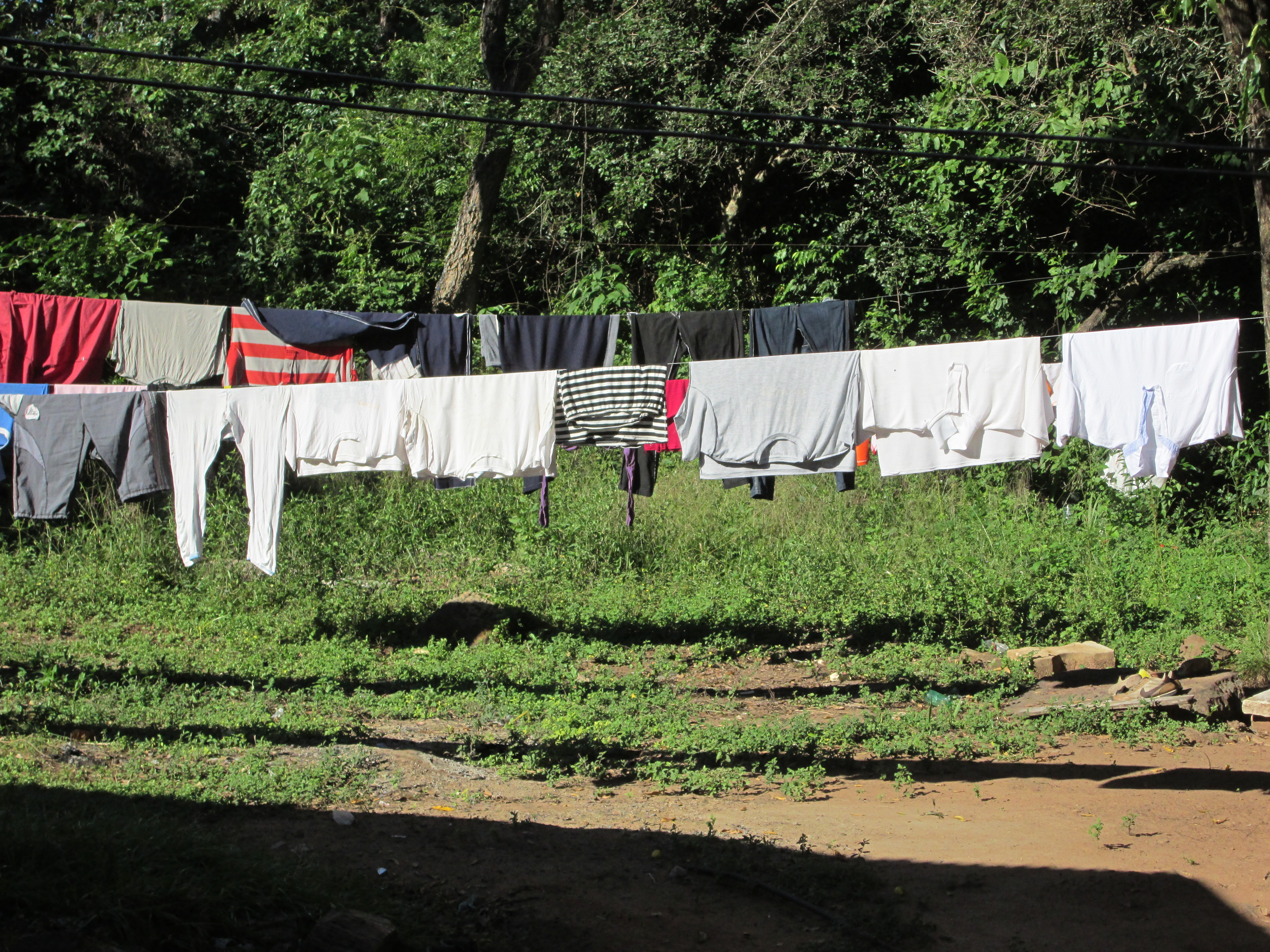
The person who asked me about this heard it from someone who visited the US. I think the root of the confusion might have been that it seemed like people wore their clothes only once because people in the US tend to have more clothes than Paraguayans. In Paraguay most people I’ve known have a handful (more or less) of each clothing item. It’s common and fine to wear the same shirt (or outfit) multiple times a week as long as it’s clean. To ensure they always have clean clothes, many Paraguayans do laundry several times a week.