Where Public Health Fits Into the Health Picture

ClimbingParaguay and Health Care

Every country has it’s own way of trying to protect its citizens’ right to health. In Paraguay, there is universal health care. This means that consults and medications are free. Well, at least that’s the idea. Most people have access to doctors and nurses trained in family medicine, but things get complicated when it comes to medications and access to specialists.

Every medical facility in Paraguay doesn’t always get all the medications it needs for its patients. (Paraguay is working to decentralize its medical system with the hope to reduce some of the bureaucracy that might be contributing to these shortages.) As for specialized care, it’s unsustainable for every health clinic to have specialist in all areas, so they are centralized regionally in hospitals and health centers.

These limitations sometimes mean individuals go without the medications or care they need. Public health has a role to play to help relieve strain on the health care system by helping people lead healthier lives in the first place.

Barriers to Medicines and Specialized Care When They Are Not Available in Local Clinics

The main barrier is access. When a local clinic doesn’t have a needed medication patients must either buy it or find a public health facility that has the medication.

For families where money is short or income is unreliable, it means individuals go without their medications—a scary thought in a land where hypertension and diabetes are leading conditions.

Traveling to another medical facility might also be out of the question. It costs money to travel—whether by bus, by dirt bike, or by car. What’s more, it takes time that individuals might not have. For those who work, they can’t be absent from their jobs. And, for those who are looking after a house, there’s food to cook, children to watch, and clothes to wash.

When patients have to travel to a regional facility for care they face the same challenges as accessing medications. It’s not uncommon for local health care providers to use their personal money and vehicles to help people see specialists. But, that is limited because it puts stress on health care providers beyond their normal work and their vehicles may not fit everyone who needs to see a specialist.

There’s no silver bullet for resolving barriers preventing people from the health care they need. But, one thing is for sure; the more we can do to help prevent illness the better off individuals will be. That’s why health education and providing individuals with advice on how to lead healthier lives makes a difference.
Hold Tight Folks, We’ve Got a Storm Coming

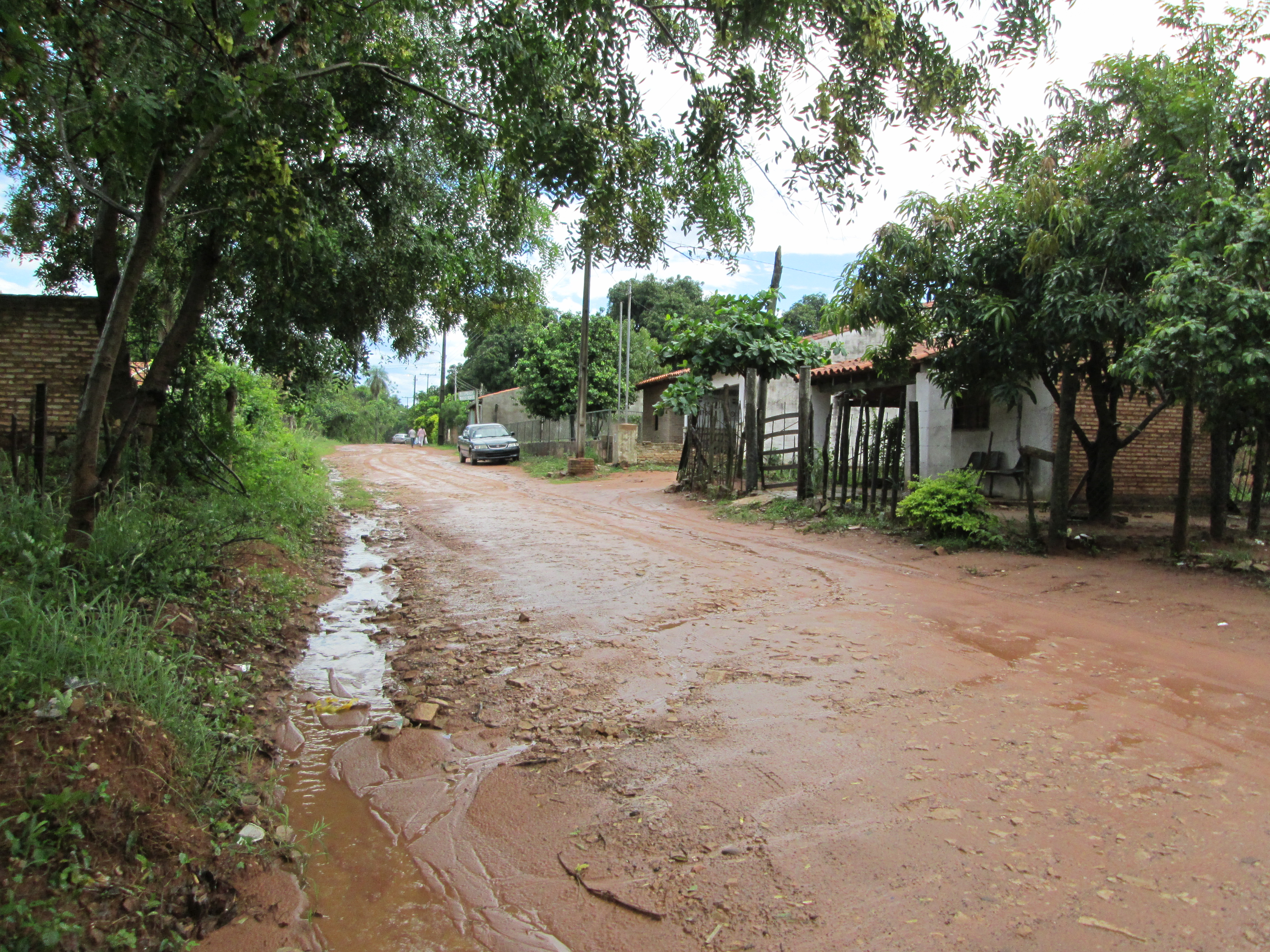
Muddy road after rainIt doesn’t rain in Paraguay; it dumps buckets. We have days darkened by ominous clouds with sheets of rain. We have nights that boom with thunder and gleam with lightening. You’ll never go back to fireworks after you’ve seen a Paraguayan lightening storm light up the starless sky.

When it rains the streets become red rivers. We don’t have glass in our windows so rain beats against the shutters and drips down the wall. If you don’t have a good roof it will inevitably drip. In my current house the kitchen, bathroom, and bedrooms are in separate buildings and the only water faucet we have is outside—the downpour days are damp days. You can’t avoid water specks on your hair and shirt.

Children don’t go to school when it rains and sometimes work is cancelled. The buses run less than usual. Most people have dirt bikes, which don’t protect you from the rain. There’s too much mud to drive a car.

Because you have to close the shutters it’s dark inside. Early afternoon feels like early evening. The electricity flickers or goes out entirely, so you are trapped in the dark. You unplug everything, including the fridge, in case the power surges when it comes back. It drops 20-30 degrees Fahrenheit and wind rustles the trees. Sometimes the water stops working.

My dirt lawn is textured with little craters from the rain pounding into the fine rust-colored sand. The trash that is around our lawn is carried away by the rain. Old terere and food scraps thrown out days earlier are washed down downhill.  Water pools on the cobblestoned roads and the paths turn to quicksand and streams. I’ve seen it hale nickel-sized ice chunks. The rain hammers on metal roofs and patters on ceramic ones. The mosquitos come out in flocks.

I sit in the gray dark in my room and think about the houses made of wood slabs, metal roofing, and tarps I saw at the edge of my community. I doubt the people who live there can stay dry.

Turn On the Public Health

Palms and ParaguayMy latest quandary (excluding all the integration and assimilation challenges I face) is not whether I will have work but rather where to begin. The community clinic and school where I plan to start my work seem open to have me do everything I can do to share information about health. What’s more, my school expressed commitment to teaching life skills and sexual health, my dream topics, along with all the other PC community health focus areas (plus some, like drug prevention).

I can see the need for public health education—from five-year olds with rotting front teeth to pregnant teens. It’s exciting to transition from creating health education materials in an office far removed from those I was trying to help to working with my target audiences directly. It’s a wonderful puzzle trying to find resources and find methods to convey information in a way that each audience will find useful.

It’s not going to be easy. I still don’t know how to say everything I want to say in Spanish (or Guarani). I don’t yet have allies in the community I know will help me or know if anyone will show up to whatever activities I do plan. I’m not sure I know enough about all the topics about which I’m supposed to teach.

I’m excited all the same. I have two years to give it my best shot. I hope by the end I’ve given at least a couple of people information they can use to improve their health and that of their loved ones.

I see a lot health presentations, lectures, games, and activities in my future. Don’t worry; I’ll let you know what works for me and what doesn’t.

Why Am I in Paraguay: Peace Corps Goals

A Paraguayan viewI know the Peace Corps and its work sounds abstract, being hard to explain is one of the many challenges of international development. Before leaving for Paraguay, many people asked what I would be doing and I couldn’t tell them. Here is my post-training attempt to define my work as a volunteer.

The Peace Corps Goals

  • To help the people of interested countries in meeting their need for trained men and women
  • To help promote a better understanding of Americans on the part of the peoples served
  • To help promote a better understanding of other peoples on the part of Americans

Cultural Exchange

The first job (and inevitable outcome of a job well done) of Peace Corps volunteer (PCV) is cultural exchange. Cultural exchange means learning about your host country’s culture and sharing about the culture of the US.

As a PCV, I’ve lived with a host family almost 3 months now and will live with one for almost 5 months when all is said and done. Living with a host family gives me the chance to learn what Paraguayan family life is like, eat tons of Paraguayan food, and ask endless questions about social events, pastimes, and beliefs. On the flip side, it also allows my host family to ask billions of questions and allows me to combat myths about the US, share my music, share American food, and offer a new perspective.

Of course, this exchange isn’t limited to my host family or the time I will live with them. Through all my interactions with community members, including people just seeing me do what I do, we are exchanging culture. Also, this blog, conversations with friends in the US, and all the stories I will tell when I get back to the States work toward the cultural exchange goals.

Health Education and Public Health

As a community health volunteer my work toward helping Paraguay develop skilled men and women involves raising awareness about health issues and working to improve health environments. The community health sector goals in Paraguay are:

Goal 1: Improve hygiene and environmental health practices

  • Dental health: I could teach why brushing your teen is important and how to brush properly. It is normal in Paraguay to see children with visible rotten teeth and for people to be missing some or many of their teeth.
  • Hand washing and parasite prevention: I may teach kids how to wash their hands correctly and parents how to recognize if their children have parasites. The main types of parasites found in Paraguay are giardia, roundworm, and hookworm.
  • Sanitation Practices (trash management and potable water): There isn’t trash collection in most places in Paraguay so most families burn or burry their trash. Water pollution can be a problem in some areas of Paraguay because of sewage management and livestock, among other things. Many people don’t think twice before throwing trash on ground.
  • Cook Stoves: Many families in Paraguay use open fires to cook. The Peace Corps has developed several wood cook stoves that when built can improve cooking efficiency, reduce the risk of burns, and reduce respiratory problems aggravated by breathing smoke.

Goal 2: Reduce the risk of non-communicable diseases (NCD)

  • Non-communicable diseases education: NCDs are diseases that can’t be passed from one person to another. Some of the most common NCDs in Paraguay are diabetes, hypertension, and obesity.  I could provide general information about these diseases and teach about nutrition and exercise as a way to control and prevent NCDs.
  • Gardens: I’m planning to have my own veggie garden, help my school have a school garden, and work with anyone who wants help making their own veggie garden. Gardens are a great opportunity to promote healthy eating and diversify the veggies available to families.

Goal 3: Reproductive Health:

  • Life Skills: I will work with youth to help them expand their decision-making and problem solving skills, critical and creative thinking abilities, communication and interpersonal relationship strategies, self-awareness and sense of empathy, and stress and emotional strain coping strategies.
  • Sexual and Reproductive Health: I may talk to youth about what sex is, STDs, and family planning strategies.
  • HIV/AIDS: As part of reproductive health, I could work to educate youth about what HIV is and how it is transmitted. Also, through this work I can hopefully help reduce discrimination against people who are living with HIV.