- Heated houses – Yeah, winter is short here and doesn’t get much below 50 degrees but it’s like camping in the cold. There’s no escape. The wind whips through my house and the cold settles into even my bed.
- Clothes washing machines and dryers – Have you ever washed your clothes by hand? I won’t burst your bubble if you haven’t other than to say you’ve saved hours of your life. The drying thing isn’t an issue during the summer, but during the winter things take a while to dry and there’s always a chance they will end up moldy.
- Trash pick-up – It is very hard to be environmentally conscious and deal with trash in the absence of trash pick-up. I am starting a collection of things with which I simply don’t know what to do.
- Not having to worry about mold – These winter months, the rainy days, and houses made of mud and cement don’t mix well. I’m constantly fighting to keep mold out of my wardrobe and away from everything in my house. Nothing can touch the floor, nothing.
- Floors that don’t hold moisture – My floor is made of cement and is laid on top of the dirt of the earth. It’s nice in the respect that if I spill tons of water…like when I hang my clothes to dry…the water doesn’t pool but disappears, but it does add to the mold problem.
- The Internet always at my fingertips – I miss being able to just look up quick facts and information. What are the hours of such and such a business? How does one get a Fulbright? Who sings such and such a song? What are all the animals in the Chinese zodiac?
- Google Maps – How the hell do I walk from here to there? How big is my community, really?
- Walking around barefoot – The threat of ringworm, hookworm, and Giardia lamblia are a pretty convincing deterrent.
- Good green tea – Paraguayans drink terere and mate, so green tea isn’t that important here. But, I just love green tea.
- Dark chocolate –Chocolate is scarce and expensive here. I don’t know why, but the chocolate that is here isn’t real chocolate…it’s chocolate flavoring without actual cocoa.
Tag Archives: Peace Corps
Bucket Baths: At Least I’m Saving the World
 Have you ever wondered how many gallons of water you use when you shower? I’ve been wondering; I put it at over 5 gallons.
Well, I only need about 2 gallons to bucket bathe. My apartment doesn’t have hot water—most people in Paraguay get hot water by using an electric showerhead that heats the water as it comes out—so on these cold days there is no way I’m showering. Instead, I’ve been heating up water to take bucket baths. I heat up almost 2 liters of water using my electric water boiler and add maybe 6 liters of cold water and mix them in a basin I also use to wash clothes.
Bucket bath technique:
- Once water is mixed, use a pitcher or cup to wet your hair over the basin (to conserve water) and to pour water on you so you are dripping.
- Wet your washcloth and make sure it has a good lathering of soap.
- Put shampoo in your hair, scrub down with the washcloth, and shave if needed. All this is done without using more water. If you are shaving your legs, you might have to rinse your razor a couple of times.
- When all the scrubbing is done, use the pitcher or cup to scoop water out of your basin to rinse. Start with rinsing your hair, in a standing position, so you also start to rinse off the soap on your body. Use the rest of the water to rinse off all soap.
The bucket bath technique is surprisingly efficient, both time wise and resource wise. It’s not particularly relaxing; my house is rather cold because it isn’t heated, but it is nice to know you are conserving water resources.
Mate: Highly Satisfying
 Mate is the hot version of terere. It is yerba mate, which is mix of leaves from a South American shrub. The yerba comes in a coarse powder that you put in a cup and drink through a medal straw that has a filter on the end. It’s very bitter, a lot like green tea, and is caffeinated. To drink terere you use cold water and to drink mate you use scolding hot water. I have burned my mouth many times.
Many Paraguayans, at least in the more rural areas, start their days well before six, and mate is a common starter. During the winter mate is drunk at almost any time, but never with food and usually not directly before eating or after eating, to stay warm.
You usually heat up about a liter of water and cup by cup drink all of that using the same yerba—like if you were to use the same tea bag to drink a whole teapot by pouring the hot water into your mug every time you finished one cup.
Like terere, there are a ton of medicinal herbs people put in their mate for every ailment from a sore throat to high blood pressure. Most herbs do something for the stomach, mouth, or throat. You can drink mate alone, like what I’m doing as I write this post, or it can be a social thing. Just like with terere, mate cups are communal and one person pours the water into the cup and passes it around the mate circle, each person takes their turn in order.
Self Doubt is Just Part of the Job
 In the normal job or school setting you get frequent feedback that helps you know how you’re doing. In school you get grades, in work you get evaluations and raises. And, if you come from a corporate setting you also have profits to check your productivity. The Peace Corps is NOT a normal job.
I’m making up what I’m going to do and I’m deciding how I did. Somehow this removes the arbitrariness, which annoyed me when I got my college report card or talked to my previous bosses about how I was doing in my job, and replaces it with doubt. The real trick is that proof that what I’m doing is making a difference won’t come for years, years after I’ve left Paraguay. Why? Because I’m trying to give people knowledge and skills to improve or maintain their health.
In the prevention part of public health you spend a lot of time telling yourself what you’re doing is valuable. When I worked for a health communication firm, I would think my work was impactful if my client was happy even if there was no proof that what I did actually improved people’s health. But, in the Peace Corps there is no client who will tell me I’m doing a good job even if there are no results. Sure, my boss will tell me I’m guapa. By doing activities I’ll meet more families who invite me over for lunch.
The compliment and lunch invite don’t really tell me how I’m doing. Many questions remain. Is the child I played with today, read to, and taught subtraction going to be better off because I was here? What is better off anyway? Is it happy? Is it financially independent? Are any of the students learning something useful from my classes and charlas? What is useful anyway? Of course, the list of questions goes on.
I think most Peace Corps volunteers are here because we want to make the world a better place. I’m 6 months in Paraguay, and 4 in site, and I’ve come to realize I’m not going to know if I change the world when I swear out. And that makes me doubt that being here is worthwhile. Yet, despite this doubt I tell myself that it’s better to stay. Why?
The biggest Peace Corps project is you. Improving yourself and expanding your drive to keep looking for ways to help the world is reason enough to muddle through the hours of doubt. The long, silent nights and days actively being friendly to everyone change you. You think a lot. You doubt a lot. You dream a lot. You hope with every fiber that when all is said and done, you did your part to make the world a better place.
Phrases I Can’t Live Without
 ¡Que guapa! – This is a compliment and means that someone is hard working. It is a good conversation starter and al ways makes people smile. It’s an acknowledgement that someone is working or that you are listening to whatever she is telling you about someone in her family.
Vamos a ver – Literally means, “We’ll see.” It’s a great way to deflect or be noncommittal without saying “no.” It leaves the possibility open, without making you a liar if you don’t do it. It’s also a good way to show that you don’t necessarily like whatever is being suggested.
Tranquilopa – Means happy, calm, and great. People always ask how you are doing and you can never say that you aren’t doing well. Saying “tranquilopa” instead of “well” always puts a smile on people’s faces.
Igual, no más – The literal translation is “equal, no more.” Paraguayans use the “no más” part with everything. It’s used to deescalate a situation, to tell someone to relax, to deemphasize something, to fill space…I think of it as an equivalent to the smiley face in chat, texting, and email. It can follow a positive statement or soften a negative statement.
Mba’e piko – Guaraní for “What?” You can also use a mixture of Guaraní and Spanish and say “Qué piko.” You can use it to literally ask a question or express surprise.
Hi’kue – An expression of surprise. It is especially helpful when someone is telling you something really sad or difficult and you don’t know what to say. It’s also a good way to express that something is expensive. I also use it to deflect questions and comments I don’t like.
Chipa

Chipa waiting to go in the oven.
Chipa is a kind of cheesy biscuit. Its ingredients include cheese, cassava flour, corn flour, animal fat, milk, anise, and eggs. It’s a common snack. People sell it on the bus, at soccer games, along the highways, and on street corners. People serve it at memorial services (which in Paraguay are nine days long and can also occur on the anniversary of people’s deaths).
Chipa is crumbly and cheesy—and amazingly yummy when it is hot. If it sits around for much more than a day, it can get rock hard. During Semana Santa, which is the week leading up to Easter, it is traditional to make a ton of chipa or only eat chipa. During that week, my jaw hurt after eating so much hard chipa.
Chipa comes in a variety of shapes but the most common are circles and sticks. It is one of the traditional foods of Paraguay, in fact, in a number of traditional Paraguayan dances the dancers hold a basket of chipa.
Patron Saint Celebration
 The patron saint of my community is San Francisco and his day is celebrated on July 24. There were celebrations throughout that week, ending in a huge party. But, on July 24, there was a mass in the morning, a saint’s procession, and a carnival, all of which I attended.
The most interesting tradition about celebrating San Francisco is that men dress up in suits completely covered in feathers—pants, jackets, and hats—and wear masks. They wear these outfits to the mass and during the saint’s procession and then dance around to traditional Paraguayan music in front of the church. There’s also some drum beating to go along with the dance.
The mass was about an hour and included singing, a sermon, and biblical readings. For the procession a group of men dressed in feather outfits, followed by the church’s men, and the congregation took a figurine of San Francisco around the soccer field that is in front of the church. After that, the feathered men jumped around in the patio of the church, there was a raffle, and there was a carnival complete with crumbling rides.
Getting Excited About the Same Food
 There are somewhere between 7 and 12 foods that make up the bulk of the Paraguayan diet. Most of those foods are made of the same things. Most of them are carbohydrates with some oil or fat added. A lot of them involve meat.
What amazes me is how excited Paraguayans are to eat these traditional foods. Despite the repetition, Paraguayans I’ve eaten with talk about sopa paraguaya like it’s a rare delicacy and chipa like it’s the “be all, end all” of foods. Chipa sells like wildfire at the soccer games and on the commuter buses.
Terere and mate is the same way. The Paraguayans I’ve drunk mate or terere with have probably drunk it almost a million times, but they still comment on how good it is every single time.
I wish I could enjoy the same food over and over again. It would make dieting a lot easier. I can’t even eat my favorite foods with the frequency that Paraguayans eat their traditional foods. How does one develop such an appreciation for life?
Big City vs. Countryside
 Coming from Vermont we always joke that we are years behind New York City. I mean, my parents still don’t have cell service at their homes and only got rid of dial-up within the past 5 years…and pop culture doesn’t get to Vermont any faster. The difference between the rural US and the urban US is dramatic. Now, times the city-country contrast in the US by 10 and you’ll get closer to the disparity between big Paraguayan cities (mainly Asunción and Encarnación) and the rest of Paraguay. Most of Paraguay is rural, ranging from rural with running water and electricity to rural with nothing.
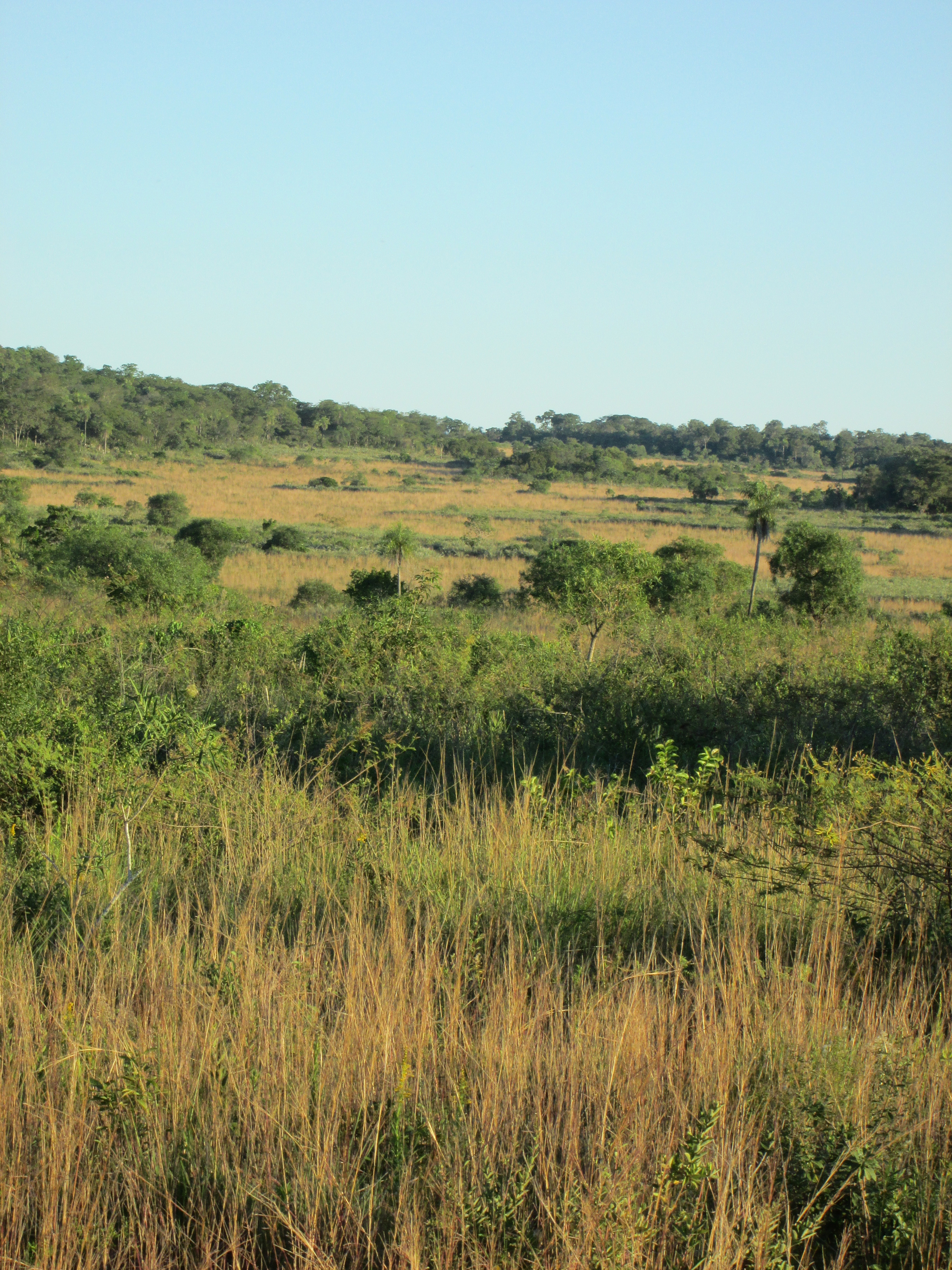
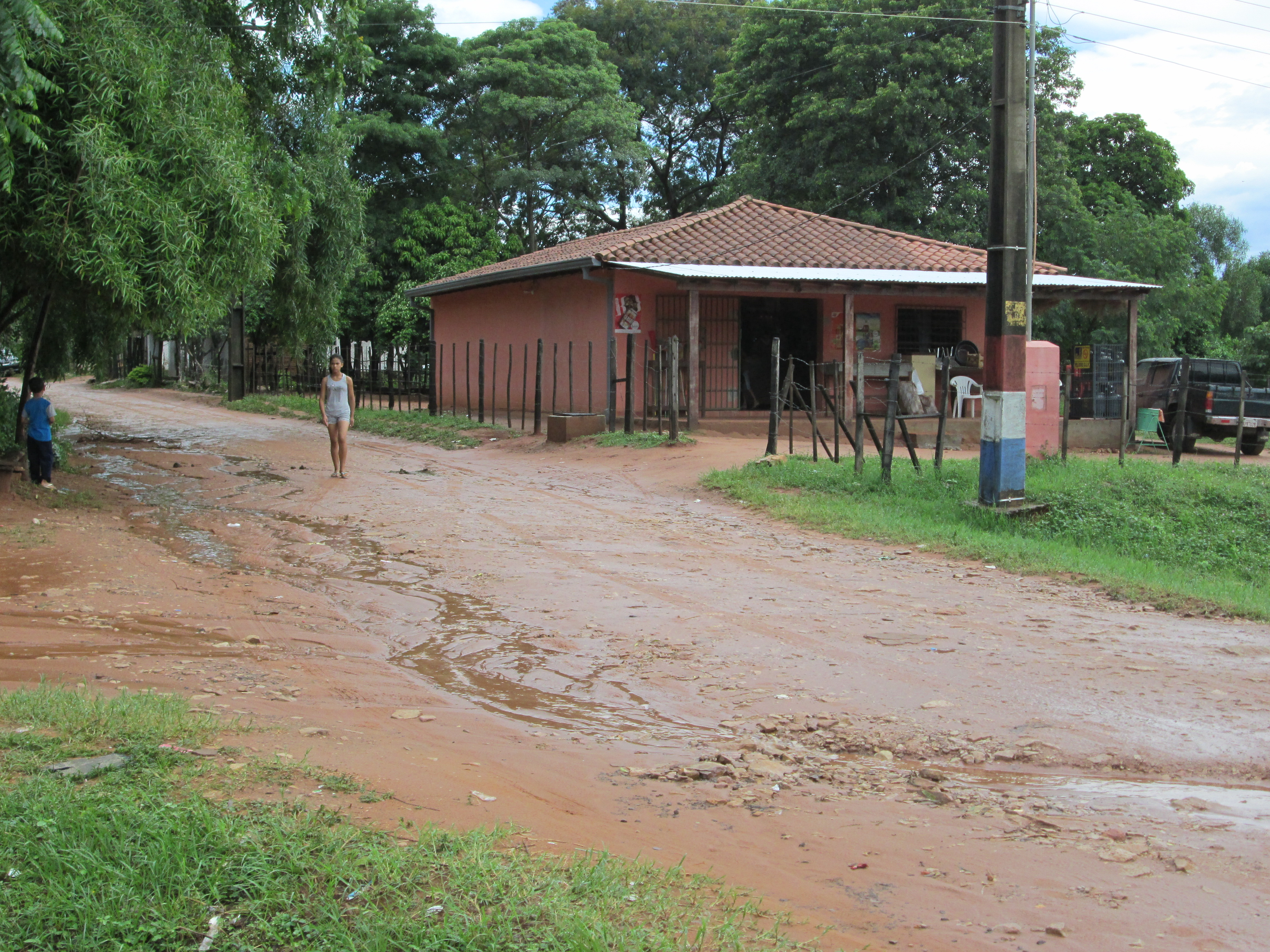
In the many rural parts of Paraguay there are roads that can’t be crossed when it rains. Cows roam free. There’s bad cell service, no Internet, electricity that goes out, and water pulled from wells with buckets. It can be hard to find groceries because there are just little house-front stores with the basics: sugar, salt, and flour.
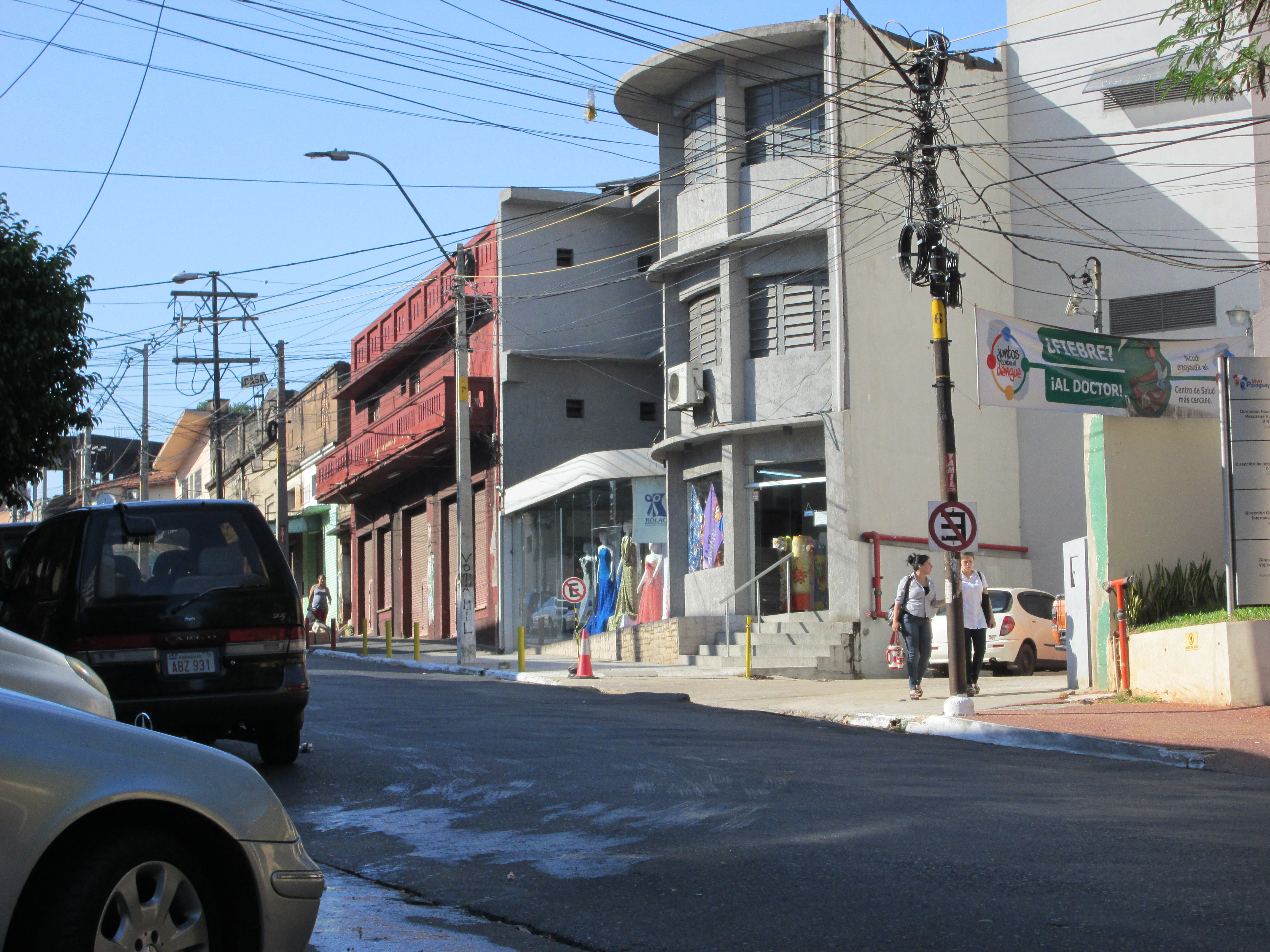
In Asunción, as least when it’s not flooding because of a downpour and no drainage—there are high-end clothing stores and sit-in restaurants with waiters and WiFi. There are coffee shops, ice cream parlors, movie theaters, and international businesses. You’d be surprised how many people in Asunción speak English, but don’t know Guaraní.
In Paraguay, the city and the countryside are like to different worlds. Sometimes, it’s hard to believe they are part of the same country.
Raw Animal Fat
 Have you even seen fat, raw and blobby? Maybe as part of Mayor Bloomberg’s obesity reduction campaign? Maybe on a TV show about liposuction? Maybe after bacon grease congeals?
I’ve seen it. I’ve worked it from a semi-solid to a mixable paste. Nothing makes you think about what you’re eating quite as dramatically as working fat globs into something more like soft butter.
In Paraguay, one of the common ingredients is raw animal fat, rather than butter or vegetable oil. In the end, it still gives baked goods a great consistency and tastes amazing, but it does make you think about your middle section. Is that whole cup going to end up right on my stomach?…is usually what I ask myself.
Baking with the señoras here has brought me back to the basics, in terms of what we actually use to give our food the taste and texture it has. In Paraguay, there is an abundance of the real thing—raw milk, raw animal fat, fresh eggs, and fresh meat (just killed minutes before cooking).
I still eat cookies, but since coming to Paraguay visions of fat globs dance in my head when I do. I know that butter and raw animal fat is the same thing in the end, but for some reason raw animal fat gives me an unpleasant visceral reaction while butter makes my mouth water. I’m used to fresh meat and raw milk, but the animal fat makes me pause every time.
 Connecting the Dots