May I Carry This Always

I’ve learned and seen enough cool things in Paraguay to fill volumes. But, I will not do that (at least not right now). So, in the simplest of terms: Paraguay is an awesome place. Paraguayans have taught me to be a more confident and caring person. And, there are some aspects of their culture I’m incorporating into my life for always, no matter where I am. My top five favorites of Paraguayan culture are:

1) Commitment to humor: Find a Paraguayan and in short time they will make a joke and be laughing. Find a Paraguayan and they will smile. Paraguayans have plenty to be negatively about, but most don’t let those realities rob them of happiness. Paraguayans are always looking for the next smile, the next bright speck in the haze of life.

2) Unwavering gratefulness: Paraguayans take time to be thankful for what they have and with who they share their lives. Of course, Paraguayans are human and want new, different things. However, they don’t let their desire for something else distract from their enjoyment of what they have.

3) Attention to detail: Paraguayans, especially and mostly the women, notice the smallest detail. They notice how one little bow can make a table at a baby shower look all the better. They notice and remember when one’s birthday is, how one’s family is doing, what one prefers to eat, what size of clothing one wears, what one likes to do…I appreciate Paraguayan women’s attention and think it is a form of being truely present. I want to be as present in my life as they are; I hope to be as understanding of the people who are important to me as they are of the people important to them.

4) Relationship building as a priority: Paraguayans work and study and do all the things that people do, but first and most important are the people in their lives. I was raised as a fierce individualistic American who believes my dream should not be bent for anyone or anything. I still believe that I must follow my dreams and not let anyone distract me, but I’ve also realized that people bring joy to life and that people in my life are important to me. I don’t ever want to get lost in a rat race that is so hectic I don’t have time to share with those I love.

5) Unrelenting curosity: Paraguayans never stop asking questions and I love them for it. They do not feel shame when asking the most outlandish, in my mind, things. I want to carry their unwavering confidence…it takes confidence to ask questions people might refuse to answer. I want to always be curious and willing to learn like I have found my closest Paraguayan friends to be.
The Art of Being Grateful

One thing that continues to impress me about Paraguayans is how happy they are. They almost always have a smile on their faces, and even in the darkest of times are quick to joke and laugh.

This ability to be joyful is not because the people of Paraguay have fewer problems than people of the US, for example. Believe me, they have many struggles from finding work and putting food on the table to maintaining their health and accomplishing the basic, like washing clothes, with access to only poor infrastructure. I often wonder how they stay positive when faced with so many obstacles.

Having thought often about how Paraguayans create happiness, I’ve come to the conclusion that Paraguayan contentment stems from a strong tendency toward gratefulness.

Paraguayans who have little and don’t know how they will put the next meal on the table are still able to enjoy the food they are currently eating, and even more profound they do not hesitate to share what they have with others. Their traditional foods always taste good to them and the soda is sweet no matter what pain they hold inside.

Paraguayans use what they have, considering it a gift to have for the time it lasts. Sometimes people in the States buy nice things and are then afraid to use them for fear of ruining them. Most Paraguayans start using a new thing right away and aren’t scared to let others use it too.

Paraguayans are experts at appreciating the company around them. They spend their free time talking to family and sharing meals. To many Paraguayans, visiting family is as important as excelling in work and school.

The Paraguay lifestyle naturally includes pauses to be grateful for one’s resources and relationships. This ability to take time and enjoy what one has, helps sustain contentment and overshadow the difficult aspects of life.

Land of Plenty and Unemployment

I went for a walk in the evening the other day. My walk took me along the main road and down to a river that was swollen beyonds its banks with rain. We’ve had a wet year and the rainy season is beginning. All along the flood banks men and women were fishing with their bamboo poles. Here fishing most often involves a string tied to a piece of bamboo, no reel, no bells and whistles. There are two primary kinds of fish, super bony and bony. The average fish is about the size of my hand.

Most people weren’t fishing just because they think it’s fun. As dusk was falling, two men on a dirt bike passed me, they were laden with silver, hand-sized fish. People here eat fish and even the small ones. One day the mother of the family I’m closest to was telling me about a woman in the community who has eight children. That’s a lot of mouths to feed with only the father working, and in Paraguay there are few jobs that pay enough to easily support a family of ten. I asked how the woman fed all her children.

“Well, they fish…” the woman I was talking to said.

Paraguay is fertile and has a climate designed for growing things. Fruit of all kinds, except apples and berries, is all over–bananas, all the citrus, papaya, passion fruit, pineapple, mangos, and the list goes on and on. There are several kinds of fruit in season at all times, and bananas are always available. With a little effort one can grow vegetables year-round and harvest most crops more than once every twelve months. In addition to fruits and vegetable, animals are part of most Paraguayan families’ lives. People who don’t live in cities can raise chickens and pigs on their plots, and even if they don’t own grazing land they can graze cows on public land and land that isn’t in use.

With some effort starving can be avoided in Paraguay even if money is tight. Further, the temperature is moderate. Unlike Vermont where winter exposure is deadly, in Paraguay, a roof to protect from the rain is enough to survive. Simple, rustic living spaces where families depend on their own crops to eat may not be a dream, but are realistic ways to live in Paraguay.

The point is that Paraguayan climate and geography are friendly toward life. People who are creative and willing to work can survive on almost no money. But, as hospitable as the earth and rivers are in Paraguay, job opportunities are limited. It is not uncommon for one person in a family of many to work, even if several people in that family are working age. The common example of a father supporting his wife, adult children before they marry, and his young children is traditional but not what most families would choose. It is a reality here because jobs are scarce and opportunities for professional employment lag far behind the number of people who are educated and trained.

As I watched the sun set over the river and bordering marshland, I thought about the juxtaposition of existence in Paraguay. I like to think Paraguayan society is moving toward providing its people as many career options as the land of the Guarani offers food choices to the hungry. I believe it is. The students I worked with want more than just a roof and bananas with fish. They want to travel and have cars and cell phones. Paraguay must change to provide what its future leaders demand or it will lose them.

Lice

Once when we were children my sister got lice from school. I remember it was a big, embarrassing ordeal. We all–my mom, my sister, and I–used lice shampoo right away. This memory makes me smile often, as I go about life in Paraguay. Things are so different here.

Most kids have lice in Paraguay…that might be an exaggeration, but not a terribly erroneous one. The difference is, however, that lice are not considered to be the end of the world in Paraguay, as they seem to be in the States. People I know here don’t use shampoo to kill the little buggers either.

Lice control in Paraguay involves a child sitting in her mom’s, aunt’s, couscin’s, or sister’s lap while the older woman combs through the girl’s hair with her fingers and kills the lice she finds between her finger nails. This is a ritual that is neither hidden or done with shame. It is undertaken out in the open and in front of visitors without hesitation.

Grooming in Paraguay is more communal than I experienced in the States. The lice picking used to remind of apes and the other habits between women (mostly) like cutting each other’s toe nails and cleaning each others feet made me a bit queasy. Feet are for walking, not for touching in my book. But, nowadays I find these behaviors normal, though I still don’t actively participate–I guess we all have our limits.

The easy-to-maintain sterile world many people in the States live in allows us to forget that germs and bugs and dirt are just part of life. I think many of us could benefit from remembering creatures like lice aren’t usually the result of negligence but are just part of this little world in which we live. I’m not exactly saying that we should all go out and get lice, but I’m suggesting that their appearance shouldn’t be a catastrophe.

5 Confessions of a Paraguay Peace Corps Volunteer

When I was preparing to leave for Peace Corps, returned volunteers told me that the experience would change me. Of course they were right. Most of the changes I’ve experienced are internal, feelings more than anything else, and can’t be summarized easily in a few words. However, there a some things I now do that are amusing to me. These new habits aren’t particularly profound, but they offer a glimps into my life in Paraguay.

5 Confessions

1) I automatically prepare a 2-liter thermos of ice cold water in the morning regardless of whether or not I have imminent plans of drinking terere. I know I’ll finish the 2 liters by the end of the day one way or another. Before Paraguay, there was nothing I drank every day (other than water of course), not tea and not coffee.

2) If it’s raining in the morning I sleep in, make mate, and decide it’s a “me” day. Only “big” commitments have a chance of breaking that routine. I used to be an “A” type who could not sit without work for even two seconds.

3) I plan the amount of groceries I buy based on how many families I think I’m going to visit that week. No matter what I do, every Paraguayan family I visit will insist on feeding me and giving me food to take home. This country is a land of super-hosts. I’m not a moocher and I don’t like to accept any kind of gift without a clear way to repay it, but Paraguayans have shown me a generosity so profound they’ve eased my “repay” obsession and given me the chance to just enjoy their company.

4) I have so many humorous, invented reasons for why I don’t have a boyfriend and why I don’t want do date whoever is asking me about my relationship status, I don’t remember the real reason for my singleness. In Paraguay, it’s just as common for people to ask me if I have a boyfriend as it is for them to ask me my name (well, almost). I don’t enjoy the prodding so common here in Paraguay, but having to think about what is up with my romantic situation so often has given me the chance to be creative. I do hope I keep the humor when I return to the States, but I won’t miss the prevalence of questions about my love life.

5) I know all the tricks to get out of eating a second piece of meat. Everything from what I finish first on my plate to where I look while eating is calculated for best results. Paraguayans eat a lot of meat and they are aggressively generous with sharing their food. I appreciate my hosts’ invites to eat, but I just can’t consume as much beef and pork as they can. When left on my own, I hardly eat meat of any kind.

Through Another’s Eyes

[Scene]

On the TV news channel a story shows footage of two girls convulsing with only the whites of their eyes showing and moving on the ground like snakes.

Señora 1: “They [the girls] are possessed by demons…they say they where worshiping Satan.”

Señora 2: “They cover a table with a white tablecloth. Then, they put a glass on the table and start to summon the devil.”

Señora 1: “When you ask for things from Satan, for personal gain, you have to promise something in return. You have to make good on your promise.”

Ten-year-old boy: “Grandmother, I asked God for something. I asked him to send you money. Is something bad going to happen?”

The conversation about the devil continues among the señoras. It seems they did not hear the boy’s question. He asks again, becoming agitated.

Señora 2: “Did you ask God?”

Boy: “Yes.”

Señora 1: “God is different. When you ask God for something nothing bad will happen.”

[End Scene]

When the Days Are Numbered

On March 8th I’ll have 30 days left in Paraguay. At that point, I’ll no longer be able to deny the countdown I’ve struggled against by hiding behind weeks and months before departure. The days are numbered like pages. As with a good book, I’m excited to start a new chapter, but sad to move forward because the story is so interesting I could just stay in the middle of it…indefinitely.

March leading to April is a good time in Paraguay. School is up and running again, students pass my house in their uniform skirts, pants, and leather shoes. The weather starts to cool and the citrus are coming in–lemons and fat grapefruit, oranges and mandarins will come later. Catholics begin to prepare their souls for Easter. This year Easter week, called Saint’s Week here, falls in March. I arrived in my community for Saint’s Week two years ago and I will leave Paraguay just after it this year. Saint’s Week is the week of chipa, family, and disturbing TV series about the rise, fall, and rise of Jesus.

During March and April two years ago I was finishing my Peace Corps training and adjusting to my new home in my community–everything was a first. The same months last year, I was glowing with the accomplishments of a volunteer who rocked her first year in site and had stellar prospects for the coming year. This year, I’m saying goodbye and everything is turning into a “last.” It is hard to imagine things that have been fundamental in my life for two years as lasts… My last party in site dancing until dawn. My last soccer game. My last…Why does “last” have an innately depressing ring to it?

The days are numbered and it would be a lie to say that I’m not ready to take the leap to the next thing. When I leave my little house on a Paraguayan hill, I have three weeks of wandering until I land in my next home, which will be in northern Vermont. Vermont will be a launching pad; there I’ll be catapulted into the trajectory of becoming a doctor. I’ve had two thoughtful years in the hot, humid land of Paraguay to meditate on doctor-hood. It is the right road to take next, but the irony of leaving Paraguay to go to Vermont to germinate my new self is not lost. Anything can flourish in Paraguay, but only the hardiest of seeds sprout and produce in Vermont’s stingy sun.

I do not miss places. Place inherently have a mix of favorable and annoying characteristics. And, in most walks of earth, I can adapt and even prosper in the mix of features that makes the place.

I do not miss entire cultures. Cultures are like ecosystems; they have many parts that rely on each other to stay together. Like I find it difficult to appreciate mosquitoes and ants, I find it impossible to accept every aspect of a culture. There are beliefs I adore and there are those I hate. I navigate by focusing on what resonates with me and ignoring the rest to the best of my ability.

I miss people. I feel their absence from my heels to the top of my messy bun. There are lots of people in our world, but there are few individuals who are mostly good. In Spanish we could call those people who tip the balance dramatically to the side of kind, fun, and just “buena anda.” “Buena anda” translates to something like “good way” or “good walk”– maybe the English phrase is “good people.” I’ve struck a fortune and made friends with some buena anda people in Paraguay. And, the readiness I feel to leave the red earth of the Guarani is dulled by the thought of moving far away from the people I love here.

My young Paraguayan friends have Facebook. There is the mail system and the chance that I will return to Paraguay for a visit. Yes, it is undeniable that the tools to “stay in touch” are available. But, having played this game of geography before, I know it is not the tools that are the most important factor to staying connected.

My closest friends and I can pick up where we left off after any amount of time, and no matter how brief our reconnect. And, my Paraguayan friends will be like that, we will carry on when we talk or are together. But, I have learned that as life goes on the time between catch-up sessions with far away friends grows. It lengthens until the relationship is mostly founded on the memories of times when we lived close. I have vivid and profound memories with my friends from this overlooked, South American country. I know what we shared will live on in our metaphorical hearts. But, I still find myself pausing in the way I learned during my years sweating in the Paraguayan humidity and lounging in mango shade.

The days are numbered. I can count them. Soon the count will be zero and I will embark on the road less traveled. I must go. I want to go. But, I don’t want to forget. I don’t want the people I knew here to fade in my life like old photographs. I don’t want the indescribable understanding of life that Paraguay gave me to get lost in a cobweb corner of my mind. Now, as I look to the horizon, I don’t just ask what is to come. There is a more emotional question that plagues me: How will I remember?

The Women of Paraguay

Last week I attended a girls’ leadership camp, the Paraguayan version of the international initiative Girls Leading Our World (GLOW). It was my second year helping plan and attending GLOW. The camp is 3 nights long and brings together 50 girls from across Paraguay to talk about being leaders in their communities.

A fantastic group of young women attended this year’s GLOW and we, the volunteers who helped organize the event, were thrilled to have speakers and support from many Paraguayans. GLOW inspired me to reflect on how Paraguayan women have helped me make sense of Paraguay since I started my service.

My biggest struggle in Peace Corps is navigating Paraguayan gender roles, many of those for women are contrary to who I am and many of those assigned to men make me uncomfortable. I’ve had a plethora of eye-opening experiences with regard to how different people see men and women in Paraguay. But, one positive aspect of the female reality in this hot, little country towers above all else, and that is the strength and cohesiveness of Paraguayan women.

There is a bound among women in Paraguay that I never experienced in the States. When I came to Paraguay it was like returning to kindergarten. I was still an adult with adult thoughts, but I understood Paraguayan culture about as well as a five-year-old understands how to live independently, which is to say I felt lost. The Paraguayan style of teaching is to criticize and instruct through jokes. It is hard to deal with at first, I think most of us like to be taken seriously as humans. Between the jeers and the hiccups during my first months, Paraguayan woman after Paraguayan woman gave me advice.

As a result, I grew as a person. I’ve absorbed a little of the Paraguayan woman’s ability to defend herself. I know how Paraguayan women usually act, even though I don’t always follow the rules because I don’t like most of them. I’ve come to understand that while men in Paraguay are free and powerful, women are not as disempowered as I thought they were at first. And, in fact, I would go as far as to say that many Paraguayan women have a strength that many American women I know lack.

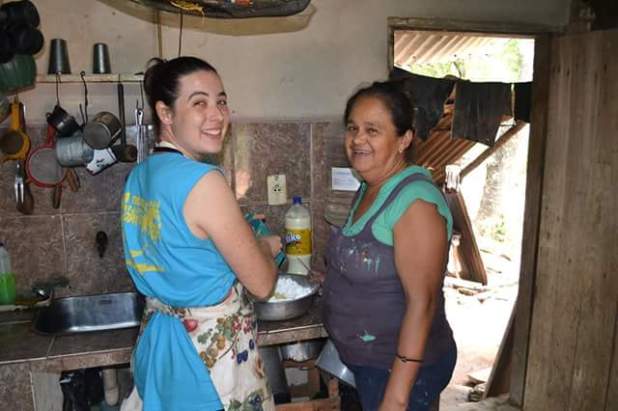
The Paraguayan woman is a nurturer. When she is young she looks after his siblings. She treats her father like a king and her brothers like princes. She cooks and cleans and works to make the men in her life happy, even at times when those men do nothing. But, while I as the outsider often find this sickening, there is a positive side to the Paraguayan female sacrifice. She is proud of her work. She is good at negotiating with the men around her, and leading them to compromises that benefit her too. She is close to the women in her family. By her teens she knows her mother, sisters, female cousins, aunts, and grandmother as well as life-long friends in the States know each in their 80s. She knows the needs of every member of her family. She knows how to barter and form strategies to meet those needs.

By the time a Paraguayan woman becomes a wife, a professional, and/or a mother she is the heart of her family. She is the life force and the glue holding people together. She remembers everyone’s birthdays. She does little things to make children feel loved. She can plan a party like a professional event planner. She never misses a detail. She can plot the path of her children so that one day they will be even greater than she is. She knows the powerful members in her community and she knows how to win their respect. She can not control her husband or her brothers, but she is a master of limiting damage. She looks to her core and her female friends to find the power she needs to get through the worst obstacles. She is beautiful. She laughs and she never forgets the women growing up around her.

Paraguayan women are proud. They may not be able to shut down the catcalls that follow them everywhere they go. They may not be free to do all that they desire. They may be afraid to break the norm. But, they don’t let these things stop them. They know how to deal with a rude, drunk man with eloquence and a smile. They know how to see the essence of a person. They know how to fight and to forgive. They know what it is to fall and to get up again, and they know how to win.

When I think about the girls who attended GLOW it makes me happy. They will one day lead their communities.They will improve the lot of the women who come after them. I believe that they have all they need to be and do whatever they want in their lives, and I am honored they shared a bit of their greatness with me.

Money View

The collective culture of Paraguay lends itself to a different approach to money from that in the individualistic United States. In the US, each person is expected to earn their own money and only spend their money. Many families encourage their children to start working in high school, not exactly to contribute to the family, but more to ensure that those youth can buy or do what they want using their own hard-earned dollars. In the States when one goes out to a bar, he or she should be prepared to buy all their own drinks. Things are different in Paraguay.

Job opportunities are more limited in Paraguay than they are in most places in the US. This is one small reason why fewer youth work in Paraguay. But, more importantly, in Paraguay money earned is not entirely viewed as belonging to the person who earned it. While the earner is free to use part of their wages to buy things they want, they will also be expected to kick-back a large chunk to the family. Youth who have jobs will buy bread and meat for their parents. They’ll buy treats and snacks for their baby cousins. Older siblings who work might buy clothes for their younger siblings who still can’t have a job. Similarly, it is culturally acceptable for youth in middle class families to be financially dependant on their family well into their 20s. Most Paraguayans live with their parents, regardless of their employment status, until they are married.

In Paraguay, if something is bought by one person it is shared…or everyone chips-in to buy the item and they then share it. Beer is a good example. If one were to go to a party with a group of friends in the States, each of those people, who drinks, would have their own beer. In Paraguay, that same group would open one beer. Each person would take a sip and pass it around to the next person. Only outsiders would have their own, personal beer.

Money in the States is often viewed as the property of the individual. Each individual is not obliged or expected to give money to others. Meanwhile, in Paraguay wealth is seen as the result of family cooperation and individual earners are expected to contribute to the family pot.

Blogging Abroad's Boot Camp Blog Challenge: Starting January 2015

Guardian Angel

My life can be divided into periods marked by which woman took me under their wing during that time. No span is without the support of at least one helping hand, and my time in Peace Corps is not an exception. My Paraguayan guide is Herminia. She is 60-something-years-old and I think of her as the guardian of my spirit. Not my spirit in a religious sense, but more as Merriam-Webster defines it, “the force within a person that is believed to give the body life, energy, and power.”

Herminia was once beautiful. She tells stories of her long hair and running away to Brazil when she was young. The traces of beauty remain, but I know her better for ignoring the obsession of perfect appearances most Paraguayan women have. Herminia’s hair is always twisted up in a nice clip. Her legs are bowed in, highlighted by the faded tights she most often wears. Her threadbare shirts are filled with holes. As much as her daughter tries to get her to wear a bra she usually doesn’t, finding them to be nothing but torture. She is clean and her nails show the remnants of paint. Her most defining feature is the lines in her face, which are caught between telling the story of a life filled with laughter and a life of nervous outbreaks.

Herminia did not go to school after second grade. She is the mother of 3, and the main caretaker of one of her grandsons. These days, Herminia lives with her aging mother, so her mother will not be alone. Herminia is 1 of 9, but the only daughter. Herminia cooks the tastiest food over wood and charcoal fires. Sometimes she has all the ingredients for what she intends to make and sometimes not, but her food always turns out yummy. She has a cow whose milk she sells. She is a talker. She talks to all people. She was raised in Asuncion, so her Spanish is as ferocious as her Guarani. She knows the medicinal plants and she believes in God.

Paraguayans are the most welcoming people I have ever met. But, most of my Paraguayan friends and neighbors don’t seek me out. I am part of their lives when I show up at their houses, and I am on a different planet the rest of the time. Herminia is different. She comes looking for me. On those days when I hide in my house, having spent the pervious day there too, she charges across the street. I see her coming with her head high and a determined expression. “Where have you been, my daughter? I thought you were mad at me. Come over and we will make some rich food,” she says.

And I go to her house. We drink terere. We cook. We chat. We watch TV. And, the unexplainable gloom that comes to one unpredictably when she lives abroad is lifted. My energy is restored, and after I leave her house I am once again ready to face the Paraguay that hardly ever looks for me. I cross my threshold on my own, until the gloom returns. And the cycle repeats.

Herminia is the most open-minded Paraguayan I know in my community. I do not believe there is any conversation we can not have, or that there is any position on any topic to which she will not at least listen. I learned how to do the rosary in Spanish, I don’t know it in English, because she taught me. I learned it because it made her so proud that she could teach me. She shares her faith in her Catholic God, even though she does not expect me to believe. She tells me about the people of the community, if they are good or bad. She is a gossip, but I have yet to see her judge of character miss the mark. She tells anyone who asks about me, and most people do, that I am the daughter of the community. She says that all the mothers here are my mothers because I am far from home.

Herminia dances on chairs with liter beer bottles balanced on her head. She is my favorite dance partner. Once, we danced until 2 am, and she made me spend the night, sleeping with her and her grandson in one bed, so I wouldn’t have to walk home. At that time, she lived farther away than she does now. Herminia defends my sobriety as she sips beer she puts in metal cups so people on the street don’t know what she is drinking. She has a sweet tooth. She forgets where she put her glasses, her wallet…her grandson and I keep track of her belongings.

I can go to her house and talk a lot or say hardly a word. I can go read while they watch TV. I go to work, but sometimes Herminia does all the cooking. We move the table from shade patch to shade patch until lunch time. Then, we eat in the living room, plates on our laps, because Herminia’s mother can no longer lift her arms to eat at the table.

When I travel, Herminia watches my house from her yard across the street. She does not know my every move or try to tell me what to do, but she keeps track enough to know everything is going along without trouble. Paraguay knows when I am down. And usually, Paraguay sends in Herminia to bring me up again. I can not think of a better agent of change.

Blogging Abroad's Boot Camp Blog Challenge: Starting January 2015