Sirens

Life boils down to tidbits like sounds. These days as I walk the sidewalk—scuttling, rambling, or strutting from one place to another—I listen to the sirens. Since running (EMT talk for “working”) on an ambulance, I accidentally developed the ability to distinguish fire truck, police car, and ambulance sirens. Since studying the Doppler effect, I can tell if the sirens are approaching or withdrawing. And since learning to drive an ambulance, I know that a change in siren tune or the blast of an air-horn indicate that the vehicle is at an intersection.

I never cared much for automobiles. I still don’t. I’m not particularly proud or impressed by my siren radar. Nor am I gleeful about that fact that I always notice ambulances, no matter where I am. Before joining a rescue squad, I hardly ever processed sirens or saw ambulances because I lived in a city where there are so many of both they become part of the background. But, since moving to the countryside again and joining the world of emergency medicine, my consciousness has changed. I find myself almost subconsciously tracking the progression of sirens around my large Vermont town. A cop car went first—drugs or a car accident maybe? Just an ambulance—maybe the firetruck is out already and it’s just a medical call? Firetruck and ambulance—maybe cardiac arrest?

I started noticing that I listen to sirens because I was thrown into a different world of sounds: the soundtrack of the emergency department. The emergency department is noisy. There are the heart monitors that beep along with patients’ heart rates and alarm whenever the heart rate or oxygen levels deviate from a norm. There’s the clicking of blood pressure cuffs inflating. There’s the sound of wheels scraping as wheelchairs and beds and carts with supplies skid across the linoleum floor. There’s the clacking of those typing about what medications they gave and assessments they did. There is the thud of quick footsteps and the shuffle of walkers. Patients groan and puke and roll in their beds. And that is only the beginning.

I think all the noise is why, after a long week of work, I seek a few hours where people are scarce. It’s hard to think when there is so much to grab your attention. In the bustle of life, we can forget what the wind and the waves and the trees and the birds sound like. But more than anything else, we forget the sound of silence. I’m not talking about the strained, artificial silence of a library during finals week. When I say “silence,” I mean those moments when no one else is there to drop a pin. I’m talking about the silence that can’t be found in a city and is endangered by our social lives. If nothing else, I think true silence helps us ground ourselves and gauge when life’s racket is distracting us.

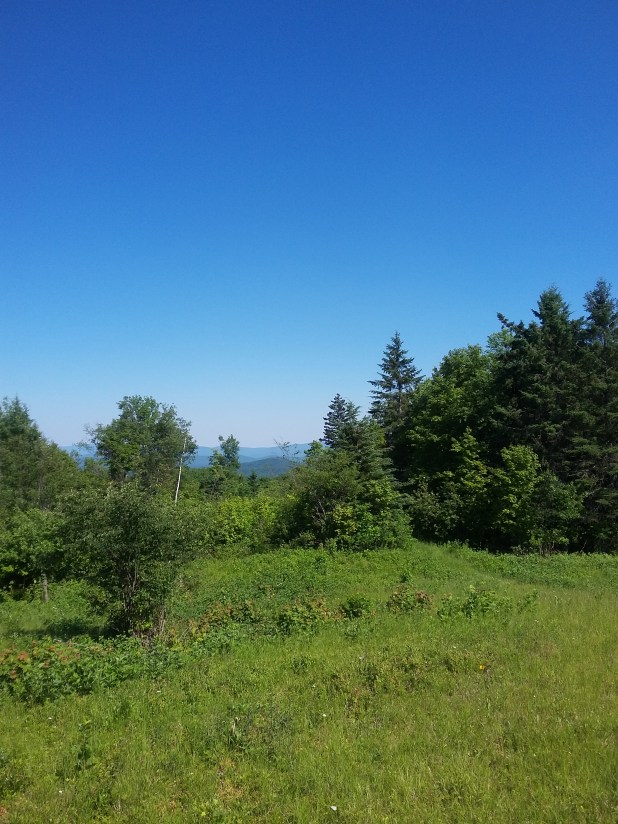
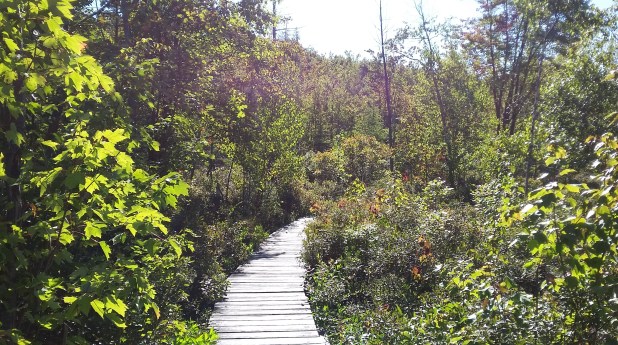
When I stroll about my town, I always hear the sirens. When I visit the woods where I grew up, I erase the ringing of so many sounds and soak in the quiet of the trees. I’m grateful that I can experience both.

Mansplaining Women’s Empowerment

I went to a training on managing aggressive patient behavior, mostly via verbal de-escalation. The class included a section on basic physical defense—such as getting out of a chokehold and escaping when someone grabs your arm. The skills were useful, but I found myself more frustrated than fulfilled by the class. What ruined the class was that one of the instructors preached for 20 minutes about how the young women in the class should feel empowered by the self-defense skills he just taught us. He told us some stories about women who were raped and killed because “they didn’t put up a fight.” He explained how we should be careful, avoid bad situations, and if attacked fight back.

Mansplaining: definition from the wiki article, “(of a man) to comment on or explain something to a woman in a condescending, overconfident, and often inaccurate or oversimplified manner.”

I was insulted by the lecture because as a woman I’ve been told countless times to be careful. When I told my family I was joining a night crew on an ambulance squad, almost before I was congratulated on finally starting as an EMT, I was asked if it would be safe for me to sleep at the station with my male crew members. Throughout my Peace Corps training, we had sessions on gender relations and how to avoid getting raped in our host country. In college, our advisers used to give us party-going strategies to avoid getting drugged. The list goes on.

It is NOT empowering to be told that you’re a victim and will always be a target. It is NOT empowering when people create boundaries (perceived or real) for you. It is empowering when others complement you on your success, offer intelligent advice as you work through challenges, and lend their support as you strive to reach lofty goals. Let me offer an example of what disempowering and empowering look like:

Disempowering: In a recent conversation with a male nurse, both the fact that I’m applying to medical school and my age (I’m almost 30) came up. The nurse didn’t comment on my age until I mentioned I’d applied to medical school. Upon hearing about my professional ambition, he “jokingly” asked why I wasn’t married and pregnant at my age. That is such a classic example of sexism it could be in a textbook. He never would have asked any man that question, even in jest, about applying to medical school.

Empowering: Upon telling one of my mentors about a test score I wished was higher, he said that he was sure I’d be just fine and turned to the other person with us to explain that “good” by my standards was quite different than “good” by most standards because I have high expectations.

Being an adventurous, single woman does clash with society’s view of women. How can I travel to foreign countries alone? It’s so dangerous. How can I go hiking or camping alone? It’s so dangerous. I’m not going to argue that those activities are safe. What I wish to suggest is that I have the intelligence to decide for myself what is safe and not safe, worth the risk and not worth it, and how to avoid unnecessary danger. I don’t need people to remind me how awful the world is. I need people to help me figure out how to overcome the challenges between me and reaching my goals.

What I wish that the instructor of the class about managing aggressive behavior knew is how many creepy men I’ve avoided in my life already, long before his class. I wish he understood that I don’t need him to tell me I should be careful and fight back. It is not empowering to be viewed as a potential victim of aggression, especially sexual aggression, even if you know how to fight back. It is empowering to be seen as a peer and fellow human with dreams, strengths, and weaknesses that transcend sex and gender. That is what women’s empowerment is all about; being viewed as an intelligent being and not an object or target or static lump.

Prayers

Trying to get into medical school is a bit of a slog at times. I’ve been lucky to have people support me during each leap through the hoops of fire. Recently, I’ve had a few folks tell me they’re praying for me, and then qualify their statement by saying they know not everyone believes in God. I was surprised that they felt the need to acknowledge I may not believe in their God.

In Paraguay, my adopted mothers prayed for me almost every time I left their house for mine (so almost daily). I am and was always thankful because of the sentiment. I believe it’s tremendously generous and kind when a person cares enough to think of me, to support me, and then to ask for help on my behalf—whether they communicate with their God or simply wish me luck.

In America, I think we publicize the extremes. I see politics radically divided. Political opinions are often based on extreme visions of how things should be or a rebellion against others’ interpretations of right and wrong. These hardline stances don’t allow for more than one opinion to thrive. To me, holding an unweaving “I’m right and they’re wrong” stance is limiting because it creates rigid definitions of aspects of life that neither the State nor another individual can interpret for me or you.

I attended church often in Paraguay because the church was the center of everything in my Paraguay community. I did not and still do not believe in the God of that church. But, I could feel how strongly my Paraguayan friends and family believed in their God. To them, their God was not only the source of life and reason for living but also the definition of love. Going to church allowed me to better understand how they saw the world. The Paraguayans who welcomed me into their lives knew our views of God were different, and they still embraced me as a dear friend. They included me in their secular and religious activities, answered my millions of questions that began with “Why?”, and they accepted it when I sat out from certain rituals because they were “too much for me.” What these shared experiences taught me was that we do not need to have the same definition of life and love to build friendships. We just need to be comfortable knowing that even though we see eye-to-eye on some things and share some history, we also hold very different views of certain aspects of life.

My hope is that someday the US won’t just be tolerant, but that each of us will be comfortable standing side-by-side with folks who are different from us, be strong enough to ask questions to learn more about how those different people see the world, and be proud enough of our belief system to follow it without expecting others to pledge allegiance to our view.

When I think of those who prayed for me before I took the MCAT, I’m thankful. Perhaps their prayers didn’t mean to me what they meant to them, but I think we share the knowledge that what I was doing was hard and whatever assistance they gave would be part of my success.

Determination: 2 Girls, 1 Hill, 1 Tree, and 1 Ladder

As children, my friends and I spent hours wandering the woods. We lived in rural Vermont in the middle of hills covered with sugar maples. One of my best friend’s families made maple syrup as part of their living—they collected their sap using draft horses. And it is with that friend that this adventure took place.

Far up on one of the hills behind her house, maybe a 40-minute hike across a river and bushwhacking through the sugar bush, was a monstrous tree. It was a Pippi Longstocking tree, a tree of wonder and stories. It was the most perfect tree for a tree fort you can imagine…and the branches didn’t start until 20 feet above the ground.

Those high branches spread out in such a way as to almost make a floor. My friend and I thought that if only we could reach those branches it would be the best thing in the world. We dreamed of hanging a hammock from those taunting limbs and eating a picnic up in the canopy. We thought about our future tree fortress on many occasions, staring up from the ground, until one day we contrived a plan.

Her father had a very tall ladder—one of those aluminum ones that has two sliding parts so it can get even longer than it appears at first.

We started in the morning. She took one end of the ladder and I the other. Those ladders, though hollow, are not light. We discovered this not long after crossing the river and starting up the hill. We also realized that zigzagging through trees was a lot harder when you are attached to another person by an 8-foot, stiff ladder.

We stopped occasionally. We argued about the best way to go through the trees. We sweated and got scratched by brayers.

And, after what seemed eons, we reached the tree. We lay the ladder against it, expanding it to its full length. We observed the ladder. We were scared. It was so tall and the ground wasn’t even. Surely, we’d fall if we climbed it. Surely, if we fell we’d die. We talked about climbing the ladder. About falling. About how amazing it probably was up there. “Fine, hold the ladder,” I said. And I put my foot on the first rung. I was shaky. It was high. My heart pounded. I got about 6 feet above the ground. I paused. The ladder felt wobbly. I wasn’t sure if I should keep going.

Slowly, carefully I reached the top rung. The branches were still overhead. I’d have to grab them and then swing my legs up and hang sloth-style to get up in the tree. I stood at the top of the ladder a long time. My friend first shouted up that if I wasn’t going to do it I should come down so she could. Then she suggested that we not do it at all.

I grabbed the branch and I swung up. “This is awesome!” I said, sitting and staring down at her on the ground. She joined me, with the greatest care because the ladder was unsteady, especially without someone holding it.

We sat up in the tree until we got hungry. The only reason we ever left the woods was because we were starved.

Some people will tell you your dreams are impossible. Don’t bother with them. Someone else will help you carry a ladder.

Energy Levels

Atoms cling to, share, or pass electrons. They do whatever it takes to make themselves more energetically stable—not reactive and content as they are.

I think we have some lessons to learn from atoms and their energy lowering endeavors—let’s say we are the atoms, the electrons are aspects of our lives, and the energy state is our emotional state.

In the world of negative electrons and positive atom nuclei, the more energetic the relationship (imbalances in charge, which basically means repulsion and attraction forces aren’t equal) the less stable and the more likely the atom is to undergo change. Electrons in high-energy states, unstable, cause chemical reactions from little ones like putting baking soda in vinegar to big ones like bombs exploding.

I’ve noticed a similar situation in my own life…and those around me. The higher the energy (emotion)—whether it be negative like stress as deadlines and huge projects loom or positive like an awesome vacation—the more reactive we are. Of course, our fizzing reactions might be petty arguments and our explosions could be bouts of extreme agitation, but nonetheless we are more likely to respond dramatically when our emotions are high or low.

The thing that’s clever about atoms is that they are willing to exert themselves to achieve a more stable state. In other words, they will do the atomic version of sweat it out—to ensure they’re living in a happy medium. And, they’ll go to great lengths to defend and maintain a stable state once they have it.

I propose, just like atoms, it’s worth it for each of us to build into our “to-dos” a little bit of energy maintenance. Atoms maintain stability by shedding or attracting electrons…what are the electrons in your life?

Defining Friendship

On my EMT shift the day before my birthday, the dangerous topic of religion came up for some reason while we were reviewing the ambulance (something we do at the beginning of every shift) to make sure we had all the right supplies. Like most careful Americans, we ended the religion conversation before we needed to say much about our personal beliefs. It was amusing to contrast the politically correct nature of the conversation with my experience in Paraguay. In Paraguay, religion is not a topic that’s avoided and people have no problem asking you if you’re catholic (the dominate religion there). I went to Paraguay with almost no religious experiences (and most that I had had were very negative)…but Paraguay brought me up to speed on their version of being catholic. And they changed my view of religion forever (though they didn’t convert me).

As I wrote when I was in Paraguay, the Paraguay I know is Catholic. That means that to my Paraguay friends the entire world is seen through the lens of Mary, Jesus, and the saints. A lot of what Mary and Jesus and the saints talk about is how you’re supposed to treat other people. Paraguayans put people, especially family, first.

A little after 9pm on my birthday I got a video message from one of my families in Paraguay. When I say family, I mean I spent every weekend with them. I went to church, out shopping, and to soccer games with them (in Paraguay, soccer is the equivalent of all sports in the US combined). I went dancing all night with the daughters, studied English and history for hours with the son, ate many dinners and lunches with them a week. I showered at their house when my water was out. I was in both daughters’ weddings…

My whole family was there in the video message. First they sang “Happy Birthday” in Guarani…then it was “Happy birthday Jett. May you have a blessed birthday and many blessed years ahead. I hope you’re having a wonderful time. Send us a video, Jett, so we can see you…We miss you Jett. When are you coming back Jett?”

It’s so nice when you realize that the people you think about all the time also think about you. And as my family’s familiar voices and happy words sunk in I thought about friendship. Even friendship is defined using a religious metaphor in Paraguay. And, with the topics of religion and friendship on my mind, it seemed fitting to share (again) one of my favorite stories about both:

Overheard in Paraguay: Friendship
Repost from October 19, 2015

We sat in a half circle around the grill. The men were cooking large slabs of meat, ribs and some unidentifiable cut, for the mother of the family’s birthday dinner. The husband of one of the birthday mother’s daughters sat by the grill passing one can of beer among the men there. A nephew walked up to the daughter’s husband. The husband was around 30 and the nephew was about 11.

The husband hugged his nephew first with one arm and then the other, squeezing him. The nephew squirmed, and they both smiled. The husband held the nephew at arm’s length and put on an almost serious expression. “Will we always be friends?” the husband asked.

“Yes,” the nephew said.

“Even when I am old and you are my age?” the husband asked.

“Yes, even when you are old and I have kids,” the nephew said.

The husband smiled and pulled the nephew into another hug. The nephew pulled away again and they looked at each other, the husband still squeezed the nephew’s shoulder with one hand.

“Even when you are in Heaven and I am old we will still be friends,” the nephew said earnestly.

The husband laughed. “And I will look after you from Heaven.” They hugged again. “And, when you come to Heaven, we will be friends in Heaven. We will be friends forever.”

The boy nodded and ran off to find his playmates.

Happiness Comes from the Heart

Being a pre-med post-baccalaureate student, I take a lot of classes with humans that are 8-10 years younger than me. These young people are a dichotomy of vibrant energy and self-doubt. We are on same footing as we struggle to memorize microbes and how p orbitals shape molecules, yet we are not even in adjacent life chapters.

It’s nice to be a witness, rather than a participant, of the soul searching that comes with learning how to be an adult. I once was an 18-year-old too, but I’m glad that era is behind me. I know my young colleagues will come out just fine without any help. But, there’s one thing that I wish I could tell them so they wouldn’t have to go through the trouble of discovering it themselves. It’s simple but, alas, it’s something only experience can teach us: happiness comes from within.

I think many of us get lost in the weeds when it comes to happiness. We jump from shiny thing to shiny thing. We assume the next great object we possess will fill the holes in our soul. We look to family, friends, and partners thinking they can save us. We search for other’s approval of our look. We act based on strangers’ opinions, hoping that society will label us as “cool.” And as we skip and hop between all these outward forces, our emptiness expands until our core seems more like a beach ball than a rock. Hollow.

It’s not the doldrums, the pits, where the quest for meaning beyond ourselves drives us, but to stagnant waters and ships with limp sails. And, while some of my young lab partners might learn quickly that they are the only ones who can make themselves happy, many of them will take years to realize the truth. I’m not sorry for them. I know their journey will have many fun days and explosions of wonder. But, if they are like me, they won’t find peace until they understand that joy originates inside and spreads from there. I don’t wish the restlessness of the road upon anyone, but it’s a road we all must wander at some point.

While others might make our lives brighter, we’re the only ones who can decide if we’re going to let in the sunshine or draw the curtains. I hope that when the going gets tough and the days seem dark the young folks around me take the time to look inward. There are many things beyond our control, but our emotions and how we respond to the world do not fall among them.

Are you lonely?

“Are you lonely?” is America’s version of the boyfriend question. I thought the coupling obsession was a Paraguayan thing. But, now that I’m back in the US, I realize I was mistaken. It’s also an American thing. Maybe it’s a human thing. Regardless, I’ve gotten a lot of practice justifying why I’m single. So, let me tell you…

…there is no reason why I’m single. I just am.

I know it’s hard to believe that a person can be happy just being. But, try to imagine it. Consider, for example, that I can go hiking on the fly and not wait for a soul. I could move anywhere and would only need to bargain with my future landlord and maybe the visa office. I can (and do) eat when, what, and where I want and don’t feel even a hint of obligation to coordinate with anyone.

Perhaps you’re thinking something like, “Fine, Jett, you’re busy and independent…but really you’re just waiting for the right guy. You’re lonely, but you forge on propelled by the dream of the prince who will sweep you off your feet one day.”

If something like that is on your mind, I must ask: Doesn’t that argument seem archaic? By now we should all know that princes only live in fairytales. They aren’t real, but metaphors for love and good fortune. I don’t need the metaphor. I’m not looking for someone to fend off the dragons. I do that just fine on my own.

Don’t despair, you’re partly right. I’m busy and I have great friends. But that’s the whole point. If I lived my whole life as I am—doing good work, engaging in hobbies, and enjoying friends—then I would have an awesome life. You see, my life’s not on hold. I’m not working toward finding that perfect man. I’m just living…and I also happen to be single. I’m not worried about love. Why should I? It’s spontaneous and stubborn. It will do whatever the heck it wants. Just like me.

I might one day stumble upon someone to be my partner in crime. I might uncover a person who makes me happier than I already am. If I do, I’ll marry him. I also might not find such a human. Either way, the trajectory is grand. I realize that many believe that singletons need to be saved. But let’s remember that when we, you and I, were taught about the American dream it was never said that it could only be dreamt by two.

Thanks for your concern about my emotional well-being. But, the better question is “What do you do?” I assure you the answer is interesting. I have a lot to say about me and my doings. And don’t worry, I’ll let you know if me becomes we.

Raising the Boiling Point

When I tell my grandmother all the things I’m doing she usually says something like, “Just hearing about your activities makes me tired.” This comment always makes me wonder why we all have different thresholds of activity before we become overwhelmed or burnt out and disinterested.

Hypothesis

Interest is to productivity like salt is to water.

Water on its own boils at a certain temperature, but after dissolving salt in water the temperature at which it boils is higher. This is because the intermolecular forces between the molecules are stronger when salt and water are mixed than between water molecules alone. In other words, it requires more energy to boil a pot of salt water than it does a pot of fresh water because the little bits that make up salt water are more strongly pulled toward each other than the tiny bits that make up water are pulled together.

I believe interest acts like the salt when the water is productivity. If you dump some interest into your productivity pool, you’ll achieve a higher production rate than you would if you just do things without figuring out how they are interesting. I define interesting as something that is thought-provoking, relevant to my interaction with people, useful in the activities I do, and/or helpful in reaching my goals.

So what?

Productivity is not set in time nor does each person have their own unique productivity rate. We each have varying productivity depending on zillions of factors like time of day, enjoyableness of what we’re doing, and how many things we have on our mind. But, what I’ve found as I take each step on the doctorhood quest is that if I can convince myself (or already am) interested in something I can focus on it a lot longer and accomplish a lot more in less time than I can if I’m apathetic about it. I can cut the time it takes to do something sometimes by half if I can think of a way to find it interesting.

That’s what I did with first semester physics, specifically kinetics. At the time, I’d been battling squirrels. Squirrel rapscallions were decimating my garden, and though I truly hated those rascals, there was nothing I could or would do about it. I wasn’t going to kill them–I didn’t have the heart. However, kinetics equations such as those used to describe projectile motion gave me a tidy solution. Kinetics can be used to describe how far, fast, and high you throw something. I imagined (even though I’d never, ever actually throw a squirrel) that all my projectile equations related to chucking squirrels. The metaphorical “strike back” was enough to ease my anger over my garden crops being stolen by squirrel thieves and gave me the source of interest I needed to learn and excel in physics.

Side note: Once I got started, I didn’t need the squirrel metaphor…physics is actually pretty cool all on its own.

Test

I think it’s a powerful observation and a testament to the power of the mind that you can trick yourself into being interested in something and by doing so improve your ability to learn about that thing. If you can dig deep and find a fragment of something that sparks your imagination and curiosity even the hardest and most tedious of tasks goes more smoothly. Don’t be believe me? Next time you’re doing something that absolutely must be done even though you hate it, try to find something about the task that is interesting and worthwhile. Focus on that as you do the task. My guess is that you’ll find the whole process slightly more bearable and that you’ll also finish sooner than you normally would have. Challenge: Prove me wrong.

On Growing Old

The best excuse for why I’ve been silent since spring is that the sun came back to Vermont and I’ve done everything I can to enjoy it. In Vermont, you spend eight months of the year waiting for summer to return.

Many Vermont summer days seem too perfect for an imperfect human like me to be part of them. They make me feel like a hideaway who, if discovered, will be kicked out. Tossed back to a land where the sun doesn’t flicker through the trees and the birds don’t chirp so musically. When I walk on these pristine days I let my mind meander.

On one such walk, I pondered growing old. I have a very vivid memory from elementary school. I was looking at the high schoolers and I thought, “I will never live to be as old as they are.” Yet, I did grow as old as they were. Not only that, I lived through college. And now I’m just a few years from 30 and I’m still living happily.

Some people fear getting old. Others complain about it. Others dye their hair and refused to tell you their age, as if time can be stopped through censorship. Recently, old people keep bursting into my thoughts. Many of my friends in Paraguay were more than twice my age. Most of the patients I transport to the hospital (I’m an EMT) were alive during WWII. My grandfather—the one who always made me laugh and was a humble, hidden source of strength—died. He’s still in my heart.

I thought about these elderly people as I walked. A slight breeze brushed away the mosquitoes and it smelled like grass and green things. I thought, “I’ll probably be 90 one day. What the heck will I be doing when I’m 90?”

I tried to envision what it would be like to be one of the white haired, wrinkly, and wise people who are always stoically at the edges of my life. For a moment, the thought made me sad. But, the melancholy passed and I grew calm. I would likely be old one day. And when that time came, I would not be busy like I am now.

It wouldn’t be that bad being old. I’d sit on a porch somewhere watching the sun shine. Perhaps I’d still be flexible enough to lie in a hammock. I’d observe the young people zooming around and they’d wonder how I wasn’t bored sitting and staring at the world all day. I would be so occupied by memories of a lifetime and all the family, friends, and acquaintances whose stories I’d shared that sitting on a porch would be like being at a movie theater watching the best movie ever. The best movie because I was its writer, producer, star, audience, and critic.

Sometimes young people would pause long enough to talk to me. They might be my grandchildren or they might be someone else’s grandchildren. I’d talk about what I’d done, seen, and learned. My words would fall on deaf ears but, sometime later, those young people would remember something I said and it would help them.

As I walked thinking about being ancient I realized that I was content with time passing. I’d make it as far as I was supposed to go. The grandest part of the whole thing, the beauty of aging, was that my weakening state would leave me no option but to reflect. My frail bones would limit the history I could make in my last few years, and that wouldn’t be so terrible. It’s meant to be that way. It’s meant to be that we have some time to enjoy what has been and is without any need to build the future.