The Kindness of Strangers

Earlier this week I had a Peace Corps training which took place in a location that I hadn’t been to yet.

In the US, the world of Google maps and cars, that wouldn’t have been a big deal. I’d have printed my directions and map and drove there. But, as a volunteer in Paraguay my only option was to take public buses.

I started gathering directions about two weeks in advanced. I started by asking the ladies I worked with—I asked two different nurses for directions at separate times. And then I asked a family I visited for directions. Why so many times?

First off, there is usually more than one way to get somewhere—and actually I got 2 different sets of directions.

Second, traveling in Paraguay involves looking for landmarks, not road signs or addresses, so it can be hard to know which mango tree or which church I need to get off at when I’ve never seen them. I figure my chance of recognizing the landmarks increases every time they are described to me.

Finally, I couldn’t pronounce the name of the town to which I was traveling. I wrote the name of the town and site where the training was on my hand before setting out, just in case.

In the end, a stranger rescued me. Before transferring from my second to third bus of the trip I asked the bus driver about my destination. He answered me politely, but I had the sinking feeling that I was going to have to ask the next bus driver a couple times to get the information I needed. But, as I jumped from the bus a woman said I should sit with her and she’d help me.

She is a nurse at the health center in the town next to my community. And, in true Paraguayan style, she asked me if I had kids, how old I was, and if I was single before asking my name. She made space for me in the line as we got on bus, told me about the towns we passed through, and made sure I got off exactly at the right spot. I am quite sure I would have gotten lost without her.

Helping me didn’t require much effort on her part, but it transformed my trip from a nerve-wracking experience to a pleasant one. As I walked down the cobblestone road to our training compound I was thankful and thought about how such a little act of kindness made such a difference in my life that day. I might complain about any number of things in Paraguay, but Paraguayan sure get the little things right.

New Norms

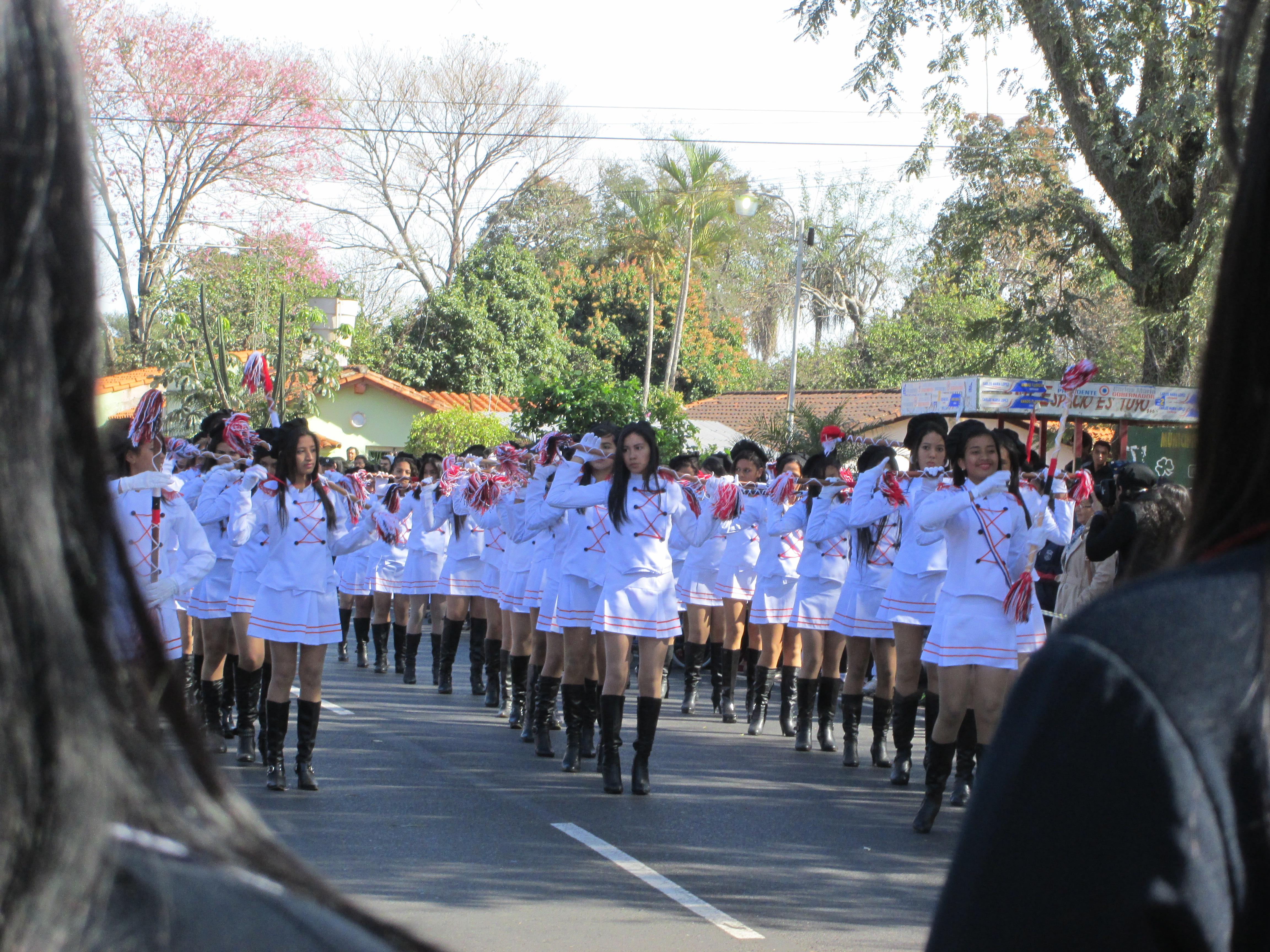
Parade I think you would surprise yourself, were you to live abroad, how quickly things you thought were weird, or never thought about before, become normal. My claim: human’s adaptability is what makes us such an overpowering (or successful) species.

Things that have become second nature to me since coming to Paraguay:

  • Throwing toilet paper in a trashcan: Paraguayan sewers (or maybe it’s the pipes and toilets themselves) can’t handle toilet paper. All bathrooms have a trashcan for paper waste.
  • Unplugging everything (including my fridge) before I leave for more than a day or during storms: It’s not uncommon for the power to go out or flicker. And, when the power comes back it can surge and fry whatever is plugged in.
  • Boiling water before putting it on the stove: Gas isn’t free and my electric water heater is very efficient. Oh, did I mention I have something like a 5-gallon gas tank that I will personally need to carry somewhere to refill.
  • Sunny, windy, warm days make me think of laundry: They are perfect conditions for clothes hung to dry to dry before they start to smell moldy. Yep, in Paraguay there are only two kinds of days: those good for laundry and those ill suited for washing.

Anything to Keep the Spirits Up

Paraguayan flagsWhen you have the slumps you’ll do anything to get your spirits up. Everyone has had days, or weeks, or months that are gloomy, but in the Peace Corps that gloom can seem magnified.

So, being a volunteer I have a long list of things I can do to keep my spirits up. Some of my most common techniques include:

  • Make a victory wall. It’s exactly like what it sounds: a wall with a label saying “victories” and with post it notes or small papers stuck to it. Each note describes a victory.
  • Do exercise. Is the body a reflection of the mind or the mind a reflection of the body?
  • Write in a journal. The lovely thing about a journal is you can write all those things you can’t say. We all have things we can’t say either because we know that in a little while we won’t feel that way anymore (so it’s not worth playing with matches on the bridge) or because we need to keep up appearances (a buzzword among Paraguayans is “respect”). Journals are also a good way to keep track of what you are doing, so you can look back and realize how much you’ve actually done.
  • Listen to music, read, or watch movies. Something in your native tongue can be amazingly calming.
  • Talk to friends from the States. Maybe family, friends back home, or other volunteers.
  • Get out the door. Getting out of your house to do anything. Sometimes the fog will lift as soon as you take that first step.
  • Visit favorite families. Paraguayans are really friendly and welcoming. I know that when I visit the families I like most I’ll be told I’m guapa, given a snack, and probably have a nice conversation about what’s happening in the community.

The Only Thing to Do Is Laugh

I learned very quickly that most Paraguayans are on the hunt for a laugh. And, as a stranger here, my mere existence is inherently funny. Yes, the constant jokes can be wearing, but I’ve also realized that looking for the next laugh is a pretty nifty way to live.

Paraguay, as a place, seems to reflect the humor of its people. It was not more than a day after posting Squashing More Than Roaches, in which I boast that I’m not scared to squash roaches with my flip-flops that my claims were put to the test.

On that evening I came home from visiting a family. I was in a good mood because I got invited to two lunches, a soccer game, and a party. I turned on the light and a large roach was chilling in the middle of my floor. The occasional roach is not a surprising occurrence, so I prepare to smash it. The only option is to annihilate a roach when I see it because of the anger (maybe unjustified) that boils up in me upon the sight of one.

If you’ve never had to go after a roach yourself, you can take my word when I tell you they are quick little buggers. So, this particular roach I tried to whack several times, with a floor detergent bottle I was saving for some recycling project, before I landed a good one. During the pursuit, I discovered 2 things: 1) there was another roach on the inside of the backdoor, which I proceeded to demolish as well, and 2) these two roaches were not alone. Concealed in the corner behind my bathroom door was a nice little cavern in the brick wall that was serving as a roach condominium.

An hour or so later the roaches were mostly defeated. I’d smashed nearly 15, maybe 20, with my detergent bottle, of various sizes. I’d probably poured more than a cup of bleach in to the roach cave. Like a cat I waited for more to emerge every time I flung more bleach into the roach hole. When they were mostly gone, according to a good inspection by the light of my headlamp, I decided to seal the rest of the roaches into the hole. I thought that maybe the bleach would finish them off, though I was doubtful because I’m pretty sure roaches could survive a nuclear ambush, but I handed it to fate. Plastic from an old soda bottle and duck tape closed off the roach den. I swept the shells of the roaches I had caught out the door—the ants or some other animal would disappear them.

I noticed my neighbors were hanging out in the back of their house, an odd thing because people in my site tend to hunker down when it gets dark. I looked at my now dented and stained detergent bottle. I had to laugh. The ruckus my insistent banging created was probably alarming, and I’m sure my expression during the fight was that of a crazed fanatic. Okay, Paraguay, you win, I walked right into that one.

I Can’t Speak Any Language Anymore

The ViewAs volunteers we joke about the fact that we can’t speak any of the 3 languages we know as part of our service—English, Spanish, and Guaraní. When we get together we speak a confusing mix of the 3 that no one but another Peace Corps Paraguay volunteer will understand easily.

Sample Conversation:

[Location Peace Corps office in Asunción]

Volunteer 1: “Hola! ¿Qué tal?”

Volunteer 2: “Fine. What have you been up to?”

Volunteer 1: “Not much. Everything is tranquilopa, but I’ve been trabajando un poco in the high school. You?“

Volunteer 2: “¡Que guapa! I don’t know. Che kui’gue.”

Volunteer 1: “Qué piko”

Volunteer 2: “I’ve just been visiting families, mostly.”

Volunteer 1: “Japu. Aren’t you working with una comisión de mujeres?”

Volunteer 2: “Más o menos. I presented a couple of ideas to them, but we haven’t started anything. Tranquilo, nomás. I mostly work with the niños in the escuela. Tengo a PE class.”

Volunteer 1: “!Que guapa, entonces! Where do you want to go for almuerzo?”

Volunteer 2: “Ndaikuaai, depende en vos nomás”

Volunteer 1: “I was thinking pasta, but I don’t need the carbs.”

Volunteer 2: “Igual nomás. The pasta place at the mall?”

Volunteer 1: “Yeah, he’tereri”

Volunteer 2: “Do you want to come back to the office after lunch?”

Volunteer 1: “Puede ser. I should call mi madre.”

Volunteer 2: “Jahama, entonces.”

The Warm-up Is Over

Sunset on the way to play soccer.The honeymoon has ended. I’ve been in my site for 4 (plus) months now, which means a couple of things.

  1. I am comfortable in my site. I call my apartment home.
  2. The Peace Corps expects me to start doing projects and to report on them.
  3. My language is better than terrible.

All these things are pretty positive, so I thought that would mean August, and onward, would be great. Wrong. The newness of everything has worn off. My desire for a busy schedule and to be productive is competing with an inclination to stay in my house. Luckily, my señoras keep me honest because they ask me where I’ve been if I don’t visit them at least weekly.

I call it the slumps. I’m torn between being happy with what I’m doing and bummed about what I haven’t done. I’m teaching life skills and English classes. So, I have that going for me…which is nice. But, I haven’t studied Guaraní enough to speak it or understand it on a basic level. I still have 38 (of 50) families I have to interview for my community census—an important tool for setting a baseline of health conditions in my site and a required project. There’s more, but this is my blog not one of my to-do lists.

I’ve gained a huge appreciation for self-employed people and almost fondness (almost being the key word) for billable hours—only because setting your own schedule is an insane exercise in self control and sticking to that schedule is a task of self motivation worthy of a gold medal.

Despite the darkness, I can see the light. A weeklong training with the other volunteers in my group earlier this August; some long conversations with volunteers about their lives, projects, and dreams; Mountains Beyond Mountains by Tracy Kidder; lists of victories and goals; and the friendliness of people in my community are pushing me up the hill.


Bucket Baths: At Least I’m Saving the World

StreamHave you ever wondered how many gallons of water you use when you shower? I’ve been wondering; I put it at over 5 gallons.

Well, I only need about 2 gallons to bucket bathe. My apartment doesn’t have hot water—most people in Paraguay get hot water by using an electric showerhead that heats the water as it comes out—so on these cold days there is no way I’m showering. Instead, I’ve been heating up water to take bucket baths. I heat up almost 2 liters of water using my electric water boiler and add maybe 6 liters of cold water and mix them in a basin I also use to wash clothes.

Bucket bath technique:

  • Once water is mixed, use a pitcher or cup to wet your hair over the basin (to conserve water) and to pour water on you so you are dripping.
  • Wet your washcloth and make sure it has a good lathering of soap.
  • Put shampoo in your hair, scrub down with the washcloth, and shave if needed. All this is done without using more water. If you are shaving your legs, you might have to rinse your razor a couple of times.
  • When all the scrubbing is done, use the pitcher or cup to scoop water out of your basin to rinse. Start with rinsing your hair, in a standing position, so you also start to rinse off the soap on your body. Use the rest of the water to rinse off all soap.

The bucket bath technique is surprisingly efficient, both time wise and resource wise. It’s not particularly relaxing; my house is rather cold because it isn’t heated, but it is nice to know you are conserving water resources.

Phrases I Can’t Live Without

gecko¡Que guapa! – This is a compliment and means that someone is hard working. It is a good conversation starter and al ways makes people smile. It’s an acknowledgement that someone is working or that you are listening to whatever she is telling you about someone in her family.

Vamos a ver – Literally means, “We’ll see.” It’s a great way to deflect or be noncommittal without saying “no.” It leaves the possibility open, without making you a liar if you don’t do it. It’s also a good way to show that you don’t necessarily like whatever is being suggested.

Tranquilopa – Means happy, calm, and great. People always ask how you are doing and you can never say that you aren’t doing well. Saying “tranquilopa” instead of “well” always puts a smile on people’s faces.

Igual, no más – The literal translation is “equal, no more.” Paraguayans use the “no más” part with everything. It’s used to deescalate a situation, to tell someone to relax, to deemphasize something, to fill space…I think of it as an equivalent to the smiley face in chat, texting, and email. It can follow a positive statement or soften a negative statement.

Mba’e pikoGuaraní for “What?” You can also use a mixture of Guaraní and Spanish and say “Qué piko.” You can use it to literally ask a question or express surprise.

Hi’kue – An expression of surprise. It is especially helpful when someone is telling you something really sad or difficult and you don’t know what to say. It’s also a good way to express that something is expensive. I also use it to deflect questions and comments I don’t like.

Hobnobbing With the Señoras

President's PalaceIn site, my friends are ladies somewhere between 2 and 3 times my age. They are grandmothers. They are wonderfully welcoming and fun. If you asked me anytime before Paraguay, I would never have imagined my social life (at least when I’m in site) centering on grandmothers.

Until I came to Paraguay, I tended to seek out the friendship of people close to my age. But, in my site people my age are complicated. The complication comes from the fact that we are going in different directions. There is a big focus on being in a relationship, so between women my age and me there’s a feeling of competition and between men my age and me there’s sexual tension—neither of which are feelings I want in my daily life.  Our dreams are different. Of course, young people here are fun, and I’m still hoping to find some Paraguayan best friends my age.

Everything that makes people my age difficult makes señoras (as one calls the older, married ladies) perfect friends. Señoras aren’t competitive, and the best ones don’t judge. Even if they think I’m strange, it doesn’t stop them. Most señoras are jokesters and enjoy hanging out. They’ve already raised kids and are the true rulers of the community. Many of them are homemakers, so they’re around more than the younger people who work outside of the home or are going to school.

Señoras have great stories and enjoy help cooking or reviewing their grandchildren’s homework. They are set in their ways, but they’ll listen to my ideas and observations even if they won’t act on them.

Greeting…Everyone

Look at the view!In my Paraguayan community I greet everyone. As I walk by people’s houses I wave and smile or call out a casual “adios.” As I pass people in the street I say “adios” and when I go to someone’s house I shake everyone’s hand or do a two-cheek air kiss.  If you don’t greet everyone, you’re liable to appear standoffish, and that’s not helpful at all.

As someone who lived in a bigger US city before coming to Paraguay, adjusting to saying “hi” to everyone took some time. I’m used to it now, but there are times when it’s still awkward; like when I’m walking past a group of guys who are staring at me the entire time I walk. Staring here is culturally acceptable, common, and unavoidable when a woman walks past any man.

Greetings here are social cues. For example, my host sister will say a guy likes a girl if he walks by her without greeting her. Or, when someone stops greeting another person it can be a sign that she is angry with him. Paraguayans avoid confrontation and are very indirect, so they’ll rarely tell a person if something that person did bothered them.

I hated having to remember to greet everyone when I first got to my site. But, now that I’m used to it, I kind of like it. It’s nice to acknowledge people, and it’s nice to be acknowledged.  It’s also easier to just put the greeting on autopilot—just always keep your eyes up, and say “hello” to everyone. Trying to decide who to greet and who not to greet is just too complicated.