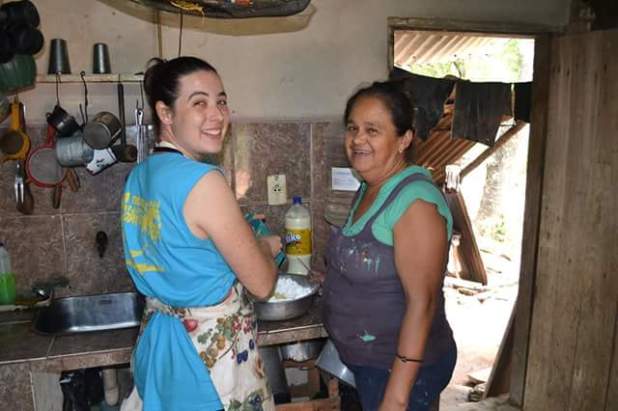
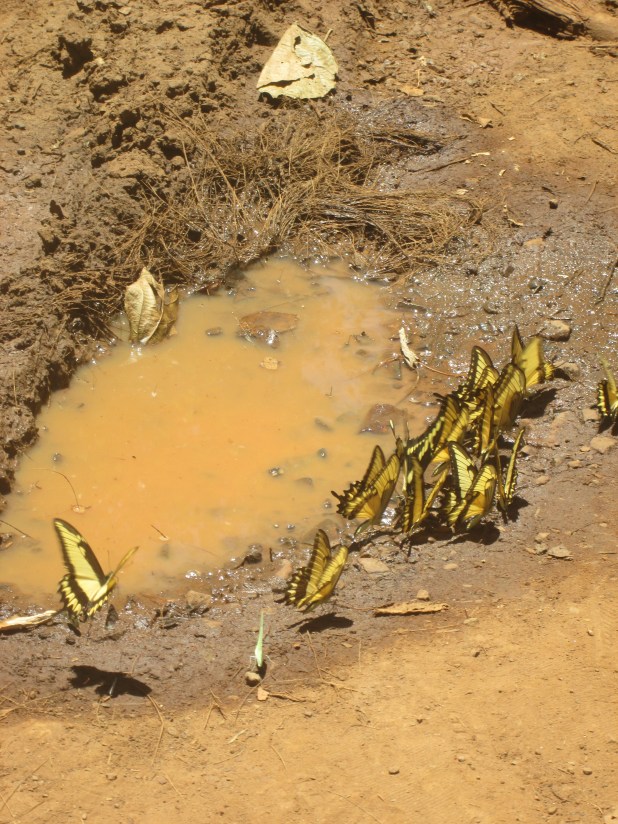
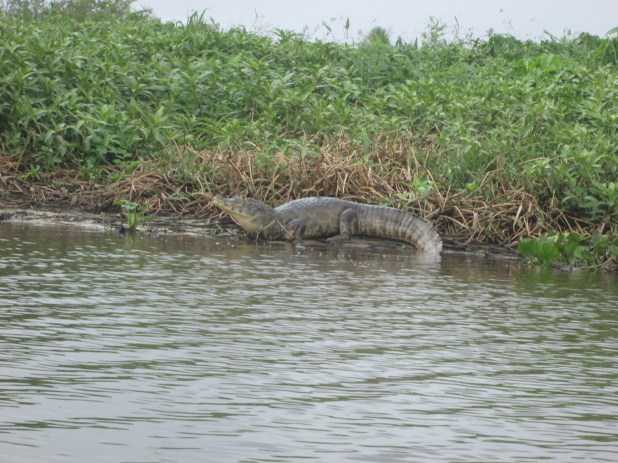
Photo credit: Carolyn Enz Hack

Convenience

“How is being back in the States?” friends and family have been asking since I got back from Paraguay. Unfortunately, I don’t have a good answer…just as I couldn’t explain what is was like to live in Paraguay when I first moved there. However, despite my general inability to describe my transition back to the USA, there is one thing that stands out to me about living in America: life logistics are incredibly simple. What I mean to say by “life logistics” is all the things we do to make sure our lives function properly— such as bathing, traveling between activities, and controlling house temperature.

In my new US home, I make up reasons to stay in the hot shower longer. It’s such a treat compared to my Paraguayan bathing ritual. In Paraguay, I stored water in a basin because for hours, many days, we didn’t have running water. Even when I did have water the pressure usually wasn’t enough to push water out of the shower head. And, because of this annoying water-flow problem I did not invest in a shower head to make hot water. So, 95% of the time I bucket bathed in cold water—using an old, plastic pitcher to dump water over my head. If it was too cold, I boiled several liters of water to add to my basin and bathed quickly. In America, I turn on the shower and the water comes pouring out every single time. The water is as cold or as hot as I want it to be. I don’t need to worry when a storm comes that I won’t have bath water or hesitate before exercising because I forgot to hoard water. In the great land between Canada and Mexico, showers are a given.

When I’m trying to get somewhere new by bus in Vermont, I type point A and point B into my smartphone. Then, Google tells me where and when to wait for the bus. The bus comes when Google says it will, and the fare costs exactly what the bus website said it would. In Paraguay, when I traveled to a new place by bus I asked 1 to 5 Paraguayans which buses to take, where to wait, and how much the fare costs because none of that information is available online. I asked more than one person to check the information and make sure I had the best route and detailed instructions to help me know where to wait for and get off the bus because there aren’t marked bus stops (usually). If I messed up my transfer in Paraguay, I had to start the process of asking for directions all over again. In Vermont, I can’t really get lost because I can check my travel progress on my phone periodically and then ask someone if I need more help.

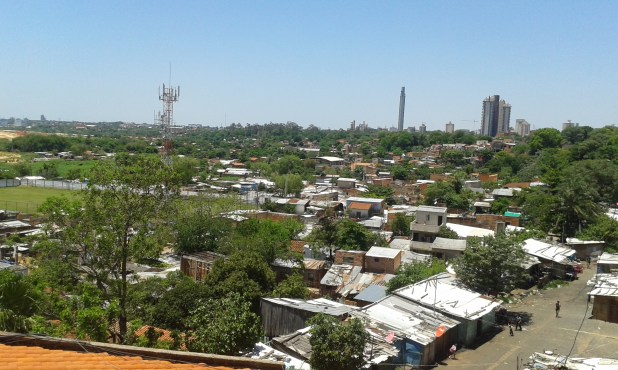
It is spring in Vermont. Sometimes it is pleasantly warm and sometimes it is cold. If it’s cold, I turn on the heat. My house is insulated. The windows and doors block the wind. My roof doesn’t leak. My floor is on a foundation so my feet are shielded from the ground’s temperature. When I listen to the beep the thermostat makes as I turn up the heat, I think of my little Paraguayan house. The wind came through the shutter and doors. The walls were made of one layer of hollow bricks. My floor was a cement slab on the good earth. My roof was tile and let in the rain in some places if it was windy. It was always windy when it rained. On cold days in Paraguay, I put on two pairs of pants and all my jackets. Then, fully clothed, I sat under my sleeping bag and drank mate. That was my heat, blankets and hot beverages.

What is it like to live in America? It is comfortable. It is efficient. It is easy. It is sterile. The challenges of life logistics have been replaced with intellectual and trivial quandaries. Should I take a more-than-five-minute shower? Would I be a better person to bike rather than ride the bus? When exactly is it cold enough to turn up the heat rather than putting on another sweater?
Life’s Soundtrack

At first it was strange to throw toilet paper in the toilet rather than the wastebasket and be in a comfortable climate rather than melting of heat. Those contrasts caught my attention first and in a jarring way when I arrived back in the US several days ago, after living as a Peace Corps volunteer in Paraguay for 27 months. But, where one puts toilet paper and how the weather is have always been minor details of life to which one easily adjusts.

My Peace Corps service ended on April 8, 2016. And, I’m still journeying to where I’ll live next. I’m visiting family, not seen for over 2 years, before I settle into what I imagine will be a hectic lifestyle. And as the visiting continues, I’m taking my time to adjust to this new world called the U.S. of A. It was both out of urgency and strategic planning that my first stops in America were to visit my grandparents. I spent so many hours sitting, chatting, and talking about old times with Paraguayans, doing the same in English with family has been a treat.

But, even in the bubble of my grandparents’ homes and neighborhoods my time in Paraguay seems to fade like a dream. As one person commented on Facebook, “It happened and now it is over.” Or, as my grandmother said, “that place you visited.” I had to laugh at the choice of the word “visited.” Can anywhere one stays for over two years count as a visit? “Visit” seems like such a trival word to describe a place I consider home and from which I emerged a new person. Words. That brings me to the point of this ramble.

There are many details that are different about living in Paraguay and living in the US. For example, I can talk to a guy my age in the US without anyone jumping directly to the conclusion I have a fling with him, where as in Paraguay people would most likely think there was something going on between he and I. But, for now, the diverging details are not overwhelming. The harshest changes I currently feel are the different life sounds between the US and Paraguay and that I have lost the key words and phrases I’ve been using for two years to express my thoughts and feelings.

On one hand, it is nice to once again understand what everyone is saying around me. On the other hand, it is so distracting to know every blasted word the people in line in front and behind me are saying. Who should I listen to? How can I think of my own words when there are so many words flying around me that I effortlessly understand? It was a lot easier to tune out in Paraguay where I did not understand every thing people said.

I am joyful to hear so many people speak my native tongue, but my goodness how the sounds that make those words sound like gravel against a shovel or nails on a chalkboard. I never realized how ugly and harsh English can sound. The twang, whine, and nasal of English words is almost painful to my ears. I miss the round vowels of Spanish and the flow of Guarani–two languages that are melodic compared to the clanking nature of English.

It’s not just the sound of the language that is dissonant to my Paraguay-tuned ears. It’s the music, or more accurately lack of music. Where is my cumbia? My bachata? Paraguayan polka? Why are the houses and buses and streets silent? What is this new phenomena of silent nights? I used to have to wear earplugs to escape from Spanish-language love songs, and now I can sleep without earplugs because there is not even the roar of dirt bikes and heaving old trucks to disturb my slumber. Am I in the land of perfect sleep?

The soundtrack is different in my country from that of my Paraguay. But, that is not all. The words and phrases I can use to express myself are different too. It is obvious that speaking in different languages means using different words. However it is not the language, but the phrasing that is tripping me. Even when I translate, or try to translate, the words and phrases I used in Paraguay to English, it doesn’t work. Why? Well, a lot of the words don’t have an English equivalent. How the heck am I supposed to say “tranquilo” or “no más” or “opama” or “kaigue” or “hi’que” in this blasted native language of mine? I can’t.

“Tranquilo” could be translated to “tranquil,” “no problem,” and “life’s good,” but it means all those things and more. The same goes for the others. “No más” literally means “no more,” but it can actually mean “that’s all,” “no problem,” and “It’s not a big deal.” “Opama” literally means “It’s over already,” but that’s hardly a good suggestion of all the things “opama” can mean in context. Both “kaigue” and “hi’que” don’t even have English translations…so there’s that.

Sounds. Words. Music. Language. They dictate who we are and how we explain ourselves to others. When I first got to Paraguay, and for all my time there, one of the biggest challenges I had was feeling like I could not completely express myself in Spanish and Guarani. Ironically, I now feel the same way in my homeland. I’m at a loss for words and homesick for the familiar sounds of my community in Paraguay. The language. The music. The spitting of frying oil and roaring of dirt bike motors. I know the sounds of my American environment will soon become just background noise. But right now, my new life’s soundtrack is bombarding my conscious mind.

May I Carry This Always

I’ve learned and seen enough cool things in Paraguay to fill volumes. But, I will not do that (at least not right now). So, in the simplest of terms: Paraguay is an awesome place. Paraguayans have taught me to be a more confident and caring person. And, there are some aspects of their culture I’m incorporating into my life for always, no matter where I am. My top five favorites of Paraguayan culture are:

1) Commitment to humor: Find a Paraguayan and in short time they will make a joke and be laughing. Find a Paraguayan and they will smile. Paraguayans have plenty to be negatively about, but most don’t let those realities rob them of happiness. Paraguayans are always looking for the next smile, the next bright speck in the haze of life.

2) Unwavering gratefulness: Paraguayans take time to be thankful for what they have and with who they share their lives. Of course, Paraguayans are human and want new, different things. However, they don’t let their desire for something else distract from their enjoyment of what they have.

3) Attention to detail: Paraguayans, especially and mostly the women, notice the smallest detail. They notice how one little bow can make a table at a baby shower look all the better. They notice and remember when one’s birthday is, how one’s family is doing, what one prefers to eat, what size of clothing one wears, what one likes to do…I appreciate Paraguayan women’s attention and think it is a form of being truely present. I want to be as present in my life as they are; I hope to be as understanding of the people who are important to me as they are of the people important to them.

4) Relationship building as a priority: Paraguayans work and study and do all the things that people do, but first and most important are the people in their lives. I was raised as a fierce individualistic American who believes my dream should not be bent for anyone or anything. I still believe that I must follow my dreams and not let anyone distract me, but I’ve also realized that people bring joy to life and that people in my life are important to me. I don’t ever want to get lost in a rat race that is so hectic I don’t have time to share with those I love.

5) Unrelenting curosity: Paraguayans never stop asking questions and I love them for it. They do not feel shame when asking the most outlandish, in my mind, things. I want to carry their unwavering confidence…it takes confidence to ask questions people might refuse to answer. I want to always be curious and willing to learn like I have found my closest Paraguayan friends to be.

The Art of Being Grateful

One thing that continues to impress me about Paraguayans is how happy they are. They almost always have a smile on their faces, and even in the darkest of times are quick to joke and laugh.

This ability to be joyful is not because the people of Paraguay have fewer problems than people of the US, for example. Believe me, they have many struggles from finding work and putting food on the table to maintaining their health and accomplishing the basic, like washing clothes, with access to only poor infrastructure. I often wonder how they stay positive when faced with so many obstacles.

Having thought often about how Paraguayans create happiness, I’ve come to the conclusion that Paraguayan contentment stems from a strong tendency toward gratefulness.

Paraguayans who have little and don’t know how they will put the next meal on the table are still able to enjoy the food they are currently eating, and even more profound they do not hesitate to share what they have with others. Their traditional foods always taste good to them and the soda is sweet no matter what pain they hold inside.

Paraguayans use what they have, considering it a gift to have for the time it lasts. Sometimes people in the States buy nice things and are then afraid to use them for fear of ruining them. Most Paraguayans start using a new thing right away and aren’t scared to let others use it too.

Paraguayans are experts at appreciating the company around them. They spend their free time talking to family and sharing meals. To many Paraguayans, visiting family is as important as excelling in work and school.

The Paraguay lifestyle naturally includes pauses to be grateful for one’s resources and relationships. This ability to take time and enjoy what one has, helps sustain contentment and overshadow the difficult aspects of life.

Lice

Once when we were children my sister got lice from school. I remember it was a big, embarrassing ordeal. We all–my mom, my sister, and I–used lice shampoo right away. This memory makes me smile often, as I go about life in Paraguay. Things are so different here.

Most kids have lice in Paraguay…that might be an exaggeration, but not a terribly erroneous one. The difference is, however, that lice are not considered to be the end of the world in Paraguay, as they seem to be in the States. People I know here don’t use shampoo to kill the little buggers either.

Lice control in Paraguay involves a child sitting in her mom’s, aunt’s, couscin’s, or sister’s lap while the older woman combs through the girl’s hair with her fingers and kills the lice she finds between her finger nails. This is a ritual that is neither hidden or done with shame. It is undertaken out in the open and in front of visitors without hesitation.

Grooming in Paraguay is more communal than I experienced in the States. The lice picking used to remind of apes and the other habits between women (mostly) like cutting each other’s toe nails and cleaning each others feet made me a bit queasy. Feet are for walking, not for touching in my book. But, nowadays I find these behaviors normal, though I still don’t actively participate–I guess we all have our limits.

The easy-to-maintain sterile world many people in the States live in allows us to forget that germs and bugs and dirt are just part of life. I think many of us could benefit from remembering creatures like lice aren’t usually the result of negligence but are just part of this little world in which we live. I’m not exactly saying that we should all go out and get lice, but I’m suggesting that their appearance shouldn’t be a catastrophe.

Through Another’s Eyes

[Scene]

On the TV news channel a story shows footage of two girls convulsing with only the whites of their eyes showing and moving on the ground like snakes.

Señora 1: “They [the girls] are possessed by demons…they say they where worshiping Satan.”

Señora 2: “They cover a table with a white tablecloth. Then, they put a glass on the table and start to summon the devil.”

Señora 1: “When you ask for things from Satan, for personal gain, you have to promise something in return. You have to make good on your promise.”

Ten-year-old boy: “Grandmother, I asked God for something. I asked him to send you money. Is something bad going to happen?”

The conversation about the devil continues among the señoras. It seems they did not hear the boy’s question. He asks again, becoming agitated.

Señora 2: “Did you ask God?”

Boy: “Yes.”

Señora 1: “God is different. When you ask God for something nothing bad will happen.”

[End Scene]

The Women of Paraguay

Last week I attended a girls’ leadership camp, the Paraguayan version of the international initiative Girls Leading Our World (GLOW). It was my second year helping plan and attending GLOW. The camp is 3 nights long and brings together 50 girls from across Paraguay to talk about being leaders in their communities.

A fantastic group of young women attended this year’s GLOW and we, the volunteers who helped organize the event, were thrilled to have speakers and support from many Paraguayans. GLOW inspired me to reflect on how Paraguayan women have helped me make sense of Paraguay since I started my service.

My biggest struggle in Peace Corps is navigating Paraguayan gender roles, many of those for women are contrary to who I am and many of those assigned to men make me uncomfortable. I’ve had a plethora of eye-opening experiences with regard to how different people see men and women in Paraguay. But, one positive aspect of the female reality in this hot, little country towers above all else, and that is the strength and cohesiveness of Paraguayan women.

There is a bound among women in Paraguay that I never experienced in the States. When I came to Paraguay it was like returning to kindergarten. I was still an adult with adult thoughts, but I understood Paraguayan culture about as well as a five-year-old understands how to live independently, which is to say I felt lost. The Paraguayan style of teaching is to criticize and instruct through jokes. It is hard to deal with at first, I think most of us like to be taken seriously as humans. Between the jeers and the hiccups during my first months, Paraguayan woman after Paraguayan woman gave me advice.

As a result, I grew as a person. I’ve absorbed a little of the Paraguayan woman’s ability to defend herself. I know how Paraguayan women usually act, even though I don’t always follow the rules because I don’t like most of them. I’ve come to understand that while men in Paraguay are free and powerful, women are not as disempowered as I thought they were at first. And, in fact, I would go as far as to say that many Paraguayan women have a strength that many American women I know lack.

The Paraguayan woman is a nurturer. When she is young she looks after his siblings. She treats her father like a king and her brothers like princes. She cooks and cleans and works to make the men in her life happy, even at times when those men do nothing. But, while I as the outsider often find this sickening, there is a positive side to the Paraguayan female sacrifice. She is proud of her work. She is good at negotiating with the men around her, and leading them to compromises that benefit her too. She is close to the women in her family. By her teens she knows her mother, sisters, female cousins, aunts, and grandmother as well as life-long friends in the States know each in their 80s. She knows the needs of every member of her family. She knows how to barter and form strategies to meet those needs.

By the time a Paraguayan woman becomes a wife, a professional, and/or a mother she is the heart of her family. She is the life force and the glue holding people together. She remembers everyone’s birthdays. She does little things to make children feel loved. She can plan a party like a professional event planner. She never misses a detail. She can plot the path of her children so that one day they will be even greater than she is. She knows the powerful members in her community and she knows how to win their respect. She can not control her husband or her brothers, but she is a master of limiting damage. She looks to her core and her female friends to find the power she needs to get through the worst obstacles. She is beautiful. She laughs and she never forgets the women growing up around her.

Paraguayan women are proud. They may not be able to shut down the catcalls that follow them everywhere they go. They may not be free to do all that they desire. They may be afraid to break the norm. But, they don’t let these things stop them. They know how to deal with a rude, drunk man with eloquence and a smile. They know how to see the essence of a person. They know how to fight and to forgive. They know what it is to fall and to get up again, and they know how to win.

When I think about the girls who attended GLOW it makes me happy. They will one day lead their communities.They will improve the lot of the women who come after them. I believe that they have all they need to be and do whatever they want in their lives, and I am honored they shared a bit of their greatness with me.

Hardship

I had dengue, a mosquito-born virus that at best feels like the flu and at worst kills, earlier this month. I had a mild case and feel better now. While I was at the Peace Corps office, seeing the doctors, several volunteers commented that they wanted dengue because it is a badge of courage. This struck a nerve in me, mostly because it is a good illustration of what I believe is a counterproductive and mistaken belief some Peace Corps volunteers have about their service. Mainly, the idea that Peace Corps is about physical hardship and surviving.

Peace Corps is about a lot of things–among them are helping people, growing as an individual, and sharing culture–but it is not about hardship and people should not join the Peace Corps if that is all they seek. They should take up rock climbing, backing-packing, or some other grueling (though rewarding) activity that will take them to the desolate places where most people can’t or won’t go.

Some volunteers are quick to share stories of illness, days without running water and electricity, and weeks of isolation. Perhaps these aspects of their service stand out to them because of their shock factor. Perhaps those volunteers think these challenges are uncommon in the lives of humans. We, Paraguay volunteers, have a word that means “fancy,” which we use to describe volunteers who live in cities and have easy access to grocery stores or have AC in their homes. Sometimes volunteers joke that Paraguay is the “posh corps” because compared to some other countries where Peace Corps works we can get around with ease and could get to a hospital if we were to fall ill.

I reject this frame that Peace Corps makes those who serve stronger because of the physical obstacles they overcome. Illness and less-than-easy living conditions are not an oddity in the human experience, they are the norm. I’m from the States and I lived a time without running water and lived in places with limited, or no, cell service. It only takes a quick trip to the major cities of the US to find food deserts. For example, people who live in the two wards on the “wrong” side of the river in Washington, DC, have almost no access to grocery stores. Around the world, people make do with little.

Peace Corps is outstanding because of the cultural exchange between volunteers and host country nationals. The hardest part of Peace Corps is not fighting big spider that come into your house, it is diving into a world that does’t speak your language and that follows different societal rules than the ones you know. Peace Corps challenges you because it asks you to make friends and contribute all you can to improving your place of service while navigating a culture that you do not, and never will, completely understand like you do your own.

My point is this: In the Peace Corps, energy focused on finding and surviving hardship is energy wasted. Peace Corps, no matter where you are, is difficult. You will struggle at times. You will wonder if you will make it to the end. Some people don’t complete the whole 27 months, and usually their decision to leave has nothing to do with which amenities they had in their homes or which illnesses they caught. Most volunteers do finish. And those that do have more stories to tell than their dear family, friends, and acquaintances at home have patience to hear.

Volunteers I implore that you don’t make the 15 to 30 seconds most people will give you to talk about your service about dengue. To focus on something so trivial to your service is to do yourself and your host country a disservice. Tell your friends something fantastic you learned about your strange home. Tell them about something you did to help make life better. Tell them about the men, women, and children you met. Tell them something that matters. Tell them something that would make your host country proud, not something that perpetuates the misconception that those who live in the “third world” are downtrodden.

Money View

The collective culture of Paraguay lends itself to a different approach to money from that in the individualistic United States. In the US, each person is expected to earn their own money and only spend their money. Many families encourage their children to start working in high school, not exactly to contribute to the family, but more to ensure that those youth can buy or do what they want using their own hard-earned dollars. In the States when one goes out to a bar, he or she should be prepared to buy all their own drinks. Things are different in Paraguay.

Job opportunities are more limited in Paraguay than they are in most places in the US. This is one small reason why fewer youth work in Paraguay. But, more importantly, in Paraguay money earned is not entirely viewed as belonging to the person who earned it. While the earner is free to use part of their wages to buy things they want, they will also be expected to kick-back a large chunk to the family. Youth who have jobs will buy bread and meat for their parents. They’ll buy treats and snacks for their baby cousins. Older siblings who work might buy clothes for their younger siblings who still can’t have a job. Similarly, it is culturally acceptable for youth in middle class families to be financially dependant on their family well into their 20s. Most Paraguayans live with their parents, regardless of their employment status, until they are married.

In Paraguay, if something is bought by one person it is shared…or everyone chips-in to buy the item and they then share it. Beer is a good example. If one were to go to a party with a group of friends in the States, each of those people, who drinks, would have their own beer. In Paraguay, that same group would open one beer. Each person would take a sip and pass it around to the next person. Only outsiders would have their own, personal beer.

Money in the States is often viewed as the property of the individual. Each individual is not obliged or expected to give money to others. Meanwhile, in Paraguay wealth is seen as the result of family cooperation and individual earners are expected to contribute to the family pot.

Blogging Abroad's Boot Camp Blog Challenge: Starting January 2015

Anything Goes

Señora: “I hate women’s work. It’s better that you don’t marry.”

Me: “That’s why whoever I do marry and I will split the chores evenly. We will both work and we will both keep house.”

Señora: She looks at me with a pitying expression. “Maybe there are men like that in your country, but not here.”

Me: “Yes, there are. That is why I haven’t married a Paraguayan. If I don’t find a man like that, I won’t marry.”

The señora nods, seemingly satisfied, and goes to check her pot of food, which she is cooking outside over charcoal. She always cooks with charcoal or wood. She has a gas stove, but I guess it is too expensive to use gas.

In Paraguay, the house is the women’s domain and everywhere else belongs to the men. When a woman leaves her home she dresses up, puts on her swagger, and forges into a land where men have all the cards–she has tricks but her male counterparts still have the upper hand.

For me the most surprising and challenging features of Paraguay are the rigidly defined and openly maintained gender roles. When you boil things down, Paraguayan culture and American culture are similar. But, while in much of the US the glass ceiling is the elephant in the room and women “accidently” end up working and doing the lion’s share of the housework and child raising, differences in gender roles are openly talked about and defended in Paraguay.

I’ve watched a brother sit on his ass while his sister washes his clothes by hand. Then, when the sister gives him the clothes, already ironed, to fold, the aunt makes the sister fold them. I’ve seen men sit at the table waiting to be served while their women cook and set the table. I’ve witnessed men sitting and drinking for hours while women clean and cook and deal with the kids.

I’ve seen a woman called a whore because her boyfriend, undenounced to her, filmed them having sex and published a video. (If I am not mistaken, she lost her job because of that). People said it was her fault for not anticipating what the man might do as a man. I’ve heard a 3-year-old boy scolded and teased for touching dolls, painting his nails, and riding a purple bike. His best friend is his 4-year-old girl cousin. The list goes on, but you get the point. That is the home.

Beyond the home, anything goes. In most places in Paraguay, catcalling women in the street is the norm. In my community catcalling is limited, score, but if I walk along the main road every couple vehicles honk at me…and I’m not even blond or ever dressed to impress. It’s normal for old men, married men, men with children, and youth to hit on women ages…well, age isn’t important if he thinks the lady or girl is pretty. Men will pester women in front of anyone and everyone except their girlfriend or wife. Women and men don’t usually mingle at social functions. The vast majority of Paraguayan men my age who show interest in me don’t do so as a friend. They have only one end goal in mind. Of course, these affronts are brushed off as joking. According to many Paraguayans, pointing out women, offering commentary on women, and trying to conquest (the literal translation for the word “woo” or “take to bed” in Spanish) are what men do. It’s not their fault, they are men. It is women’s job to protect themselves.

In Paraguay it is odd to be single, especially at my age. Women are supposed to settle down and have children. Paraguayans like to ask if I have a boyfriend. They like to ask why I don’t. Men often ask me if I have a boyfriend before they know my name. It is normal now. I expect it. I anticipate in before it happens. I have multiple funny responses.

Just because I have a gender role in Paraguay that I do not agree with, does not mean I accept it. However, I can’t crash the whole system. The Peace Corps isn’t about forcing host country culture to change. I’ve settled for small rebellions. I do exercise that isn’t dance. I wear t-shirts and loose athletic shorts. I climb trees and get sweaty. I watch movies with guns and fire and talk about fast cars. I discuss being a professional and working. I own things that are blue and green. These are small details. But, gender roles are mountains made of pebbles. Maybe I can’t move the mountain in my little Paraguayan town, but I can sure send some rocks flying.

Blogging Abroad's Boot Camp Blog Challenge: Starting January 2015