Being Single In Paraguay

PigsIn Paraguay people aren’t single. They are either in a relationship, in a relationship with multiple relationships on the side, or about to be in a relationship. This relates partly to the importance and closeness of family and the role of women as mothers in Paraguayan culture.

In the US, most people hope to eventually end up with some kind of significant other, however there are things that come first, such as personal happiness and your career. That is not the case here. Having a boyfriend or girlfriend (husband or wife) seems to be the centerpiece of happiness. As for careers, at least in my community, most people are looking to pay the bills, not to develop a career.

When I tell people I’m single, I’m often asked, “why?” It’s almost as if my community members think I’ve specially calculated my singleness. I explain that I have things to do before I get married, and that I’m working on my career. But, the Paraguayans I explain this to continue to have a confused expression on their faces.

Often times, I want to throw my hands up and say, “I’m single because I’m here.” But I don’t because that’s rude and doesn’t teach anything.

Where’s the Big Dream?

The RoadFull disclosure: I’m a dreamer. I like to think about the future and make several, multifaceted plans about where I want to end up and how to get there. I like to make plans, but I’m always happy to change and revise them whenever I learn something new or gain new insight.

As you might imagine, as a dreamer, I like to talk to other people about their goals and aspirations.  Because of this, I often find myself struggling to connect to young Paraguayans. Many of the young people I talk to here don’t dream big.

During training we did this activity that is an interview with yourself in 10 years. The idea of the activity is that one person pretends to be a reporter and asks you about what your life will be like in 10 years. I modified that and started asking young people where they see their lives in 5 years. I thought it might be a fun conversation starter.

I was wrong. The 5-year question usually yields a very short answer. The youth I have ask say the following: 1) a house, 2) a stable job, 3) a boyfriend/girlfriend, 4) children, 5) a car. Now, any of those individual topics could be interesting, but the response is usually that brief and in list form.  When asked what kind of job, the respondent often shrugs. When asked about their house, boyfriend/girlfriend, or children the answer is equality nondescript. One interesting tidbit: Often the respondents think they will have children, but aren’t sure if they’ll be married. They sometimes have a plan for how they are going to get all the things on that list, but always.

I used to find myself sad that the people I talked to didn’t have big dreams, but then I wondered why I was sad because they were probably happy with what they were doing and where they were going.  It’s hard to not make assumptions and project your beliefs on others. Living in a different culture makes in unavoidably obvious how different each person sees the world.

Staying Busy With Small Business

Paraguayan fieldI am often impressed how people in my community have so many side jobs. Women in my community make woven sunhats, bake things to sell, make clothes, and collect medical herbs—the list goes on. Men often have skills they’ll sell—like being an electrician. One woman I work with put herself through college selling medical herbs and she makes extra money now selling ice cream at the soccer games (every Sunday). People are very crafty and not shy about selling things door-to-door, on buses, or on the side of the street.

Making things to sell is something people in my community are raised doing. Children, as young as 8, will go around selling things.

Sometimes, whole families will work together, in their free time, on side jobs. Like leading up to Palm Sunday, my family made woven palms. Sometimes people will weave hats or work on other projects while visiting.

Paraguayans never stop noticing products and services that could be sold. But, making some side money is often the limit of the vision. Few Paraguayans I’ve met, even the hardest working, see their side jobs as something that could be grown into a larger business.

In my community people almost exclusively do activities that relate to making money. The three exceptions to this are playing and watching soccer, participating in religious activities, and keeping the house clean. It’s really hard to explain to Paraguayans in my community why you would do something just for the sake of doing it—like volunteering in the Peace Corps, for example.

Let’s Talk About Stereos

Río ParaguayIn the States we joke men get big trucks to make up for things they lack. If I were to adapt the joke to fit Paraguay, I’d say men here get stereos.

Most people here don’t have cars. Dirt bikes and motorcycles are the more common family transportation. But, everyone has their stereo, and you’d be amazed how many families have giant stereos.

And they use their stereos. All day, starting between 6 and 8 in the morning and ending between 7 and 10 at night. There’s no way to avoid the joyous notes of cumbia and polka, sometimes competing between houses, everywhere you go.

We aren’t talking boom boxes. We are talking huge, 3 or 4, piece stereos with speakers for treble and for bass. They play radio and CDs or you can connect your pen drive or computer or phone.

We are talking club sound for a simple house party. Get ready to dance.

Blend or Take a Stand?

Look at the sky!Assimilation is the name of game for the Peace Corps volunteer. That means absorb and integrate, become part of your host community’s culture. But, assimilation is a balance between integrating and staying true to your being.  It’s more of a give and take than a transformation. Here are some things I’ve changed and some things I fight to keep in my life as I adapt to Paraguay.

Things I’ve changed:

  • Ugh, I won’t wear sunglasses. My eyes are very sensitive to light, but people here don’t wear sunglasses and they think it’s standoffish if you do. I stopped wearing them (though I’ll probably get wrinkles from squinting and the sun gives me headaches).
  • You’re right, let me minimize my time mingling with men. Interactions between the sexes are just too complicated and sexually charged in almost every setting but professional ones. It’s easier to just chill with kids and woman.
  • Fine, I’ll drink coffee…and eat bread and meat all the time. I wasn’t a big fan of any of those things in the states but they’re staples here.
  • You know, sitting doing nothing for hours isn’t so terrible. I was one of those people who always had to be doing something. But, in Paraguay, sitting together is a huge social activity. It’s kind of the core of everything and, now that I’m used to it, I kinda like it.
  • Yeah, waiting is just part of life. Just plan for double or triple the time you think it should take when preparing to do something. Then, you’ll be pleasantly surprised if it happens faster.
  • Okay, I can eat faster. I don’t know how Paraguayans do it, but they are rapid-fire eaters.

Things I’ve kept:

  • No, I’m not here to look for a boyfriend. Questions about my love life and cat calling are part of life here. But, that doesn’t mean I have to embrace them.
  • Sorry, I can’t say I like listening to the same genera of music all day, everyday. Paraguayans LOVE their music, which is nice but it’s either cumbia or polka…which I only enjoy in SMALL doses.
  • Correct, I believe as a woman I have the same freedoms as men. I’m never going to believe things like: “when women are menstruating they shouldn’t shower” or “we aren’t made to do certain jobs”. Sure, I can’t pee standing up and that’s annoying, but I’m not delicate.
  • Yep, I do stuff by myself all the time. Just because I’m in my room or walking alone doesn’t mean something is wrong. I just enjoy alone time and being independent sometimes.
  • Nope, I’ll just take the bus or walk. It’s a Peace Corps rule that I can’t ride motorcycles and dirt bikes. Yeah, it’s an annoying rule on the surface, but I’ve also seen how people drive motorcycles in Paraguay and I’ve read the stats. I don’t want to die.
  • Well, I’m just going to tell it how it is. Communication in Paraguay is indirect (people usually don’t say exactly what they mean). But, I’m going to be blunt. Yes, I will do everything in my power to be polite, but I’ve worked my entire life to avoid beating around the bush.

Being a Woman in Paraguay

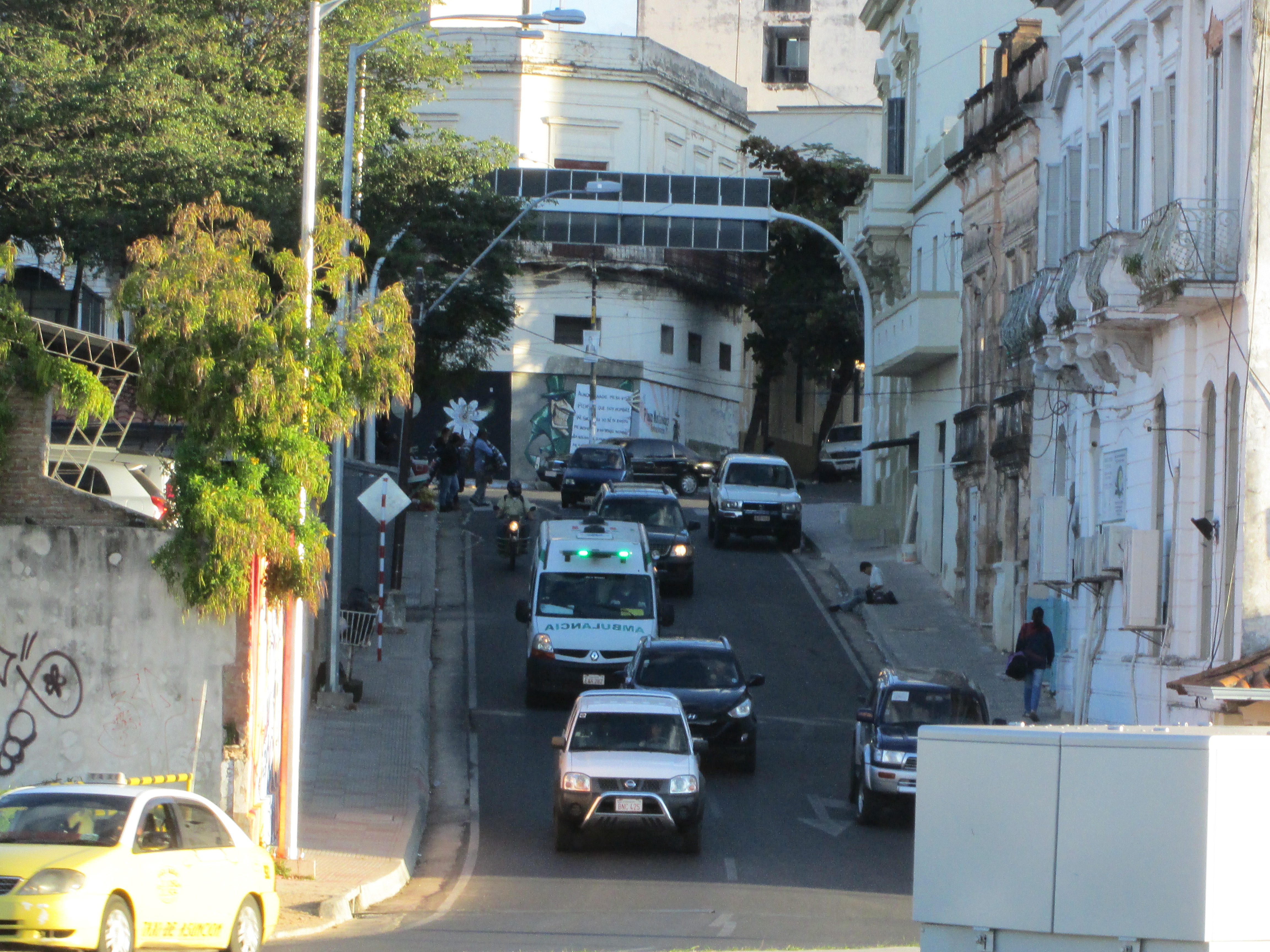
Uphill street in AsunciónI’m used to Paraguayans asking how old I am and if I have a boyfriend. But I’m still surprised when people ask me if I have kids. I’m years away from 30; children of my own aren’t on my radar.

But, after a 17-year-old mom asked me if I had kids, I started pondering the connection between motherhood and womanhood. Having children seems to be central to being a woman in Paraguay. Women without children are scarce here. Some women wait until they are older to have children, but most have them by their mid-20s.

You will find many children and many young mothers in Paraguay. But, what strikes me most is how happy every mother is to be a mother. How strong mothers are and how mothers have the last word.

Because children live with their mothers until they marry (and often afterwards too), mothers dictate the lives of their children well beyond the point when they grow from kids to adults. Mothers maintain the home. Mothers manage the family finances. Mothers earn money for the family. Mothers are a source of love and strength. Should a mother and father separate, it is the mother who takes the kids.

I’m left wondering: Is womanhood possible without motherhood in the Paraguayan context?

Guaraní: The Language of Paraguay

Paraguayan Presidential PalaceGuaraní, the indigenous language of Paraguay, is so elemental to Paraguay you can’t understand Paraguay without knowing a little but about it.

In Paraguay, most people speak a mixture of castellaño (Paraguayans’ preferred term for Spanish) and Guaraní, which is called jopara. “Jopara” means “mix” in Guaraní. When I think of jopara, I think of Spanglish; it’s the same idea, just with different languages. Basically, when talking you can use Spanish or Guaraní syntax and use a combination of Spanish and Guaraní words. Put simply, you are conversing in two languages at once, and there’s no right way to do it. Some people use more Guaraní, some people use more Spanish. It just depends on the person, the topic, and the context.

You can get by in Paraguay speaking castellaño, most teens and adults will understand you and be able to respond in castellaño. But, as you get more rural or if you want to talk to kids or older people you have to know more Guaraní.  If you want to understand what people are saying to each other you have to know Guaraní. If you want to understand what the guys are yelling at women as they walk down the street or what the old ladies are joking about over terere, you better know Guaraní.

When I was in training, my Peace Corps teachers always said Guaraní is the language of the heart in Paraguay. They explained that to make deep relationships and to really excel here you have to learn Guaraní. But, in my experience, Guaraní is as much a core of Paraguayan identity as it is a language of the heart.

Paraguayans are very proud of Paraguay. They may criticize small aspect of Paraguayan culture or their government but they will never question Paraguay. They are proud of and enjoy their tradition food, dance, music, terere, mate, and crafts. Coming from the US, where individuality is so central to most people, the uniformity in Paraguay is unfathomable. Everyone seems to listen to the same 20 songs, eat the same 7 foods, and do the same thing in their free time. To me, Guaraní is the summary of everything that Paraguayans feel makes them Paraguayan.

A Neighborhood of Family

Mural in AsunciónWhen I talk to other volunteers about their sites we often joke that we are related to almost everyone (through our host families) in our sites. In Paraguay, everyone in one family tends to live in the same town, on the same street. The street will have generations of one family, and the family members will likely live their entire lives there. One common exception comes because of marriage: If two people from different parts of Paraguay marry, most often the woman moves to the man’s neighborhood.

Another thing that makes families so massive to someone from the US is that the average woman has more children than in the US. Many nuclear families, especially families where the mother does not have a professional job, have more than 3 children and 5, 6, or more is not uncommon. It is also interesting to note that children frequently live with their parents until they marry. For example, I have 5 siblings in my current host family: 26, 24, 15, 12, and 8 years old and all of them live in the house with their mother and father.

What does living so close to your family mean?

It means, as a kid, you are guaranteed a huge band of cousins (friends) with whom you can play. It means when you host a party you have tons of hands to help cook. It means, to visit with family, you don’t need to leave your neighborhood.

As someone who grew up far away from branches of my family, I find it neat that Paraguayans have their aunts, uncles, and cousins so close. But, the closeness doesn’t prevent divisions and arguments. For example, in my site, my host family is related to most people on one side of the street through my mother and the other side of the street through my father. But, family members from the two sides of the street visit infrequently, even though they live only a ten-minute walk apart.

How does this relate to daily life as a volunteer?

For me a key aspect to doing my job is knowing who talks to who. Why? In a small town, gossip flies around and is a key pastime for many people. As a foreigner trying to maintain a positive image, it’s helpful to know how individual’s opinions of me might get around and affect my relationships with other members of the community. Knowing who gossips together is also helpful in terms of meeting people and understanding safety warnings. Like anywhere, people only hang out with the people they like, so they can only introduce you to that circle. Often, people don’t trust or don’t like the people who are not in their circle so they’ll advise you to avoid those people. As someone who is still trying to learn about the entire community, it is important to know when warnings to avoid someone are for a good reason or just because the person you’re talking to doesn’t like that person.
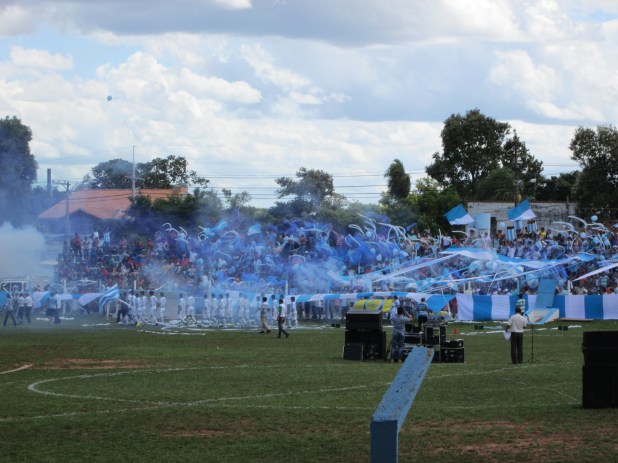
Dressing Up for the Soccer Game

In Paraguay you dress up to go to the community soccer game. It doesn’t matter that it’s hot, that there may or may not be shade, and that the players themselves will be covered in dirt and dripping with sweat.

You dress up because everyone is going to be there. Because, there will be people you want to impress—whether that means you’re looking for a significant other or know you’re going to run into a community leader.

Young women and young men gather in gendered groups and strut around.

You will see a lot of pink, on men and women, and other saturated tropical colors. You will see girls with bright pink and blue eye shadow, dark eyeliner, and lashes heavy with mascara. You’ll see rhinestone-encrusted hairpieces, scrubbed-clean-like-new sneakers, and lacy shirts. Everyone wears his or her best pair of jeans. Men wear crisply ironed t-shirts and polos. Women wear cleanly pressed tank tops. Everyone has Jesus, angel, or virgin necklaces. Even little girls break out their rings.

Just because it’s a social scene doesn’t mean soccer is secondary. The parading happens before and after the game and during halftime. When the players are playing all eyes are on the field. People scream, swear, squeal, sing, pound drums, set off fireworks, and jump to express their opinion of the game’s progress.

Cats and Dogs in Paraguay

JasyDogs and cats in Paraguay are usually approached in the same way that farm animals are—they serve a purpose and people are not emotionally attached to them. One common exception is puppies, which children tend to play with and adults tend to pet.

Dogs guard houses. They aren’t trained, spayed, or neutered. Sometimes female dogs are given a birth control shot, but several Paraguayans have told me that if you spay a dog before she has at least one litter she will die early. Dogs tend to have fleas and are dirty. They generally don’t come in the house and are often fed leftovers instead of special dog food.

There are dogs everywhere and you have to be aware when walking around at dawn, dust, and dark because dogs won’t hesitate to attack you. Luckily, however, a stick or pretending to pick up a rock will scare them away.

Cats are for killing rats and mice. They tend not to be welcome in the house and aren’t fed. Most cats I’ve met don’t really have owners and don’t really have names. Paraguayans call all cats “Michî,” which means “little” in Guaraní.