Names: Why Do I Care?

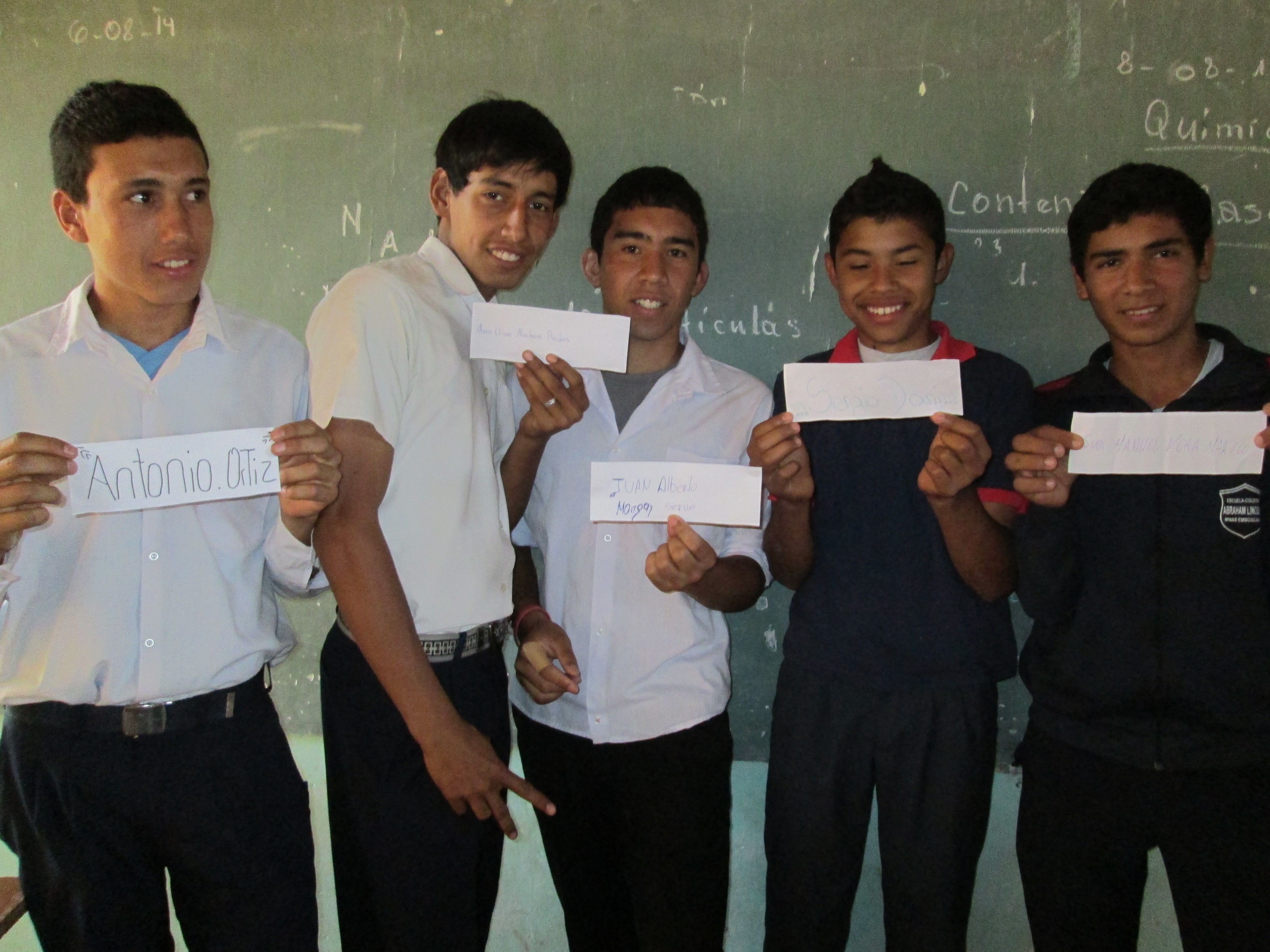
I took photos of my students with name tags so I could study.

I took photos of my students with name tags so I could study.

I’m working with 200 students, spread out over 10 classes. That’s a lot of names to learn, but I’m determined to do it. Why? Answer: There’s something powerful about being able to address people by their names.

What is so powerful about a name? In Paraguay you can tell a lot about a person by their name. Almost everyone has four names—first, second, mom’s last name, and dad’s last name. Often, one of the first two names can give you a clue as to when the person was born because it relates to the saint of a person’s birthday. And, in a community where few people move away, the two last names can help you make connections between people. It’s a relatively safe bet that if two students share one of their last names they are related somehow.

My worked is founded on relationships. I’ll never know how my time here impacted the lives of the people in my community—development and public health are a slow process. And, on top of it, I’m focusing on intangibles like self-esteem. The way I see it, the one thing I can do is set example. I can really only control what I do, so I might as well try to exemplify the life skills about which I’m preaching. For me, that starts by respecting people. Respect starts with giving people the time they deserve.

When working with youth it’s easy to lump them into categories—the studious, the bad kids, the troublemakers—but that practice won’t help anyone. I’ve noticed that as I get to know my students a little better each has his or her own way of being, a way of being that is as unique as their name. I want know the person behind the name, so I might as well start by learning the names.
The Only Thing to Do Is Laugh

I learned very quickly that most Paraguayans are on the hunt for a laugh. And, as a stranger here, my mere existence is inherently funny. Yes, the constant jokes can be wearing, but I’ve also realized that looking for the next laugh is a pretty nifty way to live.

Paraguay, as a place, seems to reflect the humor of its people. It was not more than a day after posting Squashing More Than Roaches, in which I boast that I’m not scared to squash roaches with my flip-flops that my claims were put to the test.

On that evening I came home from visiting a family. I was in a good mood because I got invited to two lunches, a soccer game, and a party. I turned on the light and a large roach was chilling in the middle of my floor. The occasional roach is not a surprising occurrence, so I prepare to smash it. The only option is to annihilate a roach when I see it because of the anger (maybe unjustified) that boils up in me upon the sight of one.

If you’ve never had to go after a roach yourself, you can take my word when I tell you they are quick little buggers. So, this particular roach I tried to whack several times, with a floor detergent bottle I was saving for some recycling project, before I landed a good one. During the pursuit, I discovered 2 things: 1) there was another roach on the inside of the backdoor, which I proceeded to demolish as well, and 2) these two roaches were not alone. Concealed in the corner behind my bathroom door was a nice little cavern in the brick wall that was serving as a roach condominium.

An hour or so later the roaches were mostly defeated. I’d smashed nearly 15, maybe 20, with my detergent bottle, of various sizes. I’d probably poured more than a cup of bleach in to the roach cave. Like a cat I waited for more to emerge every time I flung more bleach into the roach hole. When they were mostly gone, according to a good inspection by the light of my headlamp, I decided to seal the rest of the roaches into the hole. I thought that maybe the bleach would finish them off, though I was doubtful because I’m pretty sure roaches could survive a nuclear ambush, but I handed it to fate. Plastic from an old soda bottle and duck tape closed off the roach den. I swept the shells of the roaches I had caught out the door—the ants or some other animal would disappear them.

I noticed my neighbors were hanging out in the back of their house, an odd thing because people in my site tend to hunker down when it gets dark. I looked at my now dented and stained detergent bottle. I had to laugh. The ruckus my insistent banging created was probably alarming, and I’m sure my expression during the fight was that of a crazed fanatic. Okay, Paraguay, you win, I walked right into that one.

Squashing More Than Roaches

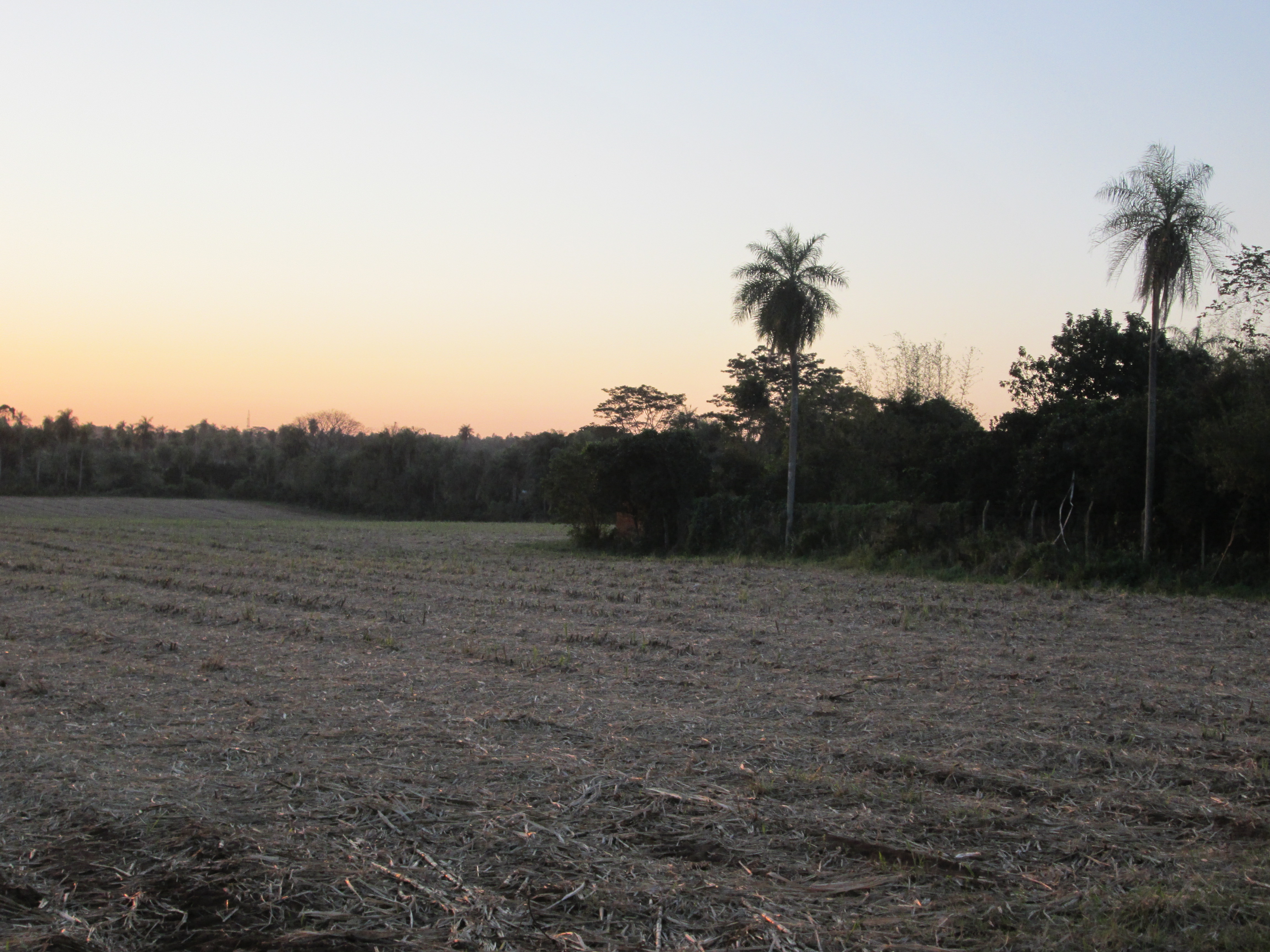
Sunset over a sugarcane fieldThere was a time when I’d scream when I saw a cockroach in my apartment and shakily dumped powdered soap on it because I was too freaked out to get close enough to crush it. That’s over. Now, I’ll even stomp on those buggers in my flip-flops—shiny backs, kinked legs, and oversized antennae aren’t going to save those creepers anymore.

I haven’t had to battle a tarantula yet, though I’m sure the opportunity will arise before I leave Paraguay, but the fears I once had are fading. I don’t mean to say I’m becoming fearless, that’s just irresponsible. What I mean is that my prospective is changing.

Things that were overwhelmingly important are less important, like clean floors, and things that weren’t important, like actively greeting everyone, are more important. Things that were petrifying have lost some of their adrenaline pumping abilities because, well, there are just more stressful things and more unknown things to pit myself against daily than there ever was before Paraguay.

No, Paraguay isn’t a scary mess. But, having to re-learn things and live in a different language and culture keeps you always on your toes. For sanity’s sake, I’m learning to not give things more credit than they’re due. The truth? I’d rather use my energy to get better at greeting people than being intimidated by bugs.

I Can’t Speak Any Language Anymore

The ViewAs volunteers we joke about the fact that we can’t speak any of the 3 languages we know as part of our service—English, Spanish, and Guaraní. When we get together we speak a confusing mix of the 3 that no one but another Peace Corps Paraguay volunteer will understand easily.

Sample Conversation:

[Location Peace Corps office in Asunción]

Volunteer 1: “Hola! ¿Qué tal?”

Volunteer 2: “Fine. What have you been up to?”

Volunteer 1: “Not much. Everything is tranquilopa, but I’ve been trabajando un poco in the high school. You?“

Volunteer 2: “¡Que guapa! I don’t know. Che kui’gue.”

Volunteer 1: “Qué piko”

Volunteer 2: “I’ve just been visiting families, mostly.”

Volunteer 1: “Japu. Aren’t you working with una comisión de mujeres?”

Volunteer 2: “Más o menos. I presented a couple of ideas to them, but we haven’t started anything. Tranquilo, nomás. I mostly work with the niños in the escuela. Tengo a PE class.”

Volunteer 1: “!Que guapa, entonces! Where do you want to go for almuerzo?”

Volunteer 2: “Ndaikuaai, depende en vos nomás”

Volunteer 1: “I was thinking pasta, but I don’t need the carbs.”

Volunteer 2: “Igual nomás. The pasta place at the mall?”

Volunteer 1: “Yeah, he’tereri”

Volunteer 2: “Do you want to come back to the office after lunch?”

Volunteer 1: “Puede ser. I should call mi madre.”

Volunteer 2: “Jahama, entonces.”

The Warm-up Is Over

Sunset on the way to play soccer.The honeymoon has ended. I’ve been in my site for 4 (plus) months now, which means a couple of things.

  1. I am comfortable in my site. I call my apartment home.
  2. The Peace Corps expects me to start doing projects and to report on them.
  3. My language is better than terrible.

All these things are pretty positive, so I thought that would mean August, and onward, would be great. Wrong. The newness of everything has worn off. My desire for a busy schedule and to be productive is competing with an inclination to stay in my house. Luckily, my señoras keep me honest because they ask me where I’ve been if I don’t visit them at least weekly.

I call it the slumps. I’m torn between being happy with what I’m doing and bummed about what I haven’t done. I’m teaching life skills and English classes. So, I have that going for me…which is nice. But, I haven’t studied Guaraní enough to speak it or understand it on a basic level. I still have 38 (of 50) families I have to interview for my community census—an important tool for setting a baseline of health conditions in my site and a required project. There’s more, but this is my blog not one of my to-do lists.

I’ve gained a huge appreciation for self-employed people and almost fondness (almost being the key word) for billable hours—only because setting your own schedule is an insane exercise in self control and sticking to that schedule is a task of self motivation worthy of a gold medal.

Despite the darkness, I can see the light. A weeklong training with the other volunteers in my group earlier this August; some long conversations with volunteers about their lives, projects, and dreams; Mountains Beyond Mountains by Tracy Kidder; lists of victories and goals; and the friendliness of people in my community are pushing me up the hill.


The Little Things, My Friend

A housePeople often say, “It’s the little things.” What does that actually mean? It seems so randomly abstract, yet I think a lot of people know exactly what you mean when you say that phrase.

Paraguayans have given me a more concrete understanding of the idea of the little things: take the time to make the moment special. When I first got here, I thought it was a complete waste of time that two nurses plus a random person at the health post spent a good hour trying to use bits of curtain and gauze to create a table cover for the dinky wooden table on which the portable vaccine cooler sat. Who cared if the table had a cover? And the gauze and bits of curtain didn’t even look that good. I used to wonder if it really made a difference if we put a Christmas tablecloth over the table in May when we were eating in a dirt-floored room that chickens entered freely. I now believe that these activities not only matter, but also are worthwhile.

I love that the señoras I bake with cover their tables before we start mixing our cake batter. I love that even if we are outside, they conjure up a tablecloth before serving coffee and crackers. I love that they take the time to find the one or two nice ceramic mugs they have to serve the coffee. I love that rather than use a different, more ugly mug they wait for the first person to finish their coffee to use the pretty mug for the next person. I love it because little things like that make me feel special. Even if the tablecloth really doesn’t make the table more sanitary or doesn’t look better I appreciate the effort.

Why shouldn’t you take the extra couple of minutes to make your eating place look nice? Why not cut your veggies so they’re pretty, not just bite sized, before throwing them into your salad? Why not great everyone before taking a seat? The little things are inherently extra, but they are the spice, the flavor of life.

Some Things I Miss

  1. Heated houses – Yeah, winter is short here and doesn’t get much below 50 degrees but it’s like camping in the cold. There’s no escape. The wind whips through my house and the cold settles into even my bed.
  2. Clothes washing machines and dryers – Have you ever washed your clothes by hand? I won’t burst your bubble if you haven’t other than to say you’ve saved hours of your life. The drying thing isn’t an issue during the summer, but during the winter things take a while to dry and there’s always a chance they will end up moldy.
  3. Trash pick-up – It is very hard to be environmentally conscious and deal with trash in the absence of trash pick-up. I am starting a collection of things with which I simply don’t know what to do.
  4. Not having to worry about mold – These winter months, the rainy days, and houses made of mud and cement don’t mix well. I’m constantly fighting to keep mold out of my wardrobe and away from everything in my house. Nothing can touch the floor, nothing.
  5. Floors that don’t hold moisture – My floor is made of cement and is laid on top of the dirt of the earth. It’s nice in the respect that if I spill tons of water…like when I hang my clothes to dry…the water doesn’t pool but disappears, but it does add to the mold problem.
  6. The Internet always at my fingertips – I miss being able to just look up quick facts and information. What are the hours of such and such a business? How does one get a Fulbright? Who sings such and such a song? What are all the animals in the Chinese zodiac?
  7. Google Maps – How the hell do I walk from here to there? How big is my community, really?
  8. Walking around barefoot – The threat of ringworm, hookworm, and Giardia lamblia are a pretty convincing deterrent.
  9. Good green tea – Paraguayans drink terere and mate, so green tea isn’t that important here. But, I just love green tea.
  10. Dark chocolate –Chocolate is scarce and expensive here. I don’t know why, but the chocolate that is here isn’t real chocolate…it’s chocolate flavoring without actual cocoa.

Bucket Baths: At Least I’m Saving the World

StreamHave you ever wondered how many gallons of water you use when you shower? I’ve been wondering; I put it at over 5 gallons.

Well, I only need about 2 gallons to bucket bathe. My apartment doesn’t have hot water—most people in Paraguay get hot water by using an electric showerhead that heats the water as it comes out—so on these cold days there is no way I’m showering. Instead, I’ve been heating up water to take bucket baths. I heat up almost 2 liters of water using my electric water boiler and add maybe 6 liters of cold water and mix them in a basin I also use to wash clothes.

Bucket bath technique:

  • Once water is mixed, use a pitcher or cup to wet your hair over the basin (to conserve water) and to pour water on you so you are dripping.
  • Wet your washcloth and make sure it has a good lathering of soap.
  • Put shampoo in your hair, scrub down with the washcloth, and shave if needed. All this is done without using more water. If you are shaving your legs, you might have to rinse your razor a couple of times.
  • When all the scrubbing is done, use the pitcher or cup to scoop water out of your basin to rinse. Start with rinsing your hair, in a standing position, so you also start to rinse off the soap on your body. Use the rest of the water to rinse off all soap.

The bucket bath technique is surprisingly efficient, both time wise and resource wise. It’s not particularly relaxing; my house is rather cold because it isn’t heated, but it is nice to know you are conserving water resources.

Mate: Highly Satisfying

MateMate is the hot version of terere. It is yerba mate, which is mix of leaves from a South American shrub. The yerba comes in a coarse powder that you put in a cup and drink through a medal straw that has a filter on the end. It’s very bitter, a lot like green tea, and is caffeinated. To drink terere you use cold water and to drink mate you use scolding hot water. I have burned my mouth many times.

Many Paraguayans, at least in the more rural areas, start their days well before six, and mate is a common starter. During the winter mate is drunk at almost any time, but never with food and usually not directly before eating or after eating, to stay warm.

You usually heat up about a liter of water and cup by cup drink all of that using the same yerba—like if you were to use the same tea bag to drink a whole teapot by pouring the hot water into your mug every time you finished one cup.

Like terere, there are a ton of medicinal herbs people put in their mate for every ailment from a sore throat to high blood pressure. Most herbs do something for the stomach, mouth, or throat. You can drink mate alone, like what I’m doing as I write this post, or it can be a social thing. Just like with terere, mate cups are communal and one person pours the water into the cup and passes it around the mate circle, each person takes their turn in order.

Self Doubt is Just Part of the Job

FieldIn the normal job or school setting you get frequent feedback that helps you know how you’re doing. In school you get grades, in work you get evaluations and raises. And, if you come from a corporate setting you also have profits to check your productivity. The Peace Corps is NOT a normal job.

I’m making up what I’m going to do and I’m deciding how I did. Somehow this removes the arbitrariness, which annoyed me when I got my college report card or talked to my previous bosses about how I was doing in my job, and replaces it with doubt. The real trick is that proof that what I’m doing is making a difference won’t come for years, years after I’ve left Paraguay. Why? Because I’m trying to give people knowledge and skills to improve or maintain their health.

In the prevention part of public health you spend a lot of time telling yourself what you’re doing is valuable. When I worked for a health communication firm, I would think my work was impactful if my client was happy even if there was no proof that what I did actually improved people’s health. But, in the Peace Corps there is no client who will tell me I’m doing a good job even if there are no results. Sure, my boss will tell me I’m guapa. By doing activities I’ll meet more families who invite me over for lunch.

The compliment and lunch invite don’t really tell me how I’m doing. Many questions remain. Is the child I played with today, read to, and taught subtraction going to be better off because I was here? What is better off anyway? Is it happy? Is it financially independent? Are any of the students learning something useful from my classes and charlas? What is useful anyway? Of course, the list of questions goes on.

I think most Peace Corps volunteers are here because we want to make the world a better place. I’m 6 months in Paraguay, and 4 in site, and I’ve come to realize I’m not going to know if I change the world when I swear out. And that makes me doubt that being here is worthwhile. Yet, despite this doubt I tell myself that it’s better to stay. Why?

The biggest Peace Corps project is you. Improving yourself and expanding your drive to keep looking for ways to help the world is reason enough to muddle through the hours of doubt. The long, silent nights and days actively being friendly to everyone change you. You think a lot. You doubt a lot. You dream a lot. You hope with every fiber that when all is said and done, you did your part to make the world a better place.