Optimism

I zoomed around running errands for work. My return-borrowed-items frenzy brought me to the opposite corners of the network of towns that make up this part of the state and forced me down some of the most congested (and my least favorite) roads in Vermont.

I was tired. I’d been studying and working extra to finish everything on my plate. It was another sunny, gorgeous fall day…another one I was missing as I toiled.

I crested the hill just past where the road was lined by strip malls—probably once farms. I felt like I’d climbed the hill myself (rather than my little car). At the edge of my vision, the largest smile caught my attention.

There in the beautiful golden sun under a tree that wore canary yellow leaves, its autumn coat, sat an elderly woman. She was laughing. Her face creased where laughs had wrinkled her face for decades. She bent forward slightly. I looked again, trying not to swerve or slow too suddenly as I drove in traffic.

Beside the woman was an elderly man. Both of their mouths were wide with joy. The fall breeze made their tufts of white hair flutter.

What were they laughing about? My face relaxed and the corners of my mouth rose, breaking line formation for the first time that day. The day wasn’t so bad—I’d just needed to look past my personal storm cloud.

Defining Friendship

On my EMT shift the day before my birthday, the dangerous topic of religion came up for some reason while we were reviewing the ambulance (something we do at the beginning of every shift) to make sure we had all the right supplies. Like most careful Americans, we ended the religion conversation before we needed to say much about our personal beliefs. It was amusing to contrast the politically correct nature of the conversation with my experience in Paraguay. In Paraguay, religion is not a topic that’s avoided and people have no problem asking you if you’re catholic (the dominate religion there). I went to Paraguay with almost no religious experiences (and most that I had had were very negative)…but Paraguay brought me up to speed on their version of being catholic. And they changed my view of religion forever (though they didn’t convert me).

As I wrote when I was in Paraguay, the Paraguay I know is Catholic. That means that to my Paraguay friends the entire world is seen through the lens of Mary, Jesus, and the saints. A lot of what Mary and Jesus and the saints talk about is how you’re supposed to treat other people. Paraguayans put people, especially family, first.

A little after 9pm on my birthday I got a video message from one of my families in Paraguay. When I say family, I mean I spent every weekend with them. I went to church, out shopping, and to soccer games with them (in Paraguay, soccer is the equivalent of all sports in the US combined). I went dancing all night with the daughters, studied English and history for hours with the son, ate many dinners and lunches with them a week. I showered at their house when my water was out. I was in both daughters’ weddings…

My whole family was there in the video message. First they sang “Happy Birthday” in Guarani…then it was “Happy birthday Jett. May you have a blessed birthday and many blessed years ahead. I hope you’re having a wonderful time. Send us a video, Jett, so we can see you…We miss you Jett. When are you coming back Jett?”

It’s so nice when you realize that the people you think about all the time also think about you. And as my family’s familiar voices and happy words sunk in I thought about friendship. Even friendship is defined using a religious metaphor in Paraguay. And, with the topics of religion and friendship on my mind, it seemed fitting to share (again) one of my favorite stories about both:

Overheard in Paraguay: Friendship
Repost from October 19, 2015

We sat in a half circle around the grill. The men were cooking large slabs of meat, ribs and some unidentifiable cut, for the mother of the family’s birthday dinner. The husband of one of the birthday mother’s daughters sat by the grill passing one can of beer among the men there. A nephew walked up to the daughter’s husband. The husband was around 30 and the nephew was about 11.

The husband hugged his nephew first with one arm and then the other, squeezing him. The nephew squirmed, and they both smiled. The husband held the nephew at arm’s length and put on an almost serious expression. “Will we always be friends?” the husband asked.

“Yes,” the nephew said.

“Even when I am old and you are my age?” the husband asked.

“Yes, even when you are old and I have kids,” the nephew said.

The husband smiled and pulled the nephew into another hug. The nephew pulled away again and they looked at each other, the husband still squeezed the nephew’s shoulder with one hand.

“Even when you are in Heaven and I am old we will still be friends,” the nephew said earnestly.

The husband laughed. “And I will look after you from Heaven.” They hugged again. “And, when you come to Heaven, we will be friends in Heaven. We will be friends forever.”

The boy nodded and ran off to find his playmates.

Birthday Eve!

We drove along in the old truck over the sine wave troughs and crests of a typical Vermont road that make your stomach drop. (The effect was exaggerated because my dad always sped up just before the peak). Then, our humming came to a crawl as we found ourselves behind a car with some white hair just sticking up above the driver’s seat headrest. I said something about them driving slow.

“Time is moving so fast for them they don’t even know they’re driving slow. As you get older each second becomes a smaller fraction of your life,” my dad said before passing the elderly driver.

Tomorrow I turn 28! I’ve almost lived a year for every minute in a half hour. I guess I’m not too old yet, though, because I think plenty of people ooze along with the viscosity of molasses.

I looked back at last time I wrote here about my birthday. I gave a robust list of accomplishments and goals. Don’t worry, I’m not doing that this year. These days my guiding principles are my 5 favs of Paraguayan culture—humor, gratefulness, details, relationships, curiosity— and everything else falls into place about them. For example, I smile at strangers…because smiles are contagious. But also, more importantly, it’s fun to catch passersby off-guard and watch the awkward expressions that flicker across their faces as they work to smile back.

I’m stoked about 28. This is the first birthday I’ve had (since adulthood anyway) where I don’t have any major changes I want to make. I have a lot of hard, exciting things on my radar for the year. Those wonderful things could dramatically change my life—like applying to medical school. But the only way to find out if the future is boring or exciting, is to keep putting one foot in front of the other.

Time does go fast at this age. It seems like I just started the semester and already I have a few exams behind me. I can’t imagine what studying will be like in my 30s, perhaps a jet race, but I’ll find out soon.

Happiness Comes from the Heart

Being a pre-med post-baccalaureate student, I take a lot of classes with humans that are 8-10 years younger than me. These young people are a dichotomy of vibrant energy and self-doubt. We are on same footing as we struggle to memorize microbes and how p orbitals shape molecules, yet we are not even in adjacent life chapters.

It’s nice to be a witness, rather than a participant, of the soul searching that comes with learning how to be an adult. I once was an 18-year-old too, but I’m glad that era is behind me. I know my young colleagues will come out just fine without any help. But, there’s one thing that I wish I could tell them so they wouldn’t have to go through the trouble of discovering it themselves. It’s simple but, alas, it’s something only experience can teach us: happiness comes from within.

I think many of us get lost in the weeds when it comes to happiness. We jump from shiny thing to shiny thing. We assume the next great object we possess will fill the holes in our soul. We look to family, friends, and partners thinking they can save us. We search for other’s approval of our look. We act based on strangers’ opinions, hoping that society will label us as “cool.” And as we skip and hop between all these outward forces, our emptiness expands until our core seems more like a beach ball than a rock. Hollow.

It’s not the doldrums, the pits, where the quest for meaning beyond ourselves drives us, but to stagnant waters and ships with limp sails. And, while some of my young lab partners might learn quickly that they are the only ones who can make themselves happy, many of them will take years to realize the truth. I’m not sorry for them. I know their journey will have many fun days and explosions of wonder. But, if they are like me, they won’t find peace until they understand that joy originates inside and spreads from there. I don’t wish the restlessness of the road upon anyone, but it’s a road we all must wander at some point.

While others might make our lives brighter, we’re the only ones who can decide if we’re going to let in the sunshine or draw the curtains. I hope that when the going gets tough and the days seem dark the young folks around me take the time to look inward. There are many things beyond our control, but our emotions and how we respond to the world do not fall among them.

Are you lonely?

“Are you lonely?” is America’s version of the boyfriend question. I thought the coupling obsession was a Paraguayan thing. But, now that I’m back in the US, I realize I was mistaken. It’s also an American thing. Maybe it’s a human thing. Regardless, I’ve gotten a lot of practice justifying why I’m single. So, let me tell you…

…there is no reason why I’m single. I just am.

I know it’s hard to believe that a person can be happy just being. But, try to imagine it. Consider, for example, that I can go hiking on the fly and not wait for a soul. I could move anywhere and would only need to bargain with my future landlord and maybe the visa office. I can (and do) eat when, what, and where I want and don’t feel even a hint of obligation to coordinate with anyone.

Perhaps you’re thinking something like, “Fine, Jett, you’re busy and independent…but really you’re just waiting for the right guy. You’re lonely, but you forge on propelled by the dream of the prince who will sweep you off your feet one day.”

If something like that is on your mind, I must ask: Doesn’t that argument seem archaic? By now we should all know that princes only live in fairytales. They aren’t real, but metaphors for love and good fortune. I don’t need the metaphor. I’m not looking for someone to fend off the dragons. I do that just fine on my own.

Don’t despair, you’re partly right. I’m busy and I have great friends. But that’s the whole point. If I lived my whole life as I am—doing good work, engaging in hobbies, and enjoying friends—then I would have an awesome life. You see, my life’s not on hold. I’m not working toward finding that perfect man. I’m just living…and I also happen to be single. I’m not worried about love. Why should I? It’s spontaneous and stubborn. It will do whatever the heck it wants. Just like me.

I might one day stumble upon someone to be my partner in crime. I might uncover a person who makes me happier than I already am. If I do, I’ll marry him. I also might not find such a human. Either way, the trajectory is grand. I realize that many believe that singletons need to be saved. But let’s remember that when we, you and I, were taught about the American dream it was never said that it could only be dreamt by two.

Thanks for your concern about my emotional well-being. But, the better question is “What do you do?” I assure you the answer is interesting. I have a lot to say about me and my doings. And don’t worry, I’ll let you know if me becomes we.

Raising the Boiling Point

When I tell my grandmother all the things I’m doing she usually says something like, “Just hearing about your activities makes me tired.” This comment always makes me wonder why we all have different thresholds of activity before we become overwhelmed or burnt out and disinterested.

Hypothesis

Interest is to productivity like salt is to water.

Water on its own boils at a certain temperature, but after dissolving salt in water the temperature at which it boils is higher. This is because the intermolecular forces between the molecules are stronger when salt and water are mixed than between water molecules alone. In other words, it requires more energy to boil a pot of salt water than it does a pot of fresh water because the little bits that make up salt water are more strongly pulled toward each other than the tiny bits that make up water are pulled together.

I believe interest acts like the salt when the water is productivity. If you dump some interest into your productivity pool, you’ll achieve a higher production rate than you would if you just do things without figuring out how they are interesting. I define interesting as something that is thought-provoking, relevant to my interaction with people, useful in the activities I do, and/or helpful in reaching my goals.

So what?

Productivity is not set in time nor does each person have their own unique productivity rate. We each have varying productivity depending on zillions of factors like time of day, enjoyableness of what we’re doing, and how many things we have on our mind. But, what I’ve found as I take each step on the doctorhood quest is that if I can convince myself (or already am) interested in something I can focus on it a lot longer and accomplish a lot more in less time than I can if I’m apathetic about it. I can cut the time it takes to do something sometimes by half if I can think of a way to find it interesting.

That’s what I did with first semester physics, specifically kinetics. At the time, I’d been battling squirrels. Squirrel rapscallions were decimating my garden, and though I truly hated those rascals, there was nothing I could or would do about it. I wasn’t going to kill them–I didn’t have the heart. However, kinetics equations such as those used to describe projectile motion gave me a tidy solution. Kinetics can be used to describe how far, fast, and high you throw something. I imagined (even though I’d never, ever actually throw a squirrel) that all my projectile equations related to chucking squirrels. The metaphorical “strike back” was enough to ease my anger over my garden crops being stolen by squirrel thieves and gave me the source of interest I needed to learn and excel in physics.

Side note: Once I got started, I didn’t need the squirrel metaphor…physics is actually pretty cool all on its own.

Test

I think it’s a powerful observation and a testament to the power of the mind that you can trick yourself into being interested in something and by doing so improve your ability to learn about that thing. If you can dig deep and find a fragment of something that sparks your imagination and curiosity even the hardest and most tedious of tasks goes more smoothly. Don’t be believe me? Next time you’re doing something that absolutely must be done even though you hate it, try to find something about the task that is interesting and worthwhile. Focus on that as you do the task. My guess is that you’ll find the whole process slightly more bearable and that you’ll also finish sooner than you normally would have. Challenge: Prove me wrong.

The Do-Good High

Did I tell you I’m an EMT? I’ve been running for about 5 months. Long enough to have learned a thing, maybe two. Let me tell you about the do-good high.

There’s a certain kind of person who becomes an EMT and sticks with it. Hint: It has nothing to do with your age, background, or future.

It boils down to what I call the “do-good high.”

There are EMTs who want patient experience so they can then become nurses and doctors. There are others who like sirens and driving large vehicles with lights. Many EMTs want to give back to the community. Others like the satisfaction of saving lives. Whatever the reason, the thing that makes all EMTs the same is that they get a thrill from doing good.

Whether it’s helping a little old lady after she’s fallen or bringing a person back from the dead through CPR, the folks who stay in emergency medicine are there because they’ve caught the do-good bug. When the alarms go off at 3 a.m., waking you from a dead sleep, and the dispatcher comes over the speaker: “56-year-old male, vomiting and diarrhea…”† I think a normal person would choose to go back to sleep. Not an EMT.

The EMT answers the call. Why? Partly it’s our duty to put on our uniform and leave the station as fast as we can, but there’s also something beyond obligation that makes us go. Even in the grossest of circumstances, like when we pick up that vomiting and pooping man and sit with him during the 30-minute ride to the hospital, we helped turn a bad night for him into a slightly better night.

The feeling you have sitting in the back of an ambulance as the sirens holler and you hustle to your patient is something like that of standing on the start line of a giant race. Your heart goes just a tad bit faster and your mind zips through the possible scenarios that could unfold once you arrive at the scene. Then you reach your patient and a calm descends upon you. There’s a human in distress and what’s ailing them is your puzzle to solve. You might be the one who saves their life. But even if you aren’t called upon to be a hero, you can ease their distress by helping them breathe or reassuring them as you go to the hospital. Seeing your patient’s face relax or their color return after you help elicits an adrenaline rush that starts in your center and spreads out to every corner of your body. It’s a high like that from scoring the winning goal or beating a chess genius at their own game, but it’s better because it lingers. This rush and joy that rapidly overtake you after helping a patient is the “do-good high.” All EMTs get it. It’s what keeps us coming back.


†Fictional dispatch that captures the essence of a typical call. HIPAA and other privacy measure prohibit sharing patient information.

On Growing Old

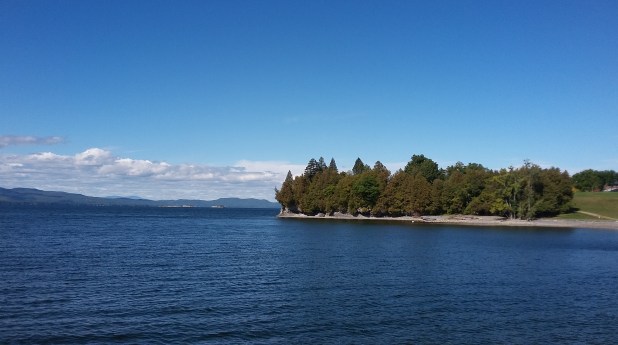
The best excuse for why I’ve been silent since spring is that the sun came back to Vermont and I’ve done everything I can to enjoy it. In Vermont, you spend eight months of the year waiting for summer to return.

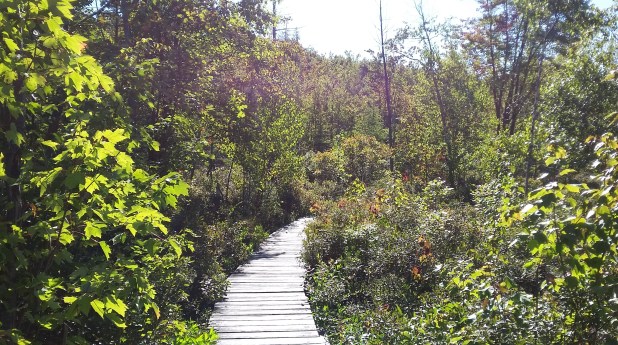
Many Vermont summer days seem too perfect for an imperfect human like me to be part of them. They make me feel like a hideaway who, if discovered, will be kicked out. Tossed back to a land where the sun doesn’t flicker through the trees and the birds don’t chirp so musically. When I walk on these pristine days I let my mind meander.

On one such walk, I pondered growing old. I have a very vivid memory from elementary school. I was looking at the high schoolers and I thought, “I will never live to be as old as they are.” Yet, I did grow as old as they were. Not only that, I lived through college. And now I’m just a few years from 30 and I’m still living happily.

Some people fear getting old. Others complain about it. Others dye their hair and refused to tell you their age, as if time can be stopped through censorship. Recently, old people keep bursting into my thoughts. Many of my friends in Paraguay were more than twice my age. Most of the patients I transport to the hospital (I’m an EMT) were alive during WWII. My grandfather—the one who always made me laugh and was a humble, hidden source of strength—died. He’s still in my heart.

I thought about these elderly people as I walked. A slight breeze brushed away the mosquitoes and it smelled like grass and green things. I thought, “I’ll probably be 90 one day. What the heck will I be doing when I’m 90?”

I tried to envision what it would be like to be one of the white haired, wrinkly, and wise people who are always stoically at the edges of my life. For a moment, the thought made me sad. But, the melancholy passed and I grew calm. I would likely be old one day. And when that time came, I would not be busy like I am now.

It wouldn’t be that bad being old. I’d sit on a porch somewhere watching the sun shine. Perhaps I’d still be flexible enough to lie in a hammock. I’d observe the young people zooming around and they’d wonder how I wasn’t bored sitting and staring at the world all day. I would be so occupied by memories of a lifetime and all the family, friends, and acquaintances whose stories I’d shared that sitting on a porch would be like being at a movie theater watching the best movie ever. The best movie because I was its writer, producer, star, audience, and critic.

Sometimes young people would pause long enough to talk to me. They might be my grandchildren or they might be someone else’s grandchildren. I’d talk about what I’d done, seen, and learned. My words would fall on deaf ears but, sometime later, those young people would remember something I said and it would help them.

As I walked thinking about being ancient I realized that I was content with time passing. I’d make it as far as I was supposed to go. The grandest part of the whole thing, the beauty of aging, was that my weakening state would leave me no option but to reflect. My frail bones would limit the history I could make in my last few years, and that wouldn’t be so terrible. It’s meant to be that way. It’s meant to be that we have some time to enjoy what has been and is without any need to build the future.

Old Haunts

I stared at the metro station that had been my home stop for several years as the train doors binged open and closed. That day I had no reason to get off there. I tried to remember what I had thought about all those times after interning, working, volunteering, and adventuring when I got off on that platform and observed the name written in white on a brown pole, “Cleveland Park.” Too many different thoughts to remember. Feelings arose—that of being too hot or tired from a long day at the office, but those were more sensations than memories.

It had been over three years since I’d visited DC—three years, but a lifetime of learning. The trouble with my recollection wasn’t so much that I didn’t remember all the good and bad things that had happened while I was in our Nation’s capital. The marathon training runs through Rock Creek Park when the sun glistened through the trees as I padded along the winding creek dodging bikers and baby strollers. I remember the roly-poly red pandas who I visited many weekends. The tart and sweet of frozen yogurt and mango. The smell of coffee emanating from my clothes after a shift at Starbucks—you can’t escape that scent, and coffee smells different when it’s associated with work, rich and bitter at the same time. I remembered the night I drank my first energy drink, my only all-nighter of college, so I could walk down to Obama’s first inauguration. I had tickets! I remember the cherry blossoms and the autumn leaves reflecting in the pool at Jefferson’s feet. The flags on the Vietnam memorial stark against the black stone. The quiet white lines of tombs at Arlington—so many lost. The smelly humidity of the metro before a marathon. The chili fries at National’s stadium—Harper, Zimmerman, Gonzales…the presidents racing. The long night walks in the neighborhood when families strolled and the smells of different restaurants wafted across the sidewalk. The Greek deli where I got my college graduation lunch.

The trouble, though hardly that, was that the feelings of weariness and frustration that had laced my time in DC were gone. Completely gone and only the happy memories of my old haunts remained. The Kennedy Center at dusk. The strange winding of the canal through Georgetown. The roses. Roses in almost every garden. The long walks to the grocery store and the strolls past embassies. It was strange to think of embassies now. I’d been an expat. I knew what it was like to visit your country’s stronghold in a strange land. Oddly not comforting considering the comparison between American politics and the warmth of Paraguay.

I watched the people rushing out of the metro. I was sure not to esca-left—unforgiveable. I’d forgotten about all the fancy men’s shoes and checkered shirts, but seeing them I realized how unchanged cloud DC was. Suits of a cut only seen on the Hill and in old boys’ clubs abounded. I smiled. Funny to think those young men, dreaming of great titles and accomplishments, where not as unique as they imagined. As for the women, the boring shirts and sensible skirts. Even below the Mason-Dixon line so many folks lacked the flare that the south brings out if you let it. “Not far enough south,” I guessed. Of course, these folks were more complex than their clothes, but they’d lead you to believe their clothes were an expression of themselves. Hard to say, not knowing them.

Wandering the streets made me feel the freedmen of disengagement. This was not my home and could very well never be my home again. It was an easy thought. Whether the metro ran on time or late mattered little—it was no longer my metro. And besides, I’d waited hours in the hot sun for buses a fraction as nice as the dirtiest DC metro car.

Old haunts. They weren’t haunts at all, really. Just little snapshots into the past. But I no longer saw any of the scenes as I did then. No. They all had a different filter. And this time, the view was bright as the afternoon, January sun in Paraguayan. The vignette lens that had once allowed the shadows to creep in around the edges of my old stomping ground had been replace by a softening and brightening filter. I noticed the sidewalks, their cracks had been filled. The sidewalks were new just like my path. And the corners of my mouth creeped up all on their own. If my positive outlook, adopted from Paraguay, could endure the city where politicians were trying to put our country forty years behind in education, rights, and healthcare, then it was safe to say I’d come to visit just at the right time. The right time to prove that rain and sun are different sides of the same sky. I saw the sun.

Springtime Rambling

My goodness how quickly time passes. It’s hard to believe that the last time I wrote was in the dead of a cold, dark winter—the hallmark of New England. I won’t bore you with the reasons why there was no time to write for so long, except to say that I know a great deal more about equilibrium, acid-base reactions, electromagnetism, circuits, batteries, optics, quantum mechanics, and special relativity than I did in February. Science.

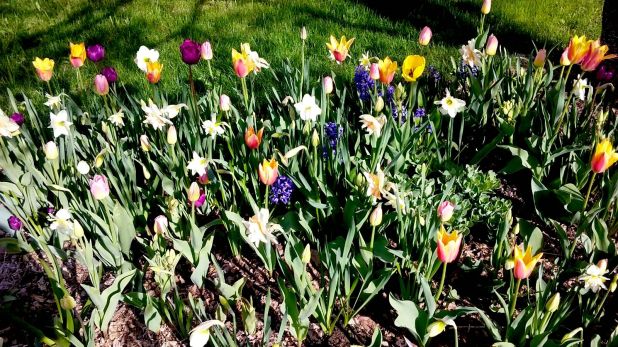
Spring arrived in Vermont with the timidity of a mouse crossing a barren stretch—one step forward, three steps back. But, the soft, new leaves are starting to unroll; the grass needs to be cut, the flower gardens need weeding, and the fruit trees fill the air with soft scents. It’s the lilacs more than the tulips and daffodils that make me think the warm weather will stay a while.

The winter was long and cold. I dared not count the gray days that melted into rainy days between frost and flowers. It goes without saying that spring is a time of new beginnings and the return of the sun.

How I missed the sun! When I went on a walk today rays of golden light danced on the path between the yellow-new, pink fresh leaves. The spirals of young ferns lined the walkway and the damp mix of old leaves and new growth saturated the air. I paused on a bridge over where the river meets the lake. There in the flooded marsh lands a fish swam almost lazily in circles. It was over a foot long. A fin lined its back waving back and forth like a ruffle along its spine as it waved its tail. What a bold fish to be out in the open in eagle, kingfisher, and heron territory!

I’m sure you guessed, but the sun makes me think of Paraguay. I completed my one-year anniversary of my return to the States in April. This is my first full spring in Vermont in many years. And the humming of the frogs, bugs, and birds make me think that this coming year will not only be as productive as the last, but more hopeful.

It is a new beginning because I’m taking my learning out of the classroom. Not so long ago I started running as an EMT. I’m still quite a newbie, but I’ve learned that every patient is a puzzle, and that solving each puzzle is more thrilling than anything else I’ve yet encountered. To realize what I can do to help someone by looking at a few measures—for example breathing, pulse, and blood pressure—is far more interesting than piecing together the clues of a physics exam question.

I’ve been thinking these days about how much I’ve learned since last spring. This time last year, I could not have told you what a healthy blood pressure was or if 5 was basic or acidic on the pH scale. Today I know those things and a great deal more. But, for some reason, Plato’s Socrates and his comment about what makes one wise has been on my mind as I take my spring walks, a translation of which reads:

“I am wiser than this man, for neither of us appears to know anything great and good; but he fancies he knows something, although he knows nothing; whereas I, as I do not know anything, so I do not fancy I do. In this trifling particular, then, I appear to be wiser than he, because I do not fancy I know what I do not know.”

The more I learn about the human body and illness the more I realize how much I don’t know. And what I’ve come to see, now that the frost has cleared, is that the doctorhood quest will not end when I pass my last board exam. It’s a quest for knowledge and better understanding that will only end when I stop practicing medicine. And despite the weight of learning so much for so long, the length and breadth of my journey does not seem daunting. I know that even if there are stretches like a Vermont winter as I make my way, they will always be followed by spring. After spring comes summer. And summer is full of life.

Photo Credit: my father