Sharing Is Just Part of Life

Clouds and palmsOne thing I’ve noticed while living with Paraguayan families is that they have few things. That’s not to say they don’t have anything—the families I’ve lived with have TVs (yes, plural), stereos, toys, and fashion items like purses and watches. But, they don’t have things in excess. Paraguayans use the things they have until they are completely worn out, and then they use them for something else.

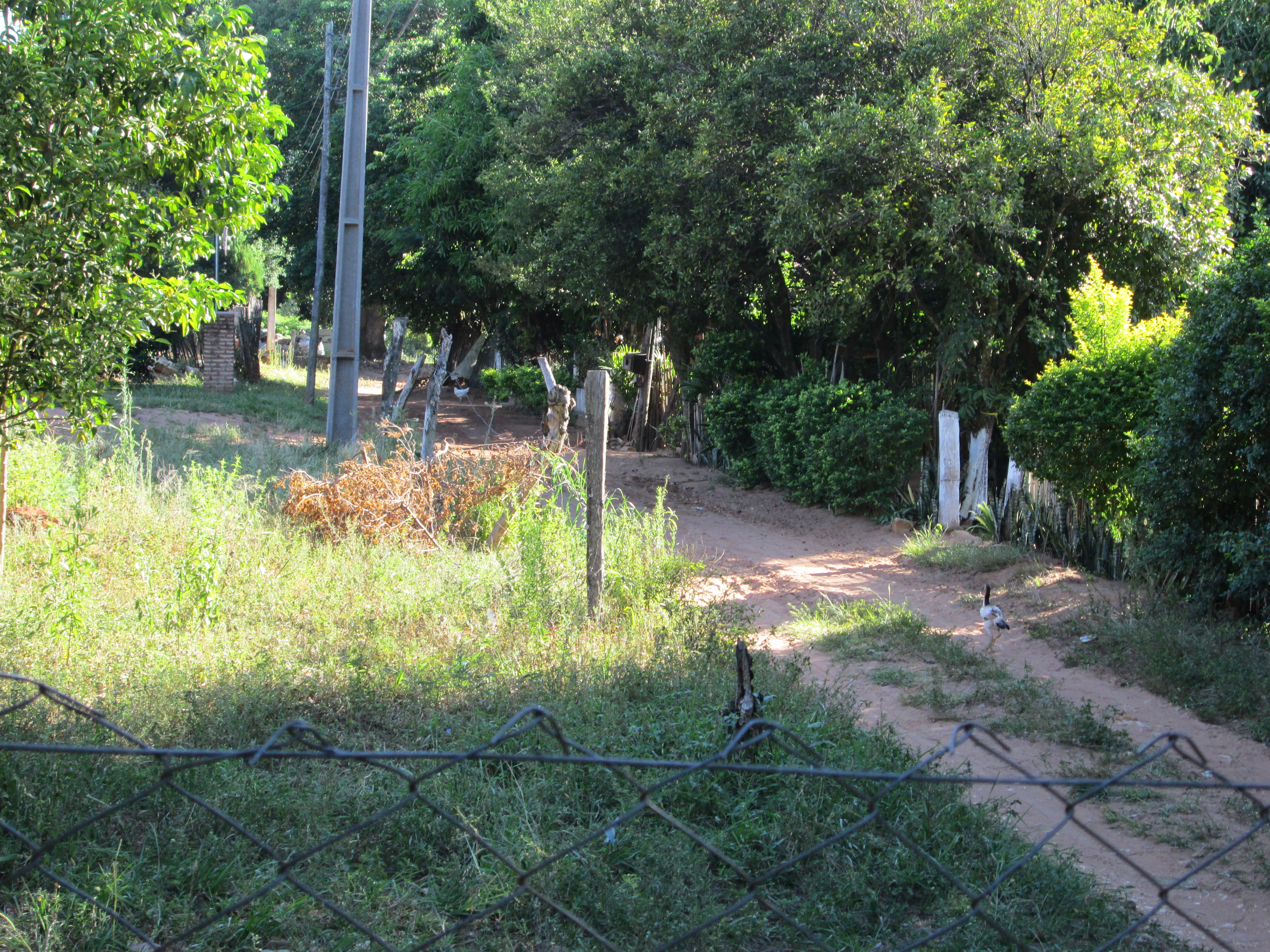
Despite having little, Paraguayans share almost everything and aren’t afraid to use things just because they might get dirty or break. For example, one of my host brothers has a bike. It’s a bike that’s too big for him and has parts from different bikes, but it runs just fine. He rides that bike whenever he can. And his sister rides it, and two of his neighboring cousins ride it because they don’t have a bike, and his other siblings and cousins ride it sometimes. They all zoom around, up and down, the little dirt paths that connect our houses. Sometimes the seat has to be raised, but most of the time it is pushed down as far as it can go. No one worries that the bike is going to break—they just enjoy what they are getting out of it now.

The same goes for food. When a little kid, or adult, or anyone really, has something yummy they almost always share it if they are eating it in front of other people. I’ve passed candy bars and cookies back and forth with my eight-year-old sister.  If you don’t want to share, you don’t eat around other people.

Everything here seems to be shared. Siblings share beds, cousins share party shoes, and neighbors share garden tools. Why does everyone family need their own ladder when someone in the vicinity already has one?

When someone in the family gets something new they pass it around so everyone can look at it. Things that individuals get still add, somehow, to the enjoyment of the whole family or group.

Having only what you need and sharing everything is very different than my experience in the US. In the US we focus on being independent and being individuals, so the idea of sharing is second thought. It may not seem like a big difference, but it is.

What’s the Real Message Here?

Not so long ago, I sat in on a twelfth grade psychology class. The topic was security and how everyone has to do their part to maintain security. After a brief lecture, the class split into groups. Each group developed and preformed a skit about one of the following topics: security in the home, security in the plaza, security in the community, security in the bus, and security in the school.

The skits were funny and covered a range of themes from helping old people on the bus (this skit poked fun at the Paraguayan buses…more on that later) to picking up trash in the town plaza.

One skit struck me more than the others, but not because of its security message. The plot: The stay at home mom had a lot to do around the house, and so she was unable to have lunch (the biggest meal in Paraguay) ready for the hour her husband came home. She had three daughters who at the beginning didn’t help her with the house chores—one was texting, one was watching TV, and one was painting her nails. One day the father came home and lunch wasn’t ready. He got angry and told the daughters they had to help their mother because he wants lunch ready when he gets home because he is hungry. After that, the daughters helped their mother and lunch was ready for the father when he got home.

I understand that the intended message of this skit was that everyone should contribute in the house. But, for me, the skit did a better job of illustrating power relationships and gender expectations.

I found it interesting that the reason the daughters had to help was because their father wanted his lunch at a specific hour. From what I’ve seen in Paraguay so far, most women’s prescribed role is taking care of their men. Women aren’t powerless here, but the last word is usually the man’s, especially when he’s the main breadwinner. I also noted that it was three daughters—this was mostly due to who was in the group developing the skit—but I think expectations for sons are different. The sons I’ve seen do help out, but few do many house chores.

For me, this little skit was a great example of how gender norms and expectations permeate through how we see everything in society. It made me wonder how a group of high school students would portray the same topic, security in the home, in the US.

2 More Myths About the US: City and Disposable Clothes

ClothesWhen I was in college we talked a lot about globalization and how US culture is everywhere. I won’t argue that point, but I’ve come to understand that being everywhere and being understood everywhere are different things.

Myth 1: The US is only city.

The thought that the US is only city has a lot to do with movies. Most of the movies that make it to Paraguay about the US are set in a city. Actually, most of the movies I watched in the US are set in the city. I guess the city is more exciting. Being from the rural US myself, this myth was fun to dispel.

Myth 2: People in the US wear their clothes once and then throw them out.

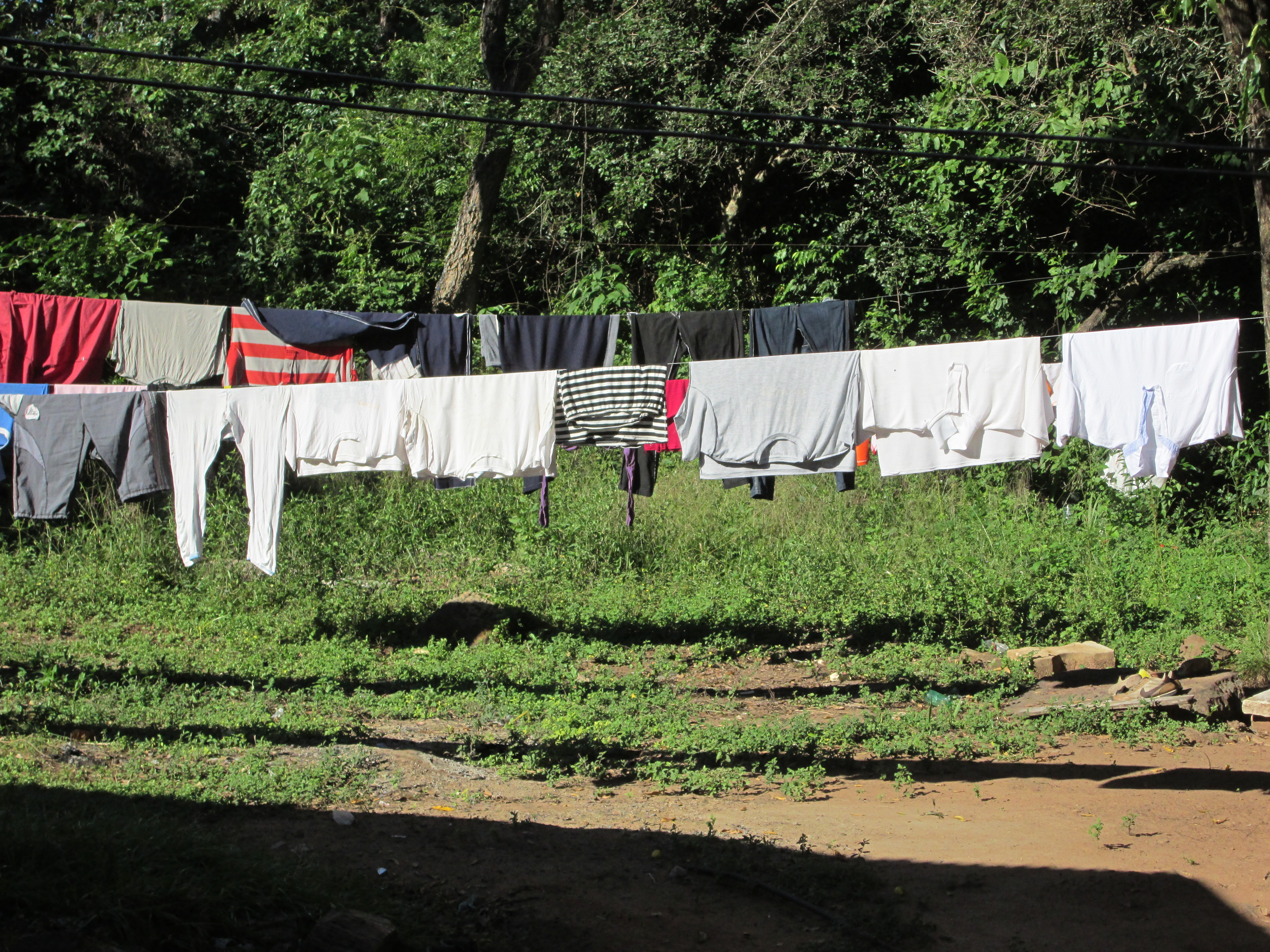
The person who asked me about this heard it from someone who visited the US. I think the root of the confusion might have been that it seemed like people wore their clothes only once because people in the US tend to have more clothes than Paraguayans. In Paraguay most people I’ve known have a handful (more or less) of each clothing item. It’s common and fine to wear the same shirt (or outfit) multiple times a week as long as it’s clean. To ensure they always have clean clothes, many Paraguayans do laundry several times a week.

Two Myths About the US

Paraguayan SkyWhen I meet people in Paraguay, I expect to tell them that my state is close to New York and Canada because they’ve never heard of it. I’m excited to be the first one to talk to them about Vermont. Coming from a rural area of the United States, I think it’s fun to dispel the image movies and TV shows create of my country. Eagerness to teach aside, there are two myths many people in Paraguay have about the US that frustrate me.

Myth 1: Everyone in the US is blond and blue-eyed.

I think one of the challenges related to this is that Paraguayans don’t always realize how big the US is. They’ve heard of New York and some of our other major cities. But, it’s hard to describe to them that the US is about 24 times the size of Paraguay (Paraguay is about the size of California). We have cities that have more inhabitants than the entire population of Paraguay

Myth 2: Everyone in the US is rich. There are no poor people in the US.  

I had an interesting conversation with one woman who thought people didn’t have to work in the United States. I think she thought we get money from the government. If I wasn’t so interested in capitalizing on the teachable moment I might have laughed. When I left the US, people were still up in arms because some saw the new health care law as a government overstep.  In Paraguay, where government handouts were part of the system for the 30-odd years leading up to Paraguayan democracy, it’s hard to convey the “pull yourself up by your bootstraps” mentality that is the American dream. Many volunteers struggle against the perception that they are here to deliver money.  Even among development organizations the idea of development as a partnership of work is not as common as it should be.

It’s not for nothing that 2 of the 3 Peace Corps goals focus on cultural exchange.

Guapa

SunriseIf you were to look up the word “guapo” or “guapa” (the “o” ending for men and the “a” ending for women) in a Spanish dictionary you would likely find a definition like, “beautiful, cute, or physically attractive.” And, while that definition will serve you well in most places, it won’t in Paraguay.

In Paraguay, guapo or guapa means hard working.  It is a complement that is lightly tossed around, but I think it has a greater weight than the joking way it’s delivered may imply.

If people think you’re guapa you’ll go far.  Respect is given to people who work and especially those who work hard. Why? I don’t know yet, but I have some guesses.

  • As you will hear many times, it is hot in Paraguay.  Have you ever tried to do anything when it’s over 100 degrees and humid? It’s like trying to do calculus after staying up all night. You deserve brownie points for just staying awake.
  • Things just take longer here (generally). Many people wash their clothes by hand and hang their clothes to dry. Some communities don’t have running water or modern stoves so people have to haul water, bucket bathe, and cook with a wood-burning stove. Paved roads are in the minority and newer to the scene.
  • Paraguayan culture is laid-back. One of the main free time activities is sitting and drinking terere.

5 Favorites and 5 Challenges

Paraguay road I’ve been in Paraguay almost two weeks. It’s hard to believe—it feels like a LOT longer! Each day is a roller coaster of new things and things that appear familiar and at the same time strange.

My 5 favorite things about Paraguay so far:

1. My Paraguayan welcome

I have a host family, Paraguay PC staff, and whole community welcoming me and supporting me as I try (not without hilarious misstep) to learn Guaraní and learn how to assimilate into Paraguayan culture. My language professors go out of their way to give me tips for communicating with my family and my family members repeat themselves a million times as I learn.

2. Tropical fruit actually grows on trees

Yep, that’s right, my neighbor has a mango tree and we have oranges, grapefruits, and lemons (not to mention all the wonderful fruits whose names I haven’t learned yet).

3. Learning about a new culture

The thing about the PC is you’re not just trying to learn about the culture of your country of service, you are trying to know it well enough to operate within the system. This is frustrating, no doubt, but it’s neat when you realize you are flexible enough to adapt your life to fit a different mold.

4. Other volunteers

Every person in my volunteer class has an interesting and unique story. This is particularly cool because despite our diversity we have something in common: We agreed to leave whatever we were doing to come to Paraguay.

5. Time to reflect

There is a lot of time to just sit, stare at the lawn, and drink tereré. Sitting time is thinking time and it’s nice to have time to think built into daily life.

The 5 most challenging things about Paraguay so far:

Children practicing traditional dance.

Children practicing traditional dance.

1. The heat

It’s too hot to think or move several hours a day.

2. Guaraní

It’s a unique language. The challenge is learning new words and how to make new sounds. I anticipate many stumbling conversations in the coming months and years.

3. Pace of life

While it’s nice to have plenty of time to reflect, life moves a lot slower than it does in the US. Coming from a city, I will need to creatively come up with ways to stay busy after training.

4. Adjusting to a new culture

Did you know the typical greeting wave of the US (made by keeping your hand upright and moving fingers up and down) doesn’t mean “hi,” it means “come”? Did you know that in Paraguay dogs are kept as guards, not really as pets? These are just several examples of the many small things that make life different here.

5. Availability of things

Tampons and candy bars, no you can’t just find them at the corner CVS. I’m slowly learning about all the little stores in my community. I visited the one “large” supermarket the other day. There is nothing like the box stores you’ll find in a US strip mall here and nothing like the variety you’ll find in the shampoo aisle of Walgreens.

Empathy – Critical and Elusive

Helping others is dependent on your ability to be empathetic, not just your knowledge and skill. In the world of health this may seem obvious, however empathy often gets lost in the complexity of the health care system.

I began pondering the sometimes dire absence of empathy in health care after watching Peter Attia’s TED Talk “Is the obesity crisis hiding a bigger problem?.” In his talk Attia discusses the practice of blaming obese patients for their health and questions the current way we think about obesity. He starts the talk with a story about a patient whom he treated. He explains that he provided exemplary medical treatment but failed as a person. He says he failed as a person because rather than being empathic he subconsciously blamed the patient for her condition.

In today’s U.S. culture it’s easy to blame people for health conditions like their weight; it’s easy to blame them for all their unhealthy choices. But, what does blaming achieve?

A large portion of my current work is in substance abuse prevention. Empathy is sometimes so hard. When I read the latest horror story about drug use, it’s hard to stop thoughts like “How can ANYONE start meth? There’s just no upside.” But, thoughts like that don’t help prevent anyone from using drugs and they certainly don’t help people trying to recover from addiction. Again, it’s so easy to blame people for using drugs. But if we want to help we must get beyond the finger pointing. We must acknowledge that we are trying to help individual humans, and that those individuals are struggling. Their struggle is their own, but we do not have to be another barrier, we can be a positive force.

I was struck by the power of empathy after watching Eleanor Longden’s TED Talk, “The voices in my head.” She talks about her struggle with schizophrenia. When she was first diagnosed it seemed her world would end. However in her fight for peace she got help from someone who told her she could work with the voices in her head. He believed in her and her ability to lead a safe and happy life. He was right. She was able to master the voices in her head. By simply offering support and understanding he changed the course of her recovery.

Health is charged. Health is mysterious. Empathy is simple. But in its simplicity it is easy to overlook. Don’t.