Time Passes Before We Know It

It’s been a while since I posted and not because there was nothing to write. The days pass slowly, but afternoon seems to fall before the morning begins. I wake up and it is already Friday. Where did the week go? I ask myself. December 8th marked exactly four months until my days in Paraguay end and a new adventure begins. The ghosts of my service past, service present, and service future have come knocking. They’ve taken me on dream walks to see what I accomplished, what I am doing, and what I will achieve. Unlike the ghosts of Christmas, the service ghosts aren’t here to make me repent. They came to remind me that time passes before we know it, and therefore I should live every second to the max.

People from America, land of the brave, often say that, “It’s the journey that counts” or some phrase that means the same thing. They say this and then grow angry that there is a line at the grocery story, show impatience because there is traffic, or become testy when there are no electronics to amuse them. They say it when they put in long hours on the job and then rush around to the bar, the gym, friends’ houses… And at such hectic times, they say another phrase, “Every moment counts.” And they say that phrase when they refuse to sit quietly, with friends or alone and without the simulation of media or a purpose.

Before my two years in Paraguay, I used those phrases just as “they” do. But now, to me, those sayings have a meaning caught between what the land of the brave believes and how I think Paraguay, the land of time, puts those phrases into practice.

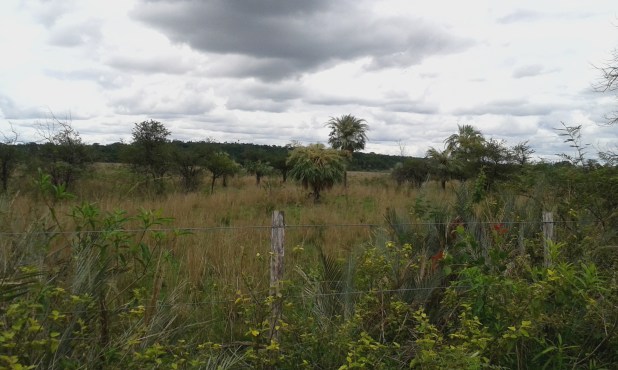
The land of time is hazy and hot. Mangos grow in December, when the land of the brave is dreaming of a white Christmas. Paraguay’s infrastructure is speeding towards better days, but for now the water goes out often and the electricity falters when storms come or too many people use their fans. People have motorcycles and the number of families with cars has skyrocketed since I moved here. However, all personal transport beside, the main staple of commuting remains the buses. One can go almost anywhere on a bus in Paraguay, if one is patient. Some places have a bus only sometimes or on some days and bus schedules are at best a suggestion. Business is accomplished over long meetings that begin with the weather, ease into family, and, at long last, mention the job at hand. It is easy for those from the US to fixate on the inefficiencies of Paraguay. We see the millions of lost moments, moments that could have been spent “doing something productive.”

Time passes before we know it, but in the hours and minutes that have ticked away since I landed in Paraguay I have seen another side of time. On those hot afternoons when the mangos hang overhead, school is out for the summer and many people have vacation. Those days are spent following the shade as it moves across the patio. Families and friends sit and watch the bright sunshine sift through the trees and make patterns of light and dark on the red sand. As families and friends watch the sun move, they talk. They talk about the heat, times shared, what absurdities the neighbors are up to, and the next barbeque. They drink terere. They take siesta. Interspersed among the bouts of sitting are the daily chores. Sometimes an adventure to the river or a party breaks up the listlessness.

The thing about these lazy days of summer when nothing happens, is that my Paraguayan friends waited all year for them to arrive. They got up at four to catch the bus at five to go to work at seven, to work, to get home at seven-eight-nine, to clean and cook and tend the animals, to say “hi” to the children, to sleep, and to get up at four to shower…they did that so their children and grandchildren could have nice clothes and cell phones and study something better. The difference between the land of the brave and the land of time is that in Paraguay, one does not work to work. One works because one has a family. As long as the hours may be, it is not the job itself nor one’s own professional standing that give life meaning, but the people who inspired one to leave the shade of the patio and go forth.

In Paraguay most of time is burned during the journey. Traveling is time consuming. Washing clothes by hand is an afternoon. Cooking with charcoal or wood and also the gas or electric oven are skills that one learns over years of practice. Navigating without power and water when the sun beats down and a shower or a fan would be nice is a test. But every moment counts. In Paraguay the moments are counted not by what one did, but by with whom one was.

Time passes before we know it, and dear reader you might be appalled at the number of moments I spent sitting in the shade of mango trees. I was shocked when I first thought of those seconds given to history at no cost. But, what I have come to see is that quiet instants are not a waste. I will never have the endurance of my señoras. They have given the better part of most years to sitting. But, what I have learned from Paraguay is that there is joy in taking time to do nothing. Peace is found in letting one’s mind wander aimlessly. Of course, too much emptiness is terrible, but my land-of-the-brave upbringing would never let me take too much time for pause. The ghosts of my service have let me face my biggest fear as the reality that I will leave Paraguay comes into focus. I fear that once I leave Paraguay I will never again have time to just be. It is a real possibility that I will descend into the ant hill again, but I hope that I can always carry with me the calm I found here, no matter where I end up. Because, happiness is not found in running from place to place worried about the moments. It is found when one stops and smiles at where the journey has plopped her and takes a moment to laugh with the family and friends around her.
You’re not fat, so why do you exercise?

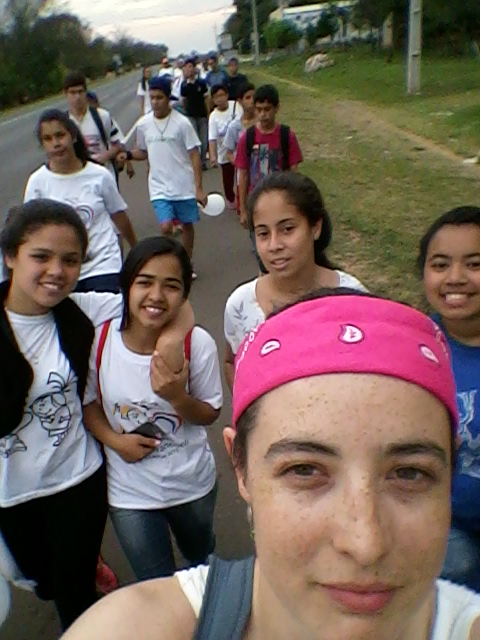
Paraguayans in my site love to comment on my weight periodically…you know just in case I’m not aware of the current state of my own body. And as much as they like to say I’ve gained or lost weight, I’ve stayed about the same since I got here. Well, until recently. I turn 26 this I year and I decided that because I’m now closer to 30 than 20 I should stop putting off my body goals. In July, I started to take steps to lose weight by my birthday in October. At the same time, a friend asked me to run a 10 km race with her for fun. The race brought back my running bug, which I lost sometime in 2012. The point being two fold. First, I’ve started controlling what I eat and how much. Second, rather than just exercising in my house—which I did consistently for most of my service—I started running. Now, everyone in my community can see me exercising.

I think most people know the basic math of weight: if you eat fewer calories than you burn you lose weight, if you eat the number of calories you burn you maintain your weight, and if you eat more calories than you burn you gain weight. Depending on what you are doing weight gain can be muscle or fat. That said, I think many people in Paraguay and the US overestimate the power of exercise in this equation. If you want to lose weight the most effective way to do it is to watch what you eat. Why? Because it is hard to do enough exercise to burn more calories than you consume if you are eating many high-calorie foods.

We are now in late August. I am a little skinner, and Paraguayans like to tell me so, and they attribute it to my exercise. Well, actually, first they say it is because I am in love. A common Paraguayan wives’ tale is that you lose weight when you’re in love (I always thought it was the opposite…). But, after I assure them that I am still single they turn to the exercise excuse. While I was visiting a señora the other day she asked, “You’re not fat, so why do you exercise?” The question struck me. I do link exercise and body image, but for me the connection is muscle tone rather than jiggle or skin-and-bones not exactly weight. And, I exercise more because I feel like crap if I don’t, not because I’m worried about muscle tone. The señora’s question made me think about exercise theoretically, and why so many people don’t do it.

Obviously, it takes effort and time to exercise, but after considering those things I think there is a greater force preventing people from being motivated to exercise. And I think that force relates to how society talks about exercise. Many people, in Paraguay and the US, regulate physical activity to the castigation of the overweight and the amusement of a special elite class of “fit” people. Just as my señora friend’s question suggested, exercise is considered by many to have the single purpose of helping one lose weight. I see this belief as dangerous.

If I had been quicker on my feet I would have explained the following to my señora friend: You don’t have to be fat to exercise. You don’t have to be special. Nor do you have to do a specific type of exercise; all exercise is not equal but most ways of exercising are better than not exercising. Exercising helps your heart, your bones, your brain…everything.

I can’t remember what I told that señora, but I see a greater opportunity, based on her question, for public health wonks. Maybe we should focus less on telling people to exercise and focus more on changing how people talk about physical activity. After all, exercise is for everyone not as a punishment or as a chore but because our bodies need to move to work correctly. Exercise should not be thought of as extra. It should be lumped in with things like vitamins, necessary and required.

Tea bags: Preening

I think all tea bags should have quotes. Why? Because quotes are awesome and tea is awesome—so they’re obviously a perfect pair. Okay, seriously, I like pondering a quote as I start my cup of tea. Tea puts the mind in a contemplative state.

Today’s topic is based on the tea bag quote, “Care about what other people think and you will always be their prisoner” brought to me by Lao Tzu. And the topic? Beauty and how that shapes the female experience. Sounds like a sociology thesis, but it’s just some observations.

Warning, I will be talking in generalizations. As with all generalizations, they are an average. They are a way of summarizing data and are not true for all individuals in the data set. Okay, we are going to talk about free time pastimes by gender in Paraguay. But, first I’d just like to say that family, terere, parties, and mate are cross-gender pastimes.

Paraguayan men have a common set of free time pastimes: soccer, volleyball, drinking alcohol, barbecuing, playing cards, and wooing ladies. Of course not all Paraguayan men do all these things and some do other things, but this list is the baseline.

Paraguayan women have a different set of pastimes: praying, watching TV, and looking pretty. There are others, but they are not as common (according to my observation). I want to talk about the umbrella category “looking pretty.” This category includes: selecting clothes and shoes, doing hair, painting nails, putting on makeup, and being in places where one can be seen.

As a general rule, Paraguayan women look impeccable. I’ve often wondered how they do it. I don’t know how they beat the humidity, but I’ve gained a better understanding of how they do it in general. Paraguayan women dedicate a great deal of time and energy to their look. The hours men use playing or watching sports (and cards), women spend on preening. That is a lot of time—maybe 30 and up to 70 percent of all waking free time. Women chat over manicures and pedicures, men chat over cards or on a playing field. Women gossip while straightening each others’ hair, if men gossip (I don’t know) they do it over beer.

I used to wonder why I sometimes felt disconnected from my young, female, Paraguayan friends. But, I finally figured it out, as best as I can at least. I am not a preener. I know how to dress well, contrary to my mother and sister’s beliefs. I know what hairstyles look good on me, how to do makeup, and match my accessories even though my Paraguayan friends might not believe it if you told them. But, I don’t do those things everyday. If fact, I only do those things when I have to—like when I’m going to a wedding, an interview, or that time I had a job where it really mattered.

I feel pressure to step up my game when I’m hanging around my Paraguayan friends. I feel like I’m constantly going to an interview. Well, I felt that way until I stopped caring and started wondering what it implies that a large portion of women’s free time is spent on preening. It was harsh when I realized to keep up with Paraguayan women how much time I’d need to primp. Not happening. I’d rather do…well, almost anything else.

The thing about time is that it passes and once it’s gone there’s no getting it back. We can choose to do whatever we want each moment, but we can’t earn back what we’ve already spent. Many women enjoy pedicures and manicures. Great, awesome for them. But, I’ve come to wonder what it says about us, women, if a lot of our free time is spent doing stuff to impress others.

Some say that women dress to impress other women. Perhaps. But, the point is still that time spent on preening is mostly to influence the thoughts of others, and only partly done out of self-interest or for personal amusement. It starts to become clear why gender lines are so clear in Paraguay, when so much effort is burned (by women) on maintaining the image of beauty generally accepted by society. Girls wear earrings. Girls do their hair. Girls wear pink. Girls wear uncomfortable shoes. Girls do not climb trees…

Free time is free time and individuals should spend it how they wish. But, what about when maintaining an image of beauty starts to get in the way of other aspects of women’s lives? I am specifically thinking about my female, eighth grade students. Should they spend much of their class time applying makeup, peering into mirrors, taking selfies, and doing each others’ hair? I don’t know, but math, language, and history seem a little more pressing.

My claim is straightforward. As long as women spend much of their free time doing activities related to their look, they will remain disempowered. To rise up women must find a way to value themselves by their actions and using their own rubric—not by hoping to fulfil someone else’s definition of beauty.

Perspective Warp

At the beginning of June, I had my mid-service training—the last training with my group of volunteers until the close of service training. (Ten months to go in Paraguay.) We had a session during mid-service training in which we talked about how our perspectives on life and our work have changed throughout our time in Paraguay.

The idea is that everyone’s perspectively is constantly evolving as we experience new things. This evolution is accelerated for Peace Corps volunteers because we face so many new ideas, people, and places. As volunteers, everything (just about) we ever believed in or thought to be true is questioned and undergoes a thoroughgoing examination. You don’t have to be a particularly meditative person for Peace Corps to change you—actually, no matter who you are it will change you. Change is inevitable.

Change is neutral, so when I talk about changing perspective I’m not saying that one perspective is better or worse. The truth is that ranking perspectives is useless, and comparing them is only useful in the sense of 1) following one’s own progression and 2) understanding others more deeply so that living with them is easier.

I won’t try to explain my perspective on life; it’s too complex for a blogpost and likely to change tomorrow. What I find more interesting and tangible is how my perspective on perspective has changed since I arrived in Paraguay. Honestly, before coming here I didn’t think much about perspective outside of the arena of politics. In US politics we talk about policies and what the Constitution means. We talk about freedom and justice. Some people think abortion is just and an inalienable right and some people think it is sin and murder. Some people see love as love and some people see it as something that should and can only happen between certain individuals. Some people think everyone should have access to healthcare and some people don’t. The list goes on and on. And, I’ve only listed the black and white perspectives, there are infinite gray perspective in between white and black.

Perspective is more than politics. Actually, perspective is everything. That’s the first lesson I’ve learned. Perspective is the lens through which we see the world. We only see things within the scope of our lens and as our lens allows us to see them. Think of it this way: If your lens is sepia, nothing is pink or green.

Second lesson: One can’t force a perspective on others. Why? Well, first it’s impossible. Second, there is no justification for demeaning someone’s perspective. There are no ranks, just differences. People will change their own perspective, and the more smooth you are about your interaction with them the greater your impression can be. No one likes to be attacked, beaten over the head, and threatened with new ideas. Everyone can be trapped into exploring their beliefs. And sometimes that exploring leads to reflection and evolution.

Lesson number three: Perspective is interesting. Remember opinions, beliefs, and thoughts are different than perspective. Perspective is the bigger picture—the whole—while everything else is a pixel in the image. It comes back to a classic question: Is the blue that I see the same as the blue you see? Answer: No. Of course not. But, it’s okay that you and I don’t see eye-to-eye on blue, or yellow, or the meaning of beautiful, or…on anything. It’s okay because it makes things more exciting. A good storybook quote: “If every flower looked just the same, “Flower” would have to be each flower’s name.” Do you know the book?

What I’ve learned about perspective from Paraguay is that life is perspective and because we all have different perspectives life is fun. We won’t follow the same arc of perspectives in our lives. We won’t always agree or understand each other. But, we can certainly amuse ourselves trying.

From the Same Country But Lightyears Apart

The View from My HouseCulture shock and disparities between host country and US culture are popular topics in Peace Corps training and volunteer stories. But, less talked about, is the diversity of Peace Corps volunteers themselves.

We volunteers come from all parts of the US. We have unique life experiences, reasons for joining Peace Corps, and life goals. We are in no sense homogeneous after you discount the fact that we are all US citizens. Our diversity is often overlooked, and by more parties that you might expect.

It’s not surprising that host country nationals might think all Americans are the same. As volunteers, we might be the first person from the US our community members have met. It’s also not entirely shocking that people in the US tend to stereotype volunteers. Most people in the US only know several returned volunteers personally. More surprising, however, is that Peace Corps staff and volunteers also often make the assumption that because all volunteers are from the States we have a lot in common.

Let me give an example. In Paraguay, one common topic in Peace Corps training and subsequent conversations with volunteers is catcalling. Street harassment is something that happens in Paraguay and, depending on where you are, it can be frequent and daily.

What I’ve found fascinating about the numerous powwows to discuss street harassment I’ve experienced with volunteers is how it is discussed as though it is something that does not happen in the States. Catcalling often is brought up as one of those unsavory parts of Paraguayan culture with which one has to deal.

I find this a mystery. Catcalling is not unique to Paraguay or foreign places. It is alive and well in the US too—from boys whistling to men who follow you down the street offering undesired commentary. My sister and I sometimes talked about our street harassment experiences when I still lived in the States: She lives in New York City and I lived in Washington, DC.

Catcalling is something new to many volunteers in Paraguay, and they find it very upsetting. But, for others, like me, who experienced catcalling in the States it is not new and we had strategies to deal with it before coming to Paraguay.

Experience with street harassment is one example of how volunteers are disimilar, but there are many examples. Our variance highlights the vastness and diversity of the US and reminds me that nationality isn’t what makes us similar or different. Nationality is one of many fragments that make up a person; it is not the summary of a person.

1 Year in Paraguay!

Paraguayan ViewIt’s hard to believe that a year ago today I landed in Paraguay. On that day, I had no idea into what I was catapulting myself. I was trying desperately not to make any assumptions. That’s to say, I came to Paraguay in the dark.

While the time passed in a flash; I feel like I’ve been here a year. It’s 95 degrees Fahrenheit as I write this and I’m almost comfortable sitting in my house without a fan. Almost. There is nothing more wonderful and delicious than a cold glass of water. I’ve joined the locals in their understanding that ice cubes don’t cut it. Water is only cold enough when it has huge ice chunks. The Paraguayans I know don’t use ice trays, they fill bags (12 inches long, 3 inch in diameter) with water to freeze. Those ice bars are sold for 500 guaranis almost everywhere in Paraguay.

I miss terere when I don’t drink it. I can drink liters of terere, no problem. Terere really is the only thing that will get me through those hot afternoon when the humidity makes it impossible to be hungry. Hand washing my clothes is part of my routine (not to say I enjoy it). Cutting vegetables into crumb-sized cubes is second-nature. I expect things to start late and I’m surprised when I don’t have to wait for the bus. Whistles, hisses, and other catcalls do not particularly catch my attention. I no longer laugh to myself when I see people sweep their yards.

I know I’ve been in Paraguay a year because I’ve started claiming back some of the things I set aside when I first got here in an effort to “ingrate.” I’ve been drinking soda for almost a year, but I’m over it. I didn’t like soda when I lived in the States, I still don’t like it, and I’m not drinking it anymore. When I feel like I want to leave a social function, I leave rather than waiting until the end. My eyes are sensitive to light, so I wear sunglasses even if people think it’s off-putting. I tentatively share my opinions about cultural things when people ask.

It’s nice to be accustomed to Paraguay and start to feel like I can be more like me and less like a censored me. But, I’m still in the dark.

I’ve come to like the dark. When the power goes at night, I can actually see the stars that fill the ever-alluring Paraguayan sky. There are too many florescent lights on at night to see the stars clearly the rest of the time. I’ve come to terms with hours spent when I understand a fraction of what people are talking about—if only I actually spoke Guarani or Paraguayans only spoke Spanish. You never know how many thoughts go through your head until you’re in a situation where you don’t have the words to express many of them.

I’ve been happy and not focused too much on the differences between my culture and Paraguayan culture until the year mark started approaching. My recent heightened observance of the differences between me and my Paraguayan friends may be because it was easier to accept that I will never be able to live up to their standards when I realized I don’t actually want the life of a Paraguayan woman. It’s not that Paraguayan women aren’t wonderful, because I’ve never met so many awesome women in one place, but my understanding of the world makes their reality terrible to me.

I will never wash my brother’s clothes and fold his shirts while he sits on his ass watching. I will never accept when my brother, father, boyfriend, husband, or any man gets up from the table leaving his dishes for me to pick up and wash. Especially when I made the meal in the first place. I will never accept that because someone is a man it’s fine that he gets drunk every weekend and hits on any women he sees. Nor do I think he has special rights to stay out late with his friends. I do not think the house is the domain of women and the outdoors is the domain of men. I don’t think because I’m a woman I must be a mother or find a boyfriend.

I guess it took a year, but now it’s hard to ignore when mothers tell their sons to stop crying because they are men and their daughters that they can’t walk around alone because they are women. As my year mark in Paraguay approached, I was angry about these things and wondered how I’d kept them in the closet of my mind so long. But, the anger past and the dawn is coming. I can’t change Paraguayan culture. First, I can’t change it because I have no means to do it. Second, I can’t change it because it must be changed by Paraguayans so it’s done the right way for them. I’ve consoled myself because I know change is a thing that happens no matter what we do to stop it. And, being the weird foreigner I am part of that change whether I’m trying to be or not.

It’s still night. Culture is complicated and hours alone thinking really do highlight the shadows in the cave. The most useful thing I’ve learned from being in the dark is that there’s nothing wrong with shade.

Doesn’t Take Much

Paraguay does it againMaybe you’ve read some leadership books or maybe you just know, but one of the best ways to get people to work is to make them feel like their work is appreciated and valuable. I became aware of the power of appreciation during my first job post-college. My boss there was a master at showing appreciation and because of that no matter how tedious the task she asked me to do was, I always did it enthusiastically.

In the States, some people naturally thank others for their work and are good at handing out compliments and some people aren’t. In Paraguay, providing positive feedback all the time it’s less of a personal trait and more of a cultural trait.

First of all, there’s the term “guapo” which you must dish in extravagant portions: You call people guapo if they are sweeping, washing clothes, cooking, walking, visiting you…seriously you can and do call people guapo as long as they aren’t sleeping.

Second, there’s a custom of giving visitors or anyone who helps you food and terere. It doesn’t matter if you are paying a team to build your house, you’ll still make them lunch and maybe pass around a couple of beers at the end of the day. On a smaller scale, when people are drinking terere, they’ll always invite you to join. And while this sharing culture is very indirect, it makes you feel included and liked, which is the first step to appreciating and valuing your work.

Third, Paraguayans offer commentary on anything—sometimes this is annoying because if involves telling you that you gained weight or asking how much something cost—often this manifests itself as a compliment, especially when it comes to food. There’s no such thing as food that isn’t yummy when you’re talking to the cook. It is also common and important to tell people their outfit, or their house, or something they possess is nice.

And finally, Paraguayans are intuitive about your needs. For example, I am teaching an English class during these summer months. For this class I give out a lot of homework and quizzes. A mother of several of my students noticed the worksheets her daughters brought home and thought that I probably was using a lot of paper. She knows paper has its cost and is a former teacher so she has a ton of paper she’s not using anymore. She went out of her way to stop by my house and give me the paper so I could use it. She explained that she’s very grateful that I’m teaching English and that she figured I’d need the paper.

Summary: Sometimes I’m not sure if I’m living in the real world or a bubble. If it weren’t for periodic, multi-hour battles with cockroaches I’d be convinced that life in my site is a dream. My community has a knack for motivating me and makes me feel justified in doing hours of prep-work for whatever I’m teaching that week. It doesn’t take much, but a little appreciation goes a long way.

Nothing Is More Important Than Here

People my age in Paraguay and people my age in the States have a number of things in common, but one that sticks out is that their cell phones are lifelines. We just can’t seem to put them down, no matter the occasion. And so, I find myself having the same reaction here that I used to have in the States when my friends whipped out their phones in the middle of a conversation.

Yeah, I’ve already head this: Internet, social media, and cell phones allow you to expand your reach far beyond your physical location and the number of people you can talk to personally in a day. These connecting tools, message-sharing tools sell things, allow you to plan with your friends, and help you keep in touch with friends and family who are far away. They are powerful.

But, nothing you post on Facebook about our friendship will ever be as powerful as that conversation we had yesterday. Nothing is more important than here, the space you are occupying at the moment, and the people who are here with you. When you bury your nose in your phone during our conversation you only send me one message: Whatever is on that little screen is more important than whatever we have between us.

When you go to an event and spend your whole time instagraming, tweeting, and facebooking, you will miss the event. Do you have to text every one of your friends to see when they’re arriving? Yes, social media and texting is important. But living life—doing real things and connecting to people in person—comes first.

Sure, I am curmudgeonly when it comes to cell phones and social media. But, it’s not because I don’t use them or think they aren’t useful; I find them essential. But don’t make me fight What’sApp when I’m talking to you. Don’t make me give up telling my story because you are clearly more interested in scrolling through newsfeeds than listening. Give me the time of day for a conversation, a meal, or an afternoon. You just might have fun and, maybe, you’ll even have something that’s genuinely interesting to say on Facebook afterwards.

A New Kind of Crowd

Perhaps you’ve heard of the term “machismo,” the dictionary definition is “strong or aggressive masculine pride.” It’s often used in Spanish class to describe Latin American culture. It’s usually mentioned along with a comment about how women’s rights in Latin America leave something to be desired.

Nine months in Paraguay and I’ve had the opportunity to experience both these popular Latin American studies topics first hand. But this post isn’t about the catcalls and hanks I get when I walk down the street—after talking to other female volunteers, especially blonds, it seems I’ve been mostly spared on that front.

This post is about the female, teenage students who performed a spectacular skit about decision-making and social pressure in my class and were greeted by an appalling response from their male classmates. And, this is about how those female students thought that response was normal and almost a compliment.

The plot of the skit was this: Boyfriend asks girlfriend to have sex. Girlfriend asks friends for advice and they say, “go for it” because there are no repercussions and he might leave you if you don’t. Little sister overhears the conversation and tells mom. Mom confronts girlfriend, and we learn that girlfriend hasn’t even told her mother she’s dating. Girlfriend sneaks out and has sex. She gets pregnant and when her mom finds out she gets kicked out of the house.

A team of students wrote the skit. When it was time for them to perform the skit they went and changed into their “soccer game best“: Nice sundresses, wedges, tights, tight jeans, and moderately revealing tops. In the school where I teach the students wear uniforms.

As soon as the girls changed and came back into the classroom their male classmates greeted them with catcalls and a litany of comments about how they looked. The girls smiled and posed. Throughout the skit this male commentary didn’t stop. It was as though the two actors playing the girlfriend and boyfriend were actually having sex in the classroom.

Often machismo is a little subtler and I have to think to notice it, but sometimes it is acute. Culture can’t be changed in one-fell-swoop, but I wish those young women didn’t have to live their lives that way.

Music Is Culture

Before leaving for Paraguay a friend who’s had some experience working abroad told me that I’d miss things I didn’t even like when I was in the States.

I was doubtful.

She was right.

For me, the thing is music. During my first few months I missed rap music. I had fewer than 20 rap songs in my music library before Paraguay. That’s changed, but I still wouldn’t call rap my jam. My longing for rap foreshadowed my realization that music is a huge part of my identity, which I wasn’t aware of before the music I’m used to wasn’t the norm anymore. I didn’t think much about music in the States. Ask my sister. She was not impressed to discover that after 4 years of college and then some I added maybe 30 songs to my iTunes from when I set it up at the end of high school until I hurried to get more music to bring to Paraguay.

In Paraguay, the most common music listened to is: bachata piru, polka, and cumbia. Also, some younger people and people who think they’re hip listen to raggeaton and a random selection of US pop songs. If you dig deeper, you’ll find that my generation and younger also listen to a lot of romantic music, Latin pop might be the genre, and some US rock. There’s also a Bob Marley following.

To put it another way, the diversity of music listened to in the US is not reflected in Paraguay. I’m sure you can find people listening to just about any group somewhere in Paraguay, but the simple fact is that what’s blasting at 4 o’clock in the morning or 7 p.m. on Sundays is bachata piru, polka, or cumbia.

For me, music is something you listen to while doing something else—unless you are playing an instrument or singing. I have playlists for cooking and cleaning, for writing, for lesson planning, and for exercising. Each activity requires a different mix of music and depending on how I feel that day I might need a new list. I can’t listen to the same song on repeat and there are very few songs that I’d like to hear more than once a day. Also, I like to have times of silence.

In Paraguay, listening to music is an activity. So much so, that people will say, “let’s listen to music.” They will then turn their stereos up way louder than I would, sit down, and proceed to listen to music. They might drink terere while listening to the music. There is one variation on this. For some Paraguayans, music is something you listen to from the moment you get up until the moment you go to bed. What this means is that you have loud music from the crack of dawn, Paraguayans get amazingly early every day, until bedtime.

I never thought music would be where I feel the most conflict integrating in Paraguay, but it is. I didn’t realize how music influenced my mood. Nor would I have thought that listening to bachata piru, polka, and cumbia would make me feel more out of place than the stares I get when I walk down the street sticking out like a sore thumb because of my clothes, the way I walk, my skin color, and the fact that I’m walking alone.

Is there a solution? I swap music with Paraguay youth who like American music. Maybe I’ll bring them and their friends further to the “dark side”…also known as US rock, pop, rap, R&B, and alternative. I put on a smile when I have to listen to cumbia all day and then go home and put on some Martin Sexton, Paul Simon, or Bruce Springsteen—not just because I like them, but because they are classics from my childhood. After I listen to a few of my songs I’m ready to go out again, I might even turn off my music and listen to my neighbors’ music for a while.