5 Things I’m Grateful for this Holiday Season

This was a big year for me. I finished my pre-medical classes, took the MCAT, applied to medical school, and then I got into medical school. My youngest brother graduated college. My grandfather was buried in Arlington National Cemetery. I got a new job in the emergency department where I get to spend most of my day caring for patients. One of my dear friends had her first baby, and I’ll get to meet him this December (because I’m visiting my beloved Paraguay!!).

The laundry list above is just a sampling of the year. I’ve also made some great new friends, met some amazing people, done a tiny bit of national travel, and spent good hours learning new things. I could fill pages about the year, but I won’t just now. Instead, as the holidays approach, here are 5 things for which I am grateful:

1) My family who made it possible for me to get into medical school. They’ve listen to me gripe. Told me to stop whining and act. Shared my excitement for small victories. They’ve cooked, visited, hosted, taken me out to dinner, pitched in when I was in a pinch, made me laugh, talked me off the edge of tears, and helped me keep going when I wasn’t sure if going was an option.

2) The friends who stay in touch even though we live lightyears apart in separate, though equally chaotic, universes. The new friends who have joined me in sweating over biochemistry, hiking through Vermont’s woods, undertaking food adventures, and soaking in the quiet moments of life. The hardest part about moving as much as I have is that many of my favorite humans live far away. It’s a testament to their greatness that despite our distance they remain a positive force in my life.

3) The folks at my new job who reminded me what being part of a good team feels like. Who taught me the tricks of a new trade. Who show up every shift ready to do what needs to be done and between saving lives have energy for a smile or laugh.

4) The mentors and teachers who taught me all I know about medicine and science. But, also, my life mentors—the ones who have been there since undergrad (or before), the ones who’ve shown me the ropes of being an EMT, and the ones who set an example of what kind of old person I aspire to be.

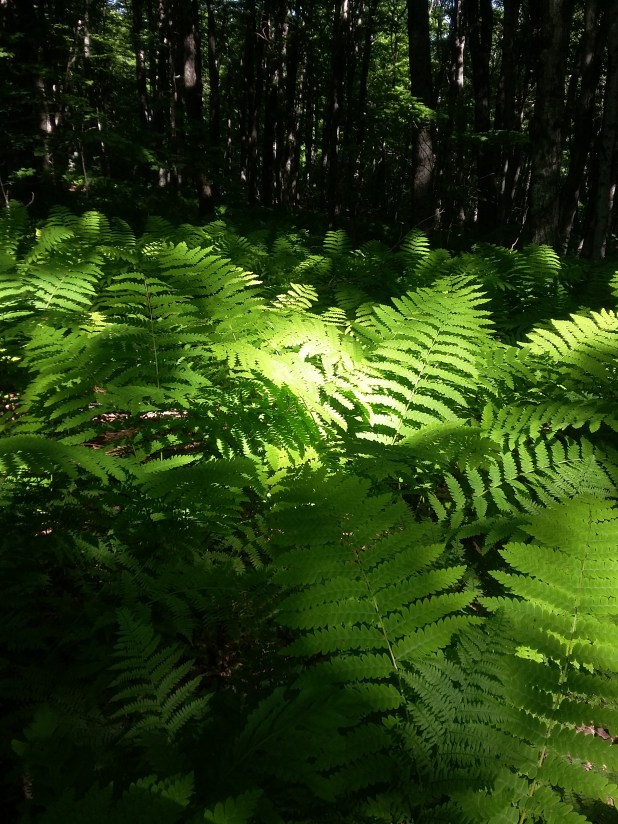
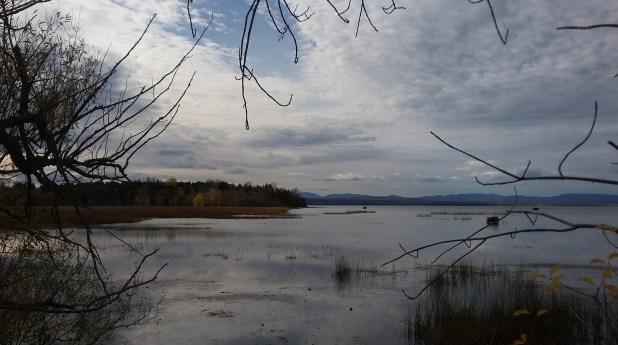
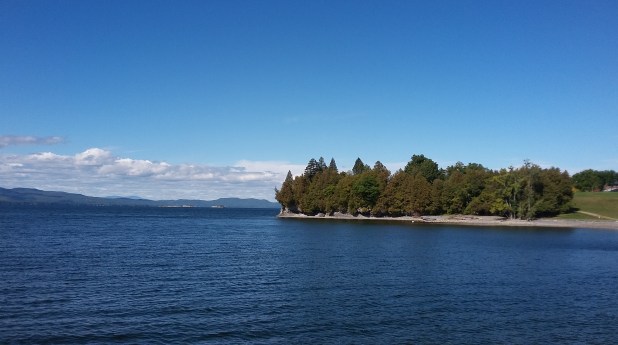
5) Vermont. Sometimes my little home state is cold (actually, it’s usually cold). Sometimes Vermont is too homogenous and too isolated to quench my love of the new. But, this year, I’ve basked in perfect summer days where the sun is just right. I’ve soaked in the smells and silence of the forest and absorbed the wind that makes waves on Lake Champlain. I’ve reflected on the mountains that guard the horizon. I’ve enjoyed creemees, apple orchards, and maple syrup. I’ve watched the rain fall with mate in hand. I’m from Vermont. And while I don’t often call Vermont my home, it is the place where my roots have always been and always will be.

I’m grateful for the moments I’ve had to enjoy all the people and places that make life worth the sweat. I’m thinking about those moments as the holidays approach.
Golden Leaves and Golden Sun

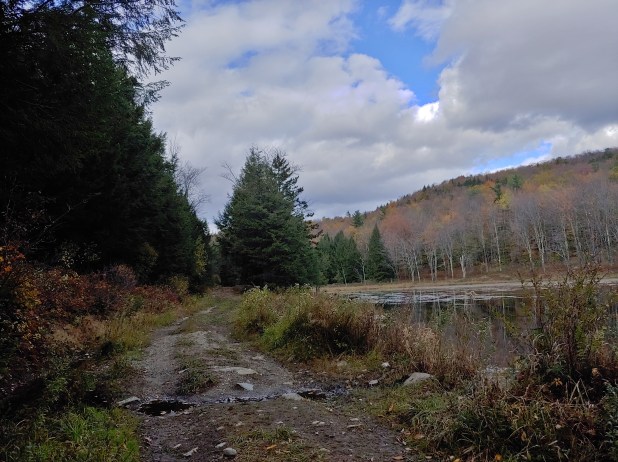
Autumn in Vermont is like a pendulum; it swings between cold rainy days and bright sun that reflects off the yellow, orange, red, and brown leaves soon to fall off the trees. The damp days and frost-laced evenings are a prelude to the winter soon to come. The strong sun on the loveliest days of October is not only a reflection of the summer just past, but also particularly appealing because it contrasts with the brisk wind and cool damp air inherit of autumn.

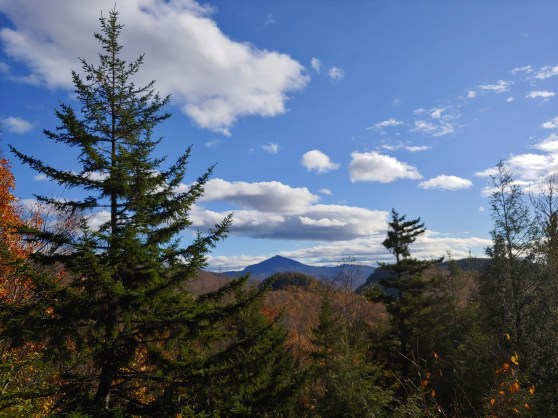
Earlier this October when the sun looked like a flood of gold as it reflected off the hills, I set out with a friend on an easy, wandering hike through the woods, past beaver dams, and up the tame slopes of a hill with an outstanding view. The shade and wind carried the hint of frost, but the sunlight danced so joyfully through the birch, beech, and maple leaves that I didn’t feel cold while wearing only a light jacket. The pleasantness of the day penetrated through my slight haze. The previous weeks had been a whirlwind of adventure, topped off by working the night shift the night before our hike and running a half marathon with my sister two days earlier. But, as we parked the car and started walking I didn’t feel tired. My mate had kicked in and the day was too charming to pass inside. There’s something about the woods in Vermont…they recharge me more than anywhere else. [Text continues after image.]

20181016_144557

I grew up in Vermont, but moved to the city for college and work and then moved abroad. I’ve been back a few years, enjoying the time until more schooling picks my next home. I imagine, just as I did as a new adult, I have more city turns and many places to live before I sleep for good. I imagine many of those places will be about as different and as far from Vermont as possible on our small planet. While I never really miss the Green Mountain State in its entirety, when I live elsewhere I periodically find myself aching for the quiet woods that always awaits me here.

The woods in the fall are my favorite. Fall is my favorite season in Vermont for its smells—piles of leaves, apple cider, wood smoke, and pumpkin baked goods—and perfect temperatures. The leaves already fallen rustle underfoot and the tangy, earthy smell of the soil and crisp foliage tingles your nose in an only pleasant way. The natural world is getting ready for sleep and a long stretch of harsh weather. The chipmunks and squirrels are in overdrive, jumping about like bunnies with cheeks full of nuts. Wild apples, acorns, cherries, and berries adorn the trees, weighing the branches down and feeding the deer and other woods dwellers. There’s an influx of geese and other migrating birds—their flocks fill the ponds and trees and raise a chorus of excited chatter about their long journey south.

The forests of Vermont aren’t epic like those of California and Washington state. They aren’t misty, exotic, and lavish like the Amazon or the jungles of Central America and Africa. Nor are they tangled and concealing large snakes, jaguars, and anteaters like the forests in Paraguay. In contrast, it’s their humble scale and unassuming beauty that brings thoughts of the Vermont woods, my childhood haunts, to me when I’ve spent too long away. I always know when those thoughts percolate it’s time to visit.

My friend and I paused on the hilltop to enjoy the view and take in a few golden rays before our descent back into the forest. I sat, knees pulled up against my chest, and gazed out over the rolling patchwork of gold, green, and bronze. The stone face on which I sat was slightly warm thanks to the sun. We were shielded from the breeze. No one else was around. There was a quiet that’s forgotten even in the smallest of towns. The calm was a relief after the rush of work in a hospital and traveling for medical school interviews—places full of complicated thoughts and human interaction. In those moments on the hill, I was thankful for the forest. I also felt a pang of bitterness about the cold winter soon to come, but I know (as I’ve said before) that the cold is one thing that keeps people from flooding Vermont. And, anything that keeps the autumn woods here quiet so I can sneak away and meditate on life’s challenges is welcome.

20181016_154000

Name the Fear

My stepmother’s friend used to play a game called “Name the Fear and Conquer It” where she identified things that scared her—like bungee jumping— and then did them. My sister has a philosophy about hesitation: If you hesitate because you don’t like something then it’s okay to abort, but if you hesitate because you’re scared you ought to dig for courage and forge onward.

The above thoughts are good summaries of how I, too, approach undertakings that make me nervous. The difference is that I don’t necessarily seek out thrillers like sky diving. I prefer to look around me so I can maximize normal life, avoid falling into mindless routines (I like to break them when they form), and daydream about the next challenge I’m going to tackle. Here’s an example.

Wrestling uncertainty was something I did when I became an EMT. I distinctly remember my tumultuous beginning. I threw myself into a condensed EMT course, having no clinical background, that moved so fast it didn’t even have lectures. It’s one of the only classes, and the only one since sophomore year of undergrad, that made me cry. I didn’t know if I’d survive the class. I didn’t know if I’d pass the licensing exams. I didn’t know if I’d like running on an ambulance. But, I made an educated guess and decided it was worth the gamble.

At first, I felt uncomfortable touching strangers—a necessity when you’re taking a pulse and blood pressure or doing a physical exam. I had to coach myself to be still and not run away when my classmates practiced taking a pulse on me. Understanding how the lungs and heart worked wasn’t intuitive. And, for my mind, memorizing isn’t enough. I must understand. I spent many hours reading and rewriting notes.

I lived through the class. Some tears, but I mostly just buried my nose in my textbook and practiced as much as I could during our practical classes. Despite my efforts, I failed a few stations of the psychomotor exam (physical skills) the first time I took it. I couldn’t concentrate and I messed up things I knew on several stations. (The traditional student in me came through though, and I passed the computer portion of the exam in one shot). I almost quit after failing the psychomotor exam. But, I asked myself, “If you can’t be an EMT how on earth are you ever going to be a doctor?” I practiced more. I gave myself many pep-talks. I passed everything on my second try because I focus on how much I wanted to start working with patients and how certain I was that I was pushing myself in the right direction.

I was so nervous thinking about starting as an EMT that I can’t recall my voyage to my first EMT shift. Despite my panic, though, running on an ambulance started way better than my EMT class had. My crew captain assured me he wouldn’t let me kill anyone. Further, he and the rest of the crew went above and beyond to show me the ropes (well, actually, they showed me the tubes, the gadgets, the bandages, and all the other gear that fills the numerous nooks of an ambulance). Time would show that I enjoyed being on an ambulance. I loved the puzzle of figuring out what was wrong with patients and how to treat their condition. I loved chatting with patients when there was nothing to be done but ride to the hospital. Patients almost always have amazing life stories to tell.

About a year after becoming an EMT, I took another leap. I left my communications job—my undergrad degree was in communications—and dove professionally into health care. I began working as an EMT in the emergency department. Yet, despite the major change, this professional jump wasn’t scary like my EMT class had been. During my first couple of months on the job, I learned a ton of new skills like how to place IVs. While I wasn’t an expert at anything new right away, I knew I’d get there if I focused and practiced. My EMT course proved that.

EMTing pushed the boundaries of my comfort zone. This surprised me because I have a wide comfort zone. After all, I’ve moved and built a life in two completely new countries (once as a student and once as a Peace Corps volunteer) and I’ve moved from the country to the city and the city to the country–which is to say I’m comfortable with change. I think the hands-on work and using assessment to inform treatment of living beings challenged me most when I started learning clinical skills. However, I’m so glad I pushed through the bumpy beginning of my career in health care delivery because medicine is the most fulfilling professional pursuit I’ve undertaken to date.

It’s easy to avoid things we’re bad at because they make us uncomfortable. But, as I told myself many times leading up to round two of the EMT exam, if everything was easy then life would be boring. With that, I leave you with a quote from Amelia Earhart:

“The most difficult thing is the decision to act, the rest is merely tenacity. The fears are paper tigers. You can do anything you decide to do. You can act to change and control your life; and the procedure, the process is its own reward.”

On Not Becoming Jaded

One night a coworker in the emergency department, who also aspires to be a doctor, asked me if I was worried about becoming jaded as I worked in health care. I answered confidently that I wasn’t worried about becoming jaded, my hope for humanity waning, or burning out like so many medical professionals do. He was skeptical, but I am certain of only that one aspect of my future.

Defining Jaded

Especially late at night when most patients are tired and grumpy, the drunks roll in after exhausting the bars, and the patients held for mental health evaluations decide to spend the early morning hours holding yelling matches that involve nonsensical accusations against staff, it’s easy to see how one can grow tired of working in a hospital (and specifically the emergency department). In medicine, we take care of everyone, even if they’re jerks to us, because the fundamental principle of health care is that we serve all people.

Not so long ago I was greeting patients in the waiting room at the emergency department. We had around 20 folks waiting for rooms, the rooms weren’t changing over, and the wait times for many were over 2 hours. That’s a recipe for an unpleasant experience as a greeter, and the recipe was rich that night. I had a parent repeatedly insult the staff, including me, and ask why we hadn’t brought her child to a room yet. That was annoying, but manageable. What got to me was when she stormed up and demanded to know why we brought back “a drug addict” (her words, not mine) before her child. Her argument was that her child had a bright future while that person was a lost cause. Of course, I couldn’t tell the hysterical mother just how awful it is to watch a person go through withdrawal shakes and then seizure. That’s something you can only understand once you see it. I couldn’t tell her about the alcoholic who came to us one night shaking so badly he couldn’t drink water from a cup. I couldn’t tell her how he had looked me in the eye and told me he wasn’t human anymore. That mother was choosing to believe him, but I knew that that patient was human even if he didn’t feel like he was. That angry mother in the waiting room clearly had never seen a person beat an addiction—winning the daily fight to not give in to a drug or alcohol for years. I have.

It’s not the job of medical professionals to pass moral judgment. Sometimes we are weak and tired, and we do judge our patients’ life choices. But if we were to slip into a world where we used our personal morals to decide who should receive care, we would betray the heart of medicine. Medicine was never meant for only a select few.

In my view jaded is another way to describe losing empathy. There are many presentations—impatience, anger, and hating work to name a few. These feelings come when we are too tired and too worn out to see patients as humans. They come when we no longer find joy in the small things about the job that are awesome. And jaded becomes the norm when we give too much. It’s easy to work hours no one else would dream of working when you’re in health care. Each hour is rewarding because we help someone feel better, but the hours take a toll on the giver.

Considering all the above, how am I so certain I won’t become jaded?

  1. My empathy comes from selfish sources, so I don’t expect that it will fizzle. The first source is curiosity and the second is a love for stories and puzzles. Each human has a story. Each sick person is a puzzle. The curious mind can’t help but wonder about the story plot and the answer to the puzzle. These two factors are some of the main reasons I veered down the medical path in the first place.
  2. I know that I’m brave enough to step away and recharge as well as to shake things up when caring for patients under specific conditions becomes wearisome.

How do I know I am brave enough? Paraguay. While living in the land of Guarani, I cultivated an ability for self-reflection and the bravery to face fears because they were required to survive the Peace Corps. Paraguayans also showed me the value of letting yourself be still. In America, we are so determined to be productive we schedule every moment. I think running around all the times makes everyone miserable no matter what their profession. I also think those who become jaded forget to reflect and change. They fail to see that their job is draining them until it’s too late and, then, they lack the courage to change their work so it’s fresh again. It comes down to the best professional advice I was ever given. When I asked a presenter in one of my undergraduate classes how she knew when it was time to leave a job (she had an awe-inspiring, lengthy job history) she said, “You’ll know. You know when it’s time to leave.”

She was right. We do know when it’s time to mix things up. The hard part is taking the steps to act upon what we know. But, if we do take those steps, then jadedness can never catch us. The moment she gave me that advice, years ago now, I promised myself I’d be strong enough to change my course whenever I “knew” it was time. That strength sent me to Paraguay and brought me back to Vermont. So, no, I’m not worried about becoming jaded. I’m just excited to see where my adventures in medicine bring me.

In Arlington Cemetery

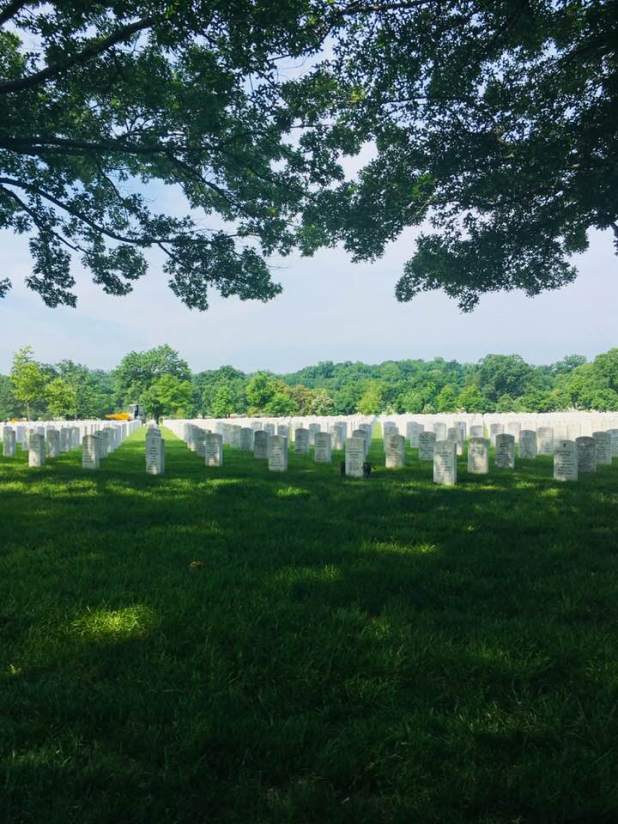
This summer we held a memorial for my grandfather in Arlington Cemetery. His name will be on one of the niches in the columbarium. He was in the Navy and served in the Korean War. The service was short and concise. I think its precision and simplicity was well suited to my grandfather who was a high school and college math professor and liked things to be just right but not conspicuous. The chaplain was empathetic and caring and the soldiers who performed the flag ceremony were on point. As we said our formal goodbyes a trumpet’s song floated in the air above us.

My grandmother used to comment how they enjoyed when I visited because I’d sit all day and laugh as my grandfather told stories. He was a particularly gifted storyteller with the dry wit that ignites my science-loving and logic-focused brain. He told stories of the Navy (usually when he and his comrades were causing trouble), his struggles as a student (he went for a doctorate in math but didn’t finish his thesis because of a disagreement with faculty), or his adventures as a teacher (he had many years of teaching from which to draw).

In EMT lingo, my grandfather had an “extensive cardiac history.” When I called my grandmother after hearing of my grandfather’s passing she told me, “The EMTs who responded to my call were wonderful. You do good work.” She said that even though they couldn’t get him back. His heart had stopped and he had no cat-lives left. When my grandfather died, I’d been volunteering as an EMT for several months.

I’m still an EMT and I also work in an emergency department. An interesting thing about providing emergency medical care is that your mission is to lessen pain and ward off death, but you end up seeing a lot of both. You end up being there when medicine meets it limits and the time of death is pronounced. I sometimes wonder what the EMTs at my grandfather’s death thought. I wonder how they ran their emergency call. What did they do to make my grandmother feel like they’d done the right thing? I hope the families of my patients have the same impression when we determine it’s time to stop CPR.

I used to visit Arlington National Cemetery periodically when I lived in DC. I like cemeteries because I enjoy walking the tombs and imagining the histories of the people they memorialize. Now when I visit Arlington, I won’t have to invent my grandfather’s story because I know it. I’m a product of it. I think of him often, partly because I wish he’d send me some of his math-genius as I continue my medical studies. Mostly, I think of him because he is one of the few people I know who successfully and completely built a life he loved. His only unfinished business is the family he left, especially his wife, but we’ll join him again one day if afterlife exists. Until then, we’ll keep making stories worth telling just as he always encouraged us to do.

Photo Credit: Mary Lou (family friend)

Determination: 2 Girls, 1 Hill, 1 Tree, and 1 Ladder

As children, my friends and I spent hours wandering the woods. We lived in rural Vermont in the middle of hills covered with sugar maples. One of my best friend’s families made maple syrup as part of their living—they collected their sap using draft horses. And it is with that friend that this adventure took place.

Far up on one of the hills behind her house, maybe a 40-minute hike across a river and bushwhacking through the sugar bush, was a monstrous tree. It was a Pippi Longstocking tree, a tree of wonder and stories. It was the most perfect tree for a tree fort you can imagine…and the branches didn’t start until 20 feet above the ground.

Those high branches spread out in such a way as to almost make a floor. My friend and I thought that if only we could reach those branches it would be the best thing in the world. We dreamed of hanging a hammock from those taunting limbs and eating a picnic up in the canopy. We thought about our future tree fortress on many occasions, staring up from the ground, until one day we contrived a plan.

Her father had a very tall ladder—one of those aluminum ones that has two sliding parts so it can get even longer than it appears at first.

We started in the morning. She took one end of the ladder and I the other. Those ladders, though hollow, are not light. We discovered this not long after crossing the river and starting up the hill. We also realized that zigzagging through trees was a lot harder when you are attached to another person by an 8-foot, stiff ladder.

We stopped occasionally. We argued about the best way to go through the trees. We sweated and got scratched by brayers.

And, after what seemed eons, we reached the tree. We lay the ladder against it, expanding it to its full length. We observed the ladder. We were scared. It was so tall and the ground wasn’t even. Surely, we’d fall if we climbed it. Surely, if we fell we’d die. We talked about climbing the ladder. About falling. About how amazing it probably was up there. “Fine, hold the ladder,” I said. And I put my foot on the first rung. I was shaky. It was high. My heart pounded. I got about 6 feet above the ground. I paused. The ladder felt wobbly. I wasn’t sure if I should keep going.

Slowly, carefully I reached the top rung. The branches were still overhead. I’d have to grab them and then swing my legs up and hang sloth-style to get up in the tree. I stood at the top of the ladder a long time. My friend first shouted up that if I wasn’t going to do it I should come down so she could. Then she suggested that we not do it at all.

I grabbed the branch and I swung up. “This is awesome!” I said, sitting and staring down at her on the ground. She joined me, with the greatest care because the ladder was unsteady, especially without someone holding it.

We sat up in the tree until we got hungry. The only reason we ever left the woods was because we were starved.

Some people will tell you your dreams are impossible. Don’t bother with them. Someone else will help you carry a ladder.

Optimism

I zoomed around running errands for work. My return-borrowed-items frenzy brought me to the opposite corners of the network of towns that make up this part of the state and forced me down some of the most congested (and my least favorite) roads in Vermont.

I was tired. I’d been studying and working extra to finish everything on my plate. It was another sunny, gorgeous fall day…another one I was missing as I toiled.

I crested the hill just past where the road was lined by strip malls—probably once farms. I felt like I’d climbed the hill myself (rather than my little car). At the edge of my vision, the largest smile caught my attention.

There in the beautiful golden sun under a tree that wore canary yellow leaves, its autumn coat, sat an elderly woman. She was laughing. Her face creased where laughs had wrinkled her face for decades. She bent forward slightly. I looked again, trying not to swerve or slow too suddenly as I drove in traffic.

Beside the woman was an elderly man. Both of their mouths were wide with joy. The fall breeze made their tufts of white hair flutter.

What were they laughing about? My face relaxed and the corners of my mouth rose, breaking line formation for the first time that day. The day wasn’t so bad—I’d just needed to look past my personal storm cloud.

Defining Friendship

On my EMT shift the day before my birthday, the dangerous topic of religion came up for some reason while we were reviewing the ambulance (something we do at the beginning of every shift) to make sure we had all the right supplies. Like most careful Americans, we ended the religion conversation before we needed to say much about our personal beliefs. It was amusing to contrast the politically correct nature of the conversation with my experience in Paraguay. In Paraguay, religion is not a topic that’s avoided and people have no problem asking you if you’re catholic (the dominate religion there). I went to Paraguay with almost no religious experiences (and most that I had had were very negative)…but Paraguay brought me up to speed on their version of being catholic. And they changed my view of religion forever (though they didn’t convert me).

As I wrote when I was in Paraguay, the Paraguay I know is Catholic. That means that to my Paraguay friends the entire world is seen through the lens of Mary, Jesus, and the saints. A lot of what Mary and Jesus and the saints talk about is how you’re supposed to treat other people. Paraguayans put people, especially family, first.

A little after 9pm on my birthday I got a video message from one of my families in Paraguay. When I say family, I mean I spent every weekend with them. I went to church, out shopping, and to soccer games with them (in Paraguay, soccer is the equivalent of all sports in the US combined). I went dancing all night with the daughters, studied English and history for hours with the son, ate many dinners and lunches with them a week. I showered at their house when my water was out. I was in both daughters’ weddings…

My whole family was there in the video message. First they sang “Happy Birthday” in Guarani…then it was “Happy birthday Jett. May you have a blessed birthday and many blessed years ahead. I hope you’re having a wonderful time. Send us a video, Jett, so we can see you…We miss you Jett. When are you coming back Jett?”

It’s so nice when you realize that the people you think about all the time also think about you. And as my family’s familiar voices and happy words sunk in I thought about friendship. Even friendship is defined using a religious metaphor in Paraguay. And, with the topics of religion and friendship on my mind, it seemed fitting to share (again) one of my favorite stories about both:

Overheard in Paraguay: Friendship
Repost from October 19, 2015

We sat in a half circle around the grill. The men were cooking large slabs of meat, ribs and some unidentifiable cut, for the mother of the family’s birthday dinner. The husband of one of the birthday mother’s daughters sat by the grill passing one can of beer among the men there. A nephew walked up to the daughter’s husband. The husband was around 30 and the nephew was about 11.

The husband hugged his nephew first with one arm and then the other, squeezing him. The nephew squirmed, and they both smiled. The husband held the nephew at arm’s length and put on an almost serious expression. “Will we always be friends?” the husband asked.

“Yes,” the nephew said.

“Even when I am old and you are my age?” the husband asked.

“Yes, even when you are old and I have kids,” the nephew said.

The husband smiled and pulled the nephew into another hug. The nephew pulled away again and they looked at each other, the husband still squeezed the nephew’s shoulder with one hand.

“Even when you are in Heaven and I am old we will still be friends,” the nephew said earnestly.

The husband laughed. “And I will look after you from Heaven.” They hugged again. “And, when you come to Heaven, we will be friends in Heaven. We will be friends forever.”

The boy nodded and ran off to find his playmates.

Birthday Eve!

We drove along in the old truck over the sine wave troughs and crests of a typical Vermont road that make your stomach drop. (The effect was exaggerated because my dad always sped up just before the peak). Then, our humming came to a crawl as we found ourselves behind a car with some white hair just sticking up above the driver’s seat headrest. I said something about them driving slow.

“Time is moving so fast for them they don’t even know they’re driving slow. As you get older each second becomes a smaller fraction of your life,” my dad said before passing the elderly driver.

Tomorrow I turn 28! I’ve almost lived a year for every minute in a half hour. I guess I’m not too old yet, though, because I think plenty of people ooze along with the viscosity of molasses.

I looked back at last time I wrote here about my birthday. I gave a robust list of accomplishments and goals. Don’t worry, I’m not doing that this year. These days my guiding principles are my 5 favs of Paraguayan culture—humor, gratefulness, details, relationships, curiosity— and everything else falls into place about them. For example, I smile at strangers…because smiles are contagious. But also, more importantly, it’s fun to catch passersby off-guard and watch the awkward expressions that flicker across their faces as they work to smile back.

I’m stoked about 28. This is the first birthday I’ve had (since adulthood anyway) where I don’t have any major changes I want to make. I have a lot of hard, exciting things on my radar for the year. Those wonderful things could dramatically change my life—like applying to medical school. But the only way to find out if the future is boring or exciting, is to keep putting one foot in front of the other.

Time does go fast at this age. It seems like I just started the semester and already I have a few exams behind me. I can’t imagine what studying will be like in my 30s, perhaps a jet race, but I’ll find out soon.

Are you lonely?

“Are you lonely?” is America’s version of the boyfriend question. I thought the coupling obsession was a Paraguayan thing. But, now that I’m back in the US, I realize I was mistaken. It’s also an American thing. Maybe it’s a human thing. Regardless, I’ve gotten a lot of practice justifying why I’m single. So, let me tell you…

…there is no reason why I’m single. I just am.

I know it’s hard to believe that a person can be happy just being. But, try to imagine it. Consider, for example, that I can go hiking on the fly and not wait for a soul. I could move anywhere and would only need to bargain with my future landlord and maybe the visa office. I can (and do) eat when, what, and where I want and don’t feel even a hint of obligation to coordinate with anyone.

Perhaps you’re thinking something like, “Fine, Jett, you’re busy and independent…but really you’re just waiting for the right guy. You’re lonely, but you forge on propelled by the dream of the prince who will sweep you off your feet one day.”

If something like that is on your mind, I must ask: Doesn’t that argument seem archaic? By now we should all know that princes only live in fairytales. They aren’t real, but metaphors for love and good fortune. I don’t need the metaphor. I’m not looking for someone to fend off the dragons. I do that just fine on my own.

Don’t despair, you’re partly right. I’m busy and I have great friends. But that’s the whole point. If I lived my whole life as I am—doing good work, engaging in hobbies, and enjoying friends—then I would have an awesome life. You see, my life’s not on hold. I’m not working toward finding that perfect man. I’m just living…and I also happen to be single. I’m not worried about love. Why should I? It’s spontaneous and stubborn. It will do whatever the heck it wants. Just like me.

I might one day stumble upon someone to be my partner in crime. I might uncover a person who makes me happier than I already am. If I do, I’ll marry him. I also might not find such a human. Either way, the trajectory is grand. I realize that many believe that singletons need to be saved. But let’s remember that when we, you and I, were taught about the American dream it was never said that it could only be dreamt by two.

Thanks for your concern about my emotional well-being. But, the better question is “What do you do?” I assure you the answer is interesting. I have a lot to say about me and my doings. And don’t worry, I’ll let you know if me becomes we.