The Return

Ha! My Peace Corps service ended so long ago that I went back to visit. Eight months after journeying from Paraguay to the US, I traveled backward for a Paraguayan friend’s wedding.

I cried when I finished my service and left the land of the Guarani—mostly because I didn’t know when I would return. I told my Paraguay friends, many of whom are more family than friends, that I would come back. I wondered if I was lying.

Well, I was honest. I went back. Sooner than expected, but love has no timeline and I swore I’d go back for my friend’s wedding. I was a bridesmaid. The bride was a vision. If my friend’s married life is half as lovely as she was on her wedding day, she scored big time.

It takes more than a day to travel from Vermont to Paraguay. It’s a journey of planes and buses. But, it’s worth it. And, now that I’ve done it once, I know I can do it again.

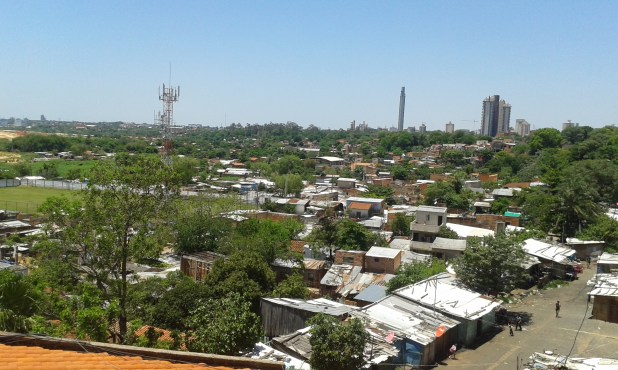
I think one of the loveliest things about going back was how little things had changed. Sure, there’s some new paint here and there. Many of my students graduated high school this year. My friends continue their lives, making changes like tying the knot. But, the important things carry on the same—perhaps indefinitely. The heat engulfs you when you step out of the airport. The sun sparkles in the sky, making the colors of life dazzle. My friends laugh easily and every Paraguayan offers food or terere. The people. The people of Paraguay are so warm. That’s the best part. They are so generous. I hope they always will be.

I spent the days drinking terere and gossiping about town happenings. I took siestas when the sun was too strong. I visited. I prepared all the little things that make a party a party—the frame for taking selfies at the wedding. Packaging the guest wedding gifts.

My Paraguayan friends welcomed me like family. They made room for me. My Paraguayan sisters gave up their beds for the days I was there. I shared meals that my favorite señoras cooked.

I saw the sun shine through the mango trees. I realized that as long as my friends are there, Paraguay will be a second home. And while my soul continues to wander, it is reassuring to know that yet another place I love will always be home. They say home is where the heart is. The euphemism is a smoothing of the reality. The heart can be like an electron. More than one place at once. My heart is divided in two. I imagine that it will split more as I fall in love with other peoples and their lands. And, now that I’ve learned a bit more about the odd natures of electrons (thank you pre-med curriculum), I’m okay with the uncertainty of where my heart actually is—I, at least, know the path on which I’m most likely to find it.

Photo credit: Carolyn Enz Hack

Convenience

“How is being back in the States?” friends and family have been asking since I got back from Paraguay. Unfortunately, I don’t have a good answer…just as I couldn’t explain what is was like to live in Paraguay when I first moved there. However, despite my general inability to describe my transition back to the USA, there is one thing that stands out to me about living in America: life logistics are incredibly simple. What I mean to say by “life logistics” is all the things we do to make sure our lives function properly— such as bathing, traveling between activities, and controlling house temperature.

In my new US home, I make up reasons to stay in the hot shower longer. It’s such a treat compared to my Paraguayan bathing ritual. In Paraguay, I stored water in a basin because for hours, many days, we didn’t have running water. Even when I did have water the pressure usually wasn’t enough to push water out of the shower head. And, because of this annoying water-flow problem I did not invest in a shower head to make hot water. So, 95% of the time I bucket bathed in cold water—using an old, plastic pitcher to dump water over my head. If it was too cold, I boiled several liters of water to add to my basin and bathed quickly. In America, I turn on the shower and the water comes pouring out every single time. The water is as cold or as hot as I want it to be. I don’t need to worry when a storm comes that I won’t have bath water or hesitate before exercising because I forgot to hoard water. In the great land between Canada and Mexico, showers are a given.

When I’m trying to get somewhere new by bus in Vermont, I type point A and point B into my smartphone. Then, Google tells me where and when to wait for the bus. The bus comes when Google says it will, and the fare costs exactly what the bus website said it would. In Paraguay, when I traveled to a new place by bus I asked 1 to 5 Paraguayans which buses to take, where to wait, and how much the fare costs because none of that information is available online. I asked more than one person to check the information and make sure I had the best route and detailed instructions to help me know where to wait for and get off the bus because there aren’t marked bus stops (usually). If I messed up my transfer in Paraguay, I had to start the process of asking for directions all over again. In Vermont, I can’t really get lost because I can check my travel progress on my phone periodically and then ask someone if I need more help.

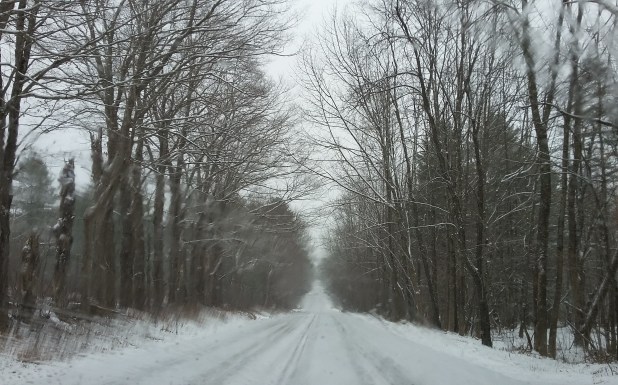
It is spring in Vermont. Sometimes it is pleasantly warm and sometimes it is cold. If it’s cold, I turn on the heat. My house is insulated. The windows and doors block the wind. My roof doesn’t leak. My floor is on a foundation so my feet are shielded from the ground’s temperature. When I listen to the beep the thermostat makes as I turn up the heat, I think of my little Paraguayan house. The wind came through the shutter and doors. The walls were made of one layer of hollow bricks. My floor was a cement slab on the good earth. My roof was tile and let in the rain in some places if it was windy. It was always windy when it rained. On cold days in Paraguay, I put on two pairs of pants and all my jackets. Then, fully clothed, I sat under my sleeping bag and drank mate. That was my heat, blankets and hot beverages.

What is it like to live in America? It is comfortable. It is efficient. It is easy. It is sterile. The challenges of life logistics have been replaced with intellectual and trivial quandaries. Should I take a more-than-five-minute shower? Would I be a better person to bike rather than ride the bus? When exactly is it cold enough to turn up the heat rather than putting on another sweater?

Life’s Soundtrack

At first it was strange to throw toilet paper in the toilet rather than the wastebasket and be in a comfortable climate rather than melting of heat. Those contrasts caught my attention first and in a jarring way when I arrived back in the US several days ago, after living as a Peace Corps volunteer in Paraguay for 27 months. But, where one puts toilet paper and how the weather is have always been minor details of life to which one easily adjusts.

My Peace Corps service ended on April 8, 2016. And, I’m still journeying to where I’ll live next. I’m visiting family, not seen for over 2 years, before I settle into what I imagine will be a hectic lifestyle. And as the visiting continues, I’m taking my time to adjust to this new world called the U.S. of A. It was both out of urgency and strategic planning that my first stops in America were to visit my grandparents. I spent so many hours sitting, chatting, and talking about old times with Paraguayans, doing the same in English with family has been a treat.

But, even in the bubble of my grandparents’ homes and neighborhoods my time in Paraguay seems to fade like a dream. As one person commented on Facebook, “It happened and now it is over.” Or, as my grandmother said, “that place you visited.” I had to laugh at the choice of the word “visited.” Can anywhere one stays for over two years count as a visit? “Visit” seems like such a trival word to describe a place I consider home and from which I emerged a new person. Words. That brings me to the point of this ramble.

There are many details that are different about living in Paraguay and living in the US. For example, I can talk to a guy my age in the US without anyone jumping directly to the conclusion I have a fling with him, where as in Paraguay people would most likely think there was something going on between he and I. But, for now, the diverging details are not overwhelming. The harshest changes I currently feel are the different life sounds between the US and Paraguay and that I have lost the key words and phrases I’ve been using for two years to express my thoughts and feelings.

On one hand, it is nice to once again understand what everyone is saying around me. On the other hand, it is so distracting to know every blasted word the people in line in front and behind me are saying. Who should I listen to? How can I think of my own words when there are so many words flying around me that I effortlessly understand? It was a lot easier to tune out in Paraguay where I did not understand every thing people said.

I am joyful to hear so many people speak my native tongue, but my goodness how the sounds that make those words sound like gravel against a shovel or nails on a chalkboard. I never realized how ugly and harsh English can sound. The twang, whine, and nasal of English words is almost painful to my ears. I miss the round vowels of Spanish and the flow of Guarani–two languages that are melodic compared to the clanking nature of English.

It’s not just the sound of the language that is dissonant to my Paraguay-tuned ears. It’s the music, or more accurately lack of music. Where is my cumbia? My bachata? Paraguayan polka? Why are the houses and buses and streets silent? What is this new phenomena of silent nights? I used to have to wear earplugs to escape from Spanish-language love songs, and now I can sleep without earplugs because there is not even the roar of dirt bikes and heaving old trucks to disturb my slumber. Am I in the land of perfect sleep?

The soundtrack is different in my country from that of my Paraguay. But, that is not all. The words and phrases I can use to express myself are different too. It is obvious that speaking in different languages means using different words. However it is not the language, but the phrasing that is tripping me. Even when I translate, or try to translate, the words and phrases I used in Paraguay to English, it doesn’t work. Why? Well, a lot of the words don’t have an English equivalent. How the heck am I supposed to say “tranquilo” or “no más” or “opama” or “kaigue” or “hi’que” in this blasted native language of mine? I can’t.

“Tranquilo” could be translated to “tranquil,” “no problem,” and “life’s good,” but it means all those things and more. The same goes for the others. “No más” literally means “no more,” but it can actually mean “that’s all,” “no problem,” and “It’s not a big deal.” “Opama” literally means “It’s over already,” but that’s hardly a good suggestion of all the things “opama” can mean in context. Both “kaigue” and “hi’que” don’t even have English translations…so there’s that.

Sounds. Words. Music. Language. They dictate who we are and how we explain ourselves to others. When I first got to Paraguay, and for all my time there, one of the biggest challenges I had was feeling like I could not completely express myself in Spanish and Guarani. Ironically, I now feel the same way in my homeland. I’m at a loss for words and homesick for the familiar sounds of my community in Paraguay. The language. The music. The spitting of frying oil and roaring of dirt bike motors. I know the sounds of my American environment will soon become just background noise. But right now, my new life’s soundtrack is bombarding my conscious mind.
See You Soon Dearest Paraguay

On April 7th, 2016 I rang the bell in the Peace Corps office, marking the closure of my Peace Corps Service in Paraguay. I lived and worked in Paraguay for 27 months. It has only been days since I left the humid land of the Guarani, and already my tenure there seems as thought it could have been a dream. I’ve locked the memories of the friendships I had in Paraguay securely in my heart as though I fear someone might rob them from me. Goodbyes are hard because they mark the end of an era. No matter what comes after a goodbye, feelings and relationships are never again be what they were.

I know I will see my friends again. I will visit Paraguay and volunteers from my group in years to come. And, we have Facebook and other means to stay in touch until we reunite. But still, it would be a lie to think the closeness I felt with my best friends in Paraguay will not evolve. Geography is important, but only because friendship is built on time shared, not time apart.

Perhaps it is forlornness for what I had and will never hold again that leaves my mind blank. But, when I force myself to really think, to feel with my heart, I know that I am not sad. I feel unexplainably content.

Paraguayans have a magical gift for making one know they love her. In the last moments, hours, and, in some cases, days I spent with my Paraguayan friends I felt loved like I never have before. What we did was not out-of-the-ordinary, we ate and laughed and talked, but the details of the moments we shared were special.

Paraguayans cooked menus that they carefully planned to include my favorite foods. I spoke to my training host mother for over an hour about the food she was making for a birthday party, and sat with her while she made it, to only discover she was actually cooking the feast for my going-away party. I woke from my last nap in a Paraguayan home because the smell of cake, made for me, was so strong.

My Paraguayan families and I exchanged gifts, kind words, and promises to forever stay in touch. We took pictures. Paraguayans joked one last time about how foolish I was to have not found myself a Paraguayan husband so I could stay. I told my Paraguayan mothers not to cry, and they told me not to be sad. I had to go, they reminded me. They explained to me that my American family was waiting for me on the other side and so were my studies.

When I had said goodbye to all the Paraguayans who made my service possible, my mind emptied and I found myself in Asuncion with the other volunteers from my group waiting to ring the bell.

Perhaps the hardest part was saying farewell to my closest volunteer friends. When I gave my last hugs and got into the car to leave for the airport the reality that my service was over hit me. The only people who truely understood my experience in Paraguay, who had shared every step with me, would evermore be miles and miles, states, and maybe countries away. I feel certain that my Paraguayan friends will be exactly where I left them, in their communities, no matter how many years from now I visit them. But, there is no such certainty about where I might find the other volunteers from my group. The world is our oyster, and that reality is stark.

No matter how soon I return to Paraguay, it will be different because I will not be the same. And, as I get better at accepting this reality it is easier to smile. Change is scary but unavoidable. In the end, life is exciting because it, like us, grows and shifts and mutates. I haven’t a clue what the next chapter of my existence will feel like. I don’t know which details of my life, now and moving forward, will make me happy. But, bundled with my memory of Paraguay is an understanding that no matter what comes, I can do it. Paraguay showed me how to appreciate and love people as I never have before. My service proved to me that I have more power than I thought. I know now that if I am willing to put in the effort the wildest of dreams can come true. And my new knowledge of my own strength is Paraguay’s greatest gift to me. It is a gift I will never be able to reciprocate.

Dearest Paraguay, I will hold our time together in my heart always. Hasta pronto!


Bus Serenity

My biggest fear when I arrived in Paraguay was taking the bus everywhere. Irrational? Perhaps, but that’s the truth. And, if one were to look at all components of taking buses in Paraguay, it might make a little sense.

The Paraguayan bus schedule is a suggestion and unpredictable; it often runs late and one must wait and wait…and wait. The only way to find out where a bus goes is to ask people; the bus routes aren’t posted ANYWHERE. There aren’t set bus stops. Therefore, when traveling to places one’s never been, one must ask the driver and passengers when to get off.  Taking the bus requires talking to many strangers and taking a leap of faith that it will all work out eventually. To compound the above, I often travel in crowded buses with a stuffed backpack. Most buses don’t have AC; they are saunas.

These days, as my mind whirs with my future life and my moving-soon emotions, I’m not nervous about the bus. I’m calm. I’m mostly traveling the roads I’ve taken many times during my wanderings in hazy Paraguay. When the bus isn’t crowded and I have a seat, ideally on the shady-side of the bus and right by an open window, the wind washes over me and familiar landmarks stand as they always have. And I pass them, wondering how many times I whizzed by without noticing their stoicism and how many more times our paths will cross.

The motion of the bus and the fact that it is no longer new is somehow soothing. I feel serene even when unexpected bus happenings occur, like the bus doesn’t go exactly where I expected it to go or the most intriguing person sits by me. When I’m on the bus, I don’t feel obligated to do anything because I’m going somewhere. I don’t even have to sleep or think. I do both with frequency. But more, I just enjoy the absence of emotion I feel as my eyes barely register the red dirt, spiky palms, and brick and mud houses.

May I Carry This Always

I’ve learned and seen enough cool things in Paraguay to fill volumes. But, I will not do that (at least not right now). So, in the simplest of terms: Paraguay is an awesome place. Paraguayans have taught me to be a more confident and caring person. And, there are some aspects of their culture I’m incorporating into my life for always, no matter where I am. My top five favorites of Paraguayan culture are:

1) Commitment to humor: Find a Paraguayan and in short time they will make a joke and be laughing. Find a Paraguayan and they will smile. Paraguayans have plenty to be negatively about, but most don’t let those realities rob them of happiness. Paraguayans are always looking for the next smile, the next bright speck in the haze of life.

2) Unwavering gratefulness: Paraguayans take time to be thankful for what they have and with who they share their lives. Of course, Paraguayans are human and want new, different things. However, they don’t let their desire for something else distract from their enjoyment of what they have.

3) Attention to detail: Paraguayans, especially and mostly the women, notice the smallest detail. They notice how one little bow can make a table at a baby shower look all the better. They notice and remember when one’s birthday is, how one’s family is doing, what one prefers to eat, what size of clothing one wears, what one likes to do…I appreciate Paraguayan women’s attention and think it is a form of being truely present. I want to be as present in my life as they are; I hope to be as understanding of the people who are important to me as they are of the people important to them.

4) Relationship building as a priority: Paraguayans work and study and do all the things that people do, but first and most important are the people in their lives. I was raised as a fierce individualistic American who believes my dream should not be bent for anyone or anything. I still believe that I must follow my dreams and not let anyone distract me, but I’ve also realized that people bring joy to life and that people in my life are important to me. I don’t ever want to get lost in a rat race that is so hectic I don’t have time to share with those I love.

5) Unrelenting curosity: Paraguayans never stop asking questions and I love them for it. They do not feel shame when asking the most outlandish, in my mind, things. I want to carry their unwavering confidence…it takes confidence to ask questions people might refuse to answer. I want to always be curious and willing to learn like I have found my closest Paraguayan friends to be.

The Art of Being Grateful

One thing that continues to impress me about Paraguayans is how happy they are. They almost always have a smile on their faces, and even in the darkest of times are quick to joke and laugh.

This ability to be joyful is not because the people of Paraguay have fewer problems than people of the US, for example. Believe me, they have many struggles from finding work and putting food on the table to maintaining their health and accomplishing the basic, like washing clothes, with access to only poor infrastructure. I often wonder how they stay positive when faced with so many obstacles.

Having thought often about how Paraguayans create happiness, I’ve come to the conclusion that Paraguayan contentment stems from a strong tendency toward gratefulness.

Paraguayans who have little and don’t know how they will put the next meal on the table are still able to enjoy the food they are currently eating, and even more profound they do not hesitate to share what they have with others. Their traditional foods always taste good to them and the soda is sweet no matter what pain they hold inside.

Paraguayans use what they have, considering it a gift to have for the time it lasts. Sometimes people in the States buy nice things and are then afraid to use them for fear of ruining them. Most Paraguayans start using a new thing right away and aren’t scared to let others use it too.

Paraguayans are experts at appreciating the company around them. They spend their free time talking to family and sharing meals. To many Paraguayans, visiting family is as important as excelling in work and school.

The Paraguay lifestyle naturally includes pauses to be grateful for one’s resources and relationships. This ability to take time and enjoy what one has, helps sustain contentment and overshadow the difficult aspects of life.

Land of Plenty and Unemployment

I went for a walk in the evening the other day. My walk took me along the main road and down to a river that was swollen beyonds its banks with rain. We’ve had a wet year and the rainy season is beginning. All along the flood banks men and women were fishing with their bamboo poles. Here fishing most often involves a string tied to a piece of bamboo, no reel, no bells and whistles. There are two primary kinds of fish, super bony and bony. The average fish is about the size of my hand.

Most people weren’t fishing just because they think it’s fun. As dusk was falling, two men on a dirt bike passed me, they were laden with silver, hand-sized fish. People here eat fish and even the small ones. One day the mother of the family I’m closest to was telling me about a woman in the community who has eight children. That’s a lot of mouths to feed with only the father working, and in Paraguay there are few jobs that pay enough to easily support a family of ten. I asked how the woman fed all her children.

“Well, they fish…” the woman I was talking to said.

Paraguay is fertile and has a climate designed for growing things. Fruit of all kinds, except apples and berries, is all over–bananas, all the citrus, papaya, passion fruit, pineapple, mangos, and the list goes on and on. There are several kinds of fruit in season at all times, and bananas are always available. With a little effort one can grow vegetables year-round and harvest most crops more than once every twelve months. In addition to fruits and vegetable, animals are part of most Paraguayan families’ lives. People who don’t live in cities can raise chickens and pigs on their plots, and even if they don’t own grazing land they can graze cows on public land and land that isn’t in use.

With some effort starving can be avoided in Paraguay even if money is tight. Further, the temperature is moderate. Unlike Vermont where winter exposure is deadly, in Paraguay, a roof to protect from the rain is enough to survive. Simple, rustic living spaces where families depend on their own crops to eat may not be a dream, but are realistic ways to live in Paraguay.

The point is that Paraguayan climate and geography are friendly toward life. People who are creative and willing to work can survive on almost no money. But, as hospitable as the earth and rivers are in Paraguay, job opportunities are limited. It is not uncommon for one person in a family of many to work, even if several people in that family are working age. The common example of a father supporting his wife, adult children before they marry, and his young children is traditional but not what most families would choose. It is a reality here because jobs are scarce and opportunities for professional employment lag far behind the number of people who are educated and trained.

As I watched the sun set over the river and bordering marshland, I thought about the juxtaposition of existence in Paraguay. I like to think Paraguayan society is moving toward providing its people as many career options as the land of the Guarani offers food choices to the hungry. I believe it is. The students I worked with want more than just a roof and bananas with fish. They want to travel and have cars and cell phones. Paraguay must change to provide what its future leaders demand or it will lose them.

Lice

Once when we were children my sister got lice from school. I remember it was a big, embarrassing ordeal. We all–my mom, my sister, and I–used lice shampoo right away. This memory makes me smile often, as I go about life in Paraguay. Things are so different here.

Most kids have lice in Paraguay…that might be an exaggeration, but not a terribly erroneous one. The difference is, however, that lice are not considered to be the end of the world in Paraguay, as they seem to be in the States. People I know here don’t use shampoo to kill the little buggers either.

Lice control in Paraguay involves a child sitting in her mom’s, aunt’s, couscin’s, or sister’s lap while the older woman combs through the girl’s hair with her fingers and kills the lice she finds between her finger nails. This is a ritual that is neither hidden or done with shame. It is undertaken out in the open and in front of visitors without hesitation.

Grooming in Paraguay is more communal than I experienced in the States. The lice picking used to remind of apes and the other habits between women (mostly) like cutting each other’s toe nails and cleaning each others feet made me a bit queasy. Feet are for walking, not for touching in my book. But, nowadays I find these behaviors normal, though I still don’t actively participate–I guess we all have our limits.

The easy-to-maintain sterile world many people in the States live in allows us to forget that germs and bugs and dirt are just part of life. I think many of us could benefit from remembering creatures like lice aren’t usually the result of negligence but are just part of this little world in which we live. I’m not exactly saying that we should all go out and get lice, but I’m suggesting that their appearance shouldn’t be a catastrophe.

5 Confessions of a Paraguay Peace Corps Volunteer

When I was preparing to leave for Peace Corps, returned volunteers told me that the experience would change me. Of course they were right. Most of the changes I’ve experienced are internal, feelings more than anything else, and can’t be summarized easily in a few words. However, there a some things I now do that are amusing to me. These new habits aren’t particularly profound, but they offer a glimps into my life in Paraguay.

5 Confessions

1) I automatically prepare a 2-liter thermos of ice cold water in the morning regardless of whether or not I have imminent plans of drinking terere. I know I’ll finish the 2 liters by the end of the day one way or another. Before Paraguay, there was nothing I drank every day (other than water of course), not tea and not coffee.

2) If it’s raining in the morning I sleep in, make mate, and decide it’s a “me” day. Only “big” commitments have a chance of breaking that routine. I used to be an “A” type who could not sit without work for even two seconds.

3) I plan the amount of groceries I buy based on how many families I think I’m going to visit that week. No matter what I do, every Paraguayan family I visit will insist on feeding me and giving me food to take home. This country is a land of super-hosts. I’m not a moocher and I don’t like to accept any kind of gift without a clear way to repay it, but Paraguayans have shown me a generosity so profound they’ve eased my “repay” obsession and given me the chance to just enjoy their company.

4) I have so many humorous, invented reasons for why I don’t have a boyfriend and why I don’t want do date whoever is asking me about my relationship status, I don’t remember the real reason for my singleness. In Paraguay, it’s just as common for people to ask me if I have a boyfriend as it is for them to ask me my name (well, almost). I don’t enjoy the prodding so common here in Paraguay, but having to think about what is up with my romantic situation so often has given me the chance to be creative. I do hope I keep the humor when I return to the States, but I won’t miss the prevalence of questions about my love life.

5) I know all the tricks to get out of eating a second piece of meat. Everything from what I finish first on my plate to where I look while eating is calculated for best results. Paraguayans eat a lot of meat and they are aggressively generous with sharing their food. I appreciate my hosts’ invites to eat, but I just can’t consume as much beef and pork as they can. When left on my own, I hardly eat meat of any kind.